5.0 out of 5 stars 6 Star Wake Up Call – The Democracy That Never Was….,September 3, 2012
It is a telling sign of the ignorance across the USA and elsewhere that there is no other review of this book, a book that was brought to my attention recently when I made it known that I was beginning to question the US Constitution's sanctity, having already concluded that the USA is as Matt Taibbi puts it so well in Griftopia: A Story of Bankers, Politicians, and the Most Audacious Power Grab in American History, a merger between criminal corrupt complicit government and criminal corrupt financial gangs whose crimes are either legalized or ignored (“control fraud”).
I find it very sad that I had to reach the age of 60 and have several years of unemployment on top of my life experience and multiple graduate degrees before I could ingest the reality that the USA is a democracy but that this does not mean popular self-rule, nor did the Founding Fathers every intend for it to be a direct democracy. The USA is a republic of, by, and for the wealthy, and I consider it quite timely and helpful that this book may be making a comeback in the consciousness of the avant guarde that always sets the stage for a revolution–and I do believe a revolution is coming in the USA.
Aug 21 2012 ► Aug 11. In the United States, the President’s Daily Brief (PDB), “the highest-level intelligence analysis targeted at the key national security issues and concerns of the President”, is increasingly going digital. For that matter, so is much of the output produced by the US Intelligence Community at large. According to AOL Defense News, “The President and his top officials want and will get a single mobile device allowing them to access highly classified and unclassified data wherever they are”. The mobility feature is driven by a desire not to be tethered to a desk or a Sensitive Compartmented Information Facility (SCIF).
In addition to the obvious benefits of mobility, the digitized PDB allows for a more in-depth and interactive reading of intelligence matters. In the example of the PDB, as the President reviews the nation’s most sensitive intelligence information on a specialized tablet, he can jump back and forth, click on links to take a deeper dive, see follow-up briefings, review background materials for greater context, view videos, photographs, maps and other visual aids. In fact, the PDB has gone from a static page to an interactive assessment of top intelligence concerns, landing it squarely in a quasi Web 2.0 world for the Intelligence Community.
In May, Harvard University and the Massachusetts Institute of Technology announced their joint plan to “explore the frontiers of digital education” by offering free online courses to learners around the world. As a result, their new online learning platform edX entered the burgeoning world of MOOCs — that is, massive open online courses— backed by a hefty $60 million pledge from the prestigious institutions.
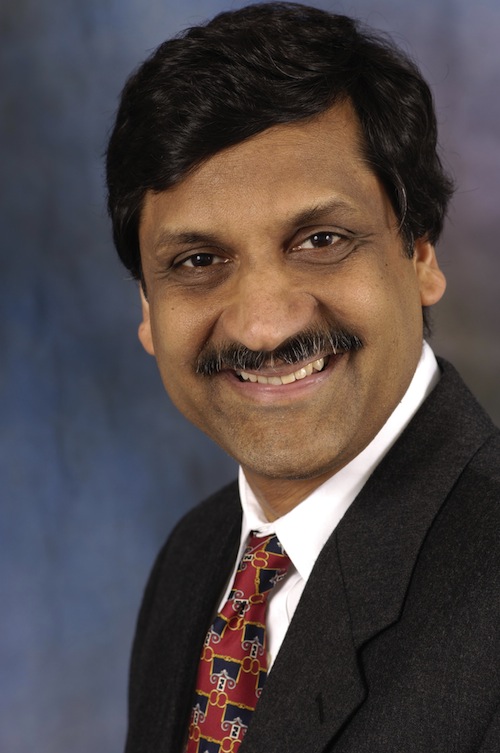
With the fall slate of classes starting soon and the University of California—Berkeley now on board, we spoke with edX’s president and first professor, Anant Agarwal, about MOOCs in general and edX in particular.
What are your main goals for edX as its president?
We really want to reinvent education. We want to offer education on a planet scale to people all around the world. Anybody who has an interest and the capability to master the material should be able to access the content for free. We also really want to revolutionize campus education. We’ve been finding that online technologies can be applied on campus to create new blended models of learning.
What do those blended models look like?
In a blended model, you do what is called flipping the classroom. Flipping involves having students do video [lecture] sequences and some concept exercises at home before they come to class. Then, you can ask the students to come into the class for interactive sessions where they can sit down and have discussions, ask questions, do interactive laboratories, solve problems. It kind of reverses what is done today and it can be very effective.
You taught the first edX class, Circuits and Electronics, from March to June this year. What did you learn about online education and MOOCs?
The whole area of MOOCs and planet-scale learning is in its infancy. Very little is known about it, so a lot of what we did was guesswork. When we began the course, we were really concerned about the large number of students enrolled. We had 154,000 students sign up and our staff was about six or seven people, which is the kind of staff that we have for a 100-person on-campus class. We didn’t know how we were going to deal with all the questions and so on that students usually have, but through our online discussion boards, we saw the students answering each other’s questions. There were no repeat questions because once someone asked a question everybody could see the response. In that way, we were able to serve 154,000 students with a very small staff. I think that was clearly our biggest learning experience and the biggest surprise we had.
Knights know that the arts–especially music–are essential to developing the creative and innovative impulses of entrepreneurs. Put more directly: no arts in education – fewer entrepreneurs.
Lesson Plans and Resources for Arts Integration
Dance in science, pop art in Spanish, or photography in math — there’s no end to the ways arts can be integrated into other curricula. Educators from Bates Middle School, in Annapolis, Maryland, share arts-integrated lessons and resources that you can use in your school.
2.0 out of 5 stars Mind-Numbing Waste of Time and Money,September 2, 2012
I am *stunned* that any Comptroller General would sign off on this. In my 33 year government career this is the densest most meaningless compilation of words (no pictures, no figures, no timelines, no lists) of gobbly-goop I have ever seen (of course there are a great many such products from other government agencies I have not seen). If I were the Comptroller General, not only would I not sign off on this, I would consider permanent exile for the entire team responsible for this. It fails to enlighten or communicate — it is more like a “cover your ass” document.
In theory, this book is about independence of audits and the professional management of audits. In fact, this is strung together text, all of it making sense in isolation, and none of it useful to actually doing a real audit meaningful to We the People. This is a classic example of doing the wrong thing righter (Russell Ackoff).
The more I read into this the sadder I got. I have known for a long time that GAO, CBO, and CRS are creatures of a very corrupt Congress, and that Congress actually reserves the right to tell them what their assumptions (code for outcomes) will be, but until I read this I did not realize how disconnected the whole process is. Now I have to emphasize that I value actual GAO reports and I would never consider doing an internal executive audit without consulting both GAO and OMB (which does not do management, but you can at least try to find someone who's heard of the concept). What this book does is give me pause — if this is the GAO “foundation work” if causes me to wonder what else about GAO is so corrupt (in the holistic not making sense of the word).
This book is available free online at the GAO website. I bought it because it never occurred to me that GAO would produce something from the Stone Age, and for serious thinking, I have to have it in writing in front of me subject to annotation and hand-eye-brain coordination.
Here is the larger bottom line:
a) Congress authorizes and appropriates money based on corruption, personal, financial, and ideological — as long as Congress is getting its standard 5% kick-back, they will authorize and appropriate anything, from the bridge to nowhere to a stealth fighter that does not work as advertised, is unaffordable, and coated in toxins that kill the pilots stupid enough to fly something the USAF swears is safe.
b) GAO is only authorized to audit for compliance with the original corrupt authorization and appropriation. They are not authorized to blow the whistle on insane, unaffordable expenditures.
c) Within the Executive, taking NSA as a classic example, the focus is on keeping money moving and growing the pie because that is how the Executive creates more and more flag and senior executive positions, and that is how those flags and senior executives “pay forward” the reverse bribes that will get them follow-on careers with the contractors that will build any insane unafforable and generally inoperable (SAIC and Trailblazer come to mind) “capability” that Congress has authorized and appropriated.
d) When NSA is inspected from within the Executive, the focus is NOT on the why, on the cost, on the “fit” with any given strategy or other related programs, but on the allocation authority and whether NSA is spending the money as directed, never mind whether it works or not. This is one reason why I believe that both Inspectors General and Operational Test & Evaluation should be part of the Intelligence Directorate of any given Cabinet office, just as I believe that education, intelligence, and research must be asuthorized, appropriated, allocated, constructed, and evaluated as a whole.
It is with a grimace that I prepare to donate this book to the Oakton VA library. It is a perfect example of corrupt perfection. Argh.
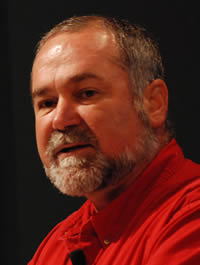
Robert David Steele
INTELLIGENCE FOR EARTH: Clarity, Diversity, Integrity, & Sustainability
Calls for rigorous impact evaluation has been accompanied by the quest for what works and why. Howard White identifies six principles for the successful application of the approach — mapping out the causal chain (programme theory), understanding the context, anticipating heterogeneity, rigorous evaluation of impact using a credible counterfactual, rigorous factual analysis and using mixed methods.
Phi Beta Iota: The international Initiative for Impact Evaluation, which receives support from the Bill and Melinda Gates Foundation, is doing important work, but in isolation from a larger canvas. They lack a strategic analytic model for studying the whole. This is typical of all intelligence and information analytic endeavors, all mired in 20th Century stove-pipe thinking.