Review: Toxic Workplace!–Managing Toxic Personalities and Their Systems of Power

5 Star, Best Practices in Management, Communications, Consciousness & Social IQ, Leadership
0Shares

Amazon Page
Amazon Page

Timely, Pointed, A Good Starting Point,

July 21, 2009
Mitchell Kusy
I read this book in the process of obtaining two other books that are being used in a mid-career leadership course, Crucial Conversations: Tools for Talking When Stakes are High and The Five Dysfunctions of a Team: A Leadership Fable (J-B Lencioni Series).

Although a bit over-hyped and not the complete picture, I consider this a valuable book that is the equivalent of a Social IQ primer for an organization instead of an individual.

I was raised in the command & control environment and would be classed an over-achiever, with documented performance equal to the next four of my peers combined. Never-the-less, I see in myself toxic elements that have been allowed to run rampant in counter-productive ways. The book focuses on insulting and bullying behavior rather than “voices not heard.” On the latter see The Deepening Darkness: Patriarchy, Resistance, and Democracy's Future as well as Pedagogy of the Oppressed and All Rise: Somebodies, Nobodies, and the Politics of Dignity (BK Currents (Hardcover)) for sharp critiques of patriarchal “rankism” and lost knowledge.

What concerns me especially that is NOT covered by this book is the inability of organizations to “hear” the frustration of their high-performers. Looking back over twenty years what I see is a two-way failure: I have been screaming and shouting about organizational pathologies and the failure of leadership, and those affected have refused to engage–they “shut out” both critics and those offering alternative views. The US National Security Council, to take one specific example, is filled with brilliant people who, in the words of Daniel Elsberg lecturing Kissinger (see my review of his book, Secrets: A Memoir of Vietnam and the Pentagon Papers “are like morons” who limit themselves to their Top Secret tid-bits and close out all those who actually have “ground truth” to offer.

The bottom line for me on this book is two-fold: first, we all need to recognize personality traits that may be good in isolation but are toxic when “unheard” or unchecked, and second, We the People, the “stockholders” in our dysfunctional government, must demand that it modernize away from the rigid hierarchical bureaucracy and toward the open space democracy that is now possible (see the books below).

Similarly “social IQ” of a corporation, beginning with a rational “not to exceed” multiplier for CEO salaries versus lowest-paid employee salaries, must become a feature of stock evaluations. Not only must corporations now embrace “Green to Gold” and “Cradle to Cradle” “Natural Capitalism”, but they must achieve “Integral Consciousness,” grow “The Knowledge Executive,” and LISTEN to their “Exemplary Performer(s).” All quotes are book titles.

Toxicity begins in the White House and Congress as well as the Boardroom. When they shut themselves off from the public interest and instead pander to special interests, they are poisoning democracy and strangling the Republic. ENOUGH!

This book is well-titled, well-organized, and just right for our times.

See also:
The Tao of Democracy: Using Co-Intelligence to Create a World That Works for All
The Cultural Creatives: How 50 Million People Are Changing the World
Counterculture Through the Ages: From Abraham to Acid House
Collective Intelligence: Creating a Prosperous World at Peace

Vote on Review
Vote on Review

Click Here to Vote on Review at Amazon,

on Cover Above to Buy or Read Other Reviews,

I Respond to Comments Here or There

Journal: Chuck Spinney Highlights: Dark Hole of Democracy: How the Fed Prints Money Out of Thin AirGreider

Banks, Fed, Money, & Concentrated Wealth, Commercial Intelligence, Democracy, Government
0Shares
Full Article Online
Full Article Online

The full article [click on AltNet]  should be must reading to any one interested in understanding the Federal Reserve Board's sinister relationship with the Banksters who, after having done such great damage to the economy, are now laying the long-term foundation for a corporatist — purists might say neo-fascist — state which, if left unchecked, might even evolve into an American variant of the zaibatsu that controlled the economic and foreign policy of the Empire of Japan.   CS

By William Greider, The Nation
Posted on July 17, 2009, Printed on July 18, 2009
The financial crisis has propelled the Federal Reserve into an excruciating political dilemma. The Fed is at the zenith of its influence, using its extraordinary powers to rescue the economy. Yet the extreme irregularity of its behavior is producing a legitimacy crisis for the central bank. The remote technocrats at the Fed who decide money and credit policy for the nation are deliberately opaque and little understood by most Americans. For the first time in generations, they are now threatened with popular rebellion.
During the past year, the Fed has flooded the streets with money — distributing trillions of dollars to banks, financial markets and commercial interests — in an attempt to revive the credit system and get the economy growing again. As a result, the awesome authority of this cloistered institution is visible to many ordinary Americans for the first time. People and politicians are shocked and confused, and also angered, by what they see. They are beginning to ask some hard questions for which Federal Reserve governors do not have satisfactory answers.
Where did the central bank get all the money it is handing out? Basically, the Fed printed it, out of thin air. That is what central banks do. Who told the Fed governors they could do this? Nobody, really — not Congress or the president. The Federal Reserve Board, alone among government agencies, does not submit its budgets to Congress for authorization and appropriation. It raises its own money, sets its own priorities.
Representative Wright Patman, the Texas populist who was a scourge of central bankers, once described the Federal Reserve as “a pretty queer duck.” Congress created the Fed in 1913 with the presumption that it would be “independent” from the rest of government, aloof from regular politics and deliberately shielded from the hot breath of voters or the grasping appetites of private interests — with one powerful exception: the bankers.
The Fed was designed as a unique hybrid in which government would share its powers with the private banking industry. Bankers collaborate closely on Fed policy. Banks are the “shareholders” who ostensibly own the twelve regional Federal Reserve banks. Bankers sit on the boards of directors, proposing interest-rate changes for Fed governors in Washington to decide. Bankers also have a special advisory council that meets privately with governors to critique monetary policy and management of the economy. Sometimes, the Fed pretends to be a private organization. Other times, it admits to being part of the government.
The antiquated quality of this institution is reflected in the map of the Fed's twelve regional banks.
  • Five of them are located in the Midwest (better known today as the industrial Rust Belt).
  • Missouri has two Federal Reserve banks (St. Louis and Kansas City), while
  • the entire West Coast has only one (located in San Francisco, not Los Angeles or Seattle).
  • Virginia has one; Florida does not.
Among its functions, the Federal Reserve directly regulates the largest banks, but it also looks out for their well-being — providing regular liquidity loans for those caught short and bailing out endangered banks it deems “too big to fail.” Critics look askance at these peculiar arrangements and see “conspiracy.” But it's not really secret. This duck was created by an act of Congress. The Fed's favoritism toward bankers is embedded in its DNA.
This awkward reality explains the dilemma facing the Fed. It cannot stand too much visibility, nor can it easily explain or justify its peculiar status.
Fed chair Ben Bernanke responded with the usual aloofness. An audit, he insisted, would amount to “a takeover of monetary policy by the Congress.” He did not appear to recognize how arrogant that sounded. Congress created the Fed, but it must not look too deeply into the Fed's private business. The mystique intimidates many politicians. The Fed's power depends crucially upon the people not knowing exactly what it does.
President Obama inadvertently made the political problem worse for the Fed in June, when he proposed to make the central bank the supercop to guard against “systemic risk” and decide the terms for regulating the largest commercial banks and some heavyweight industrial corporations engaged in finance. The House Financial Services Committee intends to draft the legislation quickly, but many members want to learn more first. Obama's proposal gives the central bank even greater power, including broad power to pick winners and losers in the private economy and behind closed doors. Yet Obama did not propose any changes in the Fed's privileged status. Instead, he asked Fed governors to consider the matter. But perhaps it is the Federal Reserve that needs to be reformed.
Six reasons why granting the Fed even more power is a really bad idea:
1. It would reward failure. Like the largest banks that have been bailed out, the Fed was a co-author of the destruction.
2. Cumulatively, Fed policy was a central force in destabilizing the US economy.
3. The Fed cannot possibly examine “systemic risk” objectively because it helped to create the very structural flaws that led to breakdown.
4. The Fed can't be trusted to defend the public in its private deal-making with bank executives. The numerous revelations of collusion have shocked the public, and more scandals are certain if Congress conducts a thorough investigation.
5. Instead of disowning the notorious policy of “too big to fail,” the Fed will be bound to embrace the doctrine more explicitly as “systemic risk” regulator.
6. This road leads to the corporate state — a fusion of private and public power, a privileged club that dominates everything else from the top down.
Whatever good intentions the central bank enunciates, it will be deeply conflicted in its actions, always pulled in opposite directions.
Obama's reform might prevail in the short run. The biggest banks, after all, will be lobbying alongside him in favor of the Fed, and Congress may not have the backbone to resist. The Fed, however, is sure to remain in the cross hairs. Too many different interests will be damaged
  • thousands of smaller banks,
  • all the companies left out of the club,
  • organized labor,
  • consumers and
  • other sectors,
  • not to mention libertarian conservatives like Texas Representative Ron Paul.
The obstacles to democratizing the Fed are obviously formidable. Tampering with the temple is politically taboo. But this crisis has demonstrated that the present arrangement no longer works for the public interest. The society of 1913 no longer exists, nor does the New Deal economic order that carried us to twentieth-century prosperity. The country thus has a rare opportunity to reconstitute the Federal Reserve as a normal government agency, shorn of the bankers' preferential trappings and the fallacious claim to “independent” status as well as the claustrophobic demand for secrecy.
Progressives in the early twentieth century, drawn from the growing ranks of managerial professionals, believed “good government” required technocratic experts who would be shielded from the unruly populace and especially from radical voices of organized labor, populism, socialism and other upstart movements. The pretensions of “scientific” decision-making by remote governing elites — both the mysterious wisdom of central bankers and the inventive wizardry of financial titans — failed spectacularly in our current catastrophe. The Fed was never independent in any real sense. Its power depended on taking care of its one true constituency in banking and finance.
The reform of monetary policy, in other words, has promising possibilities for revitalizing democracy. Congress is a human institution and therefore fallible. Mistakes will be made, for sure. But we might ask ourselves, If Congress were empowered to manage monetary policy, could it do any worse than those experts who brought us to ruin?
William Greider is the author of, most recently, “Come Home, America: The Rise and Fall (and Redeeming Promise) of Our Country (Rodale Books, 2009).”
© 2009 The Nation All rights reserved.
View this story online at: http://www.alternet.org/story/141373/

Journal: Chuck Spinney Highlights: West ignores lessons of Soviet humiliation in Afghanistan

Analysis, Military
0Shares

Times Online Story
Times Online Story

Its Afghan war spelt disaster for the USSR and now Nato is making the same mistakes
Victor Sebestyen
The Sunday Times [UK]
July 19, 2009

“There is barely an important piece of land in Afghanistan that has not been occupied by one of our soldiers at some time or another,” the commander said. “Nevertheless, much of the territory stays in the hands of the terrorists. We control the provincial centres, but we cannot maintain political control over the territory that we seize.”

He added: “Our soldiers are not to blame. They’ve fought incredibly bravely in adverse conditions. But to occupy towns and villages temporarily has little value in such a vast land, where the insurgents can just disappear into the hills.”

They could have been the words of a Nato general in the past few days. In fact they were spoken by Marshal Sergei Akhromeyev, commander of Soviet armed forces, to the USSR’s politburo in the Kremlin on November 13, 1986.

The Soviet forces were in the seventh year of their nine-year war in Afghanistan and had lost about 12,000 men. Akhromeyev, a hero of the siege of Leningrad in the second world war, had been summoned to explain why a force of 109,000 troops from the world’s second superpower appeared to be humiliated, year after year, by a band of terrorists.

Akhromeyev explained about the rough terrain, insisted the army needed more resources – including additional helicopters – and warned that without more men and equipment “this war will continue for a very long time”.

He concluded with words that sound uncannily resonant today, in the eighth year of Nato’s war: About 99% of the battles and skirmishes that we fought in Afghanistan were won by our side. The problem is that the next morning there is the same situation as if there had been no battle. The terrorists are again in the village where they were – or we thought they were – destroyed a day or so before.”

The Soviet campaign in Afghanistan is a largely forgotten war. Few strategists from Russia or the West seem to think anything can be learnt from it. But study Soviet archives and many lessons become clear.

As the world was not watching, the Soviet troops could be brutal, yet massive air raids and the destruction of villages, which killed 800,000 Afghans, did not work. Tactics changed over the years, each time accompanied by a “surge” of new troops that temporarily improved security for the Russian-backed communist government in Kabul.

Much of the fighting was in places that have become familiar to us. Soviet troops were sent on sweeps in the most troublesome areas on the border with Pakistan, through which most of the guerrillas’ weapons flowed, and the southern provinces of the country, such as Helmand. As soon as they left their fortified bases, the troops were in danger of ambush from bands of mujaheddin – the army of God.

That war, like today’s, was characterised by disputes between soldiers and politicians. As newly revealed Russian documents show, the Communist party bosses ordered the invasion against the advice of senior commanders. This caused continual friction in Moscow for many years.

Marshal Nikolai Ogarkov, the chief of the Soviet defence staff, and Akhromeyev, his number two, raised doubts shortly before Soviet forces were dispatched on Christmas Day 1979. They suggested to Dmitri Ustinov, the defence minister, that the experiences of the British and tsarist armies in the 19th century should encourage caution.

Ustinov told them to “shut up and obey orders”, according to politburo minutes.

Ogarkov went further up the chain of command to Leonid Brezhnev, the party boss. He warned that an invasion “could mire us in unfamiliar, difficult conditions and would align the entire Islamic East against us”. He was cut off in mid-sentence.

“Focus on military matters,” he was told. “Leave the policy making to us and to the party.” Not long afterwards the marshal was fired.

The Soviet troops realised soon after they entered Afghanistan that they had blundered, but Kremlin officials felt trapped. When Mikhail Gorbachev became leader in March 1985 he declared privately that ending the war – “our bleeding wound” – was his priority. But he could not do so for fear of losing too much face. Withdrawing the troops took a further four years as they searched for that difficult prize for armies on the run: peace with honour.

It was an agonising process that marked the beginning of the end of the Soviet empire and eventually the USSR itself. “How to get out of this racks one’s brains,” Gorbachev despaired to his fellow Soviet magnates in the spring of 1986. He told his generals later that year: “After all this time we have not learnt how to wage war there.”

When the last troops left on February 15, 1989, about 15,000 of their comrades had been killed. It was the only war the USSR lost. To Gorbachev, one vital issue was how to “spin” it correctly. As he wrote to his key aides during the last phase of the retreat, presentation was key: “We must say that our people have not given their lives in vain,” he said.

– Victor Sebestyen is the author of Revolution 1989: The Fall of the Soviet Empire, to be published on July 30 by Weidenfeld and Nicolson

Journal: Collective intelligence at a time of global crisis – Tom Atlee

Civil Society, Collective Intelligence, Collective Intelligence, Complexity & Resilience, Consciousness & Social IQ, Democracy, Intelligence (Collective & Quantum)
0Shares
Tom Atlee
Tom Atlee

Tom Atlee's research and thought innovations span from the conscious evolution of social systems to collaborative dynamics to a host of other ideas centering on group, social and political dynamics. He has worked with a number of leading authors on their books including ‘Awakening: The Upside of Y2K'. More recently Tom Atlee has been exploring and writing about collective dynamics.

Download (MP4 format, 27:06, 224 MB)

Tom is one of the 8 US Collective Intelligence leaders, one of 25 (or more) global leaders of collective intelligence and bottom-up deliberative dialog democracy.  He received the Golden Candle Award at OSS'04.

OSS '04: To Tom Atlee, founder of the Co-Intelligence Institute, for his sustained leadership in the vanguard of an informed democracy. His book, The Tao of Democracy: Using Co-Intelligence to Create a World that Worlds for All is in the best traditions of Thomas Jefferson, who said “A Nation’s best defense is an educated citizenry.”

It can safely be said that he has had more influence than any other person on the migration of the original Open Source Intelligence (OSINT) movement away from serving governments and toward achieving its righteous role as public intelligence in the public interest.

Co-Intelligence Institute

Journal: World Bank to Play Sheriff in Recovering Despot Funds

Corruption, Government, InfoOps (IO), Law Enforcement, Stabilization & Reconstruction
0Shares
Home Page
Home Page

With a tip of the hat to Intelligence Online Issue No. 598 (16-29 July 2009), we are delighted to note that the World Bank's Department of Institutional Integrity (INT) is creating a special new investigative unit to focus exclusively on identifying and facilitating the recovering of assets stolen by politicians in the emerging countries, i.e. Africa and Central Asia as well as select countries in South Asia and Latin America.

According to Intelligence Online, the one newsletter that is essential to those following the world of intelligence, the new unit will be partly financed by USD $100 million paid by Siemens on 2 July 2009 to avoid legal proceedings in connection with its payment of briber to Russian officials administering a World Bank contract awared.

Intelligence Online goes on to discuss the United Nations “Stolen Asset Recovery” initiative (STAR), which did not do investigations itself, but provided limited financiing for legal or private investigative probes.

Intelligence Online notes that Nigeria and Kenya had no difficulty finding the money stolen by Sani Abacha and David Arap Moi, but had to go to considerable lengths to force the banks to release the funds.  The World Bank's unit is evidently intended to make it easier to obtain and submit legal evidence that will compell banks to release the funds.

As we learned in Africa Unchained (see review), $148 billion is believed to have been stolen by various despots from Africa alone.  We speculate that a global Information Operations (IO) campaign to recover that money could be the fastest, cheapest, best means of helping Africa help herself.

PACOM Week in Review Ending 19 July 2009

Uncategorized
0Shares

Hot Topics

CN:  China rising in Latin America, but wont overtake United States 07/19/09

CN:  Chinas police-state crackdown in Xinjiang creates international …07/16/09

ID:  The Al Qaeda Paradox 07/17/09

ID: Jakarta Hotel Bombs, The Military & The CIA 07/17/09

IN:  Scientists save India’s moon mission from failure 07/17/09

NZ:  NZ needs to play its part in stamping out terrorism – PM 07/18/09

PH:  Italian freed in Philippines returns home 07/18/09

TH:  Defining the crisis in Thailand 07/17/09

Instability

AU:  Australia security warning about renewed terrorism in Indonesia 07/17/09

ID:  Security Analysts say Jemaah Islamiyah in Indonesia Remains Dangerous 07/17/09

CN:  Xinjiang riot hits regional anti-terror nerve 07/17/09

TH:  Two soldiers killed, five injured in Yala car bombing 07/17/09

IN: Pakistan faces dilemma over nemesis India 07/18/09

MY: Killer and bomb maker a step ahead 07/18/09

TH:  A tale of two insurgents 07/18/09

Special Forces

RU:  China and Russia conduct joint military exercises 07/19/09

SG:  Singapore hones defences against new terror tactics 07/19/09

Security Forces

AU:  Australian PM reaffirms Afghan commitment 07/18/09

BD:  Reviewing injustices in the military 07/15/09

BD:  Top operative of Indias terror group arrested in Bangladesh 07/17/09

ID:  GMA orders security measures following Indonesia bombings 07/18/09

ID:  Indonesia says foreign countries linked to attacks 07/16/09

IN:  Defense Contractors Target Big Jump in Indias Military Spending 07/16/09

LK:  Sri Lankas army chief vows to re-focus military 07/15/09

MY:  Lebanon Ready To Buy Military Equipments From Malaysia 07/17/09

MY:  Urals Company Will Ship Su-30 Spares to Malaysia 07/16/09

PH:  Philippines alert after Indonesia bombs: police 07/17/09

Foreign Affairs

BD:  Foreign officers come calling at NDA 07/18/09

CN:  China investment in Myanmar soars 07/16/09

CN:  China’s Kurdish Policy 07/18/09

CN:  US Reaffirms Its Rights to Operate in South China Sea 07/15/09

FJ:  Fiji finds foreign friends? 07/17/09

JP:  Japan’s Opposition Would Push US to Renegotiate Troop Move 07/16/09

KP:  North Korea focus of Asian conference 07/17/09

KR:  Korean armies face off but repeat of war unlikely 07/15/09

KS:  Terrorism trumps Kashmir in India-Pakistan relationship, for now 07/17/09

LK:  LTTE overseas hardliners see KP as a failure 07/17/09

MM:  Burmese FM to Face Suu Kyi and North Korea Questions at ARF 07/18/09

MM:  Myanmar Opposition Cautiously Organizes as China Defends Junta 07/16/09

PH:  Peace talks with Philippine communists to resume 07/15/09

PH:  Philippines offers to boost cooperation with Indonesia against …07/17/09

Crime

ID:  No military role in Papua shootings: minister 07/15/09

LK:  Sri Lankan military cleared in deaths 07/15/09

NP:  Nepal, Lanka join hands to fight money laundering 07/18/09

PH:  Military exec tagged in Davao Sur drug trade 07/15/09

TP:  East Timor: Trials begin over 2008 Horta-Gusmao assassination …07/17/09

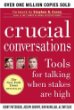
Review: Crucial Conversations–Tools for Talking When Stakes are High

4 Star, Best Practices in Management, Consciousness & Social IQ, Information Society, Leadership
0Shares

Amazon Page
Amazon Page

Good Training Tool for the Fundamentals,

July 20, 2009
Kerry Patterson
This is one of two books being used in a U.S. Government mid-career leadership course, and I decided to look at both of them for insight. The other book is The Five Dysfunctions of a Team: A Leadership Fable (J-B Lencioni Series).

Both books adopt the story-telling mode that has been justly pioneered by Steven Denning at CKO of the World Bank, see his tremendous The Springboard: How Storytelling Ignites Action in Knowledge-Era Organizations (KMCI Press), still the single best companion I have found to the still seminal 1960's book by Harold Wilensky, Organizational Intelligence (Knowledge and Policy in Government and Industry).

For myself, after two decades of feeling both attacked for being right in 1988 about the future of both intelligence and warfare, and angry over the incapacity of leaders to lead in all that time, the core point in this book that resonates with me and is also consistent with the twelve spiritual principles adopted by Phi Beta Iota, the new honor society for public intelligence, is this: do not interpret attacks as anything other than a mixture of ignorance, fear, and concern. Respond to attacks (or their obverse, sullen silence) with respect, clarity, integrity, and an offer to have a SAFE dialog. I've been very strong on integrity, and very weak on offering safety, and for that alone, this book is helpful to me.

Early on (page 20) the authors' assure my attention by stating that the core “one thing” that results from all that they preach and teach is this:

“When it comes to risky, controversial, and emotional conversations, skilled people find a way to get all relevant information (from themselves and others) out into the open.”

There you have it. The book covers obstacles to getting all the information on the table, and skills to overcome the obstacles and create safe environments for fulsome candid exchanges.

The essentials of the book are found in Chapter 7, where STATE is the acronym used to memorize

Share your facts

Tell your story

Ask for others' others' paths

Talk tentatively [others have told me I sound so assertive they hesitate to question my point of view or bring forward other views)

Encourage testing

The bottom line on this book, which is a simplified easily absorbed distillation of a great deal of research that was properly credited by the authors in their earliest work, is:

Learn to look (for signals from others and one's own signals)

Make it safe. This is the key, especially in a command and control environment where rankism prevails and the Peter Principle sees too many rise on the basis of time in grade rather than integral consciousness.

The authors pay special attention to “clever stories” that are used to cover-up what they call sell-outs and I call cop-outs, stories that allow for conflict and substance avoidance while playing out a story that justifies incivility, counter-attack, shunning, and so on. As one who was called a lunatic and an “agitator” for seeing the future in 1988, I can certainly say, while confessing my own sins, that the US Government is chock full of people at all levels who are in denial about reality and going through the motions of doing their jobs. They desperately need the kind of leadership this book discusses.

The authors stab at stakeholder issues by identifying four key questions:

Who cares?

Who knows?

Who must agree?

How many people is it worth involving?

On balance, I believe this book was very well chosen. It is perfect for rising executives who come to the class annoyed at being taken away from front line work in a time of war, simple enough to get the message across, and just right as a foundation for facilitated group discussion.

Here are seven other books I would have mid-career leaders digest:
The exemplar: The exemplary performer in the age of productivity
The Knowledge Executive
Radical Man: The Process of Psycho-Social Development
Powershift: Knowledge, Wealth, and Violence at the Edge of the 21st Century
Leadership Lessons of Jesus: A Timeless Model for Today's Leaders
Five Minds for the Future
Collective Intelligence: Creating a Prosperous World at Peace

I published the last one myself, contributing two chapters. I have removed one star from this book because it presents itself as an immaculate conception. Our Native American forbearers were practicing Seventh Generation Leadership centuries ago, a style of leadership focused on achieving sustainable consensus that took the long view. Epoch B bottom-up (multi-cultural) leadership, appreciative inquiry, deliberative dialog, and human scale leadership have all been pioneered by Tom Atlee, Juanita Jones, Paul Ray, Peggy Holman, and many others, as have the literatures on integral consciousness and hearing the voices of the dispossessed while pursuing a pedagogy of freedom.

This book is perfect for facilitating a crucial conversation among rising leaders at any level.

Vote on Review
Vote on Review

Click Here to Vote on Review at Amazon,

on Cover Above to Buy or Read Other Reviews,

I Respond to Comments Here or There