Journal: Haiti Public Intelligence Emergent

08 Wild Cards, Analysis, Budgets & Funding, Collaboration Zones, Communities of Practice, Ethics, Geospatial, InfoOps (IO), IO Mapping, Methods & Process, Mobile, Policies, Real Time, Threats, Tools

Full Story Online

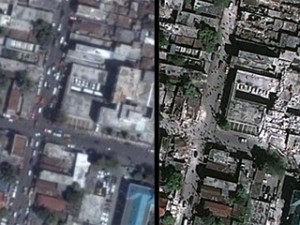
Google Maps updates with new Haiti pics: Hours-old satellite images show destruction

Google has released a new KML overlay — tech speak for map layer — that includes fresh images of Port-au-Prince.

According to GeoEye , the satellite imagery company that provided the photos, they were taken at 10:30 a.m. yesterday from a satellite 423 miles up.

By toggling the new image layer on and off, it’s easy to compare what the city looked like before the earthquake with the way it looks now.

Aside from the obvious destruction, one of the most striking features of the new images is the large number of presumably homeless people in the streets of the ruined neighborhoods.

Click here to see the new images in Google Maps.

Phi Beta Iota: Finally, but kudos never-the-less.  This should always be the first thing done, perhaps with a global arrangement that has regional cost-sharing in place and can use military air breathers where commercial are not immediately available, but respecting Google's software and end-user delivery offering.  There is still the matter of getting to shared Spacial Reference Systems (SRS).  This could and should be used to “plot” Twitter messages that identify need, and in the back office, matching RapidSMS messages that can be aggregated to fund need resolution.

Where Are Haiti Earthquake Relief Funds Going?

Millions in donations have been raised since the earthquake in Haiti on Tuesday, but where is the money going?

Like Wyclef Jean's Yele Haiti which is urging people to text “Yele” to 501501 to donate $5 to the cause — which has raised more than $2 million so far — many other relief organizations have used mobile messaging to quickly gather funds.

Phi Beta Iota: What is most interesting about this is the fact that fund-raising (financial incentive for the organizers that take a 5% to 50% “cut) is very well developed and moving money, while the other end (requirements definition, logistics coordination, and “by household” delivery” is NOT developed at all.  This is a good start toward the Global to Local Range of Needs Table, when that is developed, this will “flip” in that people will give for SPECIFIC itemized needs, not as a leap of faith in intermediaries that generally do NOT deliver full value.

What is LACKING is a single trusted Multinational Decision Support Center with both regional and global non-profit “cachet” as well as two-way reachback into all eight tribes of all nations, that can be the single point orchestrating the receipt and integration of all information in all languages in near-real-time, and the trusted point for validating both needs and the resolution of needs through the application of fundss.

See Also:

Continue reading “Journal: Haiti Public Intelligence Emergent”

Worth a Look: “Our Revolting Elites” & Dumb Public

Cultural Intelligence, Worth A Look
Full Op-Ed Online

Phi Beta Iota: This is the section that got our attention:

The information revolution, he said, has not raised the level of public intelligence. It is no secret, he continued, “that the public knows less about public affairs than it used to know. Millions of Americans cannot begin to tell you what is in the Bill of Rights, what Congress does, what the Constitution says about the powers of the presidency, how the party system emerged or how it operates. A sizeable majority, according to a recent survey, believe that Israel is an Arab nation.”

Our Revolting Elites

by J. R. Nyquist

Weekly Column Published: 1.15.2010

In 1995 Christopher Lasch came out with The Revolt of the Elites and the Betrayal of Democracy. The introduction was titled “The Democratic Malaise” and included chapters like “Does Democracy Deserve to Survive?” and “The Lost Art of Argument.” The threat to our civilization, said Lasch, does not come from the masses. The threat comes from the elite.

. . . . . . .

According to Lasch, there are far worse problems facing America than racism: “the crisis of competence; the spread of apathy and a suffocating cynicism; the moral paralysis of those who value ‘openness' above all.”   . . .

Continue reading “Worth a Look: “Our Revolting Elites” & Dumb Public”

Journal: Reality Check on Afghanistan & Gaza

Cultural Intelligence, Peace Intelligence
Chuck Spinney

If you  think the US/NATO occupation of Afghanistan is protecting the Afghan people, and especially the rights of women, think again.

Chuck

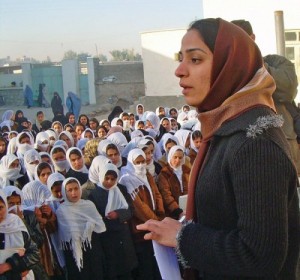
Afghanistan’s soft-spoken rebel The voice from the back of the room

Tiny but powerful: Malalai Joya speaks and the women listen

Malalai Joya is only 32, but she has been an exile, a refugee, a teacher of girls in the Taliban’s Afghanistan, and now that country’s youngest member of parliament. She’s still on the run though, and still threatened with assassination

“After 9/11, they occupied my country under the banner of women’s rights and human rights and democracy, but they bring into power this photocopy of the Taliban,” she told supporters in New York. “That’s why today, the situation in Afghanistan is a disaster.”

And on another front….

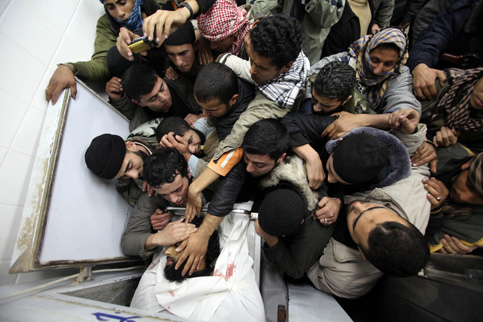
A second Gaza war around the corner?

Israel's recent aggressions look ominously like the 4 November 2008 attack on Gaza, which killed six persons and shattered the four-month-long truce meticulously respected by Hamas. Predictably, Hamas and other factions retaliated for that Israeli provocation and then Israel used their response to justify its massacre of 1,400 people in Gaza this time last year.

Israel's recent assassinations of Palestinian resistance activists look ominously like the aggression that preceded last winter's attacks in Gaza. (Wissam Nassar/MaanImages)

Journal: MILNET Selected Headlines

04 Inter-State Conflict, 05 Civil War, 06 Genocide, 07 Other Atrocities, 08 Wild Cards, 10 Security, Cultural Intelligence, Military, Peace Intelligence

British Search And Rescue Team Turned Away From Port-Au-Prince

There were reports that the airport at Port-au-Prince had run out of aviation fuel, one of the factors that is understood to have led the US military to close it. . . . The scene at Santo Domingo airport was one of chaos, uncertainty and often despair for aid workers.

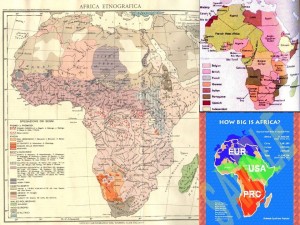
Ethno-Colonial BIG Africa

Phi Beta Iota: Lesson learned by the USMC the hard way (as of 1992):  need Forward Area Refueling Points (FARP) in the FIRST lift.

U.S. Army Africa Boss: ‘I Feel Like The Lone Ranger…'

“Africa’s not high on America’s priority list these days.

Sometimes I feel like the Lone Ranger trying to get people to bring resources to bear out here.”

I had pointed out in an earlier interview that U.S. Army Africa and Africa Command in general are notably absent from the wars in Democratic Republic of Congo and Sudan, conflicts Garrett said are “currently the world’s two deadliest.”

Full Story Online

For Israel, a Reckoning

A new global movement is challenging Israel's violations of international law with the same strategies that were used against apartheid

Phi Beta Iota: Israeli influence on the US Government has been as bad as post-war Nazi influence on the Cold War ubbas–both have spawned policies that have murdered and displaced millions, with attendant atrocities.

Pakistan: U.S.-Backed Broadcast Begins

Phi Beta Iota: Too little too late and they almost certainly have no idea about the history of the Pashtun Peace Army.

Full Story Online

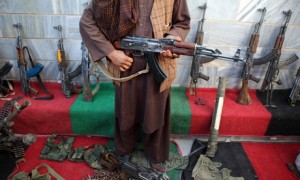
Taliban steps up violence in Afghanistan

Recent Pakistani military operations in insurgent strongholds in Pakistan also have driven greater numbers of Pakistan-based Taliban back into Afghanistan, the officer said.

UK plans ‘trust fund' to woo Taliban fighters

Phi Beta Iota: Turn in one weapon, get enough money for two…or go enlist and training and food along with a new weapon.  Money corrupts and it is not a substitute for Whole of Government Stabilization & Reconstruction accomplishments.

How To Apply ‘Smart Power' In Yemen

Developing a coherent strategy focused on the right objectives is important, and hard to do. The country team in any normal American embassy (like the one in Sana) does not have the staff, resources or experience to do so. The limited American military presence in Yemen does not either. Despite years of talk about the need to develop this kind of capability in the State Department or elsewhere in Washington, it does not exist. It must be built now, and quickly.

Phi Beta Iota: Start with Tony Zinni's The Battle for Peace and implement Robert Steele's DoD OSINT-M4IS2  Strategy along with Whole of Government Intelligence (Decision-Support).

Journal: America’s Debt to–and Incapacitation of–Haiti

07 Other Atrocities, 08 Wild Cards, Cultural Intelligence, History, IO Sense-Making
Chuck Spinney

How easily we forget the balance books of history.   Below are two pieces, one from the colonial era written in 2006, the other from the recent “neo-colonia” era in which the author examines the specifics of the Clinton Administration's policies toward Haiti.  Chuck

Full Story Online

America's Historic Debt to Haiti

By Robert Parry  February 10, 2006

As Haiti intrudes again on the U.S. consciousness with a new round of troubled elections, Americans see a violent, backward, poverty-stricken country run by descendants of African slaves. There are feelings of condescension mixed with a touch of racism.

But what few Americans know is that they owe this Caribbean nation a profound historical debt. Indeed, perhaps no nation has done more for the United States than Haiti and been treated as badly in return.

If not for Haiti – which in the 1700s rivaled the American colonies as the most valuable European possession in the Western Hemisphere – the course of U.S. history would have been very different. It is possible that the United States might never have expanded much beyond the Appalachian Mountains.

Full Story Online

Before and After the Quake

The Incapacitation of Haiti

By ASHLEY SMITH   January 14, 2010

Why were 60 percent of the buildings in Port-au-Prince shoddily constructed and unsafe in normal circumstances, according to the city's mayor? Why are there no building regulations in a city that sits on a fault line? Why has Port-au-Prince swelled from a small town of 50,000 in the 1950s to a population of 2 million desperately poor people today? Why was the state completely overwhelmed by the disaster?

To understand these facts, we have to look at a second fault line–U.S. imperial policy toward Haiti. The U.S. government, the UN, and other powers have aided the Haitian elite in subjecting the country to neoliberal economic plans that have impoverished the masses, deforested the land, wrecked the infrastructure and incapacitated the government.

The fault line of U.S. imperialism interacted with the geological one to turn the natural disaster into a social catastrophe.

Continue reading “Journal: America's Debt to–and Incapacitation of–Haiti”

Journal: Critique of Government Banking Policies

03 Economy, Civil Society, Commerce, Commercial Intelligence, Ethics, Government
Chuck Spinney

President Obama has a rapidly vanishing opportunity to achieve historical greatness as a trust buster by breaking up the banks.  Trust busting is an almost risk free path to lasting respect — Teddy Roosevelt's honored place in American history is more a result of his trust busting than his gross imperialism.

In the attached article, my good friend Marshall Auerback explains why Obama's faux populism attacks the symptom rather than the disease now infecting our financial system.

My guess is that Obama's “reform” policies — i.e., change we can believe in — will not even be smart politics in the long run, because at the end of the day, suckering the Tea Baggers (not to mention the so-called progressives) with phony populist appeals, while supporting cosmetic banking reforms, will alienate just about everyone except the oligarchical elites benefitting from his protectionist policies.  In this sense, Mr. Obama is rapidly becoming just another Bill Clinton, a highly intelligent, self-made man of the people who squandered his opportunity for greatness on the altar of short-sighted service to the rich and powerful.

Chuck Spinney

Full Story Online

Attack the Disease, Not the Symptoms

Marshall Auerback Jan 13,2010

Obama still doesn’t get it on how to rein in Wall Street.

Conceptual confusion remains at the heart of President Obama’s economic policy.

Journal: Second Amendment versus “Police Pirvacy”

07 Other Atrocities, 09 Justice, 11 Society, Civil Society, Collective Intelligence, Cultural Intelligence, Ethics, Law Enforcement, Peace Intelligence, Real Time
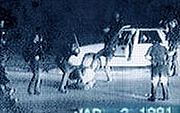
Rodney King Video Wiki Page

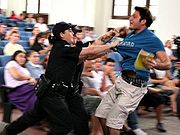
Police fight cellphone recordings: Witnesses taking audio of officers arrested, charged with illegal surveillance

Crooked cops in Boston arresting citizens for recording misconduct with cellphones

Don't Tase Me Bro Wiki

Phi Beta Iota: The police will not only lose this one, we anticipate that one day the Second Amendment will apply to radar detectors and other forms of defense against state excesses.  Certainly the public needs to take its right to be armed–both with weapons and with hip-pocket recording devices, with the utmost seriousness.

Three observations:

1.  Society has forgotten how to be civil at the same time that government has forgotten how to govern (satisfy most of the people most of the time, deal humanely with the rest).

2.  Police have become increasingly militarized and the 9/11 pork has made them more so, at the same time that the FBI and similar forms of authority have forgotten how to do arrests without a SWAT team crashing through the door first.

3.  If you tell the truth and act according to the truth, such counter-surveillance is utlimately beneficial to the truth teller rather than the abuser.

Ultimately, in our view, public use of public technologies to create public intelligence about police abuse and government waste and corporate externalizations of cost (Taiwan now pays for citizen cell recordings of pollution discharges), will be a beneficial means of restoring the public's power over “it's” police forces.