WikiLeaks Mindset Growing Far & Wide

Civil Society, Corruption, Ethics, Government, Media, Military, Open Government, Secrecy & Politics of Secrecy

(text fr newsletter)
Get used to the WikiLeaks mindset
“The hacker generation is now employed by government, the military and corporate America, writes George Smith, a senior fellow at GlobalSecurity.org.”

Workforce: Get used to the WikiLeaks mindset

  • By George Smith
  • Jan 26, 2011

George Smith is a senior fellow at GlobalSecurity.org and a writer and commentator on the science and technology of national security.

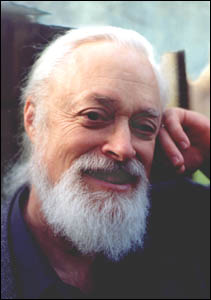
Back in the early 1990s, I edited an electronic newsletter that dealt with the culture of amateur virus writers — hackers who wrote mobile malware. Julian Assange was a subscriber. This is only to illustrate Assange's bona fides as someone from the original world computer underground, a place where one of the driving philosophies was to reveal the secrets of institutional power.

Once confined to what was considered a computer geek fringe, that ideology is now entrenched. It's no longer an outsider mindset, and it hasn't been for a long time. Now it's inside, with its originators entering middle age. And younger adherents of the philosophy are coming along all the time.

They're everywhere — employed by government, the military and corporate America. And because we have come to the point that the United States is considered by some to be a bad global actor — whether you share that point of view or not — the government is faced with a problem it cannot solve. Its exposure is thought by many to be deserved.

Continue reading “WikiLeaks Mindset Growing Far & Wide”

Event: 16-17 Feb, NYC, Intelligent Infrastructure hosted by The Economist

03 Economy, 11 Society, Academia, Civil Society, Commerce, Government, Media, Non-Governmental

From their website: “The Economist believes that human progress relies on the advancement of good ideas. The Ideas Economy brings together top thinkers from around the world, and you, to discuss and debate the most important ideas of our time.”
Comment: “..the most important ideas of our time.” Cost: between $595-$1,595 (+$9.95 fee). Why not have a more affordable entrance fee if the ideas are the most important? At least stream the event live for a very affordable fee (or free).

event info

Speakers:
+Vivek Kundra – Chief Information Officer US
+Frank Gehry – Partner of Gehry Partners
+Nicholas Negroponte – Founder/Chairman of One Laptop per Child
+Richard Newell – Admin U.S. Energy Info Admin
+Henry Cisneros – Chairman CityView
+Judith Rodin – President The Rockefeller Foundation
|
Programme/Agenda

Related:
+ Representatives of The Economist Magazine Have Attended Nearly Every Bilderberg Meeting Since 1978
+ World Economic Forum live stream

Twitter as Psychiatric Patient Predicting Stock Market 3-4 Days in Advance w/86.7 % Accuracy

03 Economy, Academia, Civil Society, Collective Intelligence, Commerce, Mobile, Technologies, Uncategorized

Twitter Can Predict the Stock Market

  • By Lisa Grossman
  • October 19, 2010

The emotional roller coaster captured on Twitter can predict the ups and downs of the stock market, a new study finds. Measuring how calm the Twitterverse is on a given day can foretell the direction of changes to the Dow Jones Industrial Average three days later with an accuracy of 86.7 percent.

“We were pretty astonished that this actually worked,” said computational social scientist Johan Bollen of Indiana University-Bloomington. The new results appear in a paper on the arXiv.org preprint server.

Bollen and grad student Huina Mao stumbled on this computational crystal ball almost by accident. Earlier studies had found that blogs can be used to gauge public mood, and that tweets about movies can predict box office sales. An open source mood-tracking tool called OpenFinder sorts tweets into positive and negative bins based on emotionally charged words.

But Bollen wanted to build a more nuanced emotional barometer. He used a standard psychology tool called the Profile of Mood States, a quick questionnaire that is used frequently in pharmaceutical research or sports medicine.

The original questionnaire asks people to rate how closely their feelings match 72 different adjectives, including “friendly,” “peeved,” “active,” “on edge” and “panicky,” and uses the responses to measure mood along six dimensions: calmness, alertness, sureness, vitality, kindness and happiness.

Continue reading “Twitter as Psychiatric Patient Predicting Stock Market 3-4 Days in Advance w/86.7 % Accuracy”

Short Videos – Eye-opening, heart-opening, mind-opening, amazing

Civil Society, Collective Intelligence, Cultural Intelligence, Reviews (DVD Only), TED Videos, YouTube
Tom Atlee

Dear friends,

Sometimes when this work seems too hard, someone will send me a video link… and I'll suddenly find myself bathed in one more reason why it is worth pouring so much of life into creating a decent, joyful, healthy society.

There is so much going on in the world that is worth preserving, so much worth celebrating, so much worth nurturing.  And, of course, most of it is not on videos.

But a lot of it is…

I thought I'd take a moment to share some of my favorites.  Most of them are 2-10 minutes long.  I've marked the longer ones.

Coheartedly,
Tom

All Links with Descriptions Below the Line

Continue reading “Short Videos – Eye-opening, heart-opening, mind-opening, amazing”

Building Democracy Amongst Corporate Personhood Rights, Powers, and Legal Fictions

04 Education, 09 Justice, Civil Society, Commerce, Corporations, Government, Videos/Movies/Documentaries

Womens International League for Peace and Freedom is pushing to turn back the Supreme Court ruling that gives corporations personhood and the freedom to spend unlimited money in political ads under freedom of speech. See Timeline of Personhood Rights and Powers from 1772-1996 (pdf)

Related:
+ Video: Transpartisan dialog on corporate power (Jan 21, 2011 on CSPAN3)
+ Resolution Calling to Amend the Constitution Banning Corporate Personhood Introduced in Vermont (Jan 22, 2011)
+ Following the Money a Year After Citizens United (Jan 19, 2011)
+ Video: The Corporation (23 parts on YouTube)
+ Links on a Smart Nation for Reform @PhiBetaIota

Transpartisan Dialog on Corporations

03 Economy, 07 Other Atrocities, 11 Society, Advanced Cyber/IO, Civil Society, Collective Intelligence, Commerce, Corporations, Power Behind-the-Scenes/Special Interests, Reform
Michael Ostrolenk Recommends...

Transpartisan dialog on corporate power: Americans as citizens, consumers and employees

I hosted a transpartsian dialog with Lisa Graves, Tim Carney, Arnold Kling and Dean Baker at the “Movement for the People.” conference in Washington DC on January 21st, 2011.  It was quite enjoyable.

Read full report….

See CSPAN3 video here

45 Social Entrepreneurs Showcase at “Unreasonable Finalist Marketplace”

01 Agriculture, 01 Poverty, 02 Infectious Disease, 03 Economy, 03 Environmental Degradation, 04 Education, 05 Energy, 07 Health, 11 Society, 12 Water, Academia, Budgets & Funding, Civil Society, Commerce, Gift Intelligence, microfinancing, Technologies
Explore the projects

http://marketplace.unreasonableinstitute.org

January 20, 2011

The Unreasonable Institute Empowers the Public to Choose the Next Wave of High-Impact Social Entrepreneurs

Global donations will determine which entrepreneurs gain admission to esteemed mentorship program

BOULDER, Colo.–(BUSINESS WIRE)–Starting Jan. 20, 45 social entrepreneurs will showcase their ventures in an online platform called the Unreasonable Finalist Marketplace (http://marketplace.unreasonableinstitute.org/). For 50 days, people from around the world are invited to vote with their wallets on the most viable ventures. The first 25 of the 45 finalists to raise $8,000 in the Marketplace will earn access to the highly acclaimed six-week mentorship program at the Unreasonable Institute. At the Institute, these social entrepreneurs undergo rigorous training sessions, including personal and entrepreneurial skill development, intensive workshops and hands-on guidance from leading thought leaders, innovators, entrepreneurs and investors.

The 45 finalists were selected from more than 300 applicants in 60 countries. Each applicant had to present a financially self-sustaining venture that has the ability to scale to serve the needs of at least 1 million people and demonstrates customer validation through sales or pilots. The finalists this year include a Chinese engineer with a prototype for waterless composting toilets; a 2010 CNN Hero from Kenya who has distributed over 10,000 solar lanterns; and an American inventor with a water purification system that can roll up to the size of a ruler.

Continue reading “45 Social Entrepreneurs Showcase at “Unreasonable Finalist Marketplace””

noble gold