Paul Jones arrived in a Chevy pickup, dust clouds billowing as he crossed the desert. He had set out soon after first light from his base in southern Afghanistan, an encampment that, thanks to his employer’s logistics savvy, had an ample supply of Pabst Blue Ribbon. Almost everything there had been sent by sea from California or Oregon, and then trucked up from Pakistan.
The 63-year-old, khaki-clad engineer came that February morning to observe a massive development project aimed at transforming the valley along the Helmand River into a modern society.
Irrigation canals would feed farms that would produce so much food that the country would export the surplus for profit. New schools, modern hospitals and recreation centers would rise from the sand. So, too, would factories, fed by electricity from a generator at a dam upriver. Jones had seen a similar transformation near his home on the outskirts of Sacramento, and he was certain it would materialize here, too. In the desert expanse, he saw “the beginning of a new civilization — a new way of life abounding in the riches of worthy endeavor.”
My good friend Pierre Sprey took issue with my characterization of Steven Walt's critique of US grand strategy as being excellent subject to two omissions. Attached herewith are Pierre's comments — they are spot on, and I stand corrected on my characterization of “excellent” … or perhaps more accurately … I stand clearly and fairly skewered. 😉
Chuck Spinney
Cap Ferrat, France
Comments by Pierre Sprey:
Chuck,
Although I appreciate that Mr. Walt's heart is in the right place–particularly regarding his admirably staunch opposition to the malign influence of the Israelis, the neocons and “W”–his essay's concept of US grand strategy for the last two decades is just as shallow as the crap from the NYT, the WSJ, the Post and the Council on Foreign Relations. He commits the two fundamental errors common to nearly all foreign policy pundits, errors that inevitably reduce their beard-stroking discussions of “grand strategy” to silliness:
1. He assumes that the US has a foreign policy or a grand strategy when in fact it has none. The US government's actions, like every other country's, are dominated by its domestic politics. And those politics dominate every move made with regard to other countries.
2. He ignores the three most powerful–and most permanent–domestic influences on America's actions abroad: Big Oil, Wall Street and the MICC. Anybody who ignores these three in recounting U.S. actions abroad is either a) hopelessly out of touch, or b) is serving the interests of the defense, financial or oil establishments, or all three.
Aside from these two crippling errors in his reasoning, Mr. Walt's fulsome praise for the success of the USG's “offshore balancing”–that is, the Big Oil (and MICC) inspired policy of setting Iran and Iraq at each other's throats since the 1940s–shows either profound ignorance or profound Kissingerian cynicism.
One last piece of silliness in the Walt essay, quite common to journalists and historians seeking a “hook” for their American Empire story, is the idea of the August 2, 1990 “turning point”, a date that marks the beginning of the decline in our allegedly successful empire. Such hooks only mask the inescapable spread of rot within empires, usually starting at birth.
With Mr. Walt's help, I am coming to believe all public discussions of grand strategy should be greeted with howls of derisive laughter.
There is a very talented author, journalist, and speaker, Mike Southon, who publishes in the Financial Times. One of his articles, “Perfect Pitch,” 7 March 2009 was instrumental in crafting the below one-page “pitch.” Mike's four web sites:
Industrialized agriculture, and industrialized corruption in defense. Nobody is serious about creating safe, affordable, sustainable solutions for anything, from agriculture to defense.
Phi Beta Iota: Holistic strategic analytics with embedded full life cycle “true costs” is a non-negotiable first step toward global hybrid governance, with or without governments.
not to be confused with Phi Beta Iota the Public Intelligence Blog
Ex-CIA official sounds alarm about hackers’ next targets (CNN):
The former director of the CIA’s Counterterrorism Center raised concerns Wednesday about an impending “code war” in which hackers will tamper not just with the Internet but with technology that runs real-world infrastructure.
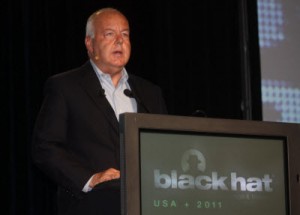
Somewhat fittingly, Cofer Black’s keynote talk at the Black Hat hacker conference at Caesars Palace in Las Vegas was interrupted by a literal alarm: flashing lights, sirens and the whole bit.
“Attention, please. Attention, please,” a robotic woman’s voice said repeatedly as Black smiled, apparently confused. “We are currently investigating the alarm signal you are hearing. Please remain calm.”
After a pause and some laughs from the audience, Black kept going.
Phi Beta Iota: He does not seem to realize he was put on the program as an inside joke, or that we all knew in 1990-1994 that cyber-space was going to be the next combat zone. What Mr. Black does not appear to understand, is that hackers are the good guys, while politicians, bureaucrats, and vendors who routinely betray the public trust are the bad guys. He is out of touch with both history and reality. He lives in a world of lies, not the world of truth. Only in the world of truth can problems be fully understood and intelligently addressed. Here above the line are one simple graphic and the most recent exposure of the cyber-scam that is on-going between ignorant Contracting Officers and equally ignorant vendors. Below the line are more references.
By David Greenberg, Washington Post Outlook, 29 July 2011
David Greenberg is a professor of history and of journalism and media studies at Rutgers University. He is a fellow at the Woodrow Wilson International Center for Scholars for the 2010-11 academic year.
EXTRACTS
“Age of Greed” chronicles how Americans ended up with the highly unregulated financial system that produced the meltdown of 2008 and the fallout that lingers three years later. What’s most novel about the book, which relies heavily on other secondary accounts, is that unlike other recent treatments of the financial crisis, it traces the origins of the problem not to the Bush or Clinton or even Reagan years, but all the way to the late 1960s.
. . . . . .
The real scandal revealed by Madrick’s important book is not the well-known tales of dastards such as telecom analyst Jack Grubman or Internet stock promoter Frank Quattrone, but the more elusive — and more consequential — story of how the government came to abdicate this supreme responsibility.