SANYA, Hainan, April 14 (Xinhua) — Leaders of five BRICS countries, Brazil, Russia, India, China and South Africa, released on Thursday a joint document, Sanya Declaration, at the BRICS Leaders Meeting in south China's resort city of Sanya.
The following is the full text of the document.
Sanya Declaration
(BRICS Leaders Meeting, Sanya, Hainan, China, 14 April 2011)
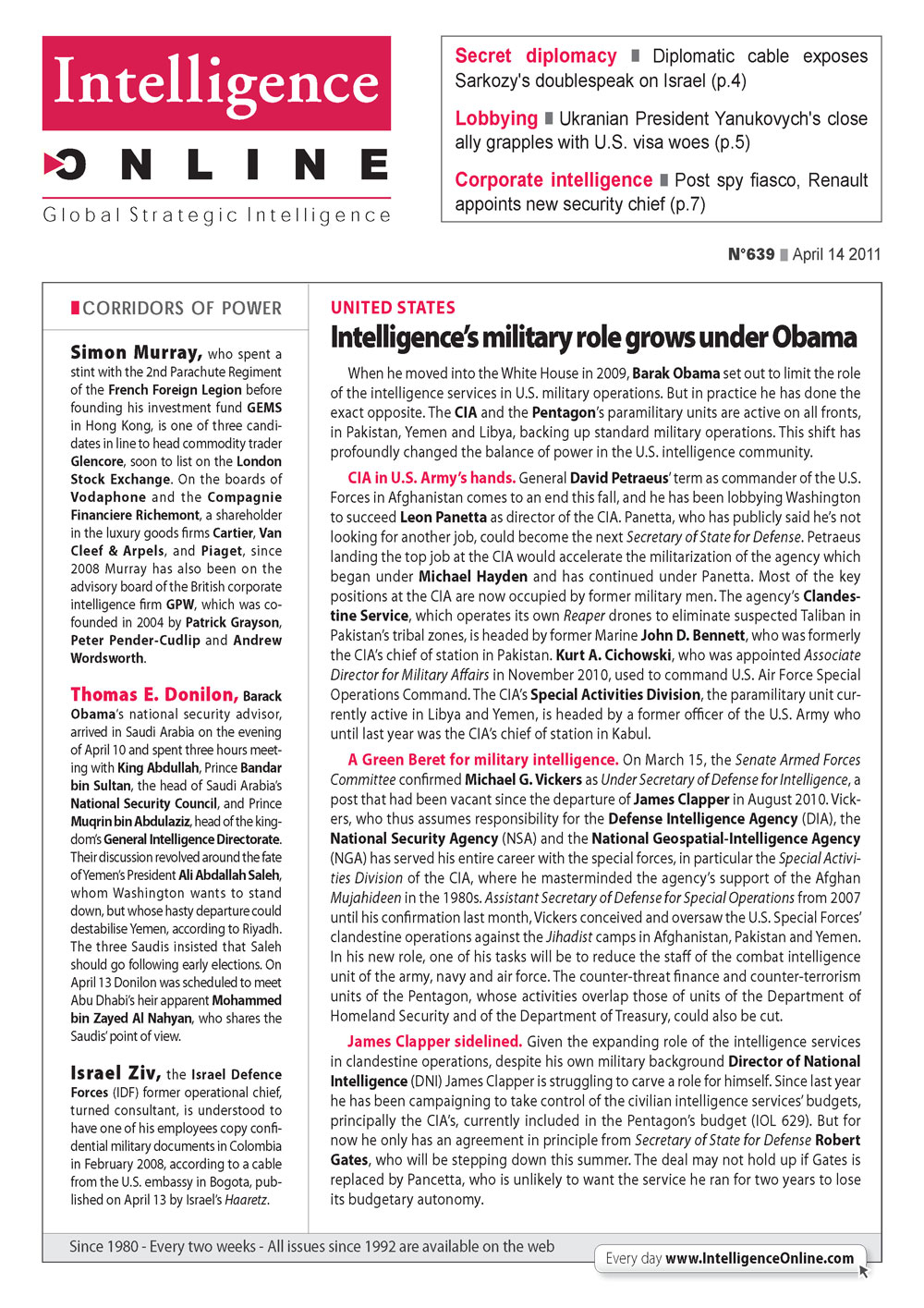
Phi Beta Iota: Posted with permission. We strongly recommend the Intelligence Online offerings. We have received a number of commentaries around this topic, and they boil down to the situation being much, much worse than depicted here:
2. Nose-dive to the lowest common denominator, completely destroying regional and country expertise and having no linguistic capabilities or grasp of history and culture (CIA, DIA)
3. Completely out of control procurement, rotten requirements definition, no full life-cycle planning (e.g. buy collection, do not buy processing), and generally disconnected from reality (NSA/Cyber-Command)
4. We are reminded that there are 1,200 distinct “organizations” wasting money and going through the motions on counter-terrorism–meanwhile, the Department of Homeland Security gropes little girls, confiscates aftershave, and is generally on the underside of institutionalized tyrannical idiocy.
That made me think of the Emergent Democracy paper that Joi Ito authored collaboratively (2001-2003) with several other folks (including Ross Mayfield and I) a few years ago. Digging into my files I found the attached marked up version… it aligns pretty well with some of the discussions here.
There's been a lot of interesting thought about the Internet and the web as platform for enhanced social activity. That idea of “finding our tribes and ourselves” was a core aspect of FringeWare, the company/community that Paco Nathan and I started in 1991. We realized that like-minded fringe thinkers and doers were scattered everywhere, and the Internet gave us a platform where they could find each other and form community. All it took was an email list and a compelling concept (“fringeware”) to catalyze that community.
“Declaration of Interdependence” sounded familiar… I did some searching…
I continue to be focused on the future of the Internet and aware of divergent paths. In the later 2000s, following a period of digital and media convergence and given broad adoption of evolving high speed (broadband) network connectivity, the Internet has become an environment for mixed media and marketing. The Internet is increasingly centralized as a platform that serves a global business engine. It’s a mashup of business to business services and business to consumer connections, a mashup of all the forms of audio, text, and video communication and media in a new, more social/participatory context: the faceless consumer now has an avatar, an email address, and a feedback loop.
The sense of the Internet as a decentralized free and open space has changed, but there are still many advocates and strong arguments for approaches that are bottom-up, network-centric, free as in freedom (and sometimes as in beer), open, collaborative, decentralized. It’s tempting to see top-down corporate approaches vs bottom-up “free culture” approaches as mutually exclusive, but I think they can and will coexist. Rather than make value judgements about the different approaches, I want to support education and thinking about ethics, something I should discuss later.
Right now I want to point to a collaboration forming around the work of Venessa Miemis, who’s been curating trends, models, and projects associated with the decentralized Internet model. Venessa and her colleagues (including myself) have been discussing how to build a decentralized network that is broadly and cheaply accessible and that is more of a cooperative, serving the public interest rather than a narrower set of economic interests.
I’ll be focusing on these sorts of projects here and in my talks on the future of the Internet. Meanwhile, here are pointers to a couple of Venessa’s posts that are good overviews for what I’m talking about. I appreciate her clarity and focus.
Phi Beta Iota: A great deal of the credit goes to Doug Rushkoff, the originator of ContactCon, for whom Venessa Miemis (also a contributing editor here at Phi Beta Iota) works. Using Doug Rushkoff's social capital, and Venessa Miemi's inspired scouting on emergence, they have quickly become a hub for innovation and information sharing about the needed Autonomous Internet.
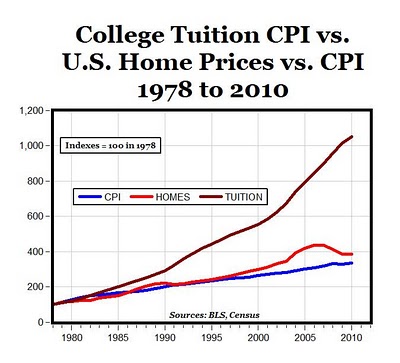
Peter Thiel (Paypal and other ventures) has been making some waves for his position that higher education in the US is the next bubble. In short, he's right. Given what we now have available in terms of tools, it should be possible to get an Ivy league education for $20 a month.
Instead we are getting a stagnant product that is so out of date that it doesn't deliver much social and economic value. Even worse: it's undergoing hyper-inflationary price increases.
. . . . . . .
The solution to this problem is to help create employment opportunities (like what we are doing with our open venture start-up) that don't use a degree as a gating mechanism. A solution that creates its own educational modules if needed (from scratch using modern tools and techniques). A solution that delivers something better than an Ivy league eduction and then backs it up with economic and social opportunities that exceed what you get in the global econonomic and social sprawl.
Fair warning: This article will piss off a lot of you.
I can say that with confidence because it’s about Peter Thiel. And Thiel – the PayPal co-founder, hedge fund manager and venture capitalist – not only has a special talent for making money, he has a special talent for making people furious.
. . . . . . .
Like the housing bubble, the education bubble is about security and insurance against the future. Both whisper a seductive promise into the ears of worried Americans: Do this and you will be safe. The excesses of both were always excused by a core national belief that no matter what happens in the world, these were the best investments you could make. Housing prices would always go up, and you will always make more money if you are college educated.
Like any good bubble, this belief– while rooted in truth– gets pushed to unhealthy levels.
. . . . . . .
But Thiel’s issues with education run even deeper. He thinks it’s fundamentally wrong for a society to pin people’s best hope for a better life on something that is by definition exclusionary.
. . . . . . .
Thiel’s solution to opening the minds of those who can’t easily go to Harvard? Poke a small but solid hole in this Ivy League bubble by convincing some of the most talented kids to stop out of school and try another path. The idea of the successful drop out has been well documented in technology entrepreneurship circles. But Thiel and Founders Fund managing partner Luke Nosek wanted to fund something less one-off, so they came up with the idea of the “20 Under 20″ program last September, announcing it just days later at San Francisco Disrupt. The idea was simple: Pick the best twenty kids he could find under 20 years of age and pay them $100,000 over two years to leave school and start a company instead.
Phi Beta Iota: Read the chapter “Paradigms of Failure” in ELECTION 2008: Lipstick on the Pig (EIN, 2008) to understand that the depth and breadth of the integrity failure in the USA. “Credentialling” is a form of top-down sub-prime scam, selling a credential instead of an education. As Thiel suggests, time for change at the top is long over-due.

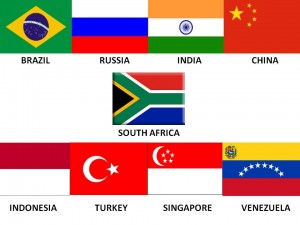 Full text of Sanya Declaration of the BRICS Leaders Meeting