Climate Change, HAARP, Process, Politics, Power

01 Agriculture, 03 Economy, 03 Environmental Degradation, 04 Education, 05 Energy, 07 Health, 07 Other Atrocities, 08 Proliferation, 11 Society, 12 Water, Advanced Cyber/IO, Cultural Intelligence, Key Players

“Remember than one one's conspiracy is another man's business plan.”

“Climate change (both sides) is all about politics.”

Phi Beta Iota: We are at the intersection of ideology, social conditioning, weak education, and the culmination of decades of power politics that have produced a severely retarded i.e. damaged collective psyche.  The collective intelligence movement can be regarded as a healing counter-cancer within this larger cancerous world non-brain.  The nuclear-tsunami in Japan is an opportunity for delving deeply into everything that can be known.  It is an opportunity to re-evaluate the known risks of nuclear power; to re-examine climate change from a holistic perspective including a rigorous look at all human processes that could be contributing to the environmental degradation of the Earth; and to establish an analytic model as well as a road-map for addressing both climate change and nuclear proliferation with the non-violent dissemination of knowledge.

Continue reading “Climate Change, HAARP, Process, Politics, Power”

Climate Change as a Culture-Information Challenge

01 Agriculture, 03 Economy, 03 Environmental Degradation, 05 Energy, 07 Health, 11 Society, 12 Water, Earth Intelligence, IO Sense-Making, Key Players

Study Says Climate Debate Is Largely Cultural

SustainableBusiness.com News, 03/17/2011

While debate on climate change often strikes a caustic tone, the real impediment to meaningful dialogue is that the two sides often talk past each other in what amounts to a “logic schism,” says a University of Michigan researcher.

Read more….

Continue reading “Climate Change as a Culture-Information Challenge”

Death Row Inmates Willing to Donate Organs are Rejected/Wasted

07 Health, 09 Justice, Waste (materials, food, etc)

Giving Life After Death Row

By CHRISTIAN LONGO
March 5, 2011

Salem, Ore. EIGHT years ago I was sentenced to death for the murders of my wife and three children. I am guilty. I once thought that I could fool others into believing this was not true. Failing that, I tried to convince myself that it didn’t matter. But gradually, the enormity of what I did seeped in; that was followed by remorse and then a wish to make amends.  I spend 22 hours a day locked in a 6 foot by 8 foot box on Oregon’s death row. There is no way to atone for my crimes, but I believe that a profound benefit to society can come from my circumstances.  I have asked to end my remaining appeals, and then donate my organs after my execution to those who need them. But my request has been rejected by the prison authorities. According to the United Network for Organ Sharing, there are more than 110,000 Americans on organ waiting lists. Around 19 of them die each day.

Continue reading “Death Row Inmates Willing to Donate Organs are Rejected/Wasted”

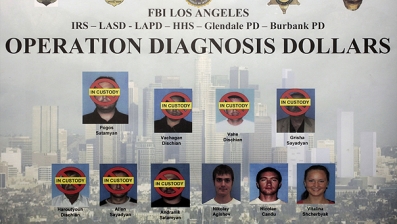
Most-Wanted List for Health Care Fraud

07 Health, Corruption, Law Enforcement

Government Launches Health Care Fraud Most-Wanted List

WASHINGTON — Health care fraud used to be a faceless crime — until now.

Medicare and Medicaid scams cost taxpayers more than $60 billion a year, but the average bank holdup is likely to get more attention. Seeking the public's help to catch more than 170 fugitive fraudsters, the government has launched a new health care most-wanted list, with its own website.  Read more…

Phi Beta Iota: What the government does in terms of fraud, waste, and abuse is VASTLY greater, resulting from a mix of ignorance and corruption.  It's a good idea–achieving full transparency for all records would put all citizen eyeballs on the mix and produce more corruption leads faster, better, cheaper.  What the government is not telling us is that the Connelly law firm has created a 15 company team led by Booz Allen that is about to take over “profit recovery” for the US Government across the entire health care industry–privateers with with civil and criminal authorities.  BAD IDEA and the natural outcome of the government not being able to do the right thing–competent employees and trusted information–so instead it does the wrong thing righter–gets bigger, more expensive, outsources more.

Americans Admire Military Personnel While Being Unaware & Uninterested in What They Do “In Our Name”

02 Diplomacy, 04 Education, 04 Inter-State Conflict, 06 Family, 07 Health, 07 Other Atrocities, 09 Justice, 10 Security, Civil Society, Corruption, Ethics, Government, Media, Military, Policy, Waste (materials, food, etc)

Troops Die Because of Their Country, Not For It

US admiration for its soldiers may be deep and widespread, but interest in what they are doing is shallow and fleeting

article

by Gary Younge
Published on Monday, January 31, 2011 by The Guardian

Most of the stories told about Benjamin Moore, 23, at his funeral started in a bar and ended in a laugh. Invited to testify about his life from the pews, friend, relative, colleague and neighbour alike described a boisterous, gregarious, energetic young man they'd known in the small New Jersey town of Bordentown since he was born. “I'll love him 'til I go,” his granny said. “If I could go today and bring him back, I would.”

Grown men choked on their memories, under the gaze of swollen, reddened eyes, as they remembered a “snot-nosed kid” and a fidget who'd become a volunteer firefighter before enlisting in the military. Shortly before Benjamin left for Afghanistan, he sent a message to his cousin that began: “I'm about to go into another country where they hate me for everything I stand for.” Now he was back in a flag-draped box, killed by roadside bomb with two other soldiers in Ghazni province.

Continue reading “Americans Admire Military Personnel While Being Unaware & Uninterested in What They Do “In Our Name””

Food speculation: ‘People die from hunger while banks make a killing on food’

01 Agriculture, 01 Poverty, 03 Economy, 07 Health, Civil Society, Commerce, Ethics, Money, Banks & Concentrated Wealth, True Cost

It's not just bad harvests and climate change – it's also speculators that are behind record prices. And it's the planet's poorest who pay
John Vidal Sunday 23 January 2011

article

Just under three years ago, people in the village of Gumbi in western Malawi went unexpectedly hungry. Not like Europeans do if they miss a meal or two, but that deep, gnawing hunger that prevents sleep and dulls the senses when there has been no food for weeks.

Oddly, there had been no drought, the usual cause of malnutrition and hunger in southern Africa, and there was plenty of food in the markets. For no obvious reason the price of staple foods such as maize and rice nearly doubled in a few months. Unusually, too, there was no evidence that the local merchants were hoarding food. It was the same story in 100 other developing countries. There were food riots in more than 20 countries and governments had to ban food exports and subsidise staples heavily.

The explanation offered by the UN and food experts was that a “perfect storm” of natural and human factors had combined to hyper-inflate prices. US farmers, UN agencies said, had taken millions of acres of land out of production to grow biofuels for vehicles, oil and fertiliser prices had risen steeply, the Chinese were shifting to meat-eating from a vegetarian diet, and climate-change linked droughts were affecting major crop-growing areas. The UN said that an extra 75m people became malnourished because of the price rises.

Continue reading “Food speculation: ‘People die from hunger while banks make a killing on food'”