(From YouTube) How Stanford & the CIA/NSA Built the Valley We Know Today, presented by Steve Blank.
Silicon Valley entrepreneur Steve Blank will talk about how World War II set the stage for the creation and explosive growth of Silicon Valley, and the role of Frederick Terman and Stanford in working with government agencies (including the CIA and the National Security Agency) to set up companies in this area that sparked the creation of hundreds of other enterprises.
Steve Blank spent nearly 30 years as founder and executive of high tech companies in Silicon Valley, most recently the enterprise software firm E.piphany. He has been involved in or co-founded eight Silicon Valley startups, ranging from semiconductors to video games, and personal computers to supercomputers. He teaches entrepreneurship at U.C. Berkeley's Haas School of Business, Columbia University and Stanford's Graduate School of Engineering.
This PressTV bit with me was recorded at 2:30 pm New York time yesterday (22 Aug 2011). At that time, I questioned the veracity of the claimed capture of Gadaffi's sons and of rebel control of the city of Tripoli. It turns out I was right.
No, I don't have a crystal ball – just good contacts on the ground who don't lie or hold their tongues when they see horrible wrong being done. NATO – that's Obama to the apologists – has done everything to keep this information from you, but the truth will out!
Phi Beta Iota: US Information Operations (IO) includes Pyschological Operations (PSYOP, now under a new name, same mindset, which is to deceive rather than to promulgate the truth). It has improved since its signal success in sending Iraqi troops home rather than having to deal with their surrender. What we are seeing in relation to Libya, apart from the impeachable crimes of pilots, generals, Congress, and the White House, is a major IO/PSYOP campaign that is driven by Wall Street and Big Oil, not by the public interest. Interestingly, this is also the first time that the truth is being crowd-sourced in a moderately effective manner, suggesting that in the future any IO/PSYOP campaign that is less than truthful will be outed in quick time.
Phi Beta Iota: The respective press–those trapped in a hotel in Tripoli and those embedded with the rebels–are seeing only what they are allowed to see. Apart from Patrick Meier, Arno Reuser and a few others, no one is actually putting together “ground truth” based on widely scatted Twitter and other forms of communication. The West sees Libya as oil, water, and gold. The Africa Union has failed to see the urgency of protecting its interest in all three.
My colleague Robert Soden was absolutely right: Tomnod is definitely iRevolution material. This is why I reached out to the group a few days ago to explore the possibility of using their technology to crowdsource the analysis of satellite imagery for Somalia. You can read more about that project here. In this blog post, however, is to highlight the amazing work they’ve been doing with National Geographic in search of Genghis Khan’s tomb.
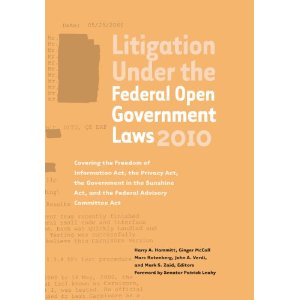
5.0 out of 5 stars Critical USEFUL Reference, Handbook, Citizen Manual,August 22, 2011
I'm exploring a major campaign to expose illegal actions across the Defense Office of Hearings and Appeals and the Defense Intelligence Agency in particular, and in talking to the Electronic Privacy Information Center (EPIC) leadership got a chance to understand just how vital and USEFUL this guide is.
Senator Patrick Leahy, co-sponsor of the OPEN Government Act of 2007, and many others are on record as considering this the single most indispensable tool in any citizen's toolkit.
For myself, having seen the capricious, arbitrary, and often unethical and even abusive manner in which DIA Personnel “cooks the books” and manipulates job announcements and screening decisions, and having been personally privy to enormous abuse by the Director of the Defense Office of Hearings and Appeals and a specifc group of his subordinates, consider this manual essential to my own search for justice.
Although I will use it more to inform myself so I can assist the specialist lawyers in making the most of what I know in their probing inquires at DIA and DOHA, I certainly recommend it to any citizen that has a specific concern that is not getting a fair hearing.
I also recommend the publisher and experts that put it together, the Electronic Privacy Information Center (EPIC). Many folks do not realize that they have been one of the leading champions of open government, and have also been one of the leading champions in exposing fraud, waste, and abuse that has been concealed by secrecy.
The US Government, in my view, as a general observation, is out of control and no longer representative of We the People. This is the handbook for citizens to use in holding every branch of the federal government accountable for its misbehavior and its dereliction of duty in failing to represent the public interest as opposed to the interest of its very big stakeholders who are recipients of the tax dollar rather than contributors to the treasury of the Republic.
Arm yourself with this knowledge, and go into battle confident in the righteousness of your cause.
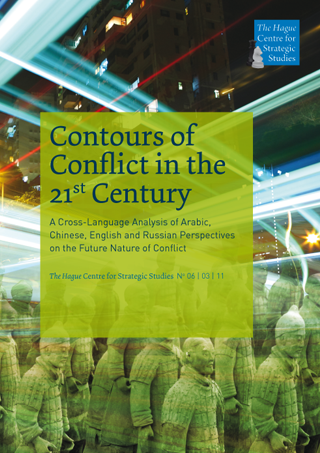
In gaining a better understanding of the future nature of conflict, it is therefore of the utmost importance to go beyond the traditional Western (English) language domain experts, and include views from regions across the world. The main purpose of the Future Nature of Conflict project is therefore to map and analyze global perspectives about the future nature of conflict published over the last two decades across four language domains – Arabic, Chinese, English and Slavic.
Click on Image to Enlarge
Phi Beta Iota: Finally! For years we have talked about the need to do multi-lingual perspectives and statements (e.g. charting Chinese, Vietnamese, Philippine, and Australian statements on the Spratley Islands going back 200 years). The protocol developed by this team must be –along with M4IS2–the future of strategic dialog, policy, acquisition, and operations. Any intelligence community that is unable to do this for any issue, any question, may as well go out of business.
Reading through the report is a real pleasure, with all sources being spelled out in footnotes that are actively linked to the original sources. This is a marvelous gift to scholars and practitioners at multiple levels.
But experts are wondering who is this opposition and who are the rebels fighting Ghadafi’s forces?
. . . . . . .
Marc Ginsberg, former U.S. Ambassador to Morocco, says the Libyan opposition is made up of different personalities and groups.
“It’s a sort of ‘Star War' assembly of characters and people who are clearly patriots, very decent people – I’m sure – journalists, opposition military officials who have broken with the regime, former diplomats – and then you’ve got Islamists,” said Ginsberg. “The Benghazi section of Libya was basically an opposition stronghold to Gadhafi and it has a very strong Islamist character to it. So while there are very good people who are part of this opposition coalition, we really can’t say that we know for sure what their capacity is to govern Libya.”
. . . . . .
“The 20-somethings are turning away from Islamists,” she said. “Now you do have an Islamic opposition and you always will have an Islamic extremism in the region. But this is not an Islamic movement. And it is not led by Islamists and it is not demanding the setting up of an Islamic Republic.
Item 1 is an insightful essay by Patrick Seale outlining the common characteristics of the political instabilities and revolutionary pressures now sweeping Europe and the Middle East. Although Seale uses the term Global Intifada to describe these instabilities, the term Intifada evolved out of the Palestinian struggle against occupation. He suggests the instabilities may be following a more general dynamic. The common causal factors he describes in the second paragraph also bring to mind a very loose comparison of the unrest unleashed in 2011 to the explosion of revolutions in 1848 across Europe. That many of Seale's common factors also exist in varying degrees in the United States makes one wonder why the politics of rage in the US remain confined to the right side of political spectrum. Item 2, “The World Consequences of US Decline,” is an equally insightful essay by Immanuel Wallerstein that suggests obliquely that this may be a temporary condition.