Review: Sleeping With the Devil: How Washington Sold Our Soul for Saudi Crude

5 Star, Capitalism (Good & Bad), Congress (Failure, Reform), Diplomacy, Empire, Sorrows, Hubris, Blowback, Executive (Partisan Failure, Reform), Impeachment & Treason, Intelligence (Government/Secret), Misinformation & Propaganda, Power (Pathologies & Utilization), Water, Energy, Oil, Scarcity

Amazon Page
Amazon Page

5.0 out of 5 stars Compelling Condemnation of Crude Corruption,

July 29, 2003
Robert Baer
Edit of 22 Dec to add links. Book is available in paperback.

Former spy Robert Baer, author of See No Evil: The True Story of a Ground Soldier in the CIA's War on Terrorism, makes the leap from intelligence reformist to national mentor with his new book, “SLEEPING WITH THE DEVIL: How Washington Sold Our Soul for Saudi Crude.” Indeed, his last sentence has the White House laying in the moonlight with its legs spread, lustfully eyeing the Saudi wallet on the bureau.

This is an extraordinary compelling work, not least because it provides detailed and documented discovery not previously available, of how the U.S. government has over the course of several administrations made a deliberate decision to a) not spy on the Arab countries, b) not collect and read open sources in Arabic, c) not attempt to understand the sub-state actors such as the Muslim brotherhood, despite a long history in which these groups commit suicide to achieve their objectives, including the murder of several heads of state.

Baer's most brutal points should make every American shudder: it is America itself that is subsidizing terrorism, as well as the corruption of the Saudi royal family. Baer's documented estimate is that $1 dollar from every barrel of petroleum is spent on Saudi royal family sexual misbehavior, and $1.50 of every barrel of petroleum bought by America ultimately ends up funding extremist schools, foundations, and terrorist groups.

Baer has “gone back in time” to document how all of this terrorism began in the 1970's, but despite its terrible local consequences (including the assassination of heads of state), was ignored by Washington as “a local problem.”

In one lovely real-life account, Baer, then duty officer at CIA while Iraq poised to invade Kuwait, found that the $35 billion per year system was useless, impotent. It came down to his calling the chief of station in Kuwait, who called a border guard, who lifted his binoculars and described the Iraqi tanks stopped for lunch. Baer says: “As I waited, I wondered: Is this what all that money for intelligence is buying us? A pair of binoculars?”

Baer joins with Robert Kaplan in concluding that democracy in Arabia would be an out and out disaster. The decades of Islamic extremism and anti-Americanism run amok cannot be resolved by democratic elections because the very people who most hate America will be elected. Baer observes that “strongman tactics” such as used by Saddam Hussein and by the Syrian leadership–including a “scorched earth” campaign against the internal terrorist groups–are a more stable “rule of law”. One can conclude that the US has made a mistake in destabilizing Iraq, and that the imposition of a democratic solution in Iraq will turn out to be vastly more difficult, and vastly more expensive, than the naive neo-conservatives understood when they set forth without bothering to establish who was in the majority within the population being “liberated.”

Saudi Arabia has bought and paid for all the White House and Congressional influence it needs. This is why the recently released 9-11 report contains no mention of the secret documentation of Saudi Arabian complicity in the terrorism that took 3,000 American lives. As Senator Shelby noted on PBS NewsHour recently (he has read the secret report), 93% of the blanked out pages, and specifically those on Saudi sponsorship of terrorism against America and other nations, is a “con man's” effort to avoid “embarrassment.” As the families of the 9-11 victims have said, “we need to know.”

Baer is extraordinary. He was a success as a case officer (a clandestine representive of America dealing with traitors and terrorists under conditions of extreme risk), and he has now become a sort of “Patrick Henry” of the modern era, warning us in clear and compelling terms that White House corruption (a non-partisan recurring corruption) and Saudi Arabia are the twin swords upon which this great Nation may yet impale itself.

Other books Americans need to read (or at least read the reviews):
Vice: Dick Cheney and the Hijacking of the American Presidency
Running on Empty: How the Democratic and Republican Parties Are Bankrupting Our Future and What Americans Can Do About It
Breach of Trust: How Washington Turns Outsiders Into Insiders
Legacy of Ashes: The History of the CIA
Fiasco: The American Military Adventure in Iraq
The Battle for the Soul of Capitalism: How the Financial System Underminded Social Ideals, Damaged Trust in the Markets, Robbed Investors of Trillions – and What to Do About It
Crossing the Rubicon: The Decline of the American Empire at the End of the Age of Oil
Rule by Secrecy: The Hidden History That Connects the Trilateral Commission, the Freemasons, and the Great Pyramids
9/11 Synthetic Terror: Made in USA, Fourth Edition

Vote on Review
Vote on Review

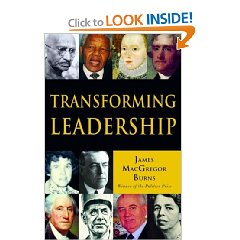
Review: Transforming Leadership–The Pursuit of Happiness

5 Star, Leadership

Amazon Page
Amazon Page

5.0 out of 5 stars Good News: It's Possible; Bad News: Not With Today's Lot,

July 26, 2003
James MacGregor Burns
Edit of 22 Dec 07 to add links.

This is quite a fine book. It will be especially valuable to that very rare breed of all-source intelligence analyst, those responsible for analyzing foreign leaders, and completely fed up with the sterile “biographic” analysis that lists job titles and honors. The author expands substantially on the very immature but promising field leadership analysis by discussing in detail the concepts and practices of “traits-based” or “value” leadership.

The author, himself already established as one of the best writers about leaders and leadership, breaks new ground in exploring the psychology of leadership, and creating a new inter-disciplinary and psychologically-rooted approach to understanding leadership at the national, organizational, and personal levels. He concludes that transformative leadership is all too rare; that it can redirect the fate of nations (Ghandi stands out as an exemplar), and that nurturing true transformative leadership rather than mere industrial-era task-mandating and monitoring leadership, is the core competency for navigating into the 21st Century.

The author is especially brutal when his idea are applied to the charismatic or ideologically-purified forms of leadership that pass for Presidential politics today. “At best, charisma is a confusing and undemocratic form of leadership. At worst, it is a form of tyranny.”

He spends a great deal of time examining the founding fathers of America and the process by which they defined both the Declaration of Independence and the Constitute, and his findings are quite remarkable (especially in light of recent attempts by Republicans in Texas and in the House of Representives to totally silence Democrats and override dissenting votes without voice):

1) The minority is an absolutely essential part of collective learning and the great dialog that leads to sound decisions. Repressing the minority is a prescription for disaster.

2) The pursuit of happiness, rather than property, was very deliberately selected by the founding fathers in order to focus on human values and collective learning, rather than property rights.

3) Rebellion from time to time is a feature, not a fault. “…the tree of liberty must be refreshed from time to time with the blood of patriots and tyrants” per John Adams. He specifically focuses on the importance of the loyal opposition as a means of enabling principled change by the majority in the cauldron of informed debate.

4) The right to abolish the U.S. Government is specifically reserved to the American people. The author notes that absolutist ideas inspire revolt, crowds have immeasurable power, and narrow ideologies with ritual tests of orthodoxy are an invitation to popular revolution.

After reviewing a number of leaders across history, the author quotes Roosevelt, who said “Government by organized money is just as dangerous as Government by organized mob” and then sets the stage for his concluding section, which suggests that leaders must embrace deep values that accept the happiness of the people as the ultimate challenge for the community, that they must empower followers rather than merely engage them, and that the ultimate challenge for all leaders of all nations and organizations is global poverty and the need to eradicate global poverty if billions are to find some semblance of happiness (and implicitly, stability that reduces the threat to the United States and Europe).

He quotes others in emphasizing that men in fear or want are not free men; that technology and money is not the answer to poverty, only values and liberation from fear and want, and–his final word, it the end it must be a “great people” rather than a “great man” that rises to the global challenge.

America! A Whole Earth. We can only imagine…

Bad Leadership:
Vice: Dick Cheney and the Hijacking of the American Presidency
Running on Empty: How the Democratic and Republican Parties Are Bankrupting Our Future and What Americans Can Do About It
Breach of Trust: How Washington Turns Outsiders Into Insiders
Sleeping with the Devil: How Washington Sold Our Soul for Saudi Crude

Good Leadership:
A Power Governments Cannot Suppress
One from Many: VISA and the Rise of Chaordic Organization
Leadership and the New Science: Discovering Order in a Chaotic World
The Tao of Democracy: Using Co-Intelligence to Create a World That Works for All
Society's Breakthrough!: Releasing Essential Wisdom and Virtue in All the People
THE SMART NATION ACT: Public Intelligence in the Public Interest

Vote on Review
Vote on Review

Review: Real Time–Preparing for the Age of the Never Satisfied Customer

5 Star, Best Practices in Management, Change & Innovation, Complexity & Resilience, Information Society, Intelligence (Public)

Amazon Page
Amazon Page

5.0 out of 5 stars Not Pedestrian at All–Packed with Insights,

July 10, 2003
Regis McKenna
Edit of 22 Dec 07 to add links.

Below is my review as planned before reading all the negative reviews….everyone brings their own baggage to any book. Following this short review, which was originally written for national intelligence professionals, I have added an addendum with a specific experience in France that illustrates why this book is valuable to anyone willing to take the time to reflect on its fundamentals.

————————

This may be one of the top three books I've read in the last couple of years. It is simply packed with insights that are applicable to both the classified intelligence community as well as the larger national information community. The following is a tiny taste from this very deep pool: “Instead of fruitlessly trying to predict the future course of a competitive or market trend, customer behavior or demand, managers should be trying to find and deploy all the tools that will enable them, in some sense, to be ever-present, ever-vigilant, and ever-ready in the brave new marketplace in gestation, where information and knowledge are ceaselessly exchanged.”

———————–

ADDENDUM: In coming to post the above review I noted a number of negative reviews along the lines of “so 1970's”, “no new ideas”, etc. Naturally any book is going to strike people with different levels of intelligence and experience differently. Our advice to intelligence professionals and managers at any level is to dismiss those other opinions, spend $20 and 1-2 hours with this book, and judge for yourself. Among many reasons why we found this book meaningful, given our focus on global coverage, weak signals, and being effective in 29+ languages, is the following experience:

In 1994, attending the French national conference on information, we heard one of the leaders of the French steel industry discussing a multi-million dollar business intelligence endeavor (in France this includes business espionage and government espionage in support of business) against steel industries around the world. The punch line, however, was stunning. At the end of it all, he said, they failed because they focused only on the steel industry. In the end, the plastics industry ate their lunch because it was able to develop very good plastic substitutes for automobile parts, including automobile under-carriage parts, and this hurt the French steel industry badly. It was from this occasion that we crafted Rule 003 (Book 2, Chapter 15) on the importance of Global Coverage, whose sub-title could be “cast a wide net.” McKenna has the basics right.

Fast forward to:
The Age of Speed: Learning to Thrive in a More-Faster-Now World
The Wealth of Networks: How Social Production Transforms Markets and Freedom

Vote on Review
Vote on Review

Review (Guest): Liar’s Poker–Rising Through the Wreckage on Wall Street

5 Star, Banks, Fed, Money, & Concentrated Wealth, Biography & Memoirs, Corruption
Amazon Page

5.0 out of 5 stars One hand, one million dollars, no tears.

July 15, 2003

john purcell “johneric99” (Purcellville, VA USA)

In the 1980's, Michael Lewis was a neophyte bond salesman for Salomon Brothers in New York and London for four years. Liar's Poker is a high-stakes game the traders, salesmen, and executives play each afternoon, but it is also a metaphor for the Salomon culture of extreme risk-taking with immediate payoffs and clear winners and losers.

This is the story of how Lewis survived the training program, inept but mean-spirited management, an aborted take-over even featuring a white knight, layoffs and the 1987 market crash before quitting to find his real calling as a business journalist. While Lewis's career did not take off quickly, he eventually became a highly paid producer, although not in the league of the true top dogs.

Lewis tells the real story of Wall Street in both go-go and crash days with self-deprecating humor enlivened with his ecletic wit. Colorful and well-known Wall Street characters appear such as Michael Milken, Lazlo Birini, Warren Buffett, Bill Simon, Sr. and John Guetfruend. All business students need to read this as even those with advanced degrees in finance such as myself, will learn how things really work. The story of how the junk bond and collateralized mortgage backed security markets emerge is told to fill in a chapter in financial history. Perhaps most interesting is some of the political machinations, rampant at Salomon, which lead for example for Salomon to ignore the junk bond market, allowing others to flourish and eventually attempt to take-over Salomon using junk bonds.

Lewis also describes for all investors the conflicts of interest and lack of governance on Wall Street long before Eliot Spitzer and Arthur Levitt became the champions of the little guy. My next step is to read Lewis's later books.

Vote on Review

Review: Bureaucratic Politics and Foreign Policy

5 Star, Congress (Failure, Reform), Diplomacy, Executive (Partisan Failure, Reform)

Amazon Page
Amazon Page

5.0 out of 5 stars Essential Reference for Understanding Bad as Well as Unethical Decisions,

July 12, 2003
Morton H. Halperin
Edit of 22 Dec 07 to stress importance of this book today, and add links. This books says that one of the rules of the game is to lie to the President if you think you can get away with it. Dick Cheney has created three new rules:

1. Ignore the President, Hijack the Presidency

2. Subvert Congress and Article 1 of the Constitution

3. Lie to the People, Over and Over, Even After the Lie is Known to be a Lie

This book is quite extraordinary. It is one of perhaps ten that I consider to be lifetime essential references for any national security official–not because I condone the rules for subverting and manipulating policy that the book documents, but in order to defend against them, for in the aggregate, they all undermine both the Constitution and the power of Congress.

Part I is an introduction to national security interests, the organizations within the government that each take on a life of their own and interpret both what our foreign policy should be and how it should be pursued in their own terms, how Presidential interests–predominantly defined by domestic constituencies–compete with the bureaucracy, and how the various players from career officials to political appointees to others play against one another.

Part II, the heart of the book, dissects the many strategies for manipulating decisions within the bureacracy. The “rules of the game” include the manipulation of which agency gets the lead (tending to suppress all dissenting opinions from other agencies) to which staffer in the White House has the lead (pre-determining the outcome), to means of using foreign officials, the press, and business leaders to present supporting opinions, to manipulating the President. [Although not cited in this book, having occurred many years later, John Lehman's ability to get President Reagan to pick three names for three aircraft carriers, was sufficient to blow away the Secretary of Defense view that only two were needed…as related in his Command of the Seas.]

Part III is, if you will, the guerrilla campaign that follows a decision. As George Shultz, then Secretary of State, is on record in Congressional testimony as saying–we paraphrase from recollection: “nothing in this town is ever decided–every decision has to be refought every single day.” The author concludes his extraordinary book with the rules of the game for distorting, undermining, or extending decisions through implementation decisions and actions in the field far from Washington. We are reminded of Harry Truman's reflections on CIA, after he retired, to the effect that he had never intended for CIA to become an action arm or anything other than a central analysis organization.

I cannot recommend a more useful nor more important book to those who would seek to understand how a handful of neo-conservatives, led by Dick Cheney, were able to manipulate the President, Congress, the Armed Forces (including the silent Joint Chiefs of Staff) and the American public, into an unjust war with Iraq. Cheney knows the “rules of the game” better than anyone else including the President….this book reveals his methods of operation in a concise and easy to understand manner.

Other books that build on this one:
Vice: Dick Cheney and the Hijacking of the American Presidency
Running on Empty: How the Democratic and Republican Parties Are Bankrupting Our Future and What Americans Can Do About It
Breach of Trust: How Washington Turns Outsiders Into Insiders
Breaking the Real Axis of Evil: How to Oust the World's Last Dictators by 2025
9/11 Synthetic Terror: Made in USA, Fourth Edition

Legacy of Ashes: The History of the CIA

Books that go in the right direction:
A Foreign Policy of Freedom: Peace, Commerce, and Honest Friendship
The Paradox of American Power: Why the World's Only Superpower Can't Go It Alone
The Unconquerable World: Power, Nonviolence, and the Will of the People
The Tao of Democracy: Using Co-Intelligence to Create a World That Works for All

Vote on Review
Vote on Review

Review: Fast Food Nation–The Dark Side of the All-American Meal

5 Star, Capitalism (Good & Bad), Consciousness & Social IQ

Amazon Page
Amazon Page

5.0 out of 5 stars A *Nation-Changing* Book of Extraordinary Value,

July 6, 2003
Eric Schlosser
Edit of 22 Dec 07 to add links.

This is an utterly extraordinary book, and I am going to review it not from the point of view of fast food as a vice, like tobacco, with individual health consequences, but rather from a national security point of view, with obesity and the loss of the warrior ethic, of fitness, of the ability to run down and kill terrorists in your neighborhood. Strategically, in both political and economic terms, this book is a *major* contribution to how politicians, corporate chiefs, university and school administrators, religious leaders, and individuals themselves should think about their national diet.

In combination with “Pandora's Poison” by Joe Thorton (a book about how chlorine-based chemistry is killing both America and the Earth), this book cuts to the very innermost corners of the national soul.

It is also more timely, in 2003, than when first published in 2001 to such acclaim, because a book called “Why People Hate America” has ably documented the Islamic and general foreign perception of how McDonald's embodies the “hamburger virus” of capitalism run amok, and Kraft Food, among others, had just recently (July 2003) announced that it is completely revisiting its edibles, now that folks are realizing that Oreo's kill kids and sodas have ten tea-spoons of sugar in every can. Food has become a fighting matter! Food has become a cultural litmus test, and America is failing the test.

We have also seen SARS, monkeypox, and multiple re-emerging infectuous diseases since this book was published. Infected fast food is a clear and present danger to the American nation.

What I find so dazzling about this work is its thoughtful integration and explanation of how fast food not only increases the gap between the rich and the poor by killing family farms and skilled labor as fast food corporations take over both farms and animal food chains so as to de-skill them and extract every penny of profit possible, but it is increasing the prospects for deadly disease entering the national bloodstream. If Microsoft is a “Dutch Elm disease” threat to national security in cyberspace (a view published in ComputerWorld by Paul Strassman recently after leaving his post as Director of Defense Information), then McDonalds and the other fast food companies are a threat to national security in multiple ways–by destroying diversity among farms and in eating habits that support unique food chains, by increasing the numbers of people in poverty, by creating massive means by which several different nation-wide epidemics could occur.

Obesity is actually the least threatening outcome of a political economy that permits fast food (and still does not regulate and enforce healthy meat processing).

At every level, from the philosophical architecture of the book, with its concern about the targeting of children as both direct clients and intermediaries in getting parents to accept bad food for their whining children, to the selection of the topics to be covered by the individual chapters, to the earnest and richly-developed sources that are quoted, this is one of the finest books among the 375 plus that I have reviewed here on Amazon.

This book is beyond five stars. In relation to poverty, corporate corruption, government ineffectiveness, fast food as a disease vector, and in relation to obesity as a symbol of a nation in decline, this book is about as important as a book can get. Totally, totally awesome. It's not about diet–its about the health of the American Republic in every way conceivable.

See also:
The Blue Death: Disease, Disaster, and the Water We Drink
Betrayal of Trust: The Collapse of Global Public Health

Vote on Review
Vote on Review

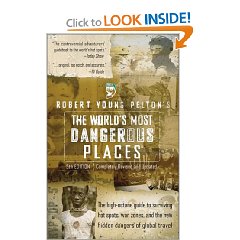
Review: Robert Young Pelton’s The World’s Most Dangerous Places: 5th Edition

5 Star, Asymmetric, Cyber, Hacking, Odd War, Atlases & State of the World, Country/Regional, Future, Games, Models, & Simulations, Geography & Mapping, History

Amazon Page
Amazon Page

5.0 out of 5 stars 5th Edition Even Better–Valuable to Business and Government,

June 19, 2003
Robert Young Pelton
I've heard Robert Young Pelton speak, and he is, if anything, even more thoughtful and provocative in person. He has written an extraordinary book that ordinary people will take to be a sensationalist travel guide, while real experts scrutinize every page for the hard truths about the real world that neither the CIA nor the media report. The 5th Edition is even better than the earlier version that I distributed to all the professional intelligence officers attending the annual Open Source Intelligence (OSINT) conference, so I am going to distribute the new improved version.Unlike clandestine case officers and normal foreign service officers, all of them confined to capital cities and/or relying on third party reporting, Robert Young Pelton actually goes to the scene of the fighting, the scene of the butchery, the scene of the grand thefts, and unlike all these so-called authoritative sources, he actually has had eyeballs on the targets and boots in the mud.

I have learned two important lessons from this book, and from its author Robert Young Pelton:

First, trust no source that has not actually been there. He is not the first to point out that most journalists are “hotel warriors”, but his veracity, courage, and insights provide compelling evidence of what journalism could be if it were done properly. Government sources are even worse–it was not until I heard him speak candidly about certain situations that I realized that most of our Embassy reporting–both secret and open–is largely worthless because it is third hand, not direct.

Second, I have learned from this book and the author that sometimes the most important reason for visiting a war zone is to learn about what is NOT happening. His accounts of Chechnya, and his personal first-hand testimony that the Russians were terrorizing their Muslims in the *absence* of any uprising or provocation, are very disturbing. His books offers other accounts of internal terrorism that are being officially ignored by the U.S. Government, and I am most impressed by the value of his work as an alternative source of “national intelligence” and “ground truth”.

There are a number of very important works now available to the public on the major threats to any country's national security, and most of them are as unconventional as this one–Laurie Garrett on public health, Marq de Villiers on Water, Joe Thorton on chlorine-based industry and the environment–and some, like Robert D. Kaplan's books on his personal travels, are moving and inspiring reflections on reality as few in the Western world could understand it–but Robert Young Pelton is in my own mind the most structured, the most competent, the most truthful, and hence the most valuable reporter of fact on the world's most dangerous places.

What most readers may not realize until they read this book is that one does not have to travel to these places to be threatened by them–what is happening there today, and what the U.S. government does or does not do about developments in these places, today, will haunt this generation and many generations to follow. I strongly recommend this book to anyone who cares to contemplate the real world right now.

Vote on Review
Vote on Review
noble gold