SchwartzReport: US Infrastructure Sucks & Rise of Democratic Big Data

03 Economy, Data
0Shares

schwartz reportOur spending practices, as a country, are completely upside down. We spend endless billions on war instead of what it will take to keep the U.S. functioning as a country, as this report makes clear. Think about what is being said here, just in reference to your own area.

Our Infrastructure Isn’t Ready for Climate Change
ED MAURER and EUGENE CORDERO – Market Watch

This is an excellent essay on the power of data. Big data. It describes the first stages of the emerging Metaview Trend, which is going to change our lives. And has the potential to recreate democracy in an electronic age.

The Rise of Big Data
KENNETH NEIL CUKIER and VIKTOR MAYER-SCHOENBERGER, Data Editor of The Economist and Professor of Internet Governance and Regulation at the Oxford U. – Foreign Affairs

John Maguire: Honoring Joe Bageant

Cultural Intelligence
0Shares
John Maguire
John Maguire

Although you may never have heard of him, Joe Bageant was perhaps the preeminent gonzo-journalist and moral-voice of his generation. Author of Deer Hunting With Jesus and Rainbow Pie, Joe quietly led one of the most experience-rich lives you could imagine. He grew up in the hard-knocks region of West Virginia; he joined the Navy as an under-age teenager during wartime; he lived in Colorado during the 1960s in a broke-down bus, worked as a beat-writer, and kept company with some of the greatest counter-cultural American icons including Hunter S Thompson and Timothy Leary.

Not only this, he was one of the most thoughtful, sober, and brutally honest chroniclers of the United States' descent into a consumerist/corporatist police-state. The video linked below is only a brief sampling of some of Joe's thoughts/feelings on what America has become since WWII, and the challenges that stand before us in saving our collective futures.

Joe passed away two years and one month ago from cancer.  His website lives on.  Here is one audio with him on mutated consciousness and willing prisoners of predatory (extractive) capitalism.

Worth a Look: Wavy Gravy Movie – Saint Misbehavin’ and His Books

Worth A Look
0Shares
$2.99 online download

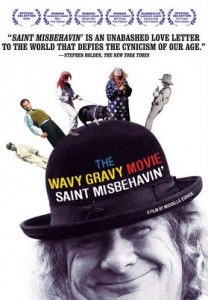
Born in 1936, Hugh Romney was an improvisational actor and standup comic who befriended Lenny Bruce and Bob Dylan when he settled in New York's Greenwich Village in the early '60s. Romney's career took him to the West Coast in the mid-'60s, where he fell in with Ken Kesey's Merry Pranksters and became a key figure in the early days of the hippie movement. Adopting the nickname “Wavy Gravy,” he embraced the persona of a playful clown, in part because he observed that hippies got arrested at protest marches, but clowns in parades did not. Wavy Gravy and his wife formed a commune in Berkley, CA, called the Hog Farm, and members of the group were hired to help with security at the Woodstock rock festival in 1969, with Romney dubbing his group “The Please Force.” Wavy Gravy became one of the more visible figures in the '60s counterculture scene, but unlike some of his peers, he never lost track of the ideals that came to symbolize the decade; well into his seventies, Wavy Gravy still works on behalf of environmental concerns, operates a camp (Camp Winnarainbow) that teaches clowning to homeless and underprivileged children, helps run a charitable organization (the Seva Foundation) that funds eye care for the poor in the Third World, and works with children living with brain injuries. Described by his friend Paul Krasner as “the illegitimate son of Harpo Marx and Mother Theresa,” Hugh Romney's remarkable life story is brought to the screen by filmmaker Michelle Esrick in the documentary Saint Misbehavin': The Wavy Gravy Movie. The film had its world premiere at the 2009 South by Southwest Film Festival.

See Also:

Continue reading “Worth a Look: Wavy Gravy Movie – Saint Misbehavin' and His Books”

Dolphin: The Most Important LinkedIn Page You’ve Never Seen

Cultural Intelligence
0Shares
YARC YARC
YARC YARC

Definitely worth a look!  Important information for individuals seeking employment in troubled economic times.

The Most Important LinkedIn Page You’ve Never Seen

Tucked behind your professional, yet pretty, profile picture, the descriptions of all your past jobs, and that column of “People You May Know” is a section of LinkedIn that most people have never heard of, let alone seen. And yet it’s the real reason why you should actually care about sprucing up your LinkedIn profile and network.

Dubbed LinkedIn Recruiter, it’s the company’s flagship product and the core of the professional social network’s Talent Solutions. Talent Solutions drive just over half of LinkedIn’s revenue, $161 million in the last quarter. While any LinkedIn user can see jobs and the pages companies build for themselves, Recruiter is only visible to companies that pay to use LinkedIn as a candidate sourcing and hiring tool.

Recruiter is a bit like a two-way mirror where companies and recruiters can see all of your profile information, without you knowing they’re checking you out. For example, recruiters can search for people with specific skill sets, flag them and add a dossier to their profile — all without that person knowing. They can all of the jobs they’ve listed and people they’re watching. Sure, there is a “Who’s Viewed Your Profile,” but those using LinkedIn Recruiter can make themselves anonymous (as can paying LinkedIn premium account members).

LinkedIn wants to make sure those well-paying recruiters and companies have the best possible experience so that they stick around, maybe even tell their HR buddies. To that end, LinkedIn recently unveiled a refreshed Recruiter home page more in line with its consumer-facing products.

Read full article.

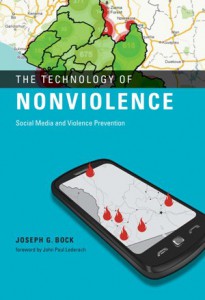
Review: The Technology of Nonviolence

5 Star, Civil Society, Communications, Culture, Research, Democracy, Disaster Relief, Disease & Health, Education (General), Humanitarian Assistance, Information Society, Information Technology, Threats (Emerging & Perennial), Voices Lost (Indigenous, Gender, Poor, Marginalized)
0Shares
Amazon Page
Amazon Page

Joseph G. Bock

5.0 out of 5 stars Pioneering Work, Deserves a Great Deal of Attention, April 29, 2013

I am shocked that there are no reviews of this book. Brought to my attention by Berto Jongman, one of the top researchers in Europe with a special talent at the intersection of terrorism and related violence (e.g. genocide) and Open Source Intelligence (OSINT), he knew this is an area that is of very high interest to me.

The book passed my very first test, with more than ample references to Dr. Patrick Meier, a pioneer in crisis mapping, SMS translations and plotting by diasporas, and humanitarian ICT generally. I strongly recommend his blog and expect him to produce a book of his own soon.

The primary focus here is on social media via hand-held devices. It assumes a working Internet and does not have a great deal of focus on the urgency of achieving an Autonomous Internet, and more fully exploiting Liberation Technology and Open Source Everything (OSE), the latter my special interest along with M4IS2 (Multinational, Multiagency, Multidisciplinary, Multidomain Information-Sharing and Sense-Making).

Use Inside the Book to see the chapters and appendices. The author makes clear two major points early on:

01 Grassroots is where its at, not top down macro

02 Technology alone is not enough, organizing — the hard long road of grassroots organizing — is essential.

Continue reading “Review: The Technology of Nonviolence”

Review (Guest): The Invention of the Land of Israel: From Holy Land to Homeland

5 Star, Country/Regional, History, Misinformation & Propaganda, Nature, Diet, Memetics, Design, Peace, Poverty, & Middle Class, Politics, Power (Pathologies & Utilization), Religion & Politics of Religion, Truth & Reconciliation
109Shares
Amazon Page
Amazon Page

Shlomo Sand

5.0 out of 5 stars Excellent Complement to First Book! December 6, 2012

“The Invention of the Land of Israel” is the follow up to the fascinating and controversial “The Invention of the Jewish People“. This excellent book serves as a complementary addition to the aforementioned book and fills gaps left behind. Historian and outspoken professor, Shlomo Sand does it again with this enlightening and educational book that reveals the history behind the Land of Israel. This 304-page book is composed of the following five chapters: 1. Making Homelands: Biological Imperative or National Property?, 2. Mytherritory: In the Beginning, God Promised the Land, 3. Toward a Christian Zionism: and Balfour Promised the Land, 4. Zionism Versus Judaism: The Conquest of “Ethnic” Space, and 5. Conclusion: The Sad Tale of the Frog and the Scorpion.

Positives:
1. A well-researched and well-cited book that takes you into the always fascinating world of Jewish history.
2. As candid and forthright a book as you will find. Professor Sand provides solid and well-cited evidence in support of his arguments.
3. Enlightening and thought-provoking book to say the least.
4. An excellent complement to his best-selling book “The Invention of the Jewish People”.
5. The myth that was the forced uprooting of the “Jewish people.”
6. The book does a wonderful job of explaining how the dissemination of a formative historical mythos occurred. “Never did I accept the idea of the Jews' historical rights to the Promised Land as self-evident.”
7. Clarifies some of the misunderstood points made in his previous book.
8. Professor Sand takes pride in his historical scholarship and it shows. The quest for primary sources. The author does a good job of letting the readers know what he does have a good handle on and what he doesn't.
9. Explains what really precipitated the establishment of the State of Israel.
10. The book achieves its goal of tracing the ways in which the “Land of Israel” was invented.
11. The book achieves the main goal of disparaging the official historiography of the Zionist Israeli establishment.
12. The notion of “homeland” in perspective. “It is important to remember that homelands did not produce nationalism, but rather the opposite: homelands emerged from nationalism.” The concept of territorial entity.

Continue reading “Review (Guest): The Invention of the Land of Israel: From Holy Land to Homeland”

David Swanson: The Revolution Note Being Televised (US Protesters Going to Jail)

07 Other Atrocities, 11 Society, Cultural Intelligence, Ethics
0Shares
David Swanson
David Swanson

The Revolution That's Not Being Televised

Hundreds gathered in Dallas to reject the Bush Lie Bury, and three went to jail.  I flew from Dallas to Syracuse, where hundreds protested Obama's drone-murder program, and 32 went to jail and are still there (and will stay until trial unless bail can be raised) — some of them risk major jail time because they violated a protective order that the commander of a U.S. military base gained to protect himself from nonviolent peace activists.  Another drone protester in Missouri, Brian Terrell, is just finishing a six-month sentence.  Climate activist Tim DeChristopher just got out.  The people locked in Guantanamo are refusing to eat, and groups around the world are making plans to fast with them.  The people of Vieques are rallying on May 1st to demand that the U.S. military truly depart their island.  Big plans are being made to rally for Bradley Manning on June 1st.  This week I'm heading to the National War Tax Resistance Coordinating Committee's meeting in North Carolina, after which — just over in Tennessee — three courageous activists go on trial, facing major time in prison, for having entered and protested a nuclear weapons facility.

The revolution will not be televised.

Read full post.