John Robb: Failure of the Global System Soon?

Blog Wisdom, Civil Society, Commerce, Corruption, Earth Intelligence, Key Players, Policies
0Shares
John Robb

JOURNAL: Early Failure of the Global System

It's impossible to fully measure the impact of disruptive attack on a complex system until it actually plays out.  Why?  There might be hidden negative or positive feedback loops in the system that either dampen or accelerate the initial damage of the disruptive attack.  That's the problem with the fight in the US Congress over the debt ceiling.  The system that is being upset is soooo complex that we don't have a clue what the damage will be or how much damage has already been done until it plays out.

What we do know is that the financial and economic system that is being disrupted is extremely leveraged.  Further, the entire global economy is entirely dependent on massive deficit spending just to avoid another collapse.  Which means that nearly any disruption can result in damage far in excess of the original attack.  It is also tightly coupled on a global level.  This means that any event in Washington can quickly spread to the rest of world in seconds.   The best analogy I can think of at the moment is a pilot of an F-16 trying to rewire his cockpit's instrumentation while in a high G turn to evade a bogey on his six.  Needless to say, it's unlikely to end well.

The only silver lining I can take from this is that all of the factors causing a slow unwind of the current system have the potential of being accelerated.  That's good?  Yes, if only for one reason.  We're not as bad off as we would be in a couple of years if this current trajectory continued.  The problems would only be worse and our ability to recover from them less.

Regardless, take this opportunity to really think about how you can make a living and protect your family in a full blown global economic depression with all of its negative consequences.  A six month stockpile of canned/freeze dried goods and two dozen boxes of ammo won't get you through it.  You need a real game plan.

Koko: Russia’s President Wants Educational Games

06 Russia, Academia, Advanced Cyber/IO, Articles & Chapters, Civil Society, Cultural Intelligence, Government, Policies
0Shares
Koko

Russia's President is on to something, with the observation that the best history games would not focus on what was, but on what might have been had true cost information been embedded at each point in time.

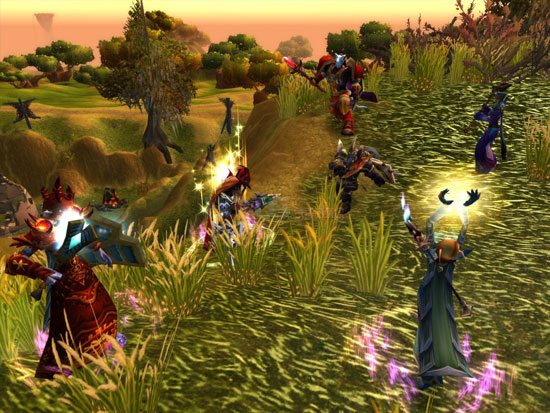
Russia's prez wants educational World of Warcraft history game

DVICE.com, 29 July 2011

While the Chinese love World of Warcraft so much they're using them as punishment in labor camps, Russia's President Dmitry Medvedev wants to make a similar game to teach people about Russian history.

Somebody give this guy a chest-bump and a double high-five. Unlike most Presidents, Medvedev is a young guy. He's in tune with pop culture and “what's in” and “cool” and aims to aggressively use new mediums such as MMORPGs as an educational tool.

Click on Image to Enlarge

Speaking at a gathering of Russia's cultural and science councils, Medvedev said:

“I've checked what our youth are playing with, and most games are pseudo-historical and fantasy-based.”“Take ‘World of Warcraft.' … It's not all about destruction. It has a subtext about developing human civilization.”

“We could try to make something similar if it's so popular — not globally, perhaps, but at the domestic level.”

Medvedev's idea comes as Russia prepares to celebrate its 1,150th anniversary of statehood next year.

Using video games to drill historical facts into heads? If we had a WoW knock-off when we were still in high school, maybe we'd have been less apt to cutting class to hang underneath the football field bleachers where the “evil” lurked.

Tom Atlee: Abundant Democracy Resources

Advanced Cyber/IO, Blog Wisdom, Civil Society, Collective Intelligence, Counter-Oppression/Counter-Dictatorship Practices, Cultural Intelligence, Ethics, Government, Open Government, Peace Intelligence, Policies, Reform
0Shares
Tom Atlee

Dear friends,

In 2001 the Co-Intelligence Institute released a breakthrough compilation of more than 100 democratic innovations.  At that time there was no other comparable resource on the web.

This year we decided — and began — to update this list, to fix its broken links, to add new innovations and resources, and to make it into a wiki to allow other people to add democratic innovations they knew about.  You can see our initial progress online.

While preparing a grant proposal to expand the project, we researched the web for other lists of democratic and participatory practices and resources.  We were surprised to find quite a few.

We decided that to add the most value in the context of this great wealth of resources, our project should

Continue reading “Tom Atlee: Abundant Democracy Resources”

DefDog: Completely False Story from Coalition on Taliban

03 Economy, 04 Inter-State Conflict, 05 Civil War, 07 Other Atrocities, 10 Security, 11 Society, Articles & Chapters, Corruption, Cultural Intelligence, Government, IO Impotency, Media, Military, Misinformation & Propaganda, Officers Call
0Shares
DefDog Recommends....

This story is completely false.  NightWatch's compilation of data reveals that “March saw the highest level of fighting up to March 2011 and May was higher still. July looks down, but much more focused and lethal against senior officials.”

Just more of the aversion of truth that permeates Washington…..it also goes against all the previous reporting of having the Taliban on the ropes…..

Coalition holds line on Taliban attacks, data show

By Jim Michaels

USA TODAY, 28 July 2011

For the first time in five years insurgent-initiated attacks in Afghanistan have not increased with the start of a new fighting season, suggesting that a surge of U.S. forces has blunted Taliban momentum, according to the coalition forces.

Read full story…

Continue reading “DefDog: Completely False Story from Coalition on Taliban”

Robert Young Pelton: USA Road to Debt Decisions

03 Economy, 07 Other Atrocities, 11 Society, Articles & Chapters, Budgets & Funding, Corruption, Cultural Intelligence, Government
0Shares
Robert Young Pelton

Useful survey on when the recent as well as the further back decisions on going into debt were made.  From April, but so very relevant today.

Running in the red: How the U.S., on the road to surplus, detoured to massive debt

By

The Washington Post, April 30, 2011

The nation’s unnerving descent into debt began a decade ago with a choice, not a crisis.

. . . . . . .

All told, Obama-era choices account for about $1.7 trillion in new debt, according to a separate Washington Post analysis of CBO data over the past decade. Bush-era policies, meanwhile, account for more than $7 trillion and are a major contributor to the trillion-dollar annual budget deficits that are dominating the political debate.

. . . . . .

William Hoagland, who was for years a top budget aide to Domenici and other GOP Senate leaders, said it is simplistic to think today’s fiscal problems began just 10 years ago. In 1976, as a young CBO analyst, Hoagland produced a long-term simulation that showed entitlement costs gradually overwhelming the rest of the federal budget.

“This situation really goes back to long before [the Bush administration], which is to say to old dead men that have long left the Congress,” he said.

Read full article (three screens)…

Venessa Miemis: Beyond Systems Thinking

Advanced Cyber/IO, Articles & Chapters, Briefings (Core), Communities of Practice, Cultural Intelligence, Earth Intelligence, Ethics, Policies
0Shares
Venessa Miemis

Excellent piece from Rethinking Complexity: Studying Systems for a Humane and Sustainable World.

From Systems Thinking to Systems Being

CONCLUSION

Systems being involves embodying a new consciousness, an expanded sense of self, a recognition that we cannot survive alone, that a future that works for humanity needs also to work for other species and the planet. It involves empathy and love for the greater human family and for all our relationships – plants and animals, earth and sky, ancestors and descendents, and the many peoples and beings that inhabit our Earth. This is the wisdom of many indigenous cultures around the world, this is part of the heritage that we have forgotten and we are in the process of recovering.

Click on Image to Enlarge

Systems being and systems living brings it all together: linking head, heart and hands. The expression of systems being is an integration of our full human capacities. It involves rationality with reverence to the mystery of life, listening beyond words, sensing with our whole being, and expressing our authentic self in every moment of our life. The journey from systems thinking to systems being is a transformative learning process of expansion of consciousness—from awareness to embodiment.

Kathia Laszlo, Ph.D., directs Saybrook University's program in Leadership of Sustainable Systems