Review: The Social Life of Information

6 Star Top 10%, Information Operations, Information Society, Information Technology, Misinformation & Propaganda, Values, Ethics, Sustainable Evolution
0Shares

Social LifeSuperb Primer for Any Age

January 19, 2008

John Seely Brown

I come to this book eight years after it was first published, and with all the accolades and superb reviews that it has already accummulated, my primary focus here, apart from flagging the book for those that follow my reviews, is to suggest that it is one of the finest overviews available and easily exploited as a primer for undergraduates, graduates, or adults pursuing their own continuing education via Amazon, which is now the hub of the World Brain.

As is my custom, I provide here a few highlights from my flyleaf notes, and then link to ten books that can be used to study discrete aspects of the digital age as I have come to understand it.

This is one of the best books I have found that makes the case that “fiber to the forehead” is next to worthless, it is not about acquiring more information, but rather about the nuanced networking and social interpretations of information in context.

Indeed, they say that with all the technologies now pushing and creating digital information, consumption of this information is only increasing among individuals by 1.7 percent a year.

I value this book, in part because I have seen the U.S. secret intelligence community lose its mind, today spending $60 billion a year of the taxpayer's hard-earned money, to create monstrous and often counter-productive technical program that access the 4% of the information we can steal, while ignoring the 94% that is in 183 languages we do not speak, and more often than not, NOT online.

The authors write well, and gifted turns of phrase about, such as “the radical instability of infopunditry.”

They do a superb job of addressing the ills of technology-centered tunnel vision, a point that Peter Drucker made in Forbes ASAP 28 Aug 98, and I repeated in my keynote in Vegas to the National Security Agency (NSA) IT conference, in the early 2000 timeframe. We've spent the past 50 years on the T in IT, we need to start focusing on the I now.

The authors are eloquent in saying that more of the same is not the answer, and I totally agree. Returning to the secret world, I paraphrase an Australian journalist commenting on the pathologies of secret programs, who said that giving more money to dysfunctional secret agencies is like pouring gasoline on a fire. Right on. I want to reduce the secret budget to $12 billion a year, and redirect everything else to US education, global access to open sources in all languages, and free on demand education to the five billion poor via a network of 100 million volunteers with skype and internet access who can answer a cell phone question in any of 183 languages: education “one cell call at a time.”

The authors point out that at its best, technology augments and enhances human capabilities, it does not replace them (less the truly repetitive mechanical aspects).

They observe (in 2000) that 1-2 exabytes of information per year are created, but that much of this is not useful, and there is a major short-fall in sense-making and precision access.

They discuss, most usefully, the reality that designers underestimate what people do (and I would add, what they want or need).

“Information fetishism” is defined as the belief that information and information technology can replaced nuanced relations among people and their individual and shared insights. In Body of Secrets, link below, Jim Bamford ends his second book on NSA by saying that with all the trillions they have spent, they have still not built the ultimate computer, one that runs on a tiny amount of energy, weighs less than a few pounds, and can make petabyte calculations per second: “the human brain.”

The authors respond to earlier criticism about not addressing LINUX, and point out that LINUX is social innovation, not technical innovation. See Wealth of Networks below.

They note that the primary advantage of IT is that it enhances both local and global access. On the downside, it neglects periphery and context.

The authors reassert, compellingly, the value of intermediation, and I am reminded of our earlier criticisms of the Internet, still valid, in that most information is unedited, unformatted, unpaginated, undated, and lacking in source bias insight. This is still true, and Google is making it worse.

By the authors own account, this book addresses:
1) Limits of infopunditry
2) Challenges of software agents
3) Social character of work and learning
4) Limits of management theory
5) Resources for innovation
6) Unnoticed aspects of the document
7) Implications for design
8) Future of information, especially for university

I have a couple of nits, but not enough to warrant removal of one star. This is clearly a seminal work of lasting value.

Nit #1: Organizational Intelligence (Wilensky, 1967) is not to be found in this book. The authors do not go past Quadrant III (see loaded images).

Nit #2: While they have a superb bibliography and include works by Barlow, Kelly, Strassmann, Toffler, and Turkle, they do NOT include the seminal works directly relevant to this book, specifically, Barlow's seminal manifesto, and the following:

Out of Control: The New Biology of Machines, Social Systems, & the Economic World
Information Payoff
Powershift: Knowledge, Wealth, and Power at the Edge of the 21st Century
The Second Self: Computers and the Human Spirit , Twentieth Anniversary Edition

Amazon limits us to ten links. See my earlier lists (the first ten) for 300+ books covering information and intelligence. Here are six more:
The Landscape of History: How Historians Map the Past
Body of Secrets: Anatomy of the Ultra-Secret National Security Agency
Fog Facts: Searching for Truth in the Land of Spin
The Wealth of Networks: How Social Production Transforms Markets and Freedom

I regret the limitation on links. See also such gems as Forbidden Knowledge; Voltaire's Bastards; Age of Missing Information; etc etc.
Review: The Culture of National Security

4 Star, Complexity & Catastrophe, Congress (Failure, Reform), Culture, DVD - Light, Empire, Sorrows, Hubris, Blowback, Power (Pathologies & Utilization), Security (Including Immigration)
0Shares
Culture Security
Amazon Page

4.0 out of 5 stars Great from an academic point of view, missing some pieces

January 19, 2008

Peter J. Katzenstein

I confess to some impatience with this book, published in 1996. It is very much state-centric, although to its credit in the conclusion it postulates a need to focus more on non-military resources and objectives, and on non-state actors.

The book opens with the statement that the key to understanding is to focus on how people view their interests and how that changes, but I searched in vain for any differentiation among the eight tribes that define my own study of international and internal relations: government, military, law enforcement, academia, business, media, non-governmental and non-profit (and in the US, especially, foundations), and finally, civil including religion, labor, and advocacy groups. This book may well be one of the last gasps of “state uber alles” literature.

I have a note, bridge between the European literature of the 1980's and the new view emerging in the post 9-11 environment, where most of us now recognize that security in all its forms, including human, food, and water security, are easily as important and often more important than military security.

The editors themselves recognize that all the theories were wrong, and that academia slept through the revolution, failing to foresee or explain.

I am amused by the discussion of identity, and how this presents the academics–poor dears–with moral issues.

I love footnotes, and this book has many of them, but as I went on and on I felt two things: 1) holy cow, the best of the best talking to themselves; and 2) where is everything else? This book strives to examine the fault line between Kennedy's focus on resources and Fukiyama's focus on ideology, while missing the impact of technology on the rise of indigenous peoples. In some ways, this book marks the end of the state-centric academic era, and the rise of the practitioner non-state actor era. There is now more to be learned outside the university than inside.

On balance, I would recommend this book as torture for aspiring PhD's who need to be steeped in the arcane debates among the varied schools of international politics and the effect of domestic politics on foreign policy, but very candidly, I find the books listed below to be a better investment of time and more accessible to broader minds.

Modern Strategy
Security Studies for the 21st Century
The Unconquerable World: Power, Nonviolence, and the Will of the People
The Paradox of American Power: Why the World's Only Superpower Can't Go It Alone
A More Secure World: Our Shared Responsibility–Report of the Secretary-General's High-level Panel on Threats, Challenges and Change
High Noon 20 Global Problems, 20 Years to Solve Them
Preparing America's Foreign Policy for the 21st Century
Global Assemblages: Technology, Politics, and Ethics as Anthropological Problems
Global Brain: The Evolution of Mass Mind from the Big Bang to the 21st Century
The Wealth of Networks: How Social Production Transforms Markets and Freedom

Vote on Review
Vote on Review

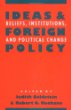
Review: Ideas and Foreign Policy: Beliefs, Institutions, and Political Change

4 Star, Diplomacy, Information Operations
0Shares
Ideas
Amazon Page

4.0 out of 5 stars Too general for modern application, January 19, 2008

Judith Goldstein

+ Ideas as roadmaps.

+ Ideas embedded in institutions “take over” in the absence of innovation

+ Decolonialization was an example of new ideas taking over (this really set me off, since I have a passing familiarity with wars of national liberation, CIA's legacy of ashes in Africa and elsewhere, blood diamonds, mercenary and gutter rats using war as their only path to wealth, women and wine, and of course the proxy wars and the rush by the US, UK, and Russia to sell arms indiscriminately to anyone [US sells three times more than UK and five times more than Russia].

+ Better example would be Yale and apartheid. When sub-state actors started shunning South African stock, *and* the white minority realized they could be over-run and exterminated by the black majority, the two in combination led to the release and rise of Nelson Mandela and the somewhat conniving and less than convivial collaboration of De Klerk.

+ Ideas can be especially strong in times of crisis.

+ Ideas create culture; culture defines truth (social construction of reality) and truth as it is perceived defines policy and behavior.

On balance this book disappoints. I raise it from three to four stars to provide for the possibility that I am at fault in failing to appreciate the totality of the book. It is not a five because for over a decade OSS.Net has been operating at the neighborhood and tribal levels of granularity, and for the past five years, pioneering the monitoring of sermons by province, and family beliefs and networks across tens of nations. Domestically we follow “the new political compass” of Paul Ray, and observe the nuanced changes as left-right agree on civil liberties, and Walll Street=0Ecotopia begin to agree on green chemistry, beneficial bacteria, and green to gold operations.

Other books I recommend:
Manufacturing Consent: The Political Economy of the Mass Media
Forbidden Knowledge: From Prometheus to Pornography
Manufacture of Evil: Ethics, Evolution, and the Industrial System
Voltaire's Bastards: The Dictatorship of Reason in the West
Fog Facts: Searching for Truth in the Land of Spin
Lost History: Contras, Cocaine, the Press & ‘Project Truth'
The Tao of Democracy: Using Co-Intelligence to Create a World That Works for All
Blessed Unrest: How the Largest Movement in the World Came into Being and Why No One Saw It Coming
A Power Governments Cannot Suppress
Weapons of Mass Deception: The Uses of Propaganda in Bush's War on Iraq

Vote on Review
Vote on Review

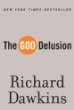
Review: The God Delusion

4 Star, Culture, DVD - Light, Misinformation & Propaganda, Religion & Politics of Religion, Values, Ethics, Sustainable Evolution
0Shares
God Delusion
Amazon Page

4.0 out of 5 stars Five for Science, Three for Humanities, Four on Balance

January 17, 2008

Richard Dawkins

I have seen this argument so many times over the past 40 years; it's as if each new generation has to condemn God to find its own soul. I myself wrote a poem in college once, “Our Father, who art in hell….” You can imagine the sophomoric rest.

There are so many other reviews, I want to use this space to highlight three ideas, point to one posted image, and link to several books that demonstrate that Mike Huckabee has it exactly right: we need God (not the high priests that steal our money to live lavishly) as a foundation for the community of man, as an absolute measure of our morality.

Idea #1: God is or should be a moral standard. Fundamentalists of any stripe that claim to be the sole religion, calling all others unbelievers or heathen or worse, are nothing more than a cult.

Idea #2: Religions are bad in so far as they incite hatred toward others or enrich a few at enormous cost to the many. We do not need intermediaries nor do we need interpreters. God loves us all (including Adolph Hitler and Dick Cheney) and God's love is immutable. We are what we are, and within God's love, we must simply strive to be better, longer.

Idea #3: Engineers and scientists have a very hard time understanding any constructive role for religion. E. O. Wilson has answered the question, “why do the sciences need the humanities,” and I will sum it up in one word: Humanitas. There is a spiritual, artistic, ethical, quantum aspect to life that is often best explained through either myths or conventions.

Here are ten books that have informed my appreciation for God, whom I found again, very strongly in my life, six months ago, when everything started going in the direction that I had been struggling to achieve for twenty years, not for myself, but for my children and the future of life.

01 The Complete Conversations with God (Boxed Set) The Bible is useful as a point of departure. It is not a substitute for being right with God, direct.

02 The Lessons of History Morality is a strategic asset of incalculable proportions (a Nobel Prize was awarded in the 1990's to a man who proved that trust lowers the cost of doing business).

03 The Left Hand of God: Taking Back Our Country from the Religious Right Rabbi Lerner's book touched me deeply. God is code for compassion, for doing the right thing, for avoiding partisan and fanatic differentiation.

04 God's Politics LP Buy this used, I hope it is reprinted. Religion is like a gun–it is the person who chooses between an exclusive “true believer” role that is hateful, or an inclusive compassion that is respectful of all. I end my review saying he has my vote for Chaplain to the Nation.

05 Faith-Based Diplomacy: Trumping Realpolitik The author is a Navy Captain (O-6) Retired, I know him, and he taught me that faith is a tangible value that can be demonstrated in a peaceful respectful manner, and doing so yields enormous dividends when negotiating or interacting with those whose faith is strong but different.

06 Thank God for Evolution!: How the Marriage of Science and Religion Will Transform Your Life and Our World This is a joyous and worthy celebration of how to deconflict religion and science.

07 Dogs of God: Columbus, the Inquisition, and the Defeat of the Moors I am often shocked by how little the average American knows of history, to include our genocide of the Native Americans, the Puritan exorcism of women as witches, the Catholic Church's inquisition, the crusades, and their all too eager collaboration with the Nazis in administering the Holocaust. This book is as good as any for reflection in that direction.

08 The Lucifer Principle: A Scientific Expedition into the Forces of History Howard Bloom is a friend, and also the author of Global Brain: The Evolution of Mass Mind from the Big Bang to the 21st Century. I learned from the latter book that a human brain “locks down” by the age of 30 or so, and whatever good or evil thoughts have been introduced to that mind, are there to stay. He anticipated the Sunni Shi'ite wars (Iran, which is Persian, and the Iraqi Shi'ites, are terrified because they are surrounded by extremist Sunnis led by Saudi Arabia which the US is stupidly arming, and Pakistan, which has the SUNNI bomb, as well as Egypt and Syria, two of the bloodier dictatorships in that region: remember, CIA put the Shah into power, overturning a democratic election in Iran. See also my review of Web of Deceit.

09 Good Muslim, Bad Muslim: America, the Cold War, and the Roots of Terror There are so many other books I could recommend, but Amazon limits us to ten. See also Looming Tower, The Fifty Year Wound, Sorrow's of Empire, and Wilson's Ghost as well as the DVD Why We Fight. The bottom line is that the US Government and its secret intelligence agencies (I've done it all across that world) are inherently pro-dictator (see Ambassador Mark Palmer's Breaking The Real Axis of Evil: How to Oust the World's Last Dictators by 2025. There are 44 dictators remaining, 42 of them are best friends with Bush-Cheney, and of the remaining two, North Korea and Cuba, both are benign in my view, and Cuba has a great deal to teach us about sustainable agriculture, full employment, and free public health care. I have no patience for demagogues, and pray for the day when we can restore the Constitution, the Republic, We the People as sovereign, and Thomas Jefferson's original vision of commerce and peace.

10 American Fascists: The Christian Right and the War On America is the top book on the evil that is represented by cult-like fundamentalist movements whose preachers can be (not all) hypocritical miscreants who favor homosexuals and drugs when traveling at our expense. American Theocracy and Tempting Faith also fall into this last category, useful for understanding where religion went wrong.

America is in a desperate condition right now because We the People forgot that democracy requires our constant tending–a Republic, if you can keep it. When we allowed the Democratic and Republican parties to disenfranchise the League of Women Voters so they could shut out third, fourth, and fifth parties; when we allowed the FBI to ignore Steve Emerson's PBS special in 1994 on imams on US territory calling for the murder of Americans and the overthrow of the secular government; when we allowed Jeb Bush to disenfranchise 35,000 to 50,000 people of color in Florida, with a brilliant exposure THREE MONTHS BEFORE THE ELECTION, and Al Gore chose to “go along” with this “reasonable dishonesty” so as to reap wealth and celebrity (rather than being shunned for spoiling the party), We the People gave up our Republic.

The image I am loading says it all. That is where a number of us are headed, and we carry God with us in mind and heart and spirit. Most churches and non-profits are nothing more than scams to separate the sheep from their money. Free men, real men, *are* God to the extent that they respect the brotherhood of man, follow the Golden Rule, and respect the Ten Commandments, which are the most helpful guide possible for life in a complex society.

A note on Mike Huckabee: he represents faith in a good way, not the evil way that Cheney harnessed and then dismissed. Mike Huckabee has a vision for a return to a Christian, family-oriented Republic. I share that vision.

Vote on Review
Vote on Review

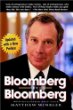
Review: Bloomberg by Bloomberg

5 Star, Biography & Memoirs, Capitalism (Good & Bad)
0Shares

BloombergSuperb, self-effacing, common sense, deeper insights into the company, January 11, 2008

Michael Bloomberg

I bought this book on 1 January when news first came out of the University of Oklahoma “bipartisan” gathering, but I did not have a chance to read it until this week. I went to Oklahoma, only to see this good man embarrassed by a truly rotten press conference that invited mockery. My three page trip report is at Earth Intelligence Network.

I'm going to summarize what I learned from this book,and then conclude with an observation on how Bloomberg could go to the next level while simultaneously cleaning up our government and educating the 5 billion poor free, one cell call at a time.

There is absolutely nothing in this book that is conceited or self-serving. This is straight talk from a hard worker, an Eagle Scout at a very young age, an ethical businessman, an inspired information entrepreneur. This is an honest worthy book I wish I had noticed sooner.

The author lived in a one-room studio apartment for his first 10 years, working 12 hours a day as a matter of routine, not counting his early morning jogging, where he says he gets his most creative thoughts.

It certainly helped that he had a $10M termination payment from his first job, but this book positively lights up around the combination of open workspace, open mind, how to create a company on the fly, fully integrating customer views, ignorning banks and other pyramidal consultants. The author discovered the “power of us” a quarter century before Business Week did its cover story on this topuc, 21 June 2005.

What I was not expecting, and what made the book riveting for me, is the complete well-paced coverage of how the author realized he could monetize financial data, then information about the people behind the data, and then information on the politics behind the people.

A few of my fly-leaf notes:

+ Build from scratch, don't buy over-priced companies or capabilities.

+ Trust me, or go out the door.

+ Do'ers with fires in their belly make for a great team

+ Pioneered compact low-cost workstations with English buttons

+ Excelled at rapid prototyping where good intention was better than any business plan

+ Really superb overview of how numbers can lie, how dangerous an automated numbers game can become

+ Outsiders do what's asked; insiders do what's needed.

+ Superb vision for the future of the hand-held cell phone as the single device, he knew this long before Eric Schmidt came along to help Google.

+ Corrects my long-standing mis=hearing of Marhsall McCluhan's book title, The Medium is the Massage (not Message, that was a separate quote)

+ Really excellent stories aabout how hard Bloomberg had to fight to be accredited both in Washington DC and in Tokyo as a legitimate news organization

+ “Ignorance and arrogance are a deadly combination.” I wish he had realized Oklahoma would be a dead end–bi-partisan is code for keeping the two-party spoils system. Transpartisan is where its at, visit Reuniting America, 110 million strong and growing. See the definitive book on the death of the two parties, Running On Empty: How The Democratic and Republican Parties Are Bankrupting Our Future and What Americans Can Do About It.

+ I agree with his view that computers should not be allowed in the classroom throughout elementary school.

+ Throughout the book, it is clear the author knows what I learned from Senator Daniel Patrick Moynihan, both personally and through his book, Miles to Go: A Personal History of Social Policy, Change is Hard. Specificially, big change takes 25 years (I am in year 18 of reforming secret intelligence and creating public intelligence, he is now in year 1 of reforming democracy and saving the Republic as well as moral capitalism).

+ The chapter on Management 101 is decent, sensible, and worthy of study.

+ I've spent hard time trying to do digital innovation, and the details in this book just blew me away as I followed the innovations the author led back in the 1980's when CIA tasked me with creating a “smart desktop” for clandestine operations. Had I known then about this man, I would have gone to his doorv and offered to help him put CIA out of business. There is still time.

I put the book down with both a feeling of pain–the Oklahoma debaacle should never have happened–and hope. This author embodies three big ideas: moral informed capitalism, honest informed self-governance, and educational reform.

I have three ideas I offer to anyone who can reach the author, I do not believe the book I created for him (Democracy 2008, see it at Earth Intelligence Network) was delivered to him by his staff, one reason he got humiliated in Oklahoma.

Idea #1: Fund a global “True Cost” project within the Natural Capital Institute's rapidly growing World Index of Social and Environmental Responsibility (WISER). Get Paul Hawkins in to energize everyone, and become the Moody's for true cost information (e.g. designer T-shirts with 4000 gallons of water, water bottles whose plastic required more water to make than is contained in the bottle, etc). This will change markets within 2-3 years, especially since ScanBack would allow Bloomberg to deliver this information to end-users via their cell phone at the point of sale.

Idea #2: Forget about running for President. It's a lousy job. BE the virtual president, forming a Transpartisan Sunshine Cabinet (Senators Nunn and Graham should be respectively Defense and Intelligence), and leveraging True Majority and Reuniting America to lead a national conversation firmly grounded in a balanced budget, on how to orchestrate $1 trillion a year in planning giving to eradicate the ten high level threats by harmonizing the twelve policies, while also creating the EarthGame to help the eight demographic challengers avoid our mistakes.

Idea #3: Examine Telelanguage.com and figure out how to register and put online 100 million volunteers who can use Skype, Telelanaguage, and their Internet connection to teach the 5 billion poor in any one of 183 languages, one cell phone call at a time.

The above will sound self-promoting, it is not. I have labored with 23 other co-founders to do Mike Bloomberg's staff work for the next decade, and if someone can get him to carefully consider these ideas, I give them to him freely. I don't need a job, but I do need a planet my three boys can grow up in, and I believe that if Mike Bloomberg stops trying to leverage political has-beens (with a few exceptions), and instead creates an architecture that can deliver public intelligence in the public interest, he will achieve his grand vision, faster, better, cheaper.

Thank you, those whom Dick Cheney has inspired into reading my non-fiction reviews. I never, ever, expected to be of service to the Nation in quite this way. If my reviews help us restore the Republic, of, by, and for the people, working with moral capitalists and leaders like this author and John Bogle (The Battle for the Soul of Capitalism then the author's unbridaled optemism could be warranted.

See also:
The Tao of Democracy: Using Co-Intelligence to Create a World That Works for All
Society's Breakthrough!: Releasing Essential Wisdom and Virtue in All the People
A Power Governments Cannot Suppress
All Rise: Somebodies, Nobodies, and the Politics of Dignity (BK Currents)
One from Many: VISA and the Rise of Chaordic Organization
THE SMART NATION ACT: Public Intelligence in the Public Interest

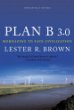
Review: Plan B 3.0–Mobilizing to Save Civilization, Third Edition

5 Star, Complexity & Catastrophe, Complexity & Resilience, Environment (Problems), Environment (Solutions), Future, Intelligence (Public), Nature, Diet, Memetics, Design, Peace, Poverty, & Middle Class, Priorities, Security (Including Immigration), Stabilization & Reconstruction, Survival & Sustainment, Values, Ethics, Sustainable Evolution
0Shares

Plan 3.0The Best and Most Essential Guide, Not the Whole Picture, January 11, 2008

Lester R. Brown

I have followed Lester Brown's dedication to evaluating the state of our planet for over a decade, and wrote to the Nobel Committee urging them to recognize him, Herman Daly, and Paul Kawkins and the two Lovins instead of Al Gore. They have all done a great deal more of the heavy lifting.

I decided to purchase this book when Medard Gabel, creator of the analog World Game with Buchminster Fuller, gave me a budget for saving the planet that totals no more than $230 billion a year (at a time when we spend $1.3 trillion waging war).

I've gone through the book and consider it to be a best in class effort, a seminal work no one else on the planet could have produced. In the author's chosen area of focus, there is no other book like this one. However, some other books are easier to read and understand, such as High Noon 20 Global Problems, 20 Years to Solve Them, and others do a better job of addressing all ten high-level threats to Humanity and Earth, such as A More Secure World: Our Shared Responsibility–Report of the Secretary-General's High-level Panel on Threats, Challenges and Change.

Here are a few highlights:

+ Book is offered free online (but the hard copy is much better deal, easier to work with, mark up and return to as a reference….use the online version to search for specifics.

+ The Introduction is clear and inspiring. This book is loaded with carefully collected facts ably presented.

+ $12 per gallon of fuel in “true costs” externalized and not billed

+ One 25 gallon ethanol tank takes enough grain to feed a person for a year. This means that those in hunger going to double from 600 million to 1.2 billion, as cars compete for grain (which is nuts).

+ Food-oil axis is developing into a triple crisis: oil, food, water. As 50% live in cities, the fuel intensity of food in the face of Peak Oil is becoming a major issue.

+ Stopping the ethanol program dead in its tracks is the single best thing US Government could do, followed my more wind farms and an end to coal plants.

+ Amazon reaching a tipping point, mega-fires are foreseen (as with New York City if its 1920's water system fails and a firestorm emerges)

+ Western model will not work for China or India (or Brazil, Indonesia, Iran, Russia, Venezuela, and other Wild Cards)

+ Ice cap is melting fast, gfalciers are melting fast and causing small earthquakes.

+ 600 million refugees expected if sea level rises ten meters (33 feet)

+ Mortality has been reduced, but fertility has not, leaving persistent population issues.

+ 15 of 24 primary ecosystems degraded or pushed beyond their limits.

+ Climate has become more destructive, with 55 weather events costing $1.5 billion or more each since the 1980's.

+ Great discussion of the ecology of cities, Bioneers would resonate with all the author recommends.

+ Scarcity crossing national boundaries.

+ Excellent notes, heavy reliance on UN and other primary sources.

+ He proposes a budget of $190 billion a year to achieve our social goals and restore the Earth.

+ The only thing missing from this book are some of the positives, for example bacteria as an energy source, healing bacteria, eletrified water as a cleanser needed no other ingredients, the recovery of the Dead Sea with furrows that retain every drop of water.

I am so surprised to find only one review that I wanted to quickly add my praise for this author, while also pointing out three things that a handful of wealthy philanthropists could do tomorrow to execute this vision.

#1 We should all support the World Index of Social and Environmental Responsibility (WISER) as created by the Natural Capital Institute, and encourage colleges and universities around the world to begin loading the “true cost” information for all products and services (e.g. 4000 gallons of water in a designer T-shirt). Delivered to end-users via cell phone query at the point sale, this will dramatically affect markets.

#2 We should ask the 90 major foundations in the USA to host a summit to which all governments, non-governmental organizations, prominent wealthy individuals, and the United Nations are invited. The objective should be to create an online “Range of Gifts” Table that identifies specific contributions that can be made at every cost level, to eradicate the ten high level threats within fifteen years, by harmonizing the twelve policies such that ALL organizations and ALL individuals can opt in on a master budget that is strategically sound, operationally executable, and tactically open to all.

#3 We must absorb the wisdom of C. K. Prahalad, Alvin and Heidi Toffler, and others listed below, and recognize that the only enduring sustainable solutioin lies in educating the five billion poor, who do not have the time or the money to sit in a classroom for 18-22 years. We can create today, using Telelanguage.com, an immediate registry of 100 million volunteers with Internet access, speaking 183 languages among them, who can educate the poor–who are not stupid, just illiterate–one cell call at a time.

I believe that Reuniting America, True Majority, and WISER are reaching critical mass. All we lack now is one well endowed champion who sees that it is our collective intelligence that will solve the world's problems, and there is no need to run for President. Here are the handful of books I would recommend to Michael Bloomberg if he were to ask me today how to fulfil his vision of political, educational, and philanthropic reform.

Visit Earth Intelligence Network for free public intelligence on the ten threats, twelve policies, and eight challengers. The weekly report “GLOBAL CHALLENGES: The Week in Review,” will appeal to anyone interested in this book and its topic.

The Wealth of Networks: How Social Production Transforms Markets and Freedom
The Fortune at the Bottom of the Pyramid: Eradicating Poverty Through Profits (Wharton School Publishing Paperbacks)
Revolutionary Wealth: How it will be created and how it will change our lives
Infinite Wealth: A New World of Collaboration and Abundance in the Knowledge Era
THE SMART NATION ACT: Public Intelligence in the Public Interest
The Future of Life

Review: Day of Empire–How Hyperpowers Rise to Global Dominance–and Why They Fall

4 Star, Country/Regional, Empire, Sorrows, Hubris, Blowback
0Shares

Day of EmpireDisappointing, Oversold, Original as far as it goes, January 11, 2008

Amy Chua

I like the author and gave her first book, World on Fire high marks. I found her treatment of the Chinese diaspora in that book to be quite valuable.

This book is disappointing for a number of reasons, not least of which is the treatment of “America” as a monolyth, a generic “hyperpower,” never mind any of the following:

Vice: Dick Cheney and the Hijacking of the American Presidency
Running On Empty: How The Democratic and Republican Parties Are Bankrupting Our Future and What Americans Can Do About It
The Battle for the Soul of Capitalism
The Cheating Culture: Why More Americans Are Doing Wrong to Get Ahead

I happen to be familiar with China's new strategy, a one-page memorandum can be found by looking for <steele chinese irregular warfare.> The Chinese have neutralized US weapons and mobility systems, and are waging peace on a global scale.

What troubled me about this book was the combination of glorious generalizations with a lack of specifics, for example, China right now has a potentially catastrophic combination of water and energy outages with continuing potential for a pandemic.

The eight challengers the Earth Intelligence Network has identified are Brazil, China, India, Indonesia, Iran, Russia, Venezuela, and Wild Cards like the Congo.

America is on the ropes because we are coming off a quarter century of a two party spoils system that knew all about Peak Oil in 1974, and decided to betray the public trust and ignore the problem. Similarly are water and food security, our public health, all are abyssmal because of a series of venal leaders among whom Dick Cheney stands out for evil, and young Bush for stupid.

I am also troubled because the author, while serving up an interesting overview, does not trouble to review the lessons of history from others, for example, Will and Ariel Durant or John Lewis Gaddis. Morality is a strategic asset of incalculable value. Time is the one asset that cannot be bought nor replaced. Our ignorance of history makes the past a “denied area” of little use to using the present to plan for the future.

On balance this book comes across as a one page outline fleshed out. The Technical Preface by Robert Garigue, RIP, to Information Operations: All Information, All Languages, All the Time is still the best statement published: it's about long-term education of mind of man, with morality, legitimacy, and dignity. Get that right and everything else takes care of itself. Visit Earth Intelligence Network to learn more.

I was also hoping to see more about emerging solutions and the wealth of networks. If we have one thing going for us in America, it is that 66 languages are spoken in Queens, NY, 183 languages across the Nation, and we could, if we wanted to, rapdily recruit 100 million volunteers able to educate the 5 billion poor one cell call at a time, in their own language.

I do not regret buying this book, but in my view, it delivered no more than 50% of its potential while being way too indiscriminate about the details. There is too much missing from this book. See my lists.

See also
The Search for Security: A U.S. Grand Strategy for the Twenty-First Century
High Noon 20 Global Problems, 20 Years to Solve Them
The Wealth of Networks: How Social Production Transforms Markets and Freedom
The Fortune at the Bottom of the Pyramid: Eradicating Poverty Through Profits (Wharton School Publishing Paperbacks)