Boyd Sutton was one of a handful of great intelligence community leaders who understood how to handle and get the most out of what CIA described as “self-starters” (they have up the idea after half of both classes quit within give years–go along bureaucrats are still the norm). He also had a huge mind, and went form being in charge of the Director of Central Intelligence (DCI) vault dealing with all external technical programs (the Advanced Program and Evaluation Group) to being a senior executive at the National Reconaissance Office (NRO), and then a retiree consultant charged by then DNI George Tenet with establishing the requirements for Global Coverage–the answer: $10 million for each of 150 “lower tier” countries and issues including non-state actors and emerging threats, or $1.5 billion a year year–today that would be $3 billion. Boyd's contribution of the unclassified version of his study to the public, in the public interest, is a significant example of individual integrity in the service of the Republic.
Boyd Sutton
Click on the Frog to connect to his original 1997 study slides and full text, all unclassified as released.
Challenge of Global Coverage Study for the DCI 1997
Superb Personal Effort, Fits in With Other Vital Contributions,
December 23, 2006
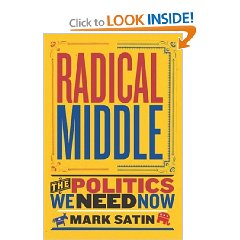
Mark Satin
I like this book very much. It is a cry from the heart–from a very informed heart–and it captures much that needs to be understood. It is not, however, the first effort in this direction. This book was published in 2004. Paul Ray and Sherry Ruth Anderson published “The Cultural Creatives: How 50 Million People are Changing the World” in 2000, coincident with the appearance of Marianne Williamson's extraordinary edited work, “IMAGINE: What American Could be in the 21st Century.” Ted Halstead and Michael Lind published “The Radical Center: The Future of American Politics,” in 2001. In 2002 Ralph Nader capped off decades of activism along these lines with “Crashing the Party: How to Tell the Truth and Run for President.” In 2003 we had Matthew Miller's “The 2% Solution: Fixing America's Problem in Ways Liberals and Conservatives Can Love.” See my reviews of all of those, and my list on democracy, to appreciate this book by this author, in a larger context.
The most important meme to come out to me–an aggressive iconoclast if ever there was one–dealt with the importance of turning away from rebellion for the sake of rebellion, and focusing instead of being a player, on bringing corporations to the table as Paul Hawken and others suggest in “Natural Capitalism” (which the author cites).
Early messages from this book include: Ignore the noise including Moore and Franken; Creative borrowing from all points of view to achieve public policy; Radical middle provides concrete answers instead of platitudes; Work with corporations instead of attacking them blindly; Idealism without the illusions. Four on key values: maximize choices, fair start for all, maximize human potential, help the developing world. The author then gives us four sections, with the highlights listed below.
Maximizing choices:
1) Universal health care that is also preventive and integrative
2) Law reform–affordable, meaningful
3) End oil dependency–parallel energies, seven paths (conservation, renewables, fossil fuels, hydrogen, nuclear, biobased, and values-change path
Fair start
1) great teachers (overlooks two-parent family, serious games, total change to curriculum)
2) affirmative action with teeth, not just letting in black-skinned white minds
3) Job for everyone and a financial next egg as well
Maximize human potential
1) corporations we can be proud of
2) biotech with adult supervision
3) bring back the draft–for EVERYONE (one of the best pieces)
Help the developed world
1) Globalization with savvy and feeling (address poverty, raise standards)
2) Make the WTO transparent
3) Humanitarian intervention in time–no more genocides (great piece)
4) Tough on terrorism and causes of terrorism
Be a player not a rebel
1) professional schools, not radical groups, are our incubators now (compassionate MDs, holistic MBAs, visionary JDs,
2) stay informed
3) join groups that matter and push them to the middle
4) run for office
5) open up the political process (free media, tax credits, proportional representation, instant run-offs, non-partisan redistricting,
Just this morning, a friend in Seattle sent me an email about a new meme that goes beyond the split between “for profit” and “non-profit” to speak of “new profit.” That is the distillation of what Paul Hawken and Herman Daly (“Ecological Economics”) are trying to capture. The old concept of corporate profit loots the commons. The new concept of profit, what I call Communal Capitalism, others call it Capitalism 3.0 or Natural Capitalism, understands that true profit must be perpetual and distributed.
This author has a following and is part of the solution. I recommend all the books I listed above, and this one.
South Africa, Military and Civilian Intelligence Community
IOP '06 Under the general leadership of Minister of Intelligence Services Ronnie Kasrils, in partnership with an extraordinary collection of individuals across all elements of the South African intelligence community, and across all countries in the continent of Africa, successfully implemented both an open source software strategy, and an early warning and open source information sharing strategy. Their continental initiative, in its openness, low cost, and mutually beneficial architecture, sets the standard for multinational, multiagency, multidisciplinary, multidomain information sharing (M4 IS).
When Nelson Mandela ended arpartheid and an integrated government was formed, the very best of the revolutionaries of color went into intelligence. President “JZ” Zuma of South Africa is himself director of intelligence for the ANC in exile and resistance. They inherited a brand new campus built by the previous regime, and the South African National Academy of Intelligence (SANAI) has proven to be both an internal and a continental asset. It introduced Open Source Intelligence (OSINT) in the 1990's, and understood far sooner than most that OSINT and the traditional secret collection disciplines have to interact “as with a DNA spiral” in the words of the Director General of National Intelligence at the time.
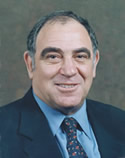
BGen Yekelo
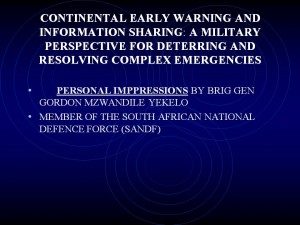
Representing Minister Kasrils at OSS '06 was Brigadier General Gordon Mzwandile Yekelo, Director, Doctrine Development, Joint Operations Division, South African Armed Forces, who shared his views on “Continental Early Warning & Information Sharing: A Military Perspective on Deterring & Resolving Complex Emergencies.” Today, in 2009, SANAI is about to offer world-class training to the eight tribes of intelligence across all of Africa, and with integrity and persistence, may yet create a Smart Continent Of, By, and For Africans.
Superb, Of Lasting Value, Next Edition Should Include Some Appendices,
December 18, 2006
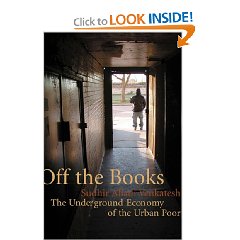
Sudhir Alladi Venkatesh
Robert Daniels review is useful. What stayed with me on this book is that we have let our urban poor down, over and over, and while they have created an underground community and a web of relationships that span the licit and illicit, they will never rise above that bare bones existence in the absence of substantial structured help.
The author draws on others to estimate that this community across the land could be responsible for at least 75 billion a year in unpaid taxes.
A few vital phrases:
“no one took (even) a few dollars for granted.”
this is a community with an intricate set of protocols for survival on the edge of the law and the edge of the economy
clergy plays a critical role as both brokers and clients for services; mothers as single heads of households are part of block committees that can negotiate complex and very specific arrangements with gangs, police, and others.
$50 in food stamps was worth (2001-2003) $75 in car repairs or $30 in beer.
The webs of relationships overcome any differences between licit and illicit. ANY form of income is respected and prized.
Informal credit a necessary social capital that replaced structured credit.
The night spaces are used by traders, regulators, and predators.
The chapter on the priests and block mothers was especially great. The author identified three blocks of preachers doing three different roles: brokering disputes in the illicit and licit local world; serving as part time work or exchange brokers for the working poor; and serving as outreach to the police and other communities, e.g. the adjacent white middle class community whose preachers could pass the word on available service jobs with specific families.
The bottom line is clear: even the most desperate, if they are resilient, can survive and find some form of happiness, but we have let them down. As I write this, Wall Street is giving out tens of billions in bonuses to its employees, the US Government is mounting the worst deficit and combined national debt in history, and the Navy and the Air Force are continuing to demand new carriers and long-range bombers while our troops on the ground lack showers, hot food, comfortable quarters, and safe vehicles–as well as an attentive responsible government (at the top–I never mean to be critical of the good people trapped in this terribly screwed up mess we call the federal government).
This is a serious useful accomplishment. Other books I recommend include ILLICIT by Moises Naim, “The Working Poor” by David Shipler, “Nickled and Dimed” by Barbara Ehrenreich, and “The Global Class War” by Jeff Faux, see my reviews of each for a quick insight into those authors' very valuable complementary views.
My only dismay is that this book is missing the icing. I would have loved to see some figures, maps, charts that visualized the substance. The comparison of the value of food stamps to car repair to beer is priceless. Most of these people barely made $750 a month. I sense that the author was exhausted by this effort and slowed to a walk as the book came to completion–should it be re-issued, and I expect it will be as I consider it to be scholarship of lasting value, I would like to see some really excellent charts, extrapolations, and visualizations.
A really fine piece of work, well worth reading along with the other books mentioned above.
Essential Foundation for Understanding Worst Case View,
December 18, 2006
Ted Flynn
I was asked recently if I had fallen in with the conspiracy theorists, and my answer was no, I had not, but in my very broad reading, had come to realize that they represent a very important alternative view of reality without which one cannot ably evaluate current threats, policies, and relationships. The invasion of Iraq and our continued occupation of that country, for example, is either sheer stupidity by the White House, or a stroke of genius, depending on your hidden agenda.
I truly respect this author and this book, and along with Crossing the Rubicon and Rule by Secrecy, would put it way up there among the books from this point of view.
Personally I believe that the US Government is populated by good people trapped in a bad system, and that most laws have dual purposes–one as understood by the rank and file in government, the larger one at the very highest levels where the White House and the Wall Street elite (a handful of individuals) speak in studied privacy.
There are other good reviews of the substance of this book, so I want to focus this review on an emerging Collective Intelligence/Natural Capital line of thinking. Collective Intelligence represents to power of the people to attack themselves like leeches to specific corporations and out their misdeeds and bad practices in detail. Natural Capital, something that Paul Hawken has been pursuing since he first helped write Seven Tomorrows and later the The Ecology of Commerce, suggests that the commercial world can only be saved–can only achieve sustainable long-term profitability–if it goes green to both reduce its impact on the environment and to offer the public genuinely intelligent design.
The more I read in this literature, the more I am persuaded that it is both correct and reaching critical mass, yet at the same time, I perceive a positive possibility that the Exxons and Goldman Sachs of this world may finally be on the verge of realizing that if they do not reform themselves, they will be put out of business by a global informed public.