WASHINGTON — When Eric Smith, 26, returned home after his second tour in Iraq serving as a Navy medic, he didn't expect to have a difficult time finding work.
While on tour, Smith had worked as a physician's assistant in the intensive care unit (ICU), caring for patients undergoing everything from cancer to recent brain surgery. At times, he served on the front lines treating infections. He never thought the expertise he had developed in the field wouldn’t amount to a job back home — but when he returned he found that he couldn't get a job in medicine without the right certifications.
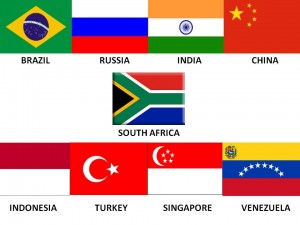
SANYA, Hainan, April 14 (Xinhua) — Leaders of five BRICS countries, Brazil, Russia, India, China and South Africa, released on Thursday a joint document, Sanya Declaration, at the BRICS Leaders Meeting in south China's resort city of Sanya.
The following is the full text of the document.
Sanya Declaration
(BRICS Leaders Meeting, Sanya, Hainan, China, 14 April 2011)
That made me think of the Emergent Democracy paper that Joi Ito authored collaboratively (2001-2003) with several other folks (including Ross Mayfield and I) a few years ago. Digging into my files I found the attached marked up version… it aligns pretty well with some of the discussions here.
There's been a lot of interesting thought about the Internet and the web as platform for enhanced social activity. That idea of “finding our tribes and ourselves” was a core aspect of FringeWare, the company/community that Paco Nathan and I started in 1991. We realized that like-minded fringe thinkers and doers were scattered everywhere, and the Internet gave us a platform where they could find each other and form community. All it took was an email list and a compelling concept (“fringeware”) to catalyze that community.
“Declaration of Interdependence” sounded familiar… I did some searching…
I continue to be focused on the future of the Internet and aware of divergent paths. In the later 2000s, following a period of digital and media convergence and given broad adoption of evolving high speed (broadband) network connectivity, the Internet has become an environment for mixed media and marketing. The Internet is increasingly centralized as a platform that serves a global business engine. It’s a mashup of business to business services and business to consumer connections, a mashup of all the forms of audio, text, and video communication and media in a new, more social/participatory context: the faceless consumer now has an avatar, an email address, and a feedback loop.
The sense of the Internet as a decentralized free and open space has changed, but there are still many advocates and strong arguments for approaches that are bottom-up, network-centric, free as in freedom (and sometimes as in beer), open, collaborative, decentralized. It’s tempting to see top-down corporate approaches vs bottom-up “free culture” approaches as mutually exclusive, but I think they can and will coexist. Rather than make value judgements about the different approaches, I want to support education and thinking about ethics, something I should discuss later.
Right now I want to point to a collaboration forming around the work of Venessa Miemis, who’s been curating trends, models, and projects associated with the decentralized Internet model. Venessa and her colleagues (including myself) have been discussing how to build a decentralized network that is broadly and cheaply accessible and that is more of a cooperative, serving the public interest rather than a narrower set of economic interests.
I’ll be focusing on these sorts of projects here and in my talks on the future of the Internet. Meanwhile, here are pointers to a couple of Venessa’s posts that are good overviews for what I’m talking about. I appreciate her clarity and focus.
Phi Beta Iota: A great deal of the credit goes to Doug Rushkoff, the originator of ContactCon, for whom Venessa Miemis (also a contributing editor here at Phi Beta Iota) works. Using Doug Rushkoff's social capital, and Venessa Miemi's inspired scouting on emergence, they have quickly become a hub for innovation and information sharing about the needed Autonomous Internet.
The doctrinal commitment to new cyber and social technologies as a means of solving political problems needs to learn from the past and take a more realistic view, says Armine Ishkanian.
I just finished a conference call on the minimal mandatory requirements for liberation technology for a specific area (there are at least another 50 that would need the same stuff–a generic capability–but in 50 other languages).
2. Open satellite channel over the area in question that can receive collect calls from anyone in the area of interest using an announced number and one of the devices.
3. Downloadable encryption for any cell phone on a use and delete basis from the satellite channel…like digital one time pads with no residue.
3. Satellite radio into the area of interest with real news relevant to that population including news of the diaspora and exile leadership.
4. Internet steganography.
I thought CIA, BBG, and JSOG were supposed to be able to do all that. Evidently not. I am being told that a fund-raising campaign is starting up to provide these capabilities to no fewer than three areas, possibly expanding to sixteen, all privately funded because the USG is not doing it.
– – – – – –
Dawn McCall
Here is a sample headline that sums up the current state of US Government attention to “liberation technology.”
Phi Beta Iota: Ms. McCall is a very accomplished Discovery Channel executive with remarkable achievements in one to many broadcasting. She has been in her current position since 27 July 2010 and does not appear to be headed for Assistant Secretary status anytime soon. The Undersecretary of Public Diplomacy and Public Affairs is Ms. Judith A. McHale, formerly President and CEO of Discovery Communications, parent of the Discovery Channel.
Cards on the table. I’ve been a “truther” since early 2002 when I came across the first major challenge to the official 9/11 story in the shape of the wonderful “Hunt the Boeing” site created by French researcher Thierry Meyssan. Until then I’d accepted the standard “Left” version of the government account – that a group of daring Muslims acting on behalf of the victims of US foreign policy had struck back at the great tyrant. The photographic and other evidence presented by Meyssan demonstrated beyond reasonable doubt that whatever it was that had caused the damage to the Pentagon, it certainly wasn’t a large Boeing jet. If the government’s story was a lie on that major point, then the whole story was brought into question. I knew at once that I had to find out as much as I could about the event which everyone was saying had “changed the world”.
. . . . . .
Richard Falk, UN Special Rapporteur on human rights in the Palestinian Territories, hit the headlines just recently. He’d committed the cardinal sin of expressing doubts about the official story of 9/11 in a personal blog. The US Ambassador to the UN, Susan Rice, rushed to condemn him and demanded he be sacked. UN Secretary-General, Ban Ki-Moon, joined in, saying that Falk’s remarks were “an affront to the memory of the more than 3000 people who died in that tragic attack”. Someone needs to remind the Secretary-General of the affront which gullible acceptance and repetition of the official lie of 9/11 causes to the memory of the more than 3 million dead and mutilated Afghan, Iraqi and now Pakistani men, women and children sacrificed on the altar of neo-imperialism as a direct consequence of the phoney ‘war on terror’ – based on the lie of 9/11 and the other false-flag crimes perpetrated for and/or by agencies of western governments.
FROM Electronic Frontier Foundation: On Monday, April 11, 2011, we launched a petition to the largest Internet companies asking them to stand with their users and be transparent in their practices. Here's a chart showing how we think each of the companies is doing right now — a gold star indicates that the company is doing a stellar job, a half-star indicates they are taking steps in the right direction. This page will be updated as companies change their practices in response to public demand.
Click on Image to Enlarge
Phi Beta Iota: Visit the EFF page to view a rather extraordinary chart that shows NONE of the major digital service providers to be anywhere near an acceptable standard of privacy before a government that has used the false war on terrorism as an excuse to both grow in unwarranted size and corporate vapor ware services, and to set aside centuries of legal protections rooted in the Constitution. We recommend regular visits to the EFF page to see how, if at all, these services of common concern respond to public interest. This could be a dry run for Electoral Reform!


 Full text of Sanya Declaration of the BRICS Leaders Meeting