Jim Turner's remarks practically had me [Teri Murphy] leaping to my feet from my little red mushroom stool as he described politics as lurching from walking solely on one's left foot, becoming exhausted, and then walking solely on the right foot until exhausted again. He called for a recognition that each of us has politics as individual as our fingerprints, but under-girding our views are the same competing poles: particularly of freedom vs order. And we're not going to get anywhere until we can address the concerns of both poles in a way that frees them to recognize their own need for the opposite pole.
Welt am Sontag in Germany asked me for an op-ed on Wikileaks. Here it is, auf Englisch. Hier, auf Deutsch.
Government should be transparent by default, secret by necessity. Of course, it is not. Too much of government is secret. Why? Because those who hold secrets hold power.
Now Wikileaks has punctured that power. Whether or not it ever reveals another document—and we can be certain that it will—Wikileaks has made us all aware that no secret is safe. If something is known by one person, it can be known by the world.
will examine how telecom is changed and challenged by always-connected users with new requirements and preferences, the transformation of the value chain, changing regulatory concerns, and new demands for high-performance infrastructure.
PTC'11 Program Highlights
Monday, 17 January 2011
Carrier Transformation
Ihab Tarazi, VP, Global Network Planning, Verizon, USA
Joe Weinman, Communications, Media, and Entertainment, Hewlett-Packard (HP), USA
A Conversation with…
Vincent Paquet, Product Manager, Google Voice, Google, Inc., USA
A Conversation with…
Mark Dankberg, CEO & Chairman, ViaSat, Inc., USA
Data Centers
Jarrett Appleby, CMO, Equinix, USA
A Conversation with…
Scott Puopolo, VP, Global Service Provider Practice, Cisco Internet Business Solutions Group (IBSG), Cisco, USA
Mobile Impacts
Vivek Jhamb, CEO – Carrier Business, Vodafone, India
Editor’s note: This is the third of a three-part guest post by venture capitalist Mark Suster of GRP Partners on “Social Networking: The Past, Present, And Future.” Read Part I and Part II first. This series is an adaptation of a recent talk Suster gave at the Caltech / MIT Enterprise Forum on “the future of social networking.” You can watch the video here , or you can scroll quickly through the Powerpoint slides embedded at the bottom of the post or here on DocStoc. Follow him on Twitter @msuster.
In my first post I talked about the history of social networking from 1985-2002 dominated by CompuServe, AOL & Yahoo! In the second post I explored the current era which covers Web 2.0 (blogs, YouTube, MySpace, Facebook), Realtime (Twitter), and mobile (Foursquare). Is the game over? Have Facebook & Twitter won or is their another act? No prizes for guessing … there’s always a second (and third, and fourth, and fifth) act in technology. So where is social networking headed next? I make eight predictions below.
Phi Beta Iota: As is customary, when persistent links exist, we point to the original. Below we list the eight points, each point is amplified in the original source that we strongly recommend, along with the first two parts and the video.
1. The Social Graph Will Become Portable
2. We Will Form Around “True” Social Networks: Quora, HackerNews, Namesake, StockTwits
3. Privacy Issues Will Continue to Cause Problems: Diaspora
4. Social Networking Will Become Pervasive: Facebook Connect meets Pandora, NYTimes
5. Third-Party Tools Will Embed Social Features in Websites: Meebo
6. Social Networking (like the web) Will Split Into Layers: SimpleGeo, PlaceIQ
7. Social Chaos Will Create New Business Opportunities: Klout, Sprout Social, CoTweet, awe.sm, (next gen) Buzzd
Julian Assange, the founder of WikiLeaks, had moved 37 times by the time he reached his 14th birthday. His mother didn’t enroll him in the local schools because, as Raffi Khatchadourian wrote in a New Yorker profile, she feared “that formal education would inculcate an unhealthy respect for authority.”
. . . . . . .
She needn’t have worried. As a young computer hacker, he formed a group called International Subversives. As an adult, he wrote “Conspiracy as Governance,” a pseudo-intellectual online diatribe. He talks of vast “patronage networks” that constrain the human spirit.
Far from respecting authority, Assange seems to be an old-fashioned anarchist who believes that all ruling institutions are corrupt and public pronouncements are lies.
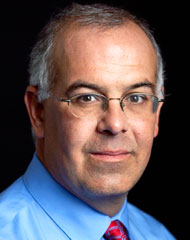
Phi Beta Iota: We like David Brooks. He's less submissive than David Ignatius, less pretentious than Fareed Zakaria, and generally has something interesting to say. In this piece, most revealingly, he displays his limitations to the fullest. We are quite certain that David Brooks means well, but the depth of his naivete in this piece is nothing short of astonishing. The below lists of lists of book reviews will suffice to demonstrate that David Brooks is not as well-read as he needs to be, not as intellectual as he pretends to be, and not at all accurate in his assessment of Julian Assange. We share with Steven Aftergood of Federation of American Scientists (FAS) concerns about Assange's judgment in releasing some materials that are gratuitous invasions of rightful privacy, but we also believe that Assange is finding his groove, and the recent cover story in Forbes captures that essence. WikiLeaks is an antidote to corporate fascism and elective Empire run amok. It meets a need.
Where’s the evidence to back up the fear mongering? A challenge to the Fiscal Commission’s report.
James K. Galbraith
James K. Galbraith is General Editor of “Galbraith: The Affluent Society and Other Writings, 1952-1967,” just published by Library of America. He teaches at The University of Texas at Austin.
The report of the National Commission on Fiscal Responsibility and Reform, issued on December 1, 2010 by Chairmen Erskine Bowles and Alan Simpson, is entitled “The Moment of Truth.” The words appear in block caps on the second page, weighty and portentous. They reappear in the first paragraph of the preamble:
EXTRACT: These sentences set the tone. The first is a bald-faced lie, as a Westerner like Senator Simpson knows perfectly well. To the contrary, we have often fallen under the sway of robber barons, water barons, oil barons, bison-killers, clear-cutters and strip-miners, hell-bent on maximum pillage in the shortest time. Only occasionally have a few heroes like Teddy and Franklin Roosevelt, Gifford Pinchot and Harold Ickes Sr. emerged to battle for the most precious physical elements of our heritage — and then only with limited success.
EXTRACT: Noticeably missing from the Commission’s plan are measures that would fall on the “leaders” themselves. The very richest pay cash for their houses. The commission would reduce, not increase, marginal income tax rates. There is no suggestion of a financial transactions tax.
EXTRACT: “…we spent the past eight months studying the same cold, hard facts. Together, we have reached these unavoidable conclusions. The problem is real. The solution will be painful. There is no easy way out. And Washington must lead.”
The reference to “studying” is suggestive. Are there any studies? White papers? Background analyses? Normally, one might expect a commission to produce some. In this case, it did not. The Commission’s web site makes no mention of any such thing.
Phi Beta Iota: The most important point in our view is that there are no studies to back up the hyperbole and the recommendations, at the same time that it is clear the deficit reductions are Of, By, and For Wall Street, not We the People. The White House and Congress continue to offer the public theater of the most absurd kind, lacking in all substance and assuredly not in the public interest.
If this report is accurate, Assange may have created a cyberwar war equivalent of the unbreakable “one time pad” — all Assange needs to do is post the key and doomsday bomb goes boom. Perhaps the Pentagon ought to hire him to teach DoD how to wage the net centric warfare it loves to talk about.
Julian Assange, the WikiLeaks founder, has circulated across the internet an encrypted “poison pill” cache of uncensored documents suspected to include files on BP and Guantanamo Bay.
One of the files identified this weekend by The Sunday Times — called the “insurance” file — has been downloaded from the WikiLeaks website by tens of thousands of supporters, from America to Australia.