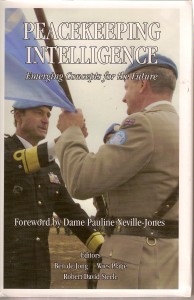
Appendix: “Peacekeeping Intelligence Leadership Digest” pp. 389-435

The truth at any cost lowers all other costs — curated by former US spy Robert David Steele.
Appendix: “Peacekeeping Intelligence Leadership Digest” pp. 389-435
Alessandro Politi, “The Citizen as ‘Intelligence Minuteman‘”


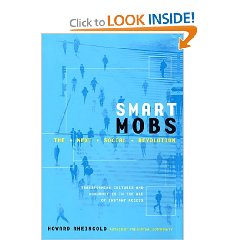
Finally, the author deserves major credit for putting all this techno-marvel stuff into a deep sociological and cultural context. He carefully considers the major issues of privacy, control, social responsibility, and group behavior. He ends on very positive notes, but also notes that time is running out–we have to understand where all this is going, and begin to change how we invest and how we design everything from our clothing to our cities to our governments.
This is an affirming book–the people that pay taxes can still look forward to the day when they might take back control of their government and redirect benefits away from special interests and back toward the commonwealth. Smart mobs, indeed.
In the aftermath of 9-11, when our secret national intelligence and counterintelligence capabilities failed us, there is a need for a restoration of the people's intelligence in the aggregate as our first line of defense against enemies both foreign and domestic. I regard this book as a very serious, thoughtful, and well-intentioned “public intelligence estimate” and warning, of the harm to our security and prosperity that will ensue from a legal system that is now “out of control” and not being audited by the common sense of the people.
This book makes it clear that if the people are inert and inattentive, they will be enslaved, “virtually speaking.” If you thought Manufacturing Consent by Noam Chomsky was scarcy, or Norman Cousins' The Pathology of Power, then this book is for you.
Along with Internet standards acceptable to the people, we now appear to need a public advocacy group, funded by the people, to fight these corporate lawyers at every turn, whilst helping our less than stellar government lawyers cope….


In my view, books like this as well as the non-fiction books such as “Information Warfare: Chaos on the Electronic Superhighway” have been vital elements in educating consumers, stockholders, and voters. If you want to know just how vulnerable your bank account is, read this book.
I won't reveal the surprise ending, but will say that it is absolutely a shocker, and totally credible.


There is much in this book, depending on one's particular interests, that can be skimmed or skipped. With patience, however, the book in its entirety is a rewarding experience for it calls into question much about how we organize ourselves politically, economically, and socially.
The bottom line, and very consistently with other great books such as “The Manufacture of Evil” on the low end and “Consilience” on the high end, is that Western thinking has been corrupted to the point that the West has become, as the inside flap says, “a vast, incomprehensible directionless machine, run by process-minded experts….whose cult of scientific management is bereft of both sense and morality.”
As my own interests run toward public intelligence and public effectiveness in guiding the polity, I found his several chapters related to secrecy, immorality, and the “hijacking of capitalism” to be especially worthwhile.
He concludes that secrecy is pathological, undermining both public confidence and the public dialog. Intelligence in his view is about disseminated knowledge, not secrets.
Throughout the book the author discusses the contest between those who feel that the people cannot be trusted–the elites who strive to remain in power by making power appear an arcane skill with rites and formulas beyond the ken of the people–and those who feels that the people–and especially the larger consciousness of the people–are more in touch with nature and reality and the needs of the people than these elites.
This is a difficult book to absorb and enjoy, but I recommend because it sets the broad outlines for the real power struggle in the 21st Century–not between terrorism and capitalism, but rather between the government-corporate elites with their own agenda, and the larger body of people now possibly ready to turn every organization into an employee-owned and managed activity.
