The following books are in line for review over this coming week, in the order in which they have been published or will be published.
Amazon Page
RELEASED: 13 February 2013. No reviews at Amazon.
How have the intelligence services been forced to adapt to try and combat the threat of terrorism? In this gripping book, former security correspondent Mark Huband takes us inside the shadowy world of intelligence-gathering. Drawing on previously unseen material, unpublished letters and exclusive interviews, he explores how the role and purpose of ‘intelligence' has evolved from its origins in nineteenth-century Ireland to today's fight against terrorism. Using his unique sources, he exposes the hidden blunders of the western intelligence agencies, such as the CIA's total misreading of the KGB's intentions during the Cold War, and the politicisation of intelligence in the build up to the Iraq War, and throws light on their evolving methods, including the manipulation of the media. Ranging from Kandahar to Belfast, this fast-paced book provides not only a compelling account of modern spycraft but a thoughtful and sobering analysis of its current fitness to combat the threat of 21st century terrorism.
Amazon Page
RELEASED EARLY: 22 March 2013. 1 idiot review at Amazon flagged for deletion.
“My concern is not whether God is on our side; my greatest concern is to be on God's side.”–Abraham Lincoln
Lincoln led America through one of the most tumultuous times in our nation's history. Reading his words today, it is clear we still have much to learn concerning what it means to be on God's side.
”There are few people on the scene who can put together mature Christianity with mature politics without compromising either. Jim Wallis does it best–and does it again here.” —Richard Rohr, OFM, Center for Action and Contemplation, Albuquerque, New Mexico.
RELEASE DATE IN APRIL 2013. No reviews allowed until release.
Told with candor and passion, Collapse of Dignity is Gómez’s account of the union’s fight, mounted in the face of traitors, armed aggression, death threats, and a political alliance extending all the way up to the presidential residence at Los Pinos. As he fends off absurdly complex legal charges, organizes the resistance from exile in Canada, and uncovers an anti-union conspiracy stretching back to years before the explosion, he only becomes more committed to fighting for the rights of Los Mineros—and by extension the workers of every country.
Gómez’s story is one of outrage, but also one of hope. Though Collapse of Dignity lays bare sickening injustice and inexcusable aggression against the Mexican working class, it is at its core a fervent call for a global workers’ movement that will represent the fundamental rights of every person who works for a living.
“Collapse of Dignity is an unblinking and unnerving look inside our world’s labor struggle. Gómez’s incredible account of the fight for justice in the face of seemingly insurmountable adversity is a warning, a lesson, and—ultimately—an impassioned call for international change. Essential reading for any working person.” —Thom Hartmann, Author of The Last Hours of Ancient Sunlight
“A riveting story about standing up to big corporations, Collapse of Dignity delivers a message for us all: We the People must force the global corporatocracy to serve us, the workers and consumers. The contrast between Chile and Mexico is a striking call to action.” —John Perkins, New York Times Bestselling Author of Confessions of an Economic Hit Man and Hoodwinked
In his magisterial bestseller FDR, Jean Edward Smith gave us a fresh, modern look at one of the most indelible figures in American history. Now this peerless biographer returns with a new life of Dwight D. Eisenhower that is as full, rich, and revealing as anything ever written about America’s thirty-fourth president. As America searches for new heroes to lead it out of its present-day predicaments, Jean Edward Smith’s achievement lies in reintroducing us to a hero from the past whose virtues have become clouded in the mists of history.
Here is Eisenhower the young dreamer, charting a course from Abilene, Kansas, to West Point, to Paris under Pershing, and beyond. Drawing on a wealth of untapped primary sources, Smith provides new insight into Ike’s maddening apprenticeship under Douglas MacArthur in Washington and the Philippines. Then the whole panorama of World War II unfolds, with Eisenhower’s superlative generalship forging the Allied path to victory through multiple reversals of fortune in North Africa and Italy, culminating in the triumphant invasion of Normandy. Smith also gives us an intriguing examination of Ike’s finances, details his wartime affair with Kay Summersby, and reveals the inside story of the 1952 Republican convention that catapulted him to the White House.
Smith’s chronicle of Eisenhower’s presidential years is as compelling as it is comprehensive. Derided by his detractors as a somnambulant caretaker, Eisenhower emerges in Smith’s perceptive retelling as both a canny politician and a skillful, decisive leader. Smith convincingly portrays an Eisenhower who engineered an end to America’s three-year no-win war in Korea, resisted calls for preventative wars against the Soviet Union and China, and boldly deployed the Seventh Fleet to protect Formosa from invasion. This Eisenhower, Smith shows us, stared down Khrushchev over Berlin and forced the withdrawal of British, French, and Israeli forces from the Suez Canal. He managed not only to keep the peace—after Ike made peace in Korea, not one American soldier was killed in action during his tenure—but also to enhance America’s prestige in the Middle East and throughout the world.
Domestically, Eisenhower reduced defense spending, balanced the budget, constructed the interstate highway system, and provided social security coverage for millions who were self-employed. Ike believed that traditional American values encompassed change and progress.
Unmatched in insight, Eisenhower in War and Peace at last gives us an Eisenhower for our time—and for the ages.
The main targets for Paul Strassmann's unmasking of misconceptions about the business use of computers include the Gartner Group, advocates of Best Practices, and that mouth piece of computing vendors, the computing trade press (e.g., CIO Magazine). While not a particularly angry polemic, Strassmann is all the more devastating for his understated, simple, and straight-forward marshaling of basic facts.
The Gartner group is making a fortune telling executives in various industries what per cent of revenue for a particular vertical industry should be spent on their firms computing function in order to remain profitable. For example, insurance spends a relatively high per cent of revenue, whereas manufacturing is less. Retail is in the middle. In industry after industry, Strassmann demonstrates there is no correlation in spending on computers and profitability. None.
What Doug does that no one else has done, is a thoughtful dissection of our present circumstances, and a very able presentation of four deeply divisive and fatal social diseases that are directly related to how information technology “slices and dices” our present lives seemingly beyond our control:
01 Digiphenia [ADDICTION/SPLIT PERSONALITIES].
02 Overwinding [OVER-DOSED/BURNED OUT}.
03 Fractalnoia [SHATTERED MINDS/LOST SOULS].
04 Apocalypto [ASSIMILATED/CRAZY].
Bottom line up front: We are at risk of losing our humanity and being assimilated into a cyber-stein world in which we become automatons generating information that is sliced and diced totally divorced from ethics, community, Earth values, and so on. We must learn how to control this information technology we have unleashed.
Early insight: IT in its present design is moving individuals — including highly educated individuals, but most horrifyingly effective on the larger masses — DOWNWARDS toward reptilian instincts and irrational behavior, doing impulse things.
QUOTE (8): “When things begin accelerating wildly out of control, sometimes patience is the only answer. Press pause. We have time for this.”
Others have focused on “slow food” and other forms of simplicity living — e.g. Human Scale, Clock of the Long Now, and so on' What Doug has done is more of a form of laboratory dissection of the rat — the IT tiny brain, it's huge server butt, it's privacy invading and data non-protecting limbs, and worst of all, its stomach where data is destroyed rather than cooked.
As an intelligence professional striving to define intelligence with integrity for the 21st Century, everything that this book talks about with respect to the pathologies of information technology and its cancerous effect on humanity, is totally consistent with what I know about the loss of the ability of think tanks and spy agencies to think.
The author focuses on the collapse of the narrative, the story being how civilization communicates aggregated validated wisdom to new generations. I am reminded of Will and Ariel Durant as well as Steve Denning's book The Springboard. CORE to the message is that there is now a chasm — a huge chasm — between the staple stories of the past that “made sense” and the chaos of today where advertising runs amok, governments and corporations and universities and non-profits all tell blatant lies, and there is no comfortable place where transparency, truth, and trust can be reliably found.
In passing futurists are properly slammed.
QUOTE (17): “Futurism became less about predicting the future than pandering to those who sought to maintain an expired past.”
I've spent a lot of time these past six years thinking about the future in structured term (see all the authors, books, centers, and forecasts at Earth Intelligence Network) and I can offer three opinions with certainty:
01) Most governments do not plan for the future, and most corporations disenfranchise both the past and the future — pleading bankruptcy to eliminate all pension fund obligations, refusing to invest in infrastructure needed to mature.
02) With the exception of Medard Gabel, co-creator with Buckminster Fuller of the analog World Game (I recommend all books by both of them), no one I know of is thinking in whole systems terms — no one I know of is is truly committed to cause and effect and cascading feedback loops seven generations or iterations down.
03) With the exception of Herman Daly and a tiny handful of those who follow him as I do, no one is at any level, and certainly no government or international organization (e.g. the UN) is embracing true cost economics as the foundation for sound decision-making about the future.,
The greatest fault that the author finds — as I do in a piece online, “Chapter: Paradigms of Failure” — is with the systemic lies that characterize virtually all that we receive from the traditional segments that comprise civilization: academia, civil society including labor and religion, commerce, government, law enforcement, media, military, and non-government/non-profit.
QUOTE (47): “The focus on immediate response engendered by the always on news becomes the new approach to governance….no one has time to think….what used to be called statecraft devolves into a constant struggle with crisis management.”
In the above the author is kinder to government than government deserves. What actually happens is that the political leadership micro-manages the narrative to leverage the Pavlovian themes that distract the public while micro-managing the Cabinet officers (especially State), all to the end of optimizing short-term financial gains for those that fund the political theater. In other words, *lies* are the root of non-strategy, non-policy, corrupt acquisition, and ineffective options — just look at Iraq, three trillion to destroy a once-working country and produce Fallujah mutant babies while destabilizing the entire region. And now, while some call for a Truth & Reconciliation Commission, others refuse to admit that the rush to an expensive war based on 935 now documented (truthout) lies should be “revisited.”
INSIGHT from the author: lacking goals over time to bring us all together toward future accomplishments, we end up fleeing what we perceive in the now. Alvin Toffler told me back in the late 1990's that when he was in Malaysia in the 1980's he was asked what his greatest fear was in the future and his one word answer was “fundamentalism.” Fundamentalism is dogma carried to its extreme. It *flourishes* in an environment where governments, corporations, and media all LIE.
OCCUPY is the first post narrative political movement. It has — the author tells us — dispenses with the left-right illusion (we are still teaching our children that there are only two parties in the USA instead of the eight accredited parties and 50 others), dispenses with sound-bite simplification, eschews end justifies the means; and for the “system,” is unweildy and unpredictable.
Sadly — my point of view having tried to get Occupy to focus on Electoral Reform — Occupy was quickly marginalized by the “system” mobilizing foundations and using tiny grants to pick Occupy apart one aspiring individual at a time.
There are rays of hope, including massive multiplayer games online. I personally do not like serious games in their current configuration for the simple reason that they are data free. As with Pentagon war games, the data base is rigged and not rooted in whole systems cause and effect or true cost economics. However, if the vision of Medard Gabel and others can be realized, there is every reason to believe that in the next ten years we will see an Open Source Agency (OSA) that funds the hub for the World Brain and the Global Game — in the latter, everyone plays themselves, has access to all relevant information, and has voice and vote on all issues they wish to weigh in on — all transparent, truthful, and therefore trusted.
This book merits slow reading and appreciative reflection. The author's discussion of time is particularly interesting to me. He makes how we relate to time central to his story, observing that time in the digital era is not lineal but rather disembodied and associative — However, while “our” time cycles are hosed, “Earth Time” is still on its natural cycle and we are out of step — this may be one of the key insights in the book: IT creates false time frames that disconnect us from reality and nature — I believe Bill McKibbin among others would find this important.
This entire section is alone worth the price of the book. He cites Clay Shirky on information overload and filter failure, and Stewart Brand on the long time cycles, to that I would add David Weinberger's books, especially Too Big to Know.
I was not expecting to find a discussion of money in this book but there is one, and it is important. Money is information. Here is one quote that is central to the matter, and completely supported by Matt Taibbi's GRIFTOPIA among others:
QUOTE (147): “The shift to central currency not only slowed down the ascent of the middle class, it also led to high rates of poverty. The inability to maintain local businesses, urban squalor, and even the plauge.”
In brief, centralized currency is optimized for storage (hoarding and compound interest) instead of transactions and physical investment.
I will not spoil the ending but will only say that it is a helpful “sauna” on the impact of IT to humanity that is timely, and it crushes the prevailing conventional wisdom represented by all of the major governments, corporations, and conventional wisdom mindsets that comprise the “norm.”
This book is educational, provocative, and righteous. Of course there are those that will find any criticism of IT and “the singularity” to be blaspheme, but on balance I find Doug Rushkoff and his writing to be part of what little sanity we have left.
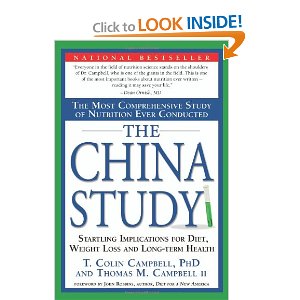
T. Colin Campbell has made a career of challenging the conventional wisdom around nutrition, and this book is the culmination of his work. His integrity, brilliance, and unflinching courage shine through every page.
The main point of this book is that most nutritional studies that we hear about in the media are poorly constructed because of what the author terms “scientific reductionism.” That is, they attempt to pin down the effects of a single nutrient in isolation from all other aspects of diet and lifestyle.
While this is the “gold standard” for clinical trials in the pharmaceutical world, it just doesn't work when it comes to nutrition. Given that the Western diet is extremely high fat and high protein compared to most of the rest of the world, studies that examine slight variations in this diet (i.e., adding a few grams of fiber or substituting skim milk for full fat milk) are like comparing the mortality rates of people who smoke five packs of cigarettes a day vs. people who smoke only 97 cigarettes a day.
Campbell's research, which he describes in a very accessible and engaging fashion, has two tremendous advantages over the typical nutritional study. First, there is the China Study itself – a massive series of snapshots of the relationship between diet and disease in over 100 villages all over China. The rates of disease differ greatly from region to region, and Campbell and his research partners (including some of the most distinguished scholars and epidemiologists in the world) carefully correlated these differences with the varying diets of the communities.
It's not lazy “survey research” either – the researchers don't rely on their subjects' memory to determine what they ate and drank. The researchers also observed shopping patterns and took blood samples to cross-validate all the data.
The second amazing part of Campbell's research method is his refusal to accept any finding without taking it back to his lab and finding out how exactly it works. In other words, we discover in The China Study not only in what way, but precisely how, the foods we eat can either promote or compromise our health.
The book is part intellectual biography / hero's journey (although Campbell is always wonderfully humble – there's no trace of self-congratulation, just a deep gratitude for what he has experienced), part nutrition guide (the most honest and unflinching one you'll ever read), and part expose. The final section leaves no sacred cow standing, and names names! From the food industry, to the government, to academia, Campbell calmly reports on a coverup of nutritional truth so widespread and insidious that all citizens should be enraged.
I have a PhD in health education and a Masters in Public Health – and I can honestly say that no book has shaken my worldview like this one. Anyone interested in health – their own, or that of their family, friends, or community – must read this book and share it. Campbell has started a revolution. Skip this work at your own peril.
5.0 out of 5 stars ONE THIRD OF THE ANSWER — Other Two Thirds Are Corruption, and Toxic Everything, March 8, 2013
This is an extraordinarily important book. Although other books have been written about the illnesses that are associated not just with electricity but also nuclear plants, coal-fueled plants, and so on, this one is unique in that it is the only one I have been able to find that is precisely at the intersection of electromagnetics and diseases.
5.0 out of 5 stars Please Appreciate the Difference — Much Misunderstanding Here, March 8, 2013
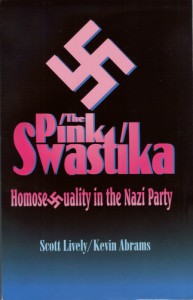
I notice the stark conflict between 30+ 5 star reviews and 30+ 1 star reviews.
I humbly offer a clarifying comment based on my broad reading.
There are two kinds of gays and lesbians that I know of:
The “good” kind are those associated with the normal gay and lesbian liberation movement who strive to make gay and lesbian an open, loving, accepting and accepted way of life that is biologically rooted and culturally stable — not seen as a threat by anyone, appreciated the way one appreciates a genius or an artist or someone with a special gift. To the best of my knowledge, this larger movement does NOT reject God, and just as we separate church and state, we should separate biology and theology.
The “bad” kind are those associated with the Nazi Brown Shirts who wanted to make their form of “manly” gay, including pedophilia and sadism against other men, women, children, and animals, what Mrs. Kay Griggs calls the “existentialists” that arose out of a mix of Nazi and French sadists who believe they are above the law, that murder is a form of precision war, and that only those that accept the macho gay cult should be fully trusted and promoted. The really scary part about this group is that they demand that their condition stay in the closet, unknown to others, and this cult appears to have infected the highest ranks of the US Marine Corps, the US Army, the Joint Special Operations Group, the NATO Gladio special channel rooted in Italy (the Vatican Church and very young Italian orphans have played a very special role in the Naples, Milan, and other Mediterranean all male party houses frequented by these people, and in the NY-NJ-CT crime and cloth circuit with Yale's Skull and Bones and Princetons Cap and Gown secret societies as the axis of evil in America.