A six week course using asynchronous forums, blogs, wikis, mindmaps, social bookmarks, concept maps, Personal Brain, and synchronous audio, video, chat, and Twitter
It was Carl Sagan who wrote ~ ” One of the saddest lessons of history is this: If we’ve been bamboozled long enough, we tend to reject any evidence of the bamboozle. We’re no longer interested in finding out the truth. The bamboozle has captured us. It is simply too painful to acknowledge ~ even to ourselves ~ that we’ve been so credulous. So the old bamboozles tend to persist as the new bamboozles rise.”
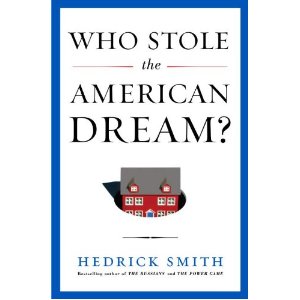
Phi Beta Iota: What interesting times. Government is supposed to be the service of common concern and operating in the public interest–nowhere is this more important than in the fragmented fields of education, intelligence, and research–the foundation of a Smart Nation with a unified soul–and in the fields of counterintelligence, inspections general, and operational test & evaluation. Unfortunately, if integrity is lacking at the electoral level and the political governance level, the good people trapped in a bad system can have all the integrity in the world, to no avail. Mini-Mi appears to be focusing on “root” causes, much as Hedrick Smith is focusing on the fundamentals in his new book, Who Stole the American Dream. Anytime Mini-Me and Hedrick Smith (a giant in the literature on power and the pathologies of power) are on the same meme, that meme is going mainstream. Corrupt politicians, take note. Integrity is coming back into fashion. One way to “reboot” America is with an Electoral Reform Act of 2012. Another is with an independent Open Source Agency. This is not rocket science. America is going into a revolutionary mode soon. Might be a good idea to start planning for that wave–you can surf it, you cannot control it.
5.0 out of 5 stars Compelling Narrative–Could the Book Tour Spark a Revolution?, September 11, 2012
EDIT of 12 Sep 2012: I spent the night thinking about this book. Directly below [and now also loaded as a graphic to this Amazon page] are a graphic showing the preconditions of revolution in the USA, and the short paper on revolution from which the graphic was drawn Here's the deal: ample preconditions exist for a public overthrow of the two-party tyranny, but a precipitant (such as the fruit seller in Tunisia) has not occurred. Even though 18 veterans commit suicide day after day after day, this is hushed up. Occupy blew it–they should have occupied the home offices of every Senator and Representative and demanded the one thing Congress could deliver that would energize the public: the Electoral Reform Act of 2012. This book by Hendrick Smith, and the book tour, could be a first step toward mobilizing a complacent public. [search for phrases below to get right to them]. Don't miss all three graphics above with the cover.
Graphic: Preconditions of Revolution in the USA Today
1992 MCU Thinking About Revolution
– – – – – – –
I received this book as a gift today (I am unemployed and can no longer afford to buy books very often), and a most welcome gift it was. The author's earlier books were in my library, now resting peacefully at George Mason University, and I was quite interested in seeing what he makes of the mess we are in.
The book is a solid five. I would have liked to see a great deal more outrage, a lot more calling of a spade a spade (abject corruption on the part of all concerned), but that is me. The author has created a very compelling narrative that manages to avoid offending anyone in particular, and I can only feel inadequate in admiration for his balance. If I were to re-write this book, most readers over 40 would be dead of a heart attack by chapter four. On second thought, not killing the reader with truth may have its own special merits!
What happened to almost $475 million worth of oil destined for the Afghan National Army – that’s what the Special Investigator General for Afghanistan Reconstruction (SIGAR) would like to know.
Unfortunately, the inspectors may never find out. According to the report released Monday, more than four years of financial records that the Department of Defense was supposed to keep to track this spending are either missing or so poorly kept that even gathering basic information, such as the location and size of fuel sites, was not possible.
The report concludes that the Department of Defense agency in charge of tracking the oil “does not have accurate or supportable information on how much U.S. funds are needed for [Army] fuel, where and how the fuel is actually used, or how much fuel has been lost or stolen.”
Inspectors found that records from October 2006 to March 2011 were shredded improperly, a violation of DOD policies that made it impossible for auditors to track what happened to the hundreds of millions of dollars’ worth of oil. DOD also “could not provide more than half” of the documents requested from March 2011 onward.
Phi Beta Iota: On 10 September, the day before 9/11, Donald Rumsfeld was being grilled by Cynthia McKinney and other Members of Congress on 2.3 TRILLION in unaccounted for DoD funds. On 9/11, whatever kit the Pentagon allegedly destroyed the computers holding the forensic accounting. INTEGRITY is a holistic concept. What we buy, how we buy it, how much we spend on people versus hardware, how much we spent on loyal uniformed forces versus mercenary contractors, how much we spend on coalition partners known to be deeply corrupt from the President on down–all of this challenges our integrity. Fuel records are not normally shredded. This reeks of a cover-up; $475 million is a serious amount of money. The Special Investigator General for Afghanistan Reconstruction (SIGAR) merits public applause for singling this specific corruption of process and finance.
Mark Lombardi (March 23, 1951 – March 22, 2000) was an AmericanNeo-Conceptualist and an abstractartist who specialized in drawings attempting to document financial and political frauds by power brokers, and in general “the uses and abuses of power.
Lombardi called his diagrams Narrative Structures.. They are structurally similar to sociograms – a type of graph drawing used in the field of social network analysis, and to a lesser degree by earlier artists like Hans Haacke. Other important influences on Lombardi were philosopher Herbert Marcuse,, and visualization expert Edward Tufte
In Lombardi's historical diagrams, each node or connection was drawn from news stories from reputable media organizations, and his drawings document the purported financial and political frauds by power brokers. For instance, his 1999 drawing George W. Bush, Harken Energy and Jackson Stephens, ca 1979–90 shows alleged connections between James Bath, the Bush and bin Laden families, and business deals in Texas and around the world.
The Essence of Lombardi's Work
The small circles in his drawings identified the main players — individuals, corporations and governments — along a time line. The arcing lines showed personal and professional links, conflicts of interest, malfeasance and fraud.
Solid lines traced influence, dotted lines traced assets and wavy lines traced frozen assets. Final denouements like court judgment, bankruptcy and death were noted in red.
Reading several newspapers a day, he culled his information entirely from published sources, keeping track of the articles with a card file that eventually held over 12,000 cards.
Mindmapping is a very serious and well researched subject, or art … or something . Whatever it is a map of the mind is definately something to be valued and this ‘instructionalicious' guide is no exception. Allow this infographic to simultaneously blow and map your mind.
Phi Beta Iota: Tens of billions of dollars are being spent on covert surveillance including the recording of all emails, telephone conversations, and other forms of exchange, but most of this is not being processed. Worse, it is not being processed toward making sense in the public interest. It is one thing to focus on the needle in the haystack threat warning. It is quite another to focus on harnessing the distributed intelligence of the public. That will be the next big leap for “national intelligence.”
Most of us take for granted that those rectangular green slips of paper we keep in our wallets are inviolable: the physical embodiment of value. But alternative forms of money have a long history and appear to be growing in popularity. It's not merely barter or primitive means of exchange like seashells or beads. Beneath the financial radar, in hip U.S. towns or South African townships, in shops, markets and even banks, people throughout the world are exchanging goods and services via thousands of currency types that look nothing like official tender. TIME Business
Phi Beta Iota: In a recent radio show on the East Coast, the single most urgent question was “what do we do if the US dollar collapses?” Alternative currencies are a huge part of the answer. Signals are mixed on whether the US will experience hyper-inflation and interruption of common supply chains (food, fuel, water). On balance we tend to believe that the USA will muddle through and crisis at the neighborhood level will be avoided.