Third of Four Installments on Libya: Israel and Libya
Once again, Mahdi Darius Nazemroaya peels away the veneer of legitimacy and deception enveloping the U.S./NATO genocide currently taking place in Libya. In his first article, Nazemroaya exposed the mechanism by which the world came to “know” of the need for a humanitarian intervention in the Libyan Arab Jamahirya and U.S./NATO admissions of targeted assassination attempts against the Leader of the 1969 Libyan Revolution, Muammar Qaddafi. In his first of these four installments since his return from Libya, Nazemraoya makes it clear that there never was any evidence given to the United Nations or the International Criminal Court to warrant or justify United Nations Resolutions 1970 and 1973 or current U.S./NATO operations inside Libya.
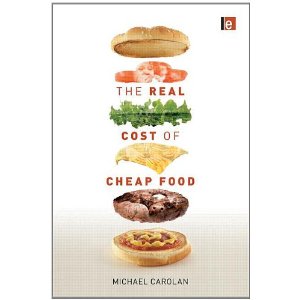
‘This is an engaging, brilliantly argued and very well-written text. It is among the best books about agri-food issues I've read in recent years. Its structure is logical, its arguments are coherent and practical, and it draws on a huge, diverse and up-to-date literature.' Geoffrey Lawrence, Professor of Sociology, University of Queensland, Australia
Michael Carolan’s book is an arresting account of the invisibilized costs of our food system. His comprehensive detailing of the political, cultural, ecological and health impacts of industrial food clearly reveals the artificial economy of pricing, demonstrating the multiple relations of food beyond its appearance as simply a commodity.
Philip McMichael, Cornell University, US
The Real Cost of Cheap Food is a must read for anyone truly interested in understanding our impaired food system and what we need to do to redesign it. As Carolan points out so brilliantly, the problem with cheap food isn't just about the “externalities” we ignore, but it lies at the heart of how our food system is designed and requires that we take a fresh, comprehensive look at the problems inherent in our globalized food system. Those problems include the poverty and the potential civic unrest and conflicts it foreshadows, its implications for human and environmental health, and what it all portends for community well-being and the need for cultural transformation. This is one of the most comprehensive treatments of this important issue available today and can serve as a guide for everyone interested in redesigning our food system for the decades ahead. Frederick Kirschenmann, Iowa State University, US
Product Description
This challenging but accessible book critically examines the dominant food regime on its own terms, by seriously asking whether we can afford cheap food and exploring what exactly cheap food affords us. Detailing the numerous ways that food has become reduced to a state, such as a price per ounce, combination of nutrients, yield per acre, or calories, the book argues for a more contextual understanding of food when debating its affordability.
The author makes a compelling case for why today's global food system produces just the opposite of what it promises. The food produced under this regime is in fact exceedingly expensive. Thus meat production and consumption are inefficient uses of resources and contribute to climate change; the use of pesticides in industrial-scale agriculture may produce cheap food, but there are hidden costs to environmental protection, human health and biodiversity conservation. Many of these costs will be paid for by future generations – cheap food today may mean expensive food tomorrow. By systematically assessing these costs the book delves into issues related, but not limited, to international development, national security, health care, industrial meat production, organic farming, corporate responsibility, government subsidies, food aid and global commodity markets. The book concludes by suggesting ways forward, going beyond the usual solutions such as farmers markets, community supported agriculture, and community gardens. Exploding the myth of cheap food requires we have at our disposal a host of practices and policies. Some of those proposed and explored include microloans, subsidies for consumers, vertical agriculture, and the democratization of subsidies for producers.
Because so much was done under the veil of secrecy, much remains unknown about the extent of the illegality. Mark Danner’s publication in these pages of the Red Cross’s report on the abusive interrogations of “high-value” detainees provides a glimpse at the horrors US agents inflicted.4 But we do not even know how many people US officials have abducted, rendered, disappeared, tortured, or killed. We do not know the extent of the injuries suffered, and still being suffered, by those we abused. We still know relatively little about the mistreatment of most of the Guantánamo detainees. We have not apologized to even a single victim—not even to those, like Canadian citizen Maher Arar and German citizen Khaled al-Masri, who were targeted for renditions and torture based on misinformation, and have been cleared of any wrongdoing themselves.
Meanwhile, our former president in his memoir has proudly proclaimed that he personally authorized waterboarding—a practice we prosecuted as torture in the past when it was used against our troops. The former vice-president recently replied affirmatively when asked whether waterboarding should “still be a tool” of interrogation. Failing to condemn such blatant wrongdoing in some official way leaves an open wound both for the victims and for the integrity of our system, and implies that the tactics were neither lawless nor immoral. The rule of law may be tenacious when it is supported, but violations of it that go unaccounted corrode its very foundation.
All of which only underscores the continuing need for an engaged civil society committed to the ideals of liberty and law. The past decade suggests that the rule of law may be stronger than cynics thought. It teaches that adherence to values of liberty, equality, and dignity is more likely to further than to obstruct our security interests. But it also illustrates our collective reluctance to confront our past, a reluctance that threatens to erode our most important values.
Officials at Creech Air Force Base in Nevada knew for two weeks about a virus infecting the drone “cockpits” there. But they kept the information about the infection to themselves — leaving the unit that’s supposed to serve as the Air Force’s cybersecurity specialists in the dark. The network defenders at the 24th Air Force learned of the virus by reading about it in Danger Room.
Phi Beta Iota: This is perfectly illustrative of the total lack of integrity that appears to prevail across the U.S. Government, but it is especially costly in the defense and intelligence worlds.
Slow Money national gatherings are quickly emerging as a significant new venue for field building, investing and social change. More than 1000 people from 34 states and several foreign countries attended our first two national gatherings, and more than $4.25 million has been invested in 16 of the presenting small food enterprises.
This grim reality is in part the impetus for the Occupy Wall Street movement, which, now in its fourth week, will take to the streets of Manhattan's Upper East Side Tuesday in what it is calling the “Millionaire's March.” Demonstrators will rally outside the homes of some of the city's wealthiest, including News Corp. (NWS) head Rupert Murdoch and JPMorgan Chase (JPM) CEO Jamie Dimon, to protest New York state's 2% millionaire tax set to expire at the end of the year.