Global Voices is a community of more than 300 bloggers and translators around the world who work together to bring you reports from blogs and citizen media everywhere, with emphasis on voices that are not ordinarily heard in international mainstream media.
Global Voices seeks to aggregate, curate, and amplify the global conversation online – shining light on places and people other media often ignore. We work to develop tools, institutions and relationships that will help all voices, everywhere, to be heard.
Robyn shares her personal story and how it inspired her current path as a “Real Food” evangelist. Grounded in a successful Wall Street career that was more interested in food as good business than good-for-you, this mother of four was shaken awake by the dangerous allergic reaction of one of her children to a “typical” breakfast. Her mission to unearth the cause revealed more about the food industry than she could stomach, and impelled her to share her findings with others. Informative and inspiring.
Amazon Page
Robyn authored The Unhealthy Truth: How Our Food Is Making Us Sick and What We Can Do About It. A former Wall Street food industry analyst, Robyn brings insight, compassion and detailed analysis to her research into the impact that the global food system is having on the health of our children. She founded allergykidsfoundation.org and was named by Forbes as one of “20 Inspiring Women to Follow on Twitter.” The New York Times has passionately
described her as “Food's Erin Brockovich.”
Phi Beta Iota: Across all twelve “policy” domains from agriculture to water, with food cutting across all domains ans especially Family, Health, and Society, we are seeing the emergence of public intelligence in the public interest. What we are not seeing (yet), is the integration of “true cost” information as a core element that must be available to the public; and the integration of all that we can know about each domain in isolation, into a larger “360 degree” strategic analytic model for getting a grip on how we live and how we spend.
For the U.S., democracy's fate in the region matters much less than the struggle between the Saudis and Iran
Robert D. Kaplan
Wall Street Journal, March 26, 2011
Despite the military drama unfolding in Libya, the Middle East is only beginning to unravel. American policy-makers have been spoiled by events in Tunisia and Egypt, both of which boast relatively sturdy institutions, civil society associations and middle classes, as well as being age-old clusters of civilization where states of one form or another have existed since antiquity. Darker terrain awaits us elsewhere in the region, where states will substantially weaken once the carapace of tyranny crumbles. The crucial tests lie ahead, beyond the distraction of Libya.
The United States may be a democracy, but it is also a status quo power, whose position in the world depends on the world staying as it is. In the Middle East, the status quo is unsustainable because populations are no longer afraid of their rulers. Every country is now in play.
Phi Beta Iota: Perhaps his meeting with Barack Obama served kool-aid, and he drank it. This article, which can certainly be considered to be an authoritative depiction of the prevailing views in Washington, is disappointing at multiple levels. The author lacks a strategic analytic model, an ethical model, and a process model, as well as an appreciation for how the tortilla has flipped. Epoch B was born in the 1970's coincident with Peak Empire when the US was thrown out of Viet-Nam by indigenous people's with stronger ethics, a stronger culture, and an unconquerable will. Today Epoch B is a young teen-ager, just beginning to flex its muscles. “Dad” can no longer win a physical contest with this young teen-ager, nor can “Dad” understand the nuances of the digital age the way this teen-ager–the first generation not to be a “mini-me” of “Dad”–does. Most of us never imagined that Wall Street and the two-party “front” for corporations would last as long as it did after the 1980's meltdown. We all under-estimated the placidity of the American public. Now the American public's perceptions are secondary. The five billion poor are on the march, and Washington has absolutely no clue what to do next.
I just completed a short field mission to Kyrgyzstan with UN colleagues and I’m already looking forward to the next mission. Flipping through several dozen pages of my handwritten notes just now explains why: example after example of the astute resourcefulness and creative uses of information and communication technologies in Kyrgyzstan is inspiring. I learned heaps.
. . . . . . .
The degrees of separation needed to verify a rumor was close to one. In the case of the supposed border attack, one member of the chat group had a contact with the army unit guarding the border crossing in question. They called them on their cell phone and confirmed within minutes that no attack was taking place. As for the rumor about the poisoned humanitarian aid, another member of the chat found the original phone numbers from which these false SMS’s were being sent. They called a personal contact at one of the telecommunication companies and asked whether the owners of these phones were in fact texting from the place where the aid was reportedly poisoned; they weren’t. Meanwhile, another member of the chat group had himself investigated the rumor in person and confirmed that the text messages were false.
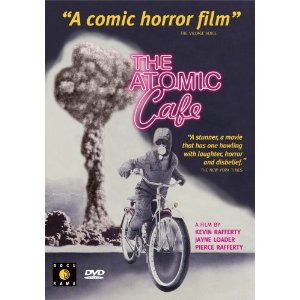
What vintage bomb survival suits have to do with Dr. Stragelove and Richard Nixon.
The recent tragedy in Japan has triggered a tsunami of terror, founded and unfounded, about the potential risks of nuclear reactors.
While there are people better equipped than us to explain the precise implications of the situation, we thought we’d put things in perspective by examining the flipside of these dystopian fears: The exuberant optimism about nuclear power in mid-century America.
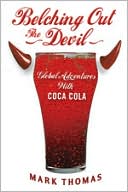
What Colombian laborers have to do with American foreign policy and the history of soda.
Labor rights are among the most pressing human rights issues in industrialized nations. But what makes the subject most devastating is how remote it feels to most of us yet how deeply infused our everyday lives are with its enablers, from the inhuman factory conditions in the Chinese factories that churn out our favorite shoes to the impossibly low wages of the Indian farmers who grow our afternoon tea. The Coca-Cola Case is an unsettling feature-length documentary by directors German Gutierrez and Carmen Garcia exploring the subject through the lens of America’s favorite soft drink, investigating the allegations that Coke orchestrated the kidnapping, torture and murder of union leaders trying to improve working conditions in Colombia, Guatemala and Turkey.
After months of investigation into Coca-Cola, all evidence shows that the Coca-Cola system is ripe with immorality, corruption and complicity in gross human rights violations, including murder and torture.”
Phi Beta Iota: Home and host country issues with multinational corporations were deeply studied in the 1970's, and then the universities were commercialized, distracted, bought off, you name it, they did everything except think holistically. The fragmentation of knowledge is the equivalent of mass human insanity. Coca Cola is representative of the broader issues, but like Nestle and others that sell “liquid,” it is particularly evil with respect to draining public water aquifers without regard to the “true cost” of that untaxed and unregulated behavior.

 The five principles driving war propaganda are in play in Libya