After soliciting the thoughts of its members, the No Labels organization has settled upon three areas of focus for the group's efforts: Policing partisan politics, promoting fiscal responsibility, and election reform.
No Labels founding member John Avlon announced this decision Monday during the weekly leaders conference call.
“Based on your feedback we have decided to focus on three core policy principles going forward.
Some conservatives call the president the political equivalent of a suicide bomber: so consumed with hatred that he's willing to blow himself up in order to inflict casualties on a society he loathes.
. . . . . . .
In short, the White House record of more than 200 years shows plenty of bad decisions but no bad men. For all their foibles, every president attempted to rise to the challenges of leadership and never displayed disloyal or treasonous intent.
Phi Beta Iota: Both the extreme right and the extreme left persist in demonizing individuals while remaining oblivious to the fact that it is the two-party “system” (remember, there are 65 parties in America, 63 of them disenfranchised) that has with malice and deliberation “sold out” the US public. The fact is that top-down governance is impossible anyway, it is pathologically dangerous when done by corrupt uninformed parties. The ONLY thing that can get America back on track is Electoral Reform–yet to our astonishment, Ralph Nader, Ron Paul, Cynthia Mckinney, all others who would seem to have everything to gain by coming together and demanding Electoral Reform in time for 2012, remain silent. Could they be part of the theater? The ONLY agile governance in the age of complexity is collective self-governance rich in clarity, diversity, and integrity. Electoral Reform is the only way to get there.
Bill Strickland's story – From struggling Pittsburgh student to MacArthur grant with a global influence, all because of his dedication to empowering underprivileged youth.
This weekend I experienced a snowcrash; a moment where the seemingly disparate pieces of information floating in my head came together. A synapse fired, a new connection was made, and I was brought to a new level of consciousness, a new way of seeing the world. In reading this over, it almost sounds obvious, but it took me a while to get here. I hope that by sharing with you, it’ll help you “get it” too. So let me take you on my thinking trail.
Tunisia: ‘I have lost my son, but I am proud of what he did'
The mother of the street vendor who set himself on fire, and triggered protests across North Africa, talks to Kim Sengupta
The street vendor who set himself alight, sparking an uprising which swept away 23 years of dictatorship in Tunisia and triggered protests across North Africa, had been beaten down by years of poverty and oppression by the authorities, his family told The Independent last night.
Mohamed Bouazizi – whose desperate act, copied in countries including Algeria and Egypt, has become a symbol of injustice and oppression – had lost his land, his living and had been humiliated by local officials.
Michel Bauwens (born 21 March 1958) is a BelgianPeer-to-Peer theorist and an active writer, researcher and conference speaker on the subject of technology, culture and business innovation.
Bauwens is founder of the Foundation for Peer-to-Peer Alternatives and works in collaboration with a global group of researchers in the exploration of peer production, governance, and property.
With Frank Theys, Bauwens is the co-creator of a 3 hour documentary TechnoCalyps, an examination of the ‘metaphysics of technology'. He taught and, with Salvino Salvaggio, co-edited a two-volume French language anthologies on the Anthropology of Digital Society.
Bauwens is the author of a number of on-line essays, including the seminal thesis Peer to Peer and Human Evolution, and The Political Economy of Peer Production. He was also editor of the email Pluralities-Integration newsletter (until 2007, when it ceased production).

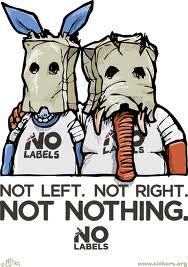 No Labels to tackle hyper-partisanship, fiscal responsibility, election reform