Review: State of the Unions–How Labor Can Strengthen the Middle Class, Improve Our Economy, and Regain Political Influence

5 Star, Capitalism (Good & Bad), Civil Society, Democracy, Future
State Unions
Amazon Page

Possibly the Most Important Book to America's Future, March 23, 2008

Philip Dine

I chanced upon this book at an airport bookstore, and after a long flight and several more hours at home with it, have put it down with an enormous sense of the righteous and epochal importance of this work. I have not trimmed my review to 1000 words because of the importance of this book, and the removal of the 1000 word limit from Amazon's current guidelines. This is IMPORTANT!

In the introduction to the book, Congressman Gephardt laments that union membership is down to 8% from 35%, for two reasons: good employers whose workers do not feel the need to unionize, and intimidation by bad employers who will stop at nothing to squelch any attempt to unionize.

He emphasizes the direct relationship between the health of the unions and the health of America's economy and its linch-pin middle class.

He is most provocative in suggesting that unions can and should displace employers as the providers of life-long benefits.

He concludes the introduction by lamenting the reality that employers pursue micro-profits instead of macro-benefits, and points out that in the absence of rules of law and fair trade, globalization will inevitably push the USA to labor conditions akin to those of the lowest common denominator–a return to sweatshops, no benefits, and despair across the land.

The book itself is phenomenal. The author, a very rare journalist who not only cares about labor issues but has also won the trust of labor leaders, has written what is in my mind the single most important book relevant to how every American should perceive the 2008 election. No candidate is serious about labor at this time. Our job is to change that, and to help labor, notably the AFL-CIO and the International Association of Fire Fighters (IAFF), change that by putting labor issues in the forefront of the economic discussion. John McCain, featured in the DVD Why We Fight, condones the impoverishment of regions to stimulate enlistments in the military-industrial complex of which he is a tacit leader. Hillary Clinton does not now and never will understand the working class–she set the standard for “bitch in residence” in the White House, according to my secret service colleagues, and she is as elitist and arrogant as it gets. Barack Obama remains surrounded by advisors who do not have a clue about Generation Y, collective intelligence, or how to create a holistic strategy that can address the ten threats with the twelve policies while helping the eight challengers avoid our self-induced The Fifty-Year Wound: How America's Cold War Victory Has Shaped Our World, the loss of the The Battle for the Soul of Capitalism and the rise of the two political parties that are a form of organized crime and Running On Empty: How The Democratic and Republican Parties Are Bankrupting Our Future and What Americans Can Do About It. It is in this context that I am simply blown away by extremely balanced, well-told, important review by a journalist uniquely qualified to provide us with a book-length review of where labor has failed, where labor shows promise, and how labor is America's bottom line: as he concludes the book, Labor defines who we are as a people.

+ Labor has unraveled, which harms America and its economy because Labor is historically the only force apart from honest religions and selected civil society elements that truly represents the moral imperatives of both social value and economic value. Decades of progress have been rolled back by Bush I, Clinton, and Bush II. Clinton in particular sold out Labor with NAFTA and the ease with which he allowed corporations to export entire programs to sweatshop countries at the same time that he reduced barriers to the dumping of both cheap and unsafe toys and other products whose “true cost” has not been properly calculated or presented.

+ Middle class, professionals, and women are going bankrupt, along with skilled blue collar workers, because the balance of power among labor, business, and government is gone–business rules.

+ 53% of Americans favor unionization.

+ Reagan's dismissal of the air traffic controllers was the signal act that destroyed decades of labor progress, and unleashed illegal, unethical, and unconscionable business repression of unions.

+ Service jobs are difficult to unionize because of high turnover, transient elements, low pay, high proportion of immigrants that can be intimidates, PLUS a lack of government penalties against business violators.

+ The above, combined with the government's enthusiastic support for exporting jobs, and poor labor leadership, have creating a sucking chest wound in the American economy. It could yet be fatal.

+ The author excels at recounting labor successes that have not been covered by the mainstream media, and he manages to do this in a way that is inspiring, objective, and not at all preachy or pontifical.

+ I am deeply moved by his account of how the IAFF, two lights down from my own office, used five methods to win Iowa for John Kerry:

– Turned out the residents (each bringing five citizens to caucuses)
– Used local presence EVERYWHERE to carry caucuses ignored by the other candidates
– Able to use local knowledge to recruit those whose candidates failed to pass the viability test
– Never gave up in darkest of times
– High public credibility and visibility

+ I am reminded that “Change to Win” started in 2005, John Kerry and his boffo haircut just could not communicate the need properly.

+ The author explains how Kerry earned fire fighter love and respect in his turning around mid-way to Asia to come back to a major fire that killed numerous fire fighters in his state, and then worked aggressively to pass fire fighter equipment and safety laws.

+ There is no other union that has a firehouse, fire trucks, uniformed personnel that are unarmed, and is able to sponsor chili feeds at the firehouses while handing out leaflets in uniform on every street corner, doing retail politics to all non-union voters.

+ Having set the stage with successes, the author then moves into a very important middle ground in which he anticipates the continued decline of labor (and of the American economy) unless labor can reassert its influence on the national agenda.

+ He is critical of labor for focusing only on “get out the vote” and not on putting its issues–all of which have moral authority–into the national dialog.

+ He points out that labor spent close to $100 million in the 2004 election across 32 states, and was a key factor in the democrats taking back both Houses of Congress.

+ He is forceful in discussing how the Republicans have made “cultural values” a smokescreen within which individuals vote for candidates that are inherently bad for the public wallet and public benefits. I have a note, “religion and ‘values' have trumped facts and consequences.”

+ He damns both parties: the Republicans for trying to eliminate minimum wage rights in the aftermath of Katrina, and the Democrats for taking labor for granted.

+ He says that the debate has not taken place regarding:

– deindustrialization of America
– dumping of unsafe and cheap products into our marketplace
– local impact of globalization (and of course Wal-Mart as a cancer)
– toll on families of reduced benefits

+ He is articulate in pointing out that labor must work at two levels:

– at a national level, constant forceful attention to legislation, regulation, and the filling of oversight posts
– locally on compliance and alerts

+ The author slams the Democrats for barely winning on the basis of Republican mistakes, while being completely lacking in any strategy, message, or coherent program of their own.

+ He is devastatingly effective in evaluating the failure of labor leaders to communicate to the public that wages are at the lowest point in history as a percentage of the Gross Domestic Product (GDP) while profits are at the highest point ever in history as a percentage of the GDP.

+ He is eloquent in pointing out that most Americans have forgotten (or never learned) that strong labor equates to the greatest prosperity for the greatest number.

+ He recommends these two books as antecedent works:

Hostile Takeover: How Big Money and Corruption Conquered Our Government–And How We Take It Back
What's the Matter with Kansas? : How Conservatives Won the Heart of America

I would add The Working Poor: Invisible in America and Off the Books: The Underground Economy of the Urban Poor

+ He documents how labor has failed to impact on trade agreements, the migrations of good jobs with benefits to overseas sweatshops, and the loss of entire segments of community economics.

+ The author describes a wide range of illegal and unethical business practices that repress unionization, while also describing the ineptness of the government, with the National Labor Review Board taking an average of 889 days to make a ruling–that is almost three years and in my mind is an ATROCITY.

+ Illegal firings that we know of amounted to 31,358 in 2005. Business enjoys a “culture of impunity” fueled by loopholes, ease of long delays, and feeble enforcement.

+ Labor hurt itself with its own repression in earlier decades of dissent, and its compulsion to demand strict obedience for a unified front (at the same time that businesses had similar practices)

+ The author believes that the country hungers for a renaissance of labor and its community-oriented values and benefits. I hope so, but right now, not a single candidate has a clue how to jump into this with both feet, a heart, and a brain.

+ I am totally inspired by this author, and have a note to myself: firefighters, cops, teachers, ambulance drivers and nurses: public servants driving public policy and benefits.

+ The author is sympathetic but very critical of labor's refusal to engage with most journalists, and he provides a superb overview of how badly labor deals with media and how badly media ignores labor issues that are fundamental.

+ He is most impressive in giving modern labor a relatively clean “bill of health” with most mafia connections and most strong-arm bosses now giving way to the empowerment of individual union members, open elections, and greater accountability.

+ He calls on labor to humanize, regionalize, and think big.

+ Labor should tell the story of its role in East European democratization and carry that creative role to the Second World.

+ Labor should compare and publicize the grotesque profits and compensation packages of industry, with those of the workers on whose backs those profits are unjustly earned.

I put this book down with a sense of wonder, a hard-eyed sense of the possibilities, and a very strong conviction that this author and this book have nailed the future of America as a Republic: Labor can be the king-maker at the national and state levels in 2008, and I pray that Labor will first learn the difference between transpartisan and bi-partisan (code for preserving the two party spoils system, something both McCain and Clinton absolutely want).

In that vein, I imagined a month national “open house” across police stations, fire stations, hospitals, and schools, in which Video-Teleconferencing was used to sponsor a national town-hall meeting to consider the ten threats and twelve policies, to elect a People's Cabinet, and perhaps funded by the Peter G. Peterson Foundation under the leadership of David Walker (former Comptroller General who told Congress USA is insolvent and quit when they would not act responsibly), a Public Budget Office capable of producing a balanced budget by 4 July 2008, and demanding that each candidate do the same (both appoint a Cabinet and produce a balanced budget for online examination before November 2008).

The author, in my opinion, is long overdue for recognition and promotion as the voice of labor, serving a new virtual Labor Congress that sets aside the fiefdoms and irrationality of the labor archipelago, and speaks to America with one voice and one practical agenda to restore America the Beautiful.

See also:
Society's Breakthrough!: Releasing Essential Wisdom and Virtue in All the People
Collective Intelligence: Creating a Prosperous World at Peace

Vote on Review

Review: Daydream Believers–How a Few Grand Ideas Wrecked American Power

5 Star, Congress (Failure, Reform), Corruption, Diplomacy, Empire, Sorrows, Hubris, Blowback, Executive (Partisan Failure, Reform), Impeachment & Treason, Insurgency & Revolution, Intelligence (Government/Secret), Iraq, Politics, Power (Pathologies & Utilization), Religion & Politics of Religion, War & Face of Battle

Daydream BelieversTogether with a Few Other Books, All You Need to Know, March 21, 2008

Fred Kaplan

The author is kinder to the protagonists than they merit.

I give the author high marks for making the case early on in the book that the world did NOT change after 9-11, and that what really happened was that the coincidence of neo-conservative back-stabbing and Bush's well-intentioned evangelical village idiot view of freedom and democracy.

The author does a fine job of reviewing how after 9-11 we were faced with two choices, the first, going for empire (“we make our own reality”) or revitalizing alliances. The neocons in their ignorance called for regime changes, but the author fails us here by not understanding that both political parties love 42 of the 44 dictators, those that “our” dictators.

The author has many gifted turns of phrase. One talks about how their “vision” turned into a “dream” that then met “reality” and was instantly converted into a “nightmare.”

The author adds to our knowledge of how Rumsfeld empowered Andy Marshall, and how the inner circle quickly grew enamored of the delusion that they could achieve total situational awareness with total accuracy in a system of systems no intelligent person would ever believe in.

The author highlights two major intelligence failures that contributed to the policy bubble:

1. Soviet Union was way behind the US during the Cold War, not ahead.
2. Soviet economy was vastly worse and more vulnerable that CIA ever understood.

The author helps us understand that the 1989 collapse of the Berlin War created a furor over the “peace dividend” and the “end of history” that were mistaken, but sufficient to bury with noise any concerns about Bin Laden and Saudi Arabian spread of virulent anti-Shi'ite Wahabibism from 1988 onwards.

By 1997 Marshall and Andy Krepinevich were staking everything on Unmanned Aerial Vehicles (UAV), high speed communications and computing (still not real today), and precision munitions.

The author provides a super discussion of Col John Warden's “five rings” in priority order: 1) leadership and C4I; 2) infrastructure; 3) transportation; 4) population (again, war crimes); and finally, 5) the enemy. The author is brutal in scoring the campaign designed by Col Warden a complete failure. It…did…not…work (in Gulf I).

I cannot summarize everything, so a few highlights:

+ Taliban quickly learned how to defeat US overhead (satellite) surveillance–remember, we do not do “no-notice” air breather imagery any more, except for easily detected UAVs, with mud as well as cover and concealment. .

+ Excellent account of the influence on Rumsfeld of George Tenet's failure to satisfy him during a missile defense review. It became obvious to all that the U.S. Intelligence Community a) no longer had a very high level of technical mastery on the topic; and b) was so fragmented as to make the varied analytic elements deaf, dumb, and blind–not sharing with each other, using contradictory data sets, the list goes on.

Page 187 is the page to read if you are just browsing in the bookstore:

Summarizing 2007: “Not so much a return to realism as a retreat to randomness.” Also: “Grand vision was shattered by reality. Policies were devised piecemeal; actions were scattershot, aimless.” And: “put forth ideas without strategies; policies without process; wishes without means.” Devastating.

So many other notes. Here are a tiny handful:

+ Speechwriter Michael Gersen connected with Bush on an evangelical level, wrote major speeches, in the case of a foreign policy speech, without actually consulting any adult practitioners.

+ Joseph Korbel was both Madeline Albright's father and Condi Rice's educational mentor–talk about a non-partisan losing streak!

+ American Enterprise Institute and Richard Perl used Natan (Anatoly) Sharansky to impress Cheney and subvert Bush by reframing the Israeli genocide against the Palestinians as the first 21st Century war between terrorism (the hapless Palestinians) and democracy (the Israeli's).

+ He credits Eliot Abrams with devising the unique linkage between American Jews whose numbers and influence have been declining, and the Evangelical Christians whose influence peaked with Bush-Cheney.

+ He slams General Tommy Franks for providing assurances and making promises he could not keep with respect to settling and stabilizing the towns by-passed or over-run by the US Army.

+ The author is misleading in his account of the Saudi-Powell discussions on how an election would lead to radical Islamics in charge (as opposed to despotic, perverted spendthrifts).

+ Rumsfeld Lite going into Iraq meant that a quarter million tons of ordnance was looted by insurgents, which is what cost us four years time. General Shinseki is vindicated.

+ For the first time I learn of a planned Truth and Reconciliation Commission.

+ The author introduces Ahmed Chalabi but does not fully understand this man's crimes as well as his special relationship with Iran. Iran used him to get the USA to depose the Taliban and Sadaam Hussein, , and to lure the entire US military into a quagmire.

+ Department of State, Mr. White in particular, got it right every time.

+ Legitimacy and stability must come before elections.

+ Hezbollah win in Lebanon dealt a crushing blow to the Bush delusions.

+ Bush refused to deal with Syria and Iran throughout. I am reminded of how Civil Affairs was told in the first five years of the war to blow off the tribal leaders and imams, and only now are they being allowed to get it right.

+ Useful account of three failed Public Diplomacy tenures (Charlotte Beers, Margaret Tutwiler, Karen Hughes (who waited six months so her son could leave for college–so much for the importance of that job….)

+ USA sent $230 million in aid to Lebanon, while Iran poured in $1 billion via Hezbollah (meanwhile, the Chinese do the same everywhere else).

Page 191 is glorious: Bush's strategies were “based on fantasies, faith, and a willful indifference toward those affected by their consequences.”

Page 192: the real divide is “between the realists and the fantasists.”

The author quite properly slams the Democrats for not having an original idea, plan, program, bill, budget, or moral thought.

He ends by suggesting that multinational consensus is still the true litmus test for the sensibility and sustainability of any endeavor.

On this note, I conclude that five stars are right where this book should be. Incomplete, but original and provocative. Bravo.

Other recommendations:
Breaking the Real Axis of Evil: How to Oust the World's Last Dictators by 2025
Web of Deceit: The History of Western Complicity in Iraq, from Churchill to Kennedy to George W. Bush
Legacy of Ashes: The History of the CIA
The Sorrows of Empire: Militarism, Secrecy, and the End of the Republic (The American Empire Project)
DVD Why We Fight
Vice: Dick Cheney and the Hijacking of the American Presidency
The Price of Loyalty : George W. Bush, the White House, and the Education of Paul O'Neill
Fiasco: The American Military Adventure in Iraq
Rumsfeld: His Rise, Fall, and Catastrophic Legacy

Vote on Review

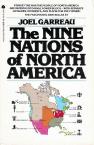
Review: The Nine Nations of North America

5 Star, Atlases & State of the World, Complexity & Catastrophe, Country/Regional, Democracy, Future, Geography & Mapping, Nature, Diet, Memetics, Design, Secession & Nullification

Nine NationsMerits Reprinting and Slight Updating, March 20, 2008

Joel Garreau

I thought I had reviewed this long ago, but evidently not. It is still very relevant to understanding and nurturing America today, and I would be very glad to see the publisher commission a slight update and then reprint this superb work.

As America strives to migrate from a disasterous and nearly fatal two-party spoils system and an Executive that is both corrupt and delusional, those who seek to lead America into a brighter future need to understand America in a new and more nuanced way. It is not about left or right. This book has been on continuing value to me as a point of reference, and I recommend it very highly in its existing state, more so if renewed.

The nine nations, each unique, are:

1. The empty quarter (which global warming will open up)
2. Quebec
3. Ecotopia (a model for the rest of us)
4. The breadbasket (which wastes water on excess foot and grows corn for fuel and cattle that is inedible and wastes more water)
5. New England
6. The Foundry (mid-Atlantic coast)
7. Dixie
8. MexAmerica
9. The Islands (of the Caribbean, where Cuban sugar cane sap could power 30-35 million cars, while Cuban health care would inform our own).

This book is one of my top eleven essential references for understanding America and the Americas. Here are the other ten:
The American Mind: An Interpretation of American Thought and Character Since the 1880's
What Kind of Nation: Thomas Jefferson, John Marshall, and the Epic Struggle to Create a United States
The Clustering of America
Losing America: Confronting a Reckless and Arrogant Presidency
The Cultural Creatives: How 50 Million People Are Changing the World
The Tao of Democracy: Using Co-Intelligence to Create a World That Works for All
Imagine: What America Could Be in the 21st Century
The Wealth of Networks: How Social Production Transforms Markets and Freedom
Revolutionary Wealth: How it will be created and how it will change our lives
Collective Intelligence: Creating a Prosperous World at Peace

Vote on Review

Review: Collective Intelligence–Creating a Prosperous World at Peace

5 Star, Best Practices in Management, Change & Innovation, Democracy, Information Operations, Information Society, Intelligence (Collective & Quantum)
097156616X
Amazon Page

Available Free Online, Hard-Copy 12 April 2008, March 20, 2008

FREE ONLINE: http://www.oss.net/CIB

Mark Tovey (ed)

This book is the first of a series of books from the Earth Intelligence Network, a 501c3 Public Charity incorporated in Virginia. As with all our books, it is available free online for inspection, digital search, and Creative Commons re-use at no cost.

We are of course very proud of the hard-copy and of being able to offer it on Amazon, and the 55 contributors, all volunteers, hope you will buy a hard-copy both for its ease of hand-eye coordination and exploitation, and to support our work in creating public intelligence in the public interest.

Here are ten other books I as the publisher personally admire, that lend credence to our proposition, hardly original in concept but uniquely documented in this book, that We the People are now ready to self-govern at the zip code and line item level.

Smart Mobs: The Next Social Revolution
The Wisdom of Crowds
An Army of Davids: How Markets and Technology Empower Ordinary People to Beat Big Media, Big Government, and Other Goliaths
One from Many: VISA and the Rise of Chaordic Organization
Wikinomics: How Mass Collaboration Changes Everything
The Tao of Democracy: Using Co-Intelligence to Create a World That Works for All
Society's Breakthrough!: Releasing Essential Wisdom and Virtue in All the People
Revolutionary Wealth: How it will be created and how it will change our lives
The Wealth of Networks: How Social Production Transforms Markets and Freedom

Vote on Review

Review: The Handbook of Large Group Methods–Creating Systemic Change in Organizations and Communities

5 Star, Change & Innovation, Democracy

Larrge GroupSomething May Be Missing, But World-Class Original Merits Appreciation, March 19, 2008

Barbara Benedict Bunker

I agree with the reviewer who notes that something may be missing (other slices of large group imagination and so on) but what I see in this book is a 5 star original updating the first original work. I am also impressed by the manner in which the author-editors have engaged a total of 49 collaborators.

Despite its size this is an easy to read and appreciate book, and in my own limited experience within this literature, stands in a class by itself.

Key Point: Must recognize and engage ALL stakeholders, including those that may be “external” to “the system” but are either inputs or outputs or victims, etc.

Key Point: This literature has developed from the 1960's focus on the social psychology of organizations, to the social psychology of networks.

Key Point: Many Small Groups = a Large System (susceptible to whole systems methods) = Future Search and Shaping.

Key Point: Real time strategic change is now known as whole-scale change (I am reminded of Kirkpatrick Sale's seminal work, Human Scale

Five methods for planning the future:
+ Search Conference
+ Future Search
+ Whole-Scale Change
+ ICAA Strategic Planning Process
+ Appreciative Inquiry

This book was published before Jim Rough's pioneering work at the Center for Wise Democracy or Tom Atlee's Co-Intelligence Institute. See:
Society's Breakthrough!: Releasing Essential Wisdom and Virtue in All the People
The Tao of Democracy: Using Co-Intelligence to Create a World That Works for All

Large Group Methods (LGM) is very ably presented by the authors and collaborators as being ideal for working with diverse groups that have different cultures, structures, and priorities. I am reminded that we live in a world dominated by pyramidal organizations that still believe in top-down elite “command and control,” and this book is therefore a revolutionary handbook for enabling bottom-up sense-making and localized social resilience.

Key point: whereas the first book focused on methods, this book focuses on challenges, the challenges rather than the methods are driving the practices.

Here are my fly-leaf notes. Some books I read to learn in depth, others I read to learn what I do not know and persuade myself the authors are essential future consultants. This is such a book. In my lifetime I cannot learn what these 49 collaborators articulate so capably.

WIDELY-DISPERSED ORGANIZATIONS
+ Defining and holding the vision
+ Tolerance for Ambiguity
+ Relationship-building

WHOLE-SYSTEM ENGAGEMENT WITH COLLABORATIVE TECHNOLOGY
+ 10% technology, 90% human interaction
+ Higher quality goals and strategies result
+ Faster decision making
+ Rapid global stakeholder alignment
+ Enhanced organizational readiness for implementation
+ New model for governance as well as participation

ORGANIZATIONS IN CRISIS
+ Focus
+ Timeline
+ Openness
+ Involvement
+ Preferences stimulate engagement
+ Seek coherence
– Directional
– Relational
– Task
– Contextual

POLARIZED AND POLITICIZED ENVIRONMENTS
+ LSG methods are more respectful of differences
+ Trust & Transformation
+ Multiple competing interests accomodated
+ Clearing the air
+ Working with tensions
+ Seven Principles
– Focus on common ground
– Rationalize conflict
– Manage conflict
– Expand individuals' view of the situation (beyond egotistic)
– Acknowledge history of group conflict and feelings
– Manage public airing of differences
– Reduce hierarchy as much as possible

COMMUNITIES WITH DIVERSE INTEREST GROUPS
+ Different from organizations, less structured, more ambiguous
+ Need sponsorship and sustainability of effort
+ Need representative planning groups from across the community
+ Skilled facilitators are essential
+ Conclude by recognizing, recording, and tracking commitments

WORKING CROSS-CULTURALLY
+ Be aware of what you do not know
+ Relationship-oriented, NOT “USA Work Before Pleasure”
+ Respect desire to maintain distance and privacy
+ Pace of decisions can be very slow
+ Respect desire to be part of a collective voice instead of an individual on the spot
+ Four Worlds
– North = intellect
– South = feeling
– East = intuition
– West = pragmatic
+ Conversations are for:
– Relationships
– Possibilities
– Action

EMBEDDING NEW PATTERNS
+ Patience
+ Respect self-organizing tendencies
+ Keep it simple

The resource section contains three additional contributions. The middle one, on graphics, captured my attention.

GRAPHICS:
+ Engage participants
+ Focus and ground energy of group
+ Provide space where participants feel heard
+ Bridge cultures
+ Surface unheard voices
+ Provide summative and integrative function
+ Provide continuity and enhance sustainability

I have personally witnessed the effectiveness of graphics at Nexus for Change and Bioneers. It is a hugely impressive technique for eliciting, capturing, and visualizing the disparate contribution of many individual minds. Those who are able to execute this function are gifted.

My eye was also caught by Covision's fast feedback cycle (bottom to top):
+ Ambivalence
+ Awareness
+ Understanding
+ MUTUAL Understanding
+ Alignment
+ Buy In
+ Commitment

The book ends with a reading list (part of what persuaded me it is better to engage these talents than try to replicate their knowledge), short bios of the very impressive collection of 49 collaborators, and a first-class index.

This is an important book. See also:
The Change Handbook: The Definitive Resource on Today's Best Methods for Engaging Whole Systems
The World Cafe: Shaping Our Futures Through Conversations That Matter
How to Change the World: Social Entrepreneurs and the Power of New Ideas, Updated Edition
The Cultural Creatives: How 50 Million People Are Changing the World
One from Many: VISA and the Rise of Chaordic Organization
Collective Intelligence: Creating a Prosperous World at Peace

I am limited to ten links. See also Group Genius, Five Minds, Smart Mobs, Wisdom of the Crowds, Wealth of Networks, Revolutionary Wealth, Infinite Wealth, Wealth of Knowledge, Army of Davids, etc.

Review: Founding Faith–Providence, Politics, and the Birth of Religious Freedom in America

5 Star, America (Founders, Current Situation), Culture, Research, Democracy, Religion & Politics of Religion

Founding FaithExtraordinary–Elegant in Concise Inisights and a Holistic Appraisal, March 18, 2008

Steven Waldman

This is a very special book. The author has done an utterly superb job of original research and elegant concise representation of the nuances in belief, practice, and circumstances with respect to the matter of religion as confronted by the Founding Fathers, and especially Ben Franklin, John Adams, George Washington, Thomas Jefferson, and James Madison.

We learn early on that freedom of religion was originally designed to apply only at the federal level–only later, when the North pushed through the Fourteenth amendment, did this get grandfathered upon the states.

We learn throughout the book that the original evangelicals wanted separation of the church and state, and made common cause with the rationalists, both groups believing that individual liberty and freedom of personal conscience were the core values.

Midway through the book we are confronted by the author with the reality that the diversity of faiths existent today in the USA render meaningless and unachievable any thought of America being a Christian or even a Protestant nation–pluralism rules.

Religion was appreciated by the Founding Fathers for its generally good impact on civic morals. George Washington especially, in the Continental Army, demanded religious tolerance, authorized chaplains, encouraged officers and men to attend religious services, and generally communicated a sense that the American Revolution was a “holy war” with God standing firmly with the colonies against England and the Church of England.

The author provides concise but no less shocking accounts of the early religious wars in America, with torture and execution and jail being imposed on Quakers and Baptists, Protestants against Jews and Catholics.

We learn that both Jefferson and Franklin doubted divinity but respected Jesus for his moral code.

Adams considered Catholics the “whore of Babylon” and this resonates with more than one modern US evangelical who has endorsed John McCain.

We larn that the Great Awakening and the revivals spawned a general practice of questioning authority.

The author draws a clear connection between political liberty and religious freedom–the two were intertwined from the beginning of the revolutionary impulse.

George Washington was spiritual but not theological.

There are many gifted turns of phrase throughout the book. One that stayed with me: Jefferson saw God not as devine, but as a “brilliant wise reformer offering a benevolent code of morals.”

Madison held a dispassionate faith in contrast to the others. He also felt that one should err on the side of separation.

From page 192 the author lists and discuonts four liberal and four conservative falacies. Buy the book.

The conclusion is as elegant as the rest of the book: Separation is the root condition for nurturing the fullest possible religious diversity and vitality.

I put this book down with an intellectual, spiritual, and civic “WOW” in mind. Truly an extraordinary work, a very important work, a lovely piece of scholarship that is meaningful to every American and every immigrant would would be an American citizen.

Other books that are faith-related that I recommend:
God's Politics LP
The Left Hand of God: Taking Back Our Country from the Religious Right
Faith-Based Diplomacy: Trumping Realpolitik
The Complete Conversations with God (Boxed Set)
American Fascists: The Christian Right and the War On America
Tempting Faith: An Inside Story of Political Seduction
Dogs of God: Columbus, the Inquisition, and the Defeat of the Moors

DVDs I recommend:
Gandhi (Widescreen Two-Disc Special Edition)
Bonhoeffer
Tibet – Cry of the Snow Lion

Review: Biocapital–The Constitution of Postgenomic Life

5 Star, Capitalism (Good & Bad), Change & Innovation, Country/Regional, Economics, Environment (Solutions), Nature, Diet, Memetics, Design, Survival & Sustainment, Values, Ethics, Sustainable Evolution

Amazon Page

Kaushik Sunder Rajan

5 of 5 stars.Ā  Treasure Trove that Ends with USA-India Axis of Good

March 9, 2008

I've been struggling with this book, published in 2006, for months. Today I realized I could combine my notes with a handful of key index entries to create a more useful synthesis. I end with ten other books I have reviewed that augment this one.

My first impression of the book was soured by the absence of any mention of green chemistry, ecological economics, or ecology of commerce. I've known about citation analysis clusters since 1970, but I grow increasingly frustrated by the fragmentation of knowledge and the constantly growing barriers between schools of thought within political-legal, socio-economic, ideo-cultural, techno-demographic, and natural-geographic.

An important early distinction is between industrial-cost for profit capitalism and commercial speculative capitalism. Toward the end of the book I finally encountered the author's emphasis on national priorities, and I for one condemn all seeds that do not reproduce naturally. In agriculture, economy, energy, health, my bottom line is that anything that retards the eradication of hunger, poverty, sustainment, or individual and social health gains, is inherent against the laws of God and man.

Early notes include:

+ Information science plays huge role in genomics. I am reminded of the convergence in the 1990's among cognitive and information science, nano-technology, bio-technology, and earth science. I have a later note, “life sciences becoming information sciences.”

+ Although E. O. Wilson is not cited, the author is on a clear convergence in taking about how valuation is a vital aspect of getting it right. I think of India as IT rich and farm poor–they are allowing the aquifers to drop a meter a year because farmers can sell a tanker-full of water for $4, which is insane, and 2,000 farmers a year commit suicide in the face of drought and debt. Valuation is a critical national function.

+ This work falls within a new category of reading that I have been increasingly impressed by, “ethnographic,” or the study of localities and particularities to map global system that is not generic, homogenized, or blurred..

+ As the author does not cite Paul Hawken or Herman Daly, I draw the distinction between the author's focus on “natural capitalism” as of the privatization of biocapital and the patenting of gnomes, and the purer definition, of natural capitalism as one that understands the true costs over the lifetime of the materials being used including water (4000 liters of water Bangladesh cannot afford to export in a designer cotton shirt), and that makes the case for going green to create gold.

+ The author views biocapital as a combination of circuits of land, labor, and value; and biopolitics.

+ Life sciences are being “overdetermined” by speculative capitalism. I agree, and apart from India's symbiotic relationship with the US, I would like to see India develop a special relationship with Cuba and with the global academic community to take patents away from speculators and carpet bagging profiteers with no morality.

+ Technoscience changing laws (I am reminded that Google is now a suprnational entity that no government understands or regulates, something similar is happening in technoscience where Recombinant DNA technology is undermining the future of life.

+ Political economy is an epistemology.

+ Life, labor, & language–biology, political economy, philology central to the knowledge of and management of humanity.

+ VERY IMPORTANT: Game requires playing in FUTURE in order to stimulate and guide present. Visit Earth Intelligence Network to read about Medard Gabel's EarthGame that for $2M a year can offer this up across the ten threats, twelve policies, and eight challengers, with embedded budgets of all organizations (governments, corporations, international and non-governmental, and charitable foundations).

+ Market valuation buries ethics, defines “allowable” ethics. Author touches, and I really respect this, on the moral value of information. Later on in the book the author cites Michael Fischer on “ethical plateaus.”

+ The author addresses the “social lives” of biological materials and biological information (note: I violently oppose Google's biomedical information initiative–we may as well become their zombies). In this vein, “ownership” of any of the bio-information constrains seamless sharing, enhancement, and I would add privacy. [Easy answer: CISCO AON on individual recyclable server-routers so individuals control all the information–medical, financial, etc. at their point of creation.] If CISCO will not do this, then India needs to.

+ Useful detailed discussion of conflicts & costs of privatized information versus information as a public good. The author makes case for blurring of lines and avoidance of either/or binary approach. I've already solved this: information in the aggregate should be public, while individual instances are private. Simple example: average spare parts costs can be derived from the aggregate while protecting the individual prices paid by any one of the contributors. AON, not Google, is the key.

+ The author emphasizes that the genome data demands robust detailed medical history to be valued. He contrasts India bio-ethics versus US. Sidenote: computational ethics are just as crucial.

+ I like, very much, the India public sector laboratories. I firmly believe that all health and education should be free, a public good similar to public safety.

+ Biocapital is complicated by context, distance, culture, financial, and technical variances among the competing parties.

+ I credit the author with this but I may have drawn it out: if we now see the value of collective intelligence, why are we having so much trouble seeing the value of collective intellectual property (the Creative Commons not-with-standing)?

+ Biopolitics centers of life (citing Foucault), accounting for and taking care of the population at large are central.

+ Political ecologies at all levels, gifting versus indebtedness, unions as a factor. UNIONS as a major factor. Vision fundamental. Direct links among ideology, capital, and locality.

+ Excluded populations (e.g. HIV not eligible…) can cause them to be consumed populations.

This is a deep complicated book hard for the lay reader (which I am), so to do it justice, I am resorting for the first time to a short list of key terms from the index that more represent the content:

belief systems
bioethical issues
biopolitics
biotechnology industry
capitalism, biocapital as new phase
diseases and illnesses
drug development marketplace
economic issues, multiple forms of currency
ethnographic research
genomics bioethics and industry
global market terrains
hype, capitalism
information ownership
intellectual property
life sciences
market value and non-market value
patient-in-waiting
populations, classification of
production issues
promissory biocapitalist futures
public domain issues
research issues
social issues
speed issues
temporality issues
therapeutic development
value access to
vision, commercial value

This is a pretty spectacular book, and someone did a great job across the board in presenting it.

Other books I would recommend:
Ecological Economics: Principles And Applications
The Ecology of Commerce
The Future of Life
Plan B 3.0: Mobilizing to Save Civilization, Third Edition
The leadership of civilization building: Administrative and civilization theory, symbolic dialogue, and citizen skills for the 21st century
How to Change the World: Social Entrepreneurs and the Power of New Ideas, Updated Edition
The Wealth of Networks: How Social Production Transforms Markets and Freedom
Society's Breakthrough!: Releasing Essential Wisdom and Virtue in All the People
Collective Intelligence: Creating a Prosperous World at Peace

Vote and/or Comment on Review
noble gold