The Arabs face a formidable task — nothing less than rebuilding the entire state structure and system of government in countries as diverse as Tunisia and Egypt, Libya and Yemen. In Syria, too, the Ba‘thist state is almost certainly doomed, whether President Bashar al-Asad survives at its head or not. It has lasted 48 years, ever since the Ba‘th party seized power in 1963. If it is to outlast the present uprising, it would need to be profoundly recast and remade in order to accommodate several neglected forces in Syrian society — sects, ethnicities, tribes, disgruntled intellectuals and the rural poor among others.
What form of government will replace the rickety Arab structures, some of which have already been brought down it, while others are still fighting to survive? What state structures will replace the old autocracies, with their bankrupt one-party rule and their all-powerful military and security apparatus? This is the key question posed by events not only in Damascus, but also in Tunis, Cairo, Tripoli and Sanaa. This is the great unknown.
The monarchies of the Arabian Peninsula (with the exception of Bahrain) stand out as islands of relative stability in the current upheaval — possibly the most radical since the fall of the Ottoman Empire. They are protected by their oil wealth, but not by that alone.
Modernised and reformed over the years, their traditional systems of government have, in most cases, proved responsive to the needs of their citizens. They have provided reasonably good governance, whether in the United Arab Emirates or Qatar, in Kuwait or Oman, or indeed in Saudi Arabia itself, the dominant power in the Peninsula. Good governance would seem to be the secret of their continued legitimacy.
We all know — because it has been said so often — that the revolutionaries of the Arab Spring want social justice, jobs, freedom from police brutality and arbitrary arrest, a chance to advance in life, better prospects for themselves and their families, a fairer distribution of their country’s resources, an end to corruption by a privileged elite, dignity and respect from their rulers. In a word, good governance.
That, above all, is what the Arab world would seem to want, rather than democracy on the Western model, of which the Arabs have had little experience; and for which they have little appetite, if it means any form of Western tutelage.
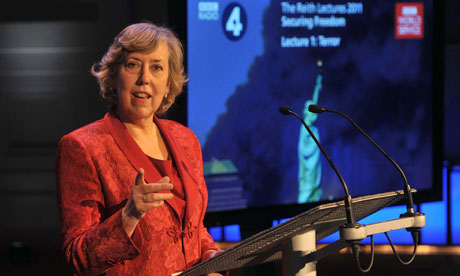
Lady Eliza Manningham-Buller, the former head of MI5, delivered a withering attack on the invasion of Iraq, decried the term “war on terror”, and held out the prospect of talks with al-Qaida.
MI5's former director general Lady Eliza Manningham-Buller during her 2011 BBC Reith lecture. Photograph: Jeff Overs/BBC/PA
Recording her first BBC Reith lecture on the theme, Securing Freedom, she made clear she believed the UK and US governments had not sufficiently understood the resentment that had been building up among Arab people, which was only compounded by the war against Iraq.
Before an audience which included Theresa May, the home secretary, she also said the 9/11 attacks were “a crime, not an act of war”. “So I never felt it helpful to refer to a war on terror”.
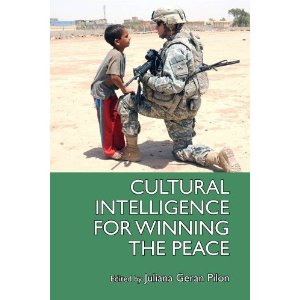
The greatest threat facing the USA is the irony inherent in our current defense posture, like for example planning to use nuclear energy embodied in missiles to fight over oil fields that nuclear energy could replace. This irony arises in part because the USA’s current security logic is still based on essentially 19th century and earlier (second millennium) thinking that becomes inappropriate applied to 21st century (third millennium) technological threats and opportunities. That situation represents a systematic intelligence failure of the highest magnitude. There remains time to correct this failure, but time grows short as various exponential trends continue.
5.0 out of 5 stars In the Ada Bozeman Tradition–a Vital Stepping Stone,August 16, 2011
EDIT of 10 Sep 2011 to add more specifics and a concluding judgment.
I am delighted to see that Look Inside the Book has been activated and urge one and all to look over the table of contents and then buy the book. This is a preliminary review, mostly because it causes me pain to see no review at all on this important work. A copy of the book is on the way to me from the publisher. I will insert my substantive additional comments in a few days.
The book is in the Ada Bozeman tradition, and brings back to mind my continuing recommendation that no one be allowed to graduate from any serious international studies or international security course without reading at least the 25-page introduction, but ideally the full work:
She is to intelligence and statecraft what Will and Ariel Durant are to the study of history.
It distresses me to observe that we have not come far since this book was published, with many failures across the fifteen slices of human intelligence (HUMINT) among which are included the Human Terrain Teams (HTT) that I believe should be absorbed into the new active duty Civil Affairs Brigade with regional battalions. This would be an excellent time to hold a conference and do a follow-on book, this time integrating both the full spectrum of HUMINT capabilities, and the new meme, Multinational, Multiagency, Multidisciplinary, Multidomain Information-Sharing and Sense-Making (M4IS2).
Within this book, several of the chapters stand out for me:
“Hybrid Wars” by Col John J. mccuen, USA (Ret)
QUOTE (75): “Hybrid war appears new in that it requires simultaneous rather than sequential success in these diverse but related ‘population battlegrounds.'”
“Avoiding the Cookie Cutter Approach to Culture: Lessons Learned from Operations in East Africa,” by Maj Christopher H. Varhola USAR and LtCol Laura R. Varhola, USA
QUOTE (156): Inadequate preparation and planning (today) “Despite the lessons learned in Iraq, operations like those ongoing in Kenya and Tanzania are marked by high personnel turnover. Moverow, most of the personnel desployed there have received little or no training on the region, have no Swahili language ability, and do not have a chain of command insisting that they learn the indigneous language in situ [which would not matter since they rotate out so quickly.”
Key lessons not learned in Africa Command (AFRICOM):
01 Mistaking the power of tribal identity
02 Overlooking cultural complexity
03 Dubious public affairs efforts
04 Misunderstanding religious influence
05 Ignoring economic and power relations
I am stunned–stunned beyond belief–that military commanders desperate for a culture belly-button have tended to appoint the predominantly Christian chaplains to that position. Talk about the blind leading the deaf.
“Fourth Generation Warfare evolves, Fifth Emerges,” by Col T. X. Hammes, USMC (Ret).
QUOTE (312): Fifth-generation warfare will result from the continued shift of political and social loyalties to causes rather than nations.”
Col Hammes provides a very tight opening on how most of the US Government refused to take 4th Generation warfare seriously (even after Al Qaeda stated that this was their focus), and does a nice job of showing how all generations of warfare continue to be present while fifth generation emerges in which the emphasis is on a global strategic narrative (information operations) with supporting violent actions.
The book ends with an all too short piece from Antulio Echevarria II, one of the top scholars at the U.S. Army's Strategic Studies Institute (SSI), on “Wars of Ideas and the War of Ideas, and that is perhaps the irony of this superb work brouight together by editor Juliana Geran Pilon: despite the excellence of this specific book, and the coherence of the contributions from all of the authors, the US Government generally, including the Department of State, and the Department of Defense more specficially, are in the toilet when it comes to recognizing the cultural nuances of confrontation in the 21st Century.
I am reminded of Tony Zinni's brilliant distinction among the six different wars that were waged in Viet-Nam all at the same time depending the geographic and demographic terrain, this author takes the concept a step further to posit something that does not exist but should: Whole of Government Multinational Multifunctional War-Peace Spectrum Operations–full court press on all fronts, not just the military front.
Here are a tiny handful of books that I respect along with this one, on this topic. The US Government is massively ignorant about reality and especially about cultural nuances, so all of these books are vital to anyone who has aspirations of public or private service in the international arena, who wishes to display integrity in all respects. Any fool can lecture the “other,” understanding them is quite another matter.
IBM will acquire i2 to accelerate its business analytics initiatives and help clients address crime, fraud and security threats. Financial terms were not disclosed.
. . . . . . .
Organizations in both the public and private sectors today are facing an exponential increase in “big data” — information and intelligence coming from disparate and unstructured sources including social media, biometrics and criminal databases. When it is accessible to the people who need it, this information can be used to anticipate potential problems, make better, faster decisions, and coordinate resources to deliver exceptional service to citizens and customers.
Phi Beta Iota: Fascinating, since I2 is to analytics as water is to C-Rations….humans do the fat-fingering, humans carry the water. As much as we like the idea of IBM trying to do more in analytics, this seems like a superficial acquisition that does not address the fundamentals. They might have been better off talking to any number of individuals focused on massive global gaming, human computation, and crowd-sourcing.
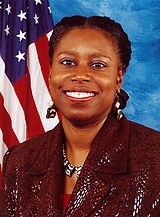
On today, the anniversary of the overthrow of King Idris in Libya, the neo-colonial powers met in France to continue their drive at the new carve-up of Africa. This set of circumstances makes many of us very sad.
I had a dream last night. I was caught in the midst of intense fighting–street fighting: house to house. I guess I was channeling what the typical Libyan is feeling and has been feeling for the past 6 months. In my chats with DIGNITY Delegation members, one thing is clear: we are traumatized by what is happening to the lovely people of Libya. But imagine, if we feel that way, how must they feel? Terrorized and worse.
When the DIGNITY Delegation of journalists was there, we could already see the impact of the bombing on patients in the hospital, children trying to understand what was happening, women trying to soothe their families, men trying to carry on with their normal activities, shopkeepers trying to eke out a living despite fighting and bombing all around them, Black Libyans who felt threatened by their fellow countrymen and the outsiders who have streamed into the country, siding with NATO and openly boasted of killing dark-skinned Libyans (who number between 50% and 58% of the population, according to one of the Libyans who joined us on the tour, now returned to his country, not the 30% written in the special interest press) and non-Libyan Africans. Continue reading “Cynthia McKinney: Libya Eyewitness Tour Final Report”