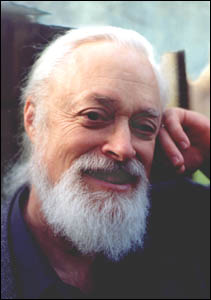
Speaking of Tom's work … This morning I stumbled across a podcast, which includes the audio from a TV interview I did with Tom in the year 2000. The podcast is from Jarrett Sanchez' NEXT STEP, a podcast partially inspired by Tom's work. Tom was at least fifteen years ahead of the times in 2000 so his perspective is becoming more commonsensical today.
Phi Beta Iota: The audio tape is 30 minutes long. Tom Atlee is in many ways “ground zero” for deliberative democracy, a hub to whom all of the “modalities” from Open Space Technology to Collective Intelligence to Conscious Evolution to Appreciative Inquiry to Participatory Budgeting to Citizen Wisdom Councils to World Cafe all connect.
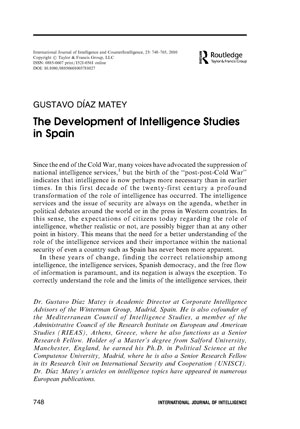
Phi Beta Iota: Gustavo DIAZ Matey is the leading author in the Spanish language on the topic of intelligence as a discipline, profession, and inherently unclassified process of decision-support.
The Obama administration and its NATO allies will declare late this week that the war in Afghanistan has made sufficient progress to begin turning security control over to its government by spring, months before the administration’s July deadline to start withdrawing U.S. troops, according to U.S. and European officials.
Even as it announces the “transition” process, which will not immediately include troop withdrawals, NATO will also state its intention to keep combat troops in Afghanistan until 2014, a date originally set by Afghan President Hamid Karzai.
The seemingly contradictory messages, in communiques and agreements to be released at NATO’s upcoming summit in Lisbon, are intended to reassure U.S. and European audiences that the process of ending the war has begun.
At the same time, the coalition wants to signal to the Taliban – along with Afghans and regional partners who fear a coalition withdrawal, and Republicans in Congress who oppose it – that they are not leaving anytime soon.
KABUL- President Hamid Karzai said on Saturday that the United States must reduce the visibility and intensity of its military operations in Afghanistan and end the increased U.S. Special Operations forces night raids that aggravate Afghans and could exacerbate the Taliban insurgency.
Phi Beta Iota: Deja vu…we have the uneasy feeling that Brzezinski and whoever is still whispering in Obama's ear is pulling a Kissinger–four more years will kill thousands more at a cost we cannot afford for a purpose we have never legitimately defined.
James Fergusson returns after three years to Chak, just 40 miles from Kabul, to find the Taliban's grip is far stronger than the West will admit
Independent, 14 November 2010
The sound of a propeller engine is audible the moment my fixer and I climb out of the car, causing us new arrivals from Kabul to glance sharply upwards. I have never heard a military drone in action before, and it is entirely invisible in the cold night sky, yet there is no doubt what it is. My first visit to the Taliban since 2007 has only just begun and I am already regretting it. What if the drone is the Hellfire-missile-carrying kind?
Three years ago, the Taliban's control over this district, Chak, and the 112,000 Pashtun farmers who live here, was restricted to the hours of darkness – although the local commander, Abdullah, vowed to me that he would soon be in full control. As I am quickly to discover, this was no idle boast. In Chak, the Karzai government has in effect given up and handed over to the Taliban. Abdullah, still in charge, even collects taxes. His men issue receipts using stolen government stationery that is headed “Islamic Republic of Afghanistan”; with commendable parsimony they simply cross out the word “Republic” and insert “Emirate”, the emir in question being the Taliban's spiritual leader, Mullah Omar.
The most astonishing thing about this rebel district – and for Nato leaders meeting in Lisbon this week, a deeply troubling one – is that Chak is not in war-torn Helmand or Kandahar but in Wardak province, a scant 40 miles south-west of Kabul.
Phi Beta Iota: We are reminded by this piece of how the best CIA desk officers knew instantly, the day we announced going to war in Viet-Nam, that we had gotten it wrong, that Ho Chi Minh was a nationalist, and that we would lose. By the time Afghanistan rolled around, intelligence had become both jejeune and unethical (silent in the face of treason), and politics had become even more ideologically psychopathic and corrupt than ever before. James Fegusson has given us a very fine contribution–this is ground truth at its best.
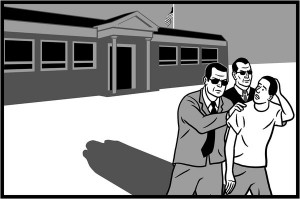
Mid-1990s: Gonzalez, 14, is visited by F.B.I. agents at his high school for hacking into NASA.
Gonzalez, law-enforcement officials would discover, was more than just a casher. He was a moderator and rising star on Shadowcrew.com, an archetypal criminal cyberbazaar that sprang up during the Internet-commerce boom in the early 2000s. Its users trafficked in databases of stolen card accounts and devices like magnetic strip-encoders and card-embossers; they posted tips on vulnerable banks and stores and effective e-mail scams. Created by a part-time student in Arizona and a former mortgage broker in New Jersey, Shadowcrew had hundreds of members across the United States, Europe and Asia. It was, as one federal prosecutor put it to me, “an eBay, Monster.com and MySpace for cybercrime.”
Phi Beta Iota: We opened Hackers on Planet Earth (HOPE) in 1994, making the observation that when the Israeli's captured a hacker they gave him a job, while the US simply kicked them in the teeth and sent them to jail. We tried to keep Phiber Optic out of jail, and we have for decades been on record comparing hackers to astronauts–full of the right stuff and pushing the edge of the envelope. No one, including Marty Harris then in charge of the National Information Infrastructure (NII) wanted to listen. Today the US Government is again ignoring the warnings on the urgency of getting a grip on all information in all languages all the time, and roughly 20 years behind in creating “root” cyber-security. This article by James Verini is a phenomenal update on what we all knew in the mid-1990's that the US Government is still oblivious to–this is not a problem technology or wanton spending can solve–this is a problem that demands discipline, integrity, intelligence, and sharing. It is neither possible nor desireable to secure government or military computers in isolation–this is an “all in” smart safe nation challenge.
This book is an excellent description of the application of scientific theories primarily from the fields of mathematics and physics to military theory and practice. Bousquet's approach is original, if somewhat eccentric, and he succeeds in clearly explaining both complex scientific theories and their influence on military strategies and tactics.
He divides what he terms “techno-scientific regimes” into four categories that more or less follow the historical development of technology. Thus he argues that the development of a reliable mechanical clock was reflected in military thinking by the introduction of synchronized battle drill and orderly, if often complex, planning and execution of strategy and tactics. Bousquet considers that the identification of the rules of thermodynamics directly influenced the military doctrines of rapid, dispersed, and unpredictable movement that culminated in WWII with such tactical and operational formulations as the German Blitzkrieg. His treats the third regime the computer and its military counter-part “cybernetic warfare” as the introduction of large quantities of information and rapid telecommunications as well as command and control systems as establishing the means of reducing the normal uncertainty and chaos of battle. This was the age of operations research and systems analysis which, as Bousquet notes, came to grief in the Vietnam War. His fourth regime is derived from “chaos theory” and the concept of networked type of organizations in which decision making is dispersed down to the smallest possible unit. This regime's application to military theory essentially embraces chaos rather than minimizing it and uses it to confuse and confound the enemy.
It is in this fourth regime that Bousquet has a number of really interesting ideas. He gives credit to the increasingly recognized ideas of Colonel John Boyd (USAF ret. 1927-1997) who deliberately used such scientific theories as the Second Law of Thermodynamics and Chaos Theory in his military thinking. Using these theories, Boyd for example developed his famous Observe, Orient, Decide, Act (OODA) “loop” which is a very accurate conceptual model for all command and control (C2) systems. By using these theories, Bousquet was able to clearly describe the concept of Network Centric Warfare (NCW) as originally conceived and advocated. He notes that NCW was information driven and designed to thrive on the chaos of war. There was a rather vague strategy derived from NCW, but it was never really developed. The original NCW concept incorporated the concept of non-hierarchical network type of organizations in which information sharing allowed situational awareness information was pushed to the highest levels of command while decision making was pushed to the lowest level possible. NCW was founded on an advance command and telecommunication system called, “Command. Control, Communications, Computers, Intelligence, Surveillance, and Reconnaissance” (C4ISR). All forms of C4ISR systems are designed as information management systems specifically for the high flows of information produced by 21st Century information acquisition and forwarding systems.
This book would be a good companion to “Science, Strategy, and War” by Frans P.B. Osinga which is a careful examination of the scientific origins of Boyd's theories.
RETIRED READER SPECIAL ADDITION FOR PHI BETA IOTA READERS
The question that I have is has anyone in the Office of the Director of National Intelligence (ODNI) read this book or Osinga’s and noted the appropriateness of using scientific theories to develop a real theory of intelligence? The uncertainty principle, entropy, and chaos theory all seem to be applicable to the issues confronting U.S. intelligence. A theory of intelligence based on scientific theory as opposed to the fuzzy academic exercises that now pass for intelligence theories would be the first step in developing a real strategy for intelligence in the 21st Century. At present within the Intelligence Community (IC) strategic planning is hopelessly conflated with so-called “vision statements” and neither serve any rational purpose. And there is no theory of intelligence worthy of the name.
Lukas Biewald, 11.09.10, 04:00 PM EST for Forbes.com
How crowdsourcing will change the way the world works.
s the amount of digital work increases and the amount of physical work decreases, our notions of employment and work change profoundly. Digital work doesn't require roads and factories; it requires a laptop and an Internet connection–equipment that people have access to in their homes. The need for offices, supervisors and rigid employment arrangements diminishes.
As technology improves, companies should theoretically be able to access in real-time the perfect person for a given job–the one who will do the job the best, enjoy it the most or do it the fastest. All these factors combine in a way that will change the landscape of work. Here's what I think that will look like:–Within a decade résumés will become less important as we continue to adopt newer, multifaceted ways to measure the quality of a candidate's work.