These SIPRI Fact Sheets present data from the SIPRI Multilateral Peace Operations Database to illuminate some of the most significant developments in peace operations around the world in 2009 as well as trends over the decade since 2000. They include statistical data on numbers and type of peacekeeping personnel, the organizations and countries mounting operations and deploying personnel, along with maps of peace operations that were active in Africa, Asia and Europe during 2009.
About the author
Kirsten Soder (Germany) was a Researcher with the SIPRI Armed Conflict and Conflict Management Programme. She managed the SIPRI Multilateral Peace Operations Database between 2006 and 2010.
We are not sure if you are looking for the Earth Rescue Network patch, but since there is not world army shoulder patch and you looked here, below is the link to our patch, representing a global hybrid network, all volunteers, all focused on creating a prosperous world at peace through the use of information converted into intelligence (information arbitrage).
The contest between coal-fired energy production and water demand is a mismatch. Mining and burning coal accounts for half of all water withdrawals in the United States, which is the same amount of water that pours over Niagara Falls in five months. Burning coal in power plants also is the source of more climate-changing carbon emissions than any other industrial sector. Here’s a look at the economically essential and ecologically damaging accord between coal and water.
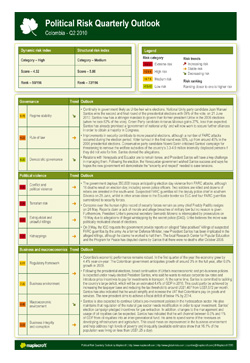
Phi Beta Iota: All well and good, but nothing here about whether the government has a holistic strategy, adequate decision support, Whole of Government planning and programming, and so on. This is a good start that could be made vastly better by embracing the larger contruct of political-legal, socio-economic, ideo-cultural, techno-demographic, and natural-geographic.
“Science is a voyage of discovery and Katy Börner has provided its first atlas. This excellent book offers a compendium of all that is best in explaining visual maps of our scientific knowledge.”
—Michael Batty, University College London, author of Cities and Complexity: Understanding Cities with Cellular Automata, Agent-Based Models, and Fractals (MIT Press)
Product Description
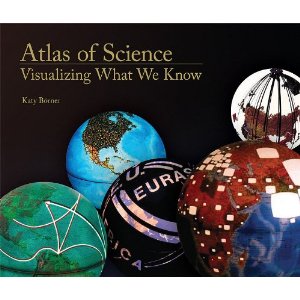
Cartographic maps have guided our explorations for centuries, allowing us to navigate the world. Science maps have the potential to guide our search for knowledge in the same way, helping us navigate, understand, and communicate the dynamic and changing structure of science and technology. Allowing us to visualize scientific results, science maps help us make sense of the avalanche of data generated by scientific research today. Atlas of Science, features more than thirty full-page science maps, fifty data charts, a timeline of science-mapping milestones, and 500 color images; it serves as a sumptuous visual index to the evolution of modern science and as an introduction to “the science of science”—charting the trajectory from scientific concept to published results.
Atlas of Science, based on the popular exhibit “Places & Spaces: Mapping Science,” describes and displays successful mapping techniques. The heart of the book is a visual feast: Claudius Ptolemy's Cosmographia World Map from 1482; a guide to a PhD thesis that resembles a subway map; “the structure of science” as revealed in a map of citation relationships in papers published in 2002; a periodic table; a history flow visualization of the Wikipedia article on abortion; a globe showing the worldwide distribution of patents; a forecast of earthquake risk; hands-on science maps for kids; and many more. Each entry includes the story behind the map and biographies of its makers.
Not even the most brilliant minds can keep up with today's deluge of scientific results. Science maps show us the landscape of what we know.
Exhibition (Ongoing) at National Science Foundation, Washington, D.C.; The Institute for Research Information and Quality Assurance, Bonn, Germany; and Storm Hall, San Diego State College
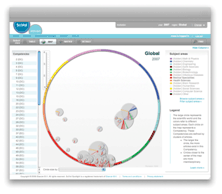
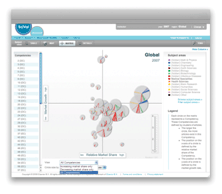
Elsevier is now commercializing what Dick has been doing for the last twenty years in one-of productions, and we believe this capability will be extraordinary, not only in performance measurement and performance enhancement for specific disciplinary units, but in demanding that inter-disciplinary and integrative problem-finding and solving come back into being.
Code for America was founded to help the brightest minds of the Web 2.0 generation transform city governments. Cities are under greater pressure than ever, struggling with budget cuts and outdated technology. What if, instead of cutting services or raising taxes, cities could leverage the power of the web to become more efficient, transparent, and participatory?