Sustainability experts have called on global regulators to ask companies to report on their sustainable policy and performance, disclosing results in a similar way to financial reporting.
“A ‘report or explain’ approach could persuade more companies to report rather than explain why they don’t,” said Teresa Fogelberg, deputy chief executive of the Global Reporting Initiative (GRI).
. . . . . .
About 4,000 global companies report their sustainability performance, using reporting guidelines recently updated by the GRI.
These focus on 79 issues including consulting stakeholders on important topics, human rights, the impact on local communities and gender matters.
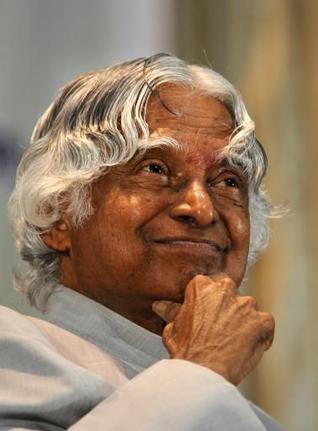
Former President, Mr A P J Abdul Kalam today said that to create a better world, it is necessary to alleviate poverty, safeguard drinking water, use clean energy and ensure quality education and values for all.
Mr Kalam, who was honoured at a public reception by the Indo-American Centre (IAC) here, said: “The world is integrally connected through the environment, economy, people and ideas.”
He said that we need an educational value system, and ideas and innovations should not be politically inclined.
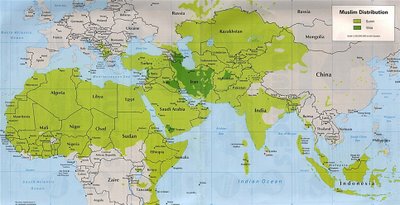
On political unrest in the Middle East, Mr Kalam explained how the Egyptian revolution for a change to democracy has spread to the Arab world.
whether talking about a intelligent knowledge infrastructure, robert's global brain, or suresh's project matching for climate change initiatives, this article seemed useful.
Futurescaper is an online tool for making sense of the drivers, trends and forces that will shape the future. As a user interface system, it is horrible. As a tool for analyzing and understanding complex systems, it works pretty well. Several people asked me about this after my last post, so here is some more detail.
Following the logic of collective intelligence (as part of my my PhD), I broke up the the scenario thinking process into discrete chunks, came up with a system for analyzing and relating them together, and then distilled them into key outputs for helping the scenario development process: 1) Emergent Thematic Maps 2) Revealing Hidden Connections 3) Drilling Down
The first system is called “Futurescaper” and was developed in partnership with the International Futures Forum (IFF), Tony Hodgson and my friend Nathan Koren. This was piloted on a project for the UK Government, exploring secondary and tertiary impacts of climate change.
10 April 2011: John Vidal: Bolivia is set to pass the world's first laws granting all nature equal rights to humans. The Law of Mother Earth, now agreed by politicians and grassroots social groups, redefines the country's rich mineral deposits as “blessings” and is expected to lead to radical new conservation and social measures to reduce pollution and control industry
19 Apr 2011: Jonathan Glennie: Bolivia under President Evo Morales is seeking a radical development model based on equality and environmental sustainability – and there are lessons we can all learn.
13 Apr 2011: John Vidal: Development, by the west, creates considerable imbalances and a million problems. Indigenous people can solve these, says David Choquehuanca, Bolivia's foreign minister
In other words, someone has sold Obama on Pakistaning the Libyan War, i.e., pursuing a military strategy of relying on drone attacks to a destroy an adversary hiding in the environmental background. What is astonishing is that Obama took the cape, despite the fact that only 12 days earlier, a report in the Los Angeles Times by David Cloud illustrated once again the absurdity of Cartwright's and Gates' claims.
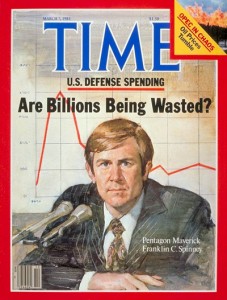
In what may be one of the finest five minute presentations by Congressman Ron Paul (R-TX-14), he summarizes how US sanctions are equivalent to a declaration of war, and goes on to review how we are spending one trillion dollars a year (that we borrow) to militarize the world, in the process driving everyone into the hands of the Chinese.
This does not appear to be a prepared speech–it appears to be statesmanlike common-sense. Phenomenal.