Journal: Eradicating Poverty One Micro-Job at a Time

Advanced Cyber/IO, Analysis, Augmented Reality, Budgets & Funding, Collaboration Zones, Collective Intelligence, Communities of Practice, Ethics, Geospatial, Historic Contributions, info-graphics/data-visualization, InfoOps (IO), Intelligence (government), International Aid, Journalism/Free-Press/Censorship, Key Players, Maps, Methods & Process, microfinancing, Open Government, Policies, Policy, Politics of Science & Science of Politics, Reform, Research resources, Strategy, Technologies, Threats, Tools, Videos/Movies/Documentaries

Working for change: Samasource redefines international aid

December 10, 2010

On Need to Know, we do a lot of reporting about the world’s problems. But we’re premiering a new series about people coming up with creative solutions — it’s called “Agents of Change.”

Click on title to read short intro and option to view video….

9 minutes — summary

Social entrepreneur challenging conventional wisdom

Samasource–microwork (small digital tasks that can be done on an inexpensive computers).

Building 21st Century assembly line that can break down massive tasks (e.g. updating addresses for Google maps, or translating emergency messages from Creole to English).  Won contracts with Google, LinkedIn, Microsoft.

15% premium for socially-conscious companies, AND competitive on cost, quality, and turnaround time.

Small scale digital tasks did not exist before.

Transforming lives, especially women, young men, and refugees.  $5 a day is very much better than local norms, and buys an active English-speaking brain with hands able to do quality work.

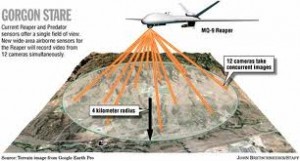
IMPORTANT:  Developing world is out-pacing USA and West generally in extending Internet infrastructure to the poor–centers created, humans come in, also doing viewing (Gorgon Stare, take note!), creating logs of store videos on shopper buying habits, anything that can be noticed and logged by a human–$5 a day.

Phi Beta Iota: We could not, in a million years, have found a better “off-set” to the USAF Gorgon Stare program.  This micro-tasking, combining human brains and hands with Internet access, is one of  the most profoundly intelligent and socio-economically useful ideas we have seen in our lifetimes (there are 800 of us here).  BRAVO.
Reference: Gorgon Stare–USAF Goes Nuts (Again)

04 Inter-State Conflict, 05 Civil War, 08 Wild Cards, 10 Security, Advanced Cyber/IO, Analysis, Augmented Reality, Budgets & Funding, Geospatial, info-graphics/data-visualization, InfoOps (IO), Intelligence (government), Maps, Methods & Process, Military, Misinformation & Propaganda, Officers Call, Policy, Politics of Science & Science of Politics, Power Behind-the-Scenes/Special Interests, Reform, Secrecy & Politics of Secrecy, Standards, Strategy, Technologies, Waste (materials, food, etc)
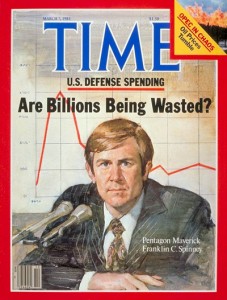
Chuck Spinney Sounds Off

SEE ALSO: Journal: Gorgon Stare (All Eyes, No Brain)

The American Way of War: If You Can See Everything, Can You Know Anything?

With Air Force's new drone, ‘we can see everything,' in today's Washington Post (attached below) is a good example of how the high-cost addiction to techno war is  running amok. One thing ought to be clear in Afghanistan: A tiny adversary armed with the most primitive weapons, and a command and control system made up of prayer rugs and cell phones, has brought the high tech US military to a stalemate … or even worse, the looming specter a grand-strategic defeat, because we are becoming economically and morally exhausted by the futility of this war.  It does not matter whether it is President Obama presiding over a vapid strategic review or a low ranking grunt on point in Afghanistan — the central problem facing the United States in Afghanistan is the absence of what the Germans call fingerspitzengefühlor the feeling in the fingerprints needed for an intuitive feel for or connection with one's environment.

As the American strategist Colonel John Boyd (USAF Ret.) showed, fingerspitzengefühl is absolutely essential to the kind of synthetic (as opposed to analytic) thinking that is necessary for quick, relevant, and ultimately successful decision making in war, where quick decisions and sharp actions at all levels must be made and harmonized in an ever-present  atmosphere of menace, uncertainty, mistrust, fear, and chaos that impedes decisive action.[1]

Article About Grogon Stare

To paraphrase Clausewitz, these difficulties multiply to produce a kind of friction, and therefore, even though everything in war is simple, the simplest thing is difficult.  Clausewitz considered friction is the atmosphere of war. Nevertheless, according to the Post, the Air Force is about to deploy to Afghanistan a “revolutionary airborne surveillance system called Gorgon Stare, which will be able to transmit live video images of physical movement across an entire town.”

Quoting Maj. Gen. James O. Poss, the Air Force's assistant deputy chief of staff for intelligence, surveillance and reconnaissance, “Gorgon Stare will be looking at a whole city, so there will be no way for the adversary to know what we're looking at, and we can see everything.”  Nirvana. While the Post dutifully reports a smattering of opposing views, it misses the ramifications of the central idea epitomized by General Poss's confident assertion: namely, how the American ideology of techno war assumes it can negate the human need for fingerspitzengefühl on a battlefield.

General Poss's confidence suggests quite clearly he believes seeing everything enables one to know everything. This a stunning theory of knowledge.  It is also a classic example of the American military's unquestioned belief that complex technologies coupled to step-by-step analytical procedures can negate the friction of combat to solve any problem in war.  Lifting the fog of war is, in fact, a phrase frequently used in contractor brochures touting the efficacy of these technologies.  This reflects theory of knowledge — really an unquestioned ideology — that views war as fundamentally a procedural problem of methodical analytical thinking, as opposed to its messy reality of being in large part an art of synthetic thinking.

Continue reading “Reference: Gorgon Stare–USAF Goes Nuts (Again)”

Journal: It’s a Depression–and It is NOT Getting Better….

03 Economy, Collaboration Zones, Communities of Practice, IO Sense-Making, Key Players
Chuck Spinney Recommends...

“End of the Recession? Who's Kidding Whom?”

Immanuel Wallerstein<

Commentary No. 296, Jan. 1, 2011

The media are telling us that the economic “crisis” is over, and that the world-economy is once more back to its normal mode of growth and profit. On December 30, Le Monde summed up this mood in one of its usual brilliant headlines: “The United States wants to believe in an economic upturn.” Exactly, they “want to believe” it, and not only people in the United States. But is it so?

First of all, as I have been saying repeatedly, we are not in a recession but in a depression. Most economists tend to have formal definitions of these terms, based primarily on rising prices in stock markets. They use these criteria to demonstrate growth and profit. And politicians in power are happy to exploit this nonsense. But neither growth nor profit is the appropriate measures.

Read full article….

Journal: Next Year’s Wars, This Year’s Gay Resistance

08 Wild Cards, 09 Justice, 10 Security, 11 Society, Civil Society, Cultural Intelligence, Government, IO Multinational, Military, Officers Call, Peace Intelligence
Marcus Aurelius Recommends

Next Year's Wars

The 16 brewing conflicts to watch for in 2011.

Foreign Policy with International Crisis Group

December 28, 2010

Large photos with captions on each

and closer to home….

THE GAYING OF AMERICA

Officer won't sign order for troop indoctrination, asks to be relieved of command over repeal of ‘gay' ban in military

Worldnet.com,Posted: December 24, 2010

An Army lieutenant colonel has asked to be relieved of command rather than order his troops to go through pro-homosexual indoctrination following the repeal of the policy, which required homosexuals to keep silent about their sexual preference.

Read article….

Journal: Why It Is Time to Leave Afghanistan

04 Inter-State Conflict, 05 Civil War, 07 Other Atrocities, 08 Wild Cards, 09 Justice, 09 Terrorism, 10 Security, 11 Society, Government, Military, Peace Intelligence
Chuck Spinney Recommends...

Afghanistan: Our mandate for action is finally exhausted

The withdrawal of our troops is not because we have won or lost in any conventional sense

Editorial

The Observer, Sunday 2 January 2011

This year will see the 10th anniversary of the war in Afghanistan and, according to current plans, the beginning of British troop withdrawal. A decade into the military campaign, there is no longer even discussion of winning. The initial objective to release the country from the despotic grip of the Taliban and prevent its use as a safe haven for al-Qaida was achieved within months. Since then, it has only ever become harder to discern what victory might look like.

There is some clarity on what would count as defeat. If Nato withdrawal leads to the total collapse of Hamid Karzai's government and a return to Taliban rule, there would be no disguising the humiliation to western powers, nor the increased security threat from jihadi terrorism. Not that President Karzai is an attractive ruler. His administration is corrupt and repressive.

Journal: Imperial by Design, Unethical by Choice

02 Diplomacy, 10 Security, 11 Society, Corruption, Cultural Intelligence, Government, Methods & Process, Misinformation & Propaganda, Power Behind-the-Scenes/Special Interests, Secrecy & Politics of Secrecy, Strategy, Threats
Who, Me?

Imperial by Design

The National Interest

From the issue

John J. Mearsheimer

December 16, 2010

Summary: The author discusses the intellectual but not the ethical underpinings of the failure of US foreign policy and national security since the first Clinton Administration.  He touches on alternative policies such as isolationalism, offshore balancing, selective engagement, global dominance, and then settles on offshore balancing as the way to go: pulling back the Army and Marines from overseas, sharply reducing their budgets, and restoring budget to the Air Force and the Navy.

Read the article….

John J. Mearsheimer is the R. Wendell Harrison Distinguished Service Professor of Political Science at the University of Chicago. He is on the Advisory Council of The National Interest, and his most recent book, Why Leaders Lie: The Truth About Lying in International Politics, was published in January 2011 by Oxford University Press.  He is also the co-author of the deeply practical The Israel Lobby and U.S. Foreign Policy and The Tragedy of Great Power Politics.

Journal: Detriot in Ruins–End of Empire From 1960’s…

03 Economy, 04 Education, 05 Energy, 09 Justice, 11 Society, Budgets & Funding, Commercial Intelligence, Communities of Practice, Corporations, Corruption, Cultural Intelligence, info-graphics/data-visualization, IO Sense-Making, Money, Banks & Concentrated Wealth, Power Behind-the-Scenes/Special Interests, Waste (materials, food, etc)
Who, Me?

Detroit in ruins: the photographs of Yves Marchand and Romain Meffre

Guardian, Sunday 2 January 2011

Sean O'Hagan

Article

Photo Gallery Direct

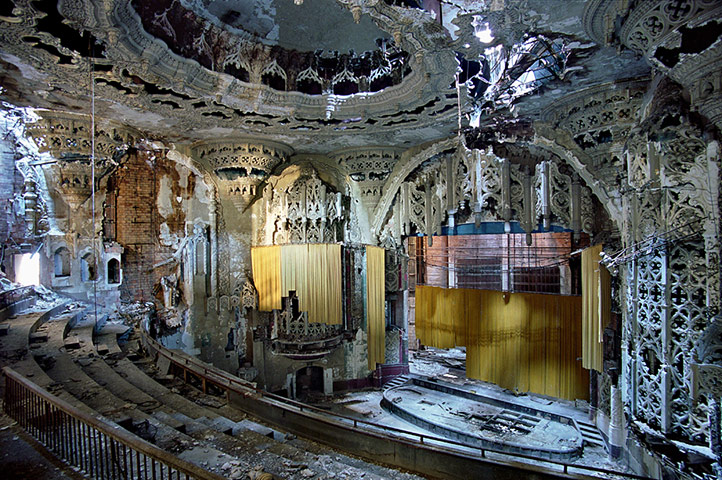
In downtown Detroit, the streets are lined with abandoned hotels and swimming pools, ruined movie houses and schools, all evidence of the motor city's painful decline. The photographs of Yves Marchand and Romain Meffre capture what remains of a once-great city – and hint at the wider story of post-industrial America

. . . . . . .

Click to Enlarge

Cumulatively, the photographs are a powerful and disturbing testament to the glory and the destructive cost of American capitalism: the centre of a once-thriving metropolis in the most powerful nation on earth has become a ghost town of decaying buildings and streets. There is a formal beauty here too, though, reminiscent of Robert Polidori's images of post-hurricane Katrina New Orleans. “It seems like Detroit has just been left to die,” says Marchand, “Many times we would enter huge art deco buildings with once-beautiful chandeliers, ornate columns and extraordinary frescoes, and everything was crumbling and covered in dust, and the sense that you had entered a lost world was almost overwhelming. In a very real way, Detroit is a lost world – or at least a lost city where the magnificence of its past is everywhere evident.”

. . . . . . .

Click to Enlarge

The Ruins of Detroit tells the city's story so far in one starkly beautiful photograph after another, all of which add up to nothing less than an end-of-empire narrative. Or as Sugrue puts it: “The abandoned factories, the eerily vacant schools, the rotting houses, and gutted skyscrapers that Yves Marchand and Romain Meffre chronicle are the artefacts of Detroit's astonishing rise as a global capital of capitalism and its even more extraordinary descent into ruin, a place where the boundaries between the American dream and the American nightmare, between prosperity and poverty, between the permanent and the ephemeral are powerfully and painfully visible. No place epitomises the creative and destructive forces of modernity more than Detroit, past and present.”

noble gold