Here are the concise references focused on revolution. For corruption, collective intelligence, open space and other methods of non-violent consensus building and emergence, see the lists at the end of this post.
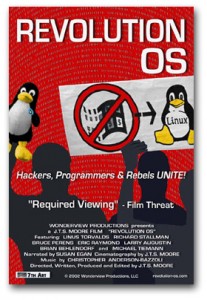
REVOLUTION OS tells the inside story of the hackers who rebelled against the proprietary software model and Microsoft to create GNU/Linux and the Open Source movement.
On June 1, 2001, Microsoft CEO Steve Ballmer said “Linux is a cancer that attaches itself in an intellectual property sense to everything it touches.”
Microsoft fears GNU/Linux, and rightly so. GNU/Linux and the Open Source & Free Software movements arguably represent the greatest threat to Microsoft's way of life. Shot in cinemascope on 35mm film in Silicon Valley, REVOLUTION OS tracks down the key movers and shakers behind Linux, and finds out how and why Linux became such a potent threat.
REVOLUTION OS features interviews with Linus Torvalds, Richard Stallman, Bruce Perens, Eric Raymond, Brian Behlendorf, Michael Tiemann, Larry Augustin, Frank Hecker, and Rob Malda. To view the trailer or the first eight minutes go to the ifilm website for REVOLUTION OS.
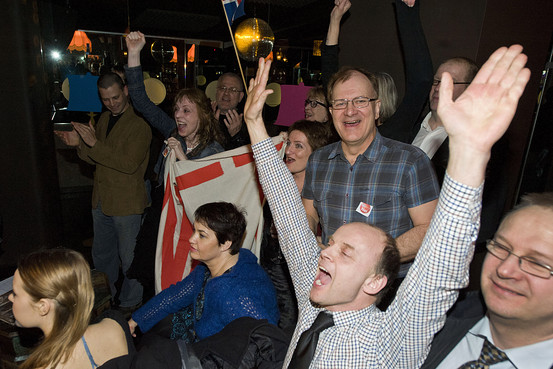
For the second time, Icelanders voted down a deal to repay Britain and the Netherlands billions of euros lost in the island nation's 2008 financial collapse—at once a bold popular rejection of the notion that taxpayers must bear the burden for bankers' woes and a risky outcome that will complicate Iceland's efforts to rejoin global markets.
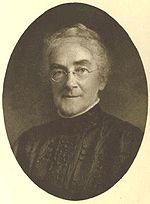
Ellen Henrietta Swallow Richards (December 3, 1842 – March 30, 1911) was the foremost female industrial and environmental chemist in the United States in the 19th century, pioneering the field of home economics. Richards graduated from Westford Academy (2nd oldest secondary school in Westford, MA). She was the first woman admitted to the Massachusetts Institute of Technology and its first female instructor, the first woman in America accepted to any school of science and technology, and the first American woman to earn a degree in chemistry.
The last time the price of oil topped $100 a barrel for an extended period, we ended up in a global financial meltdown. Is this time any different?
Not much.
All of the excessively financial leverage and fraudelent derivative wealth we had during the last melt down is still in place. Total debt to GDP levels in the US are about the same (370% of GDP or so). No reforms were made on Wall Street. Nobody at fault for the fraud that led to the last melt down went to jail, so behaviors haven't changed.
This is classic Tainter (the excellent anthropoligist/historian). He posited that complex societies only collapse when the costs of basic inputs increase at the same time the returns on investments in complex institutions/etc. turn negative. So, with oil going up again, we are seeing basic input costs rise. It's also clear that our twin overheads Government and Global Finance are well past the point they delivered positive returns for additional complexity. Worse, they are colluding, via cronyism, to prevent any meaningful changes.
The first is “A revolution against neoliberalism” by Abu Atris, it appeared in Al Jazeera on 24 Feb. The second is “Of the 1%, by the 1%, and for the 1%” by Joseph Stiglitz. One is about the Arab Revolt in Egypt and the other is about income inequality in the United States … they raise stunningly similar — and very disturbing — themes when compared to each other. I urge readers to read each carefully and think about the likenesses and differences between them.
Americans have been watching protests against oppressive regimes that concentrate massive wealth in the hands of an elite few. Yet in our own democracy, 1 percent of the people take nearly a quarter of the nation’s income—an inequality even the wealthy will come to regret.