In “borderless” cyberspace, nation states struggle — M4IS2 Anyone?

Advanced Cyber/IO, Analysis, Augmented Reality, Budgets & Funding, Collective Intelligence, Communities of Practice, Computer/online security, Corporations, Counter-Oppression/Counter-Dictatorship Practices, Cultural Intelligence, Earth Intelligence, Ethics, Geospatial, History, info-graphics/data-visualization, InfoOps (IO), Intelligence (government), Journalism/Free-Press/Censorship, Key Players, Methods & Process, Officers Call, Peace Intelligence, Policies, Policy, Politics of Science & Science of Politics, Real Time, Reform, Research resources, Serious Games, Standards, Strategy, Technologies, Threats, Tools, Whole Earth Review
Click on Image to Enlarge

Analysis: In “borderless” cyberspace, nation states struggle

By Peter Apps, Political Risk Correspondent

Reuters LONDON | Thu Jun 9, 2011

EXTRACT:

“The nature of cyberspace is borderless and anonymous,” R. Chandrasekhara, secretary of India's telecommunications department, told a cyber security conference in London last week organised by a U.S.-based think tank, the EastWest Institute. “Governments, countries and law — all are linked to territory. There is a fundamental contradiction.”

Read full article….

Tip of the Hat to Chris Pallaris at LinkedIn.

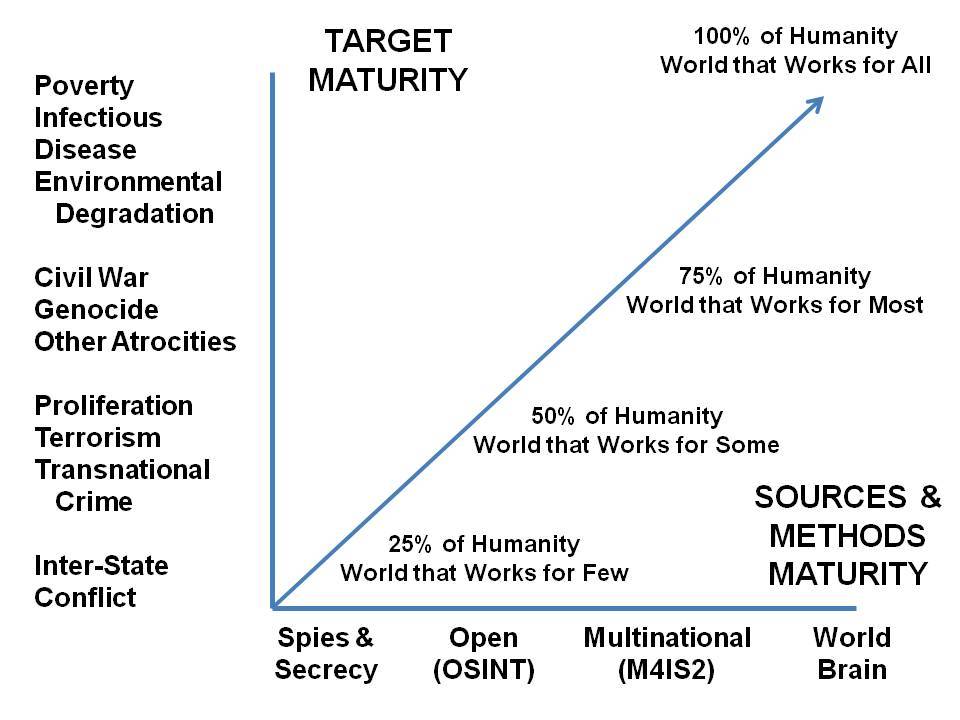
Phi Beta Iota: The national secret intelligence communities mean well, but they are cognitively and culturally incapacitated  in relation to both the global threats and the global infomation sharing and sense-making possibilities.  It may just be that the solution has to come from a private sector service of common concern that can provide the integrity now lacking in governments and most corporation.  Scary thought.  M4IS2 is inevitable….delay is costing trillions.

Doc Searls on user-driven democracy

07 Other Atrocities, 11 Society, Advanced Cyber/IO, Civil Society, Collective Intelligence, Computer/online security, Corporations, Counter-Oppression/Counter-Dictatorship Practices, Cultural Intelligence, Cyberscams, malware, spam, Government, InfoOps (IO), IO Sense-Making, Power Behind-the-Scenes/Special Interests, Privacy, Secrecy & Politics of Secrecy, Technologies, Tools
Jon Lebkowsky Bio

Doc Searls on user-driven democracy

by jonl

Speaking at the 2011 Personal Democracy Forum, Doc talks about how power relationships work in markets vs how they should  and could work. Markets are conversations, and they should be symmetrical conversations. Note his bit about how the language of marketing parallels the language of slavery….and the part where all their cookies end up giving them 50% completely wrong information.

Doc is the co-author of the Clue-Train Manifesto.

Direct Link to Personal Democracy Video

See Also:

48 Recordings on Tap from Personal Democracy 2011

Digital Activism, Epidemiology, Faster *IS* Different

11 Society, Advanced Cyber/IO, Civil Society, Collective Intelligence, Counter-Oppression/Counter-Dictatorship Practices, Cultural Intelligence, Ethics, Methods & Process, Mobile, Tools
Patrick Meier

Digital Activism, Epidemiology and Old Spice: Why Faster is Indeed Different

The following thoughts were inspired by one of Zeynep Tufekci’s recent posts entitled “Faster is Different” on her Technosociology blog. Zeynep argues “against the misconception that acceleration in the information cycle means would simply mean same things will happen as would have before, but merely at a more rapid pace. So, you can’t just say, hey, people communicated before, it was just slower. That is wrong. Faster is different.”

I think she’s spot on and the reason why goes to the heart of complex systems behavior and network science. “Combined with the reshaping of networks of connectivity from one/few-to-one/few (interpersonal) and one-to-many (broadcast) into many-to-many, we encounter qualitatively different dynamics,” writes Zeynep. In a very neat move, she draws upon “epidemiology and quarantine models to explain why resource-constrained actors, states, can deal with slower diffusion of protests using ‘whack-a-protest’ method whereas they can be overwhelmed by simultaneous and multi-channel uprisings which spread rapidly and ‘virally.’

Read entire anomalously long post….

Phi Beta Iota: Concentrations of power create preconditions for revolution.  Precipitants (such as burning monks or fruit vendors) ignite masses.  The public is a power no government can repress forever.  Howard Zinn (RIP) knew the public is a power government cannot repress; Vaclav Havel spoke to this (power of the powerless); Jonathan Schell documented it most ably (unconquerable world).  Bottom line:  With a tiny handful of exceptions, all governments have lost legitimacy and capability at the same time that the public is increasingly aware of the shocking injustices by banks and predatory corporations that have been legalized by governments.  Patrick Meier's discussion is a significant contribution to our understanding of why a global revolution is inevitable and panarchy will replace “sovereignty” as the primary operating principle for Earth.

TED: John Perry Barlow on Collective Consciousness

02 Diplomacy, 03 Economy, 09 Justice, 10 Security, 11 Society, Advanced Cyber/IO, Augmented Reality, Civil Society, Collective Intelligence, Counter-Oppression/Counter-Dictatorship Practices, Cultural Intelligence, Ethics, InfoOps (IO), Methods & Process, Officers Call, Politics of Science & Science of Politics, Power Behind-the-Scenes/Special Interests, Secrecy & Politics of Secrecy, Strategy, Technologies, TED Videos
John Perry Barlow

TEDxMarin – John Perry Barlow – The Right to Know

16:56

Phi Beta Iota: This is classic Barlow, totally new fresh look, a moving and deeply engaging personal monologue on where we are, where we are going.

“Thought is not a noun to be owned, it is a verb, an action.”

“Copyright is the wrong model for monetizing thinking.”

See Also:

Electronic Frontier Foundation

1992 Barlow (US) Information Wants to Be Free

Review: The Virtual Community–Homesteading on the Electronic Frontier

USA: Thirteen Big Lies — Needed Counter-Narrative

07 Other Atrocities, Advanced Cyber/IO, Analysis, Budgets & Funding, Civil Society, Collective Intelligence, Corporations, Corruption, Counter-Oppression/Counter-Dictatorship Practices, Cultural Intelligence, Ethics, History, info-graphics/data-visualization, InfoOps (IO), Intelligence (government), IO Impotency, Journalism/Free-Press/Censorship, Methods & Process, Misinformation & Propaganda, Money, Banks & Concentrated Wealth, Officers Call, Policies, Politics of Science & Science of Politics, Power Behind-the-Scenes/Special Interests, Reform, Secrecy & Politics of Secrecy, Standards, Strategy, Technologies, Waste (materials, food, etc)
Jock Gill

Here are a few of the BIG lies used to support the status quo.  What we need, rather urgently, is a counter-narrative

LIE 1. The earth is an open system with infinite supplies and sinks;

POSSIBLE TRUTH:  Earth is a closed system, changes that used to take 10,000 years now take three, humanity is “peaking” the entire system.

LIE 2. Everything must be monetized;

POSSIBLE TRUTH:  Money is an exchange unit and an information unit; in the absence of holistic analytics and “true cost” transparency, mony is actually a toxic means of concentrating wealth and depriving communities of their own resources (e.g. land).

LIE 3. The extreme unregulated free market is the only option for a modern economy;

POSSIBLE TRUTH:  Information asymmetries and “rule by secrecy” have been clearly documented–the free market is neither free nor fair.  A modern economy needs to be transparent, resilient, and hence rooted in the local.

Continue reading “USA: Thirteen Big Lies — Needed Counter-Narrative”

Cooperation Is Pledged By Nations Of the Arctic

06 Russia, 08 Wild Cards, Advanced Cyber/IO, Analysis, Budgets & Funding, Collective Intelligence, Communities of Practice, Earth Intelligence, Ethics, History, InfoOps (IO), Intelligence (government), Journalism/Free-Press/Censorship, Maps, Methods & Process, Open Government, Policies, Policy, Politics of Science & Science of Politics, Real Time, Reform, Research resources, Serious Games, Standards, Strategy, Technologies, Threats, Tools
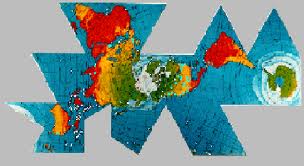
Click on Image to Enlarge

Cooperation Is Pledged By Nations Of the Arctic

By

New York Times, May 12, 2011

NUUK, Greenland — The eight Arctic nations pledged Thursday to create international protocols to prevent and clean up offshore oil spills in areas of the region that are becoming increasingly accessible to exploration because of a changing climate.

The Arctic Council — the United States, Russia, Canada, Iceland, Denmark, Norway, Finland and Sweden — said the protocols would be modeled on a separate agreement signed here in Nuuk on Thursday to coordinate search-and-rescue operations over 13 million square miles of ocean.

Read more….

Phi Beta Iota: This is potentially world-changing, but pedestrian at this time.  Legal and logistics arrangements institutionalize old ways of doing things–slow, expensive, often inappropriate ways.  Much more exciting would be for the nations to agree to create an Arctic M4IS2 Centre, perhaps based in Copenhagen or in Oslo, with an emphasis on sustainable energy and climate change to begin with, but rapidly filling out to provide holistic analytics across all threats and helpful to the harmonization of spending across all policies.  Such a center could be innovative from the first day if it includes all eight tribes of intelligence in its organizational and outreach schema, creating a model for both the United Nations and for each of the continental political organizations.

4 Trends Shaping the Emerging “Superfluid” Economy

Advanced Cyber/IO, Analysis, Augmented Reality, Budgets & Funding, Collaboration Zones, Collective Intelligence, Communities of Practice, Counter-Oppression/Counter-Dictatorship Practices, Ethics, Geospatial, History, info-graphics/data-visualization, InfoOps (IO), IO Mapping, IO Multinational, IO Sense-Making, Key Players, Maps, Methods & Process, Mobile, Policies, Real Time, Reform, Serious Games, Strategy, Technologies, Threats, Tools, Waste (materials, food, etc)
Venessa Miemis

4 Trends Shaping the Emerging “Superfluid” Economy

Venessa Miemis | May 9, 2011

This post originally appeared on CNN.com's Global Public Square.

Humanity and technology continue to co-evolve at an ever increasing pace, leaving traditional institutions (and mindsets) calcified and out of date. A new paradigm is emerging, where everything is increasingly connected and the nature of collaboration, business and work are all being reshaped. In turn, our ideas about society, culture, geographic boundaries and governance are being forced to adapt to a new reality.

While some fear the loss of control associated with these shifts, others are exhilarated by the new forms of connectivity and commerce that they imply. Transactions and interactions are growing faster and more frictionless, giving birth to what I call a “superfluid” economy.

Business will not return to usual. So let's discuss 4 key concepts to help us  better understand the shifts that are underway:

1. Quantifying and mapping everything
2. Everyone has access to the internet
3. Self-organizing expands
4. Peer-to-peer exchange changes the future of money

4 Trends discussed below the line with links

Continue reading “4 Trends Shaping the Emerging “Superfluid” Economy”