
Worth a Look: SciVal from Elsevier

Analysis, Collective Intelligence, Maps, Politics of Science & Science of Politics, Research resources, Tools, Worth A Look

SciVal Home

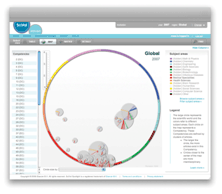
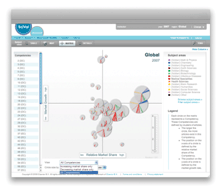
We have in the past highlighted the work of Dick Klavans, who along with Brad Ashton is one of our foremost Scientific & Technical Intelligence (S&TI) colleagues.  Apart from his book with Brad, Keeping Abreast of Science and Technology: Technical Intelligence for Business and his new web site, Maps of Science, see also on this site: 2002 Klavans (US) Technology Mapping: A Workshop on (Open) Sources & Methods for Identifying Commercial Opportunities in Technology and 2002 Klavans (US) Tomorrow’s Hotspots: Identifying Commercial Opportunities from Science.
SciVal Home

Elsevier is now commercializing what Dick has been doing for the last twenty years in one-of productions, and we believe this capability will be extraordinary, not only in performance measurement and performance enhancement for specific disciplinary units, but in demanding that inter-disciplinary and integrative problem-finding and solving come back into being.
Code for America

Civil Society, Collective Intelligence, Government, Open Government, Technologies

Code for America was founded to help the brightest minds of the Web 2.0 generation transform city governments. Cities are under greater pressure than ever, struggling with budget cuts and outdated technology. What if, instead of cutting services or raising taxes, cities could leverage the power of the web to become more efficient, transparent, and participatory?

Friends of Code for America

The Case Foundation | CityCamp | GOOD | GovFresh | GovLoop | Omidyar Network | Open311 | OpenMuni | OpenPlans | O'Reilly Media | Stamen Design | The Sunlight Foundation

Banking with “Enemies”

Commerce, Corruption, Money, Banks & Concentrated Wealth

According to court documents, from as early as the mid-1990s until September 2006, Barclays knowingly and willfully moved or permitted to be moved hundreds of millions of dollars through the U.S. financial system on behalf of banks from Cuba, Iran, Libya, Sudan and Burma, and persons listed as parties or jurisdictions sanctioned by OFAC in violation of U.S. economic sanctions.

Department of Justice Office of Public Affairs, Wednesday, August 18, 2010

Barclays Bank PLC Agrees to Forfeit $298 Million in Connection with Violations of the International Emergency Economic Powers Act and the Trading with the Enemy Act

WASHINGTON – Barclays Bank PLC, a United Kingdom corporation headquartered in London, has agreed to forfeit $298 million to the United States and to the New York County District Attorney’s Office in connection with violations of the International Emergency Economic Powers Act (IEEPA) and the Trading with the Enemy Act (TWEA), announced Assistant Attorney General Lanny A. Breuer of the Criminal Division and District Attorney Cyrus R. Vance Jr., of the New York County District Attorney’s Office. The violations relate to transactions Barclays illegally conducted on behalf of customers from Cuba, Iran, Sudan and other countries sanctioned in programs administered by the Office of Foreign Assets Control (OFAC).

Opening Beijing’s Seven Secrets

02 China, 07 Other Atrocities, Counter-Oppression/Counter-Dictatorship Practices, Open Government, Secrecy & Politics of Secrecy

Waiting for Wikileaks: Beijing's Seven Secrets

by Perry Link (Aug 18, 2010)

While people in the US and elsewhere have been reacting to the release by Wikileaks of classified US documents on the Afghan War, Chinese bloggers have been discussing the event in parallel with another in their own country. On July 21 in Beijing, four days before Wikileaks published its documents, Chinese President Hu Jintao convened a high-level meeting to discuss ways to prevent leaks from the archives of the Communist Party of China.

In emails, tweets, and web postings, Chinese bloggers, both inside China and overseas, began listing key episodes in recent Chinese history that have remained shrouded in mystery and for which they would love to see archives opened:

1. The famine during the Great Leap Forward in 1959-62. Somewhere between 20 and 50 million people died because of bad policy, not “bad weather.” What exactly happened? What policies caused the famine and what policies suppressed information on it? How much grain was in state granaries while people starved? Is it true that Mao sold grain to the Soviet Union during those years in order to buy nuclear weapons?

Continue reading “Opening Beijing's Seven Secrets”

Worth a Look: CrowdMap (Beta)

Advanced Cyber/IO, Analysis, Augmented Reality, Citizen-Centered, Collective Intelligence, Collective Intelligence, Counter-Oppression/Counter-Dictatorship Practices, Earth Intelligence, Geospatial, Historic Contributions, info-graphics/data-visualization, InfoOps (IO), Intelligence (government), International Aid, IO Mapping, Journalism/Free-Press/Censorship, Maps, Methods & Process, microfinancing, Mobile, Officers Call, Open Government, Policy, Reform, Research resources, Technologies, Tools, Worth A Look

Crowdmap (Liquida)

Crowdmap allows you to…

+ Collect information from cell phones, news and the web.
+ Aggregate that information into a single platform.
+ Visualize it on a map and timeline.

Crowdmap is designed and built by the people behind Ushahidi, a platform that was originally built to crowdsource crisis information. As the platform has evolved, so have its uses. Crowdmap allows you to set up your own deployment of Ushahidi without having to install it on your own web server.

See Also:

Graphics: Twitter as an Intelligence Tool

Reference: How to Use Twitter to Build Intelligence

Journal: Tech ‘has changed foreign policy’

Continue reading “Worth a Look: CrowdMap (Beta)”

Worth a Look: Engaging Emergence

5 Star, Best Practices in Management, Collaboration Zones, Communities of Practice, Consciousness & Social IQ, Ethics, Key Players, Methods & Process, Policies, Strategy, Threats, Worth A Look

Amazon Page

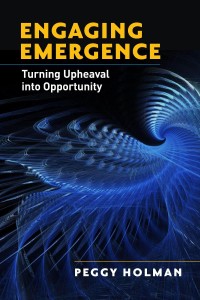
Phi Beta Iota: Previously recommended in Worth a Look: New Book Engaging Emergence, we reiterate our regard for Peggy Holman, arguably one of a handful of leaders shaping our collective intelligence capacity today–Tom Atlee, Barbara Marx Hubbard, Harrison Owen, Thom Hartman, Jim Rough, Robert Fuller, Mark Tovey, are others, all helping shape community Open Space Open Source Collaborative Information-Sharing and Sense-Making.

See Also:

Review: The Handbook of Large Group Methods–Creating Systemic Change in Organizations and Communities

Review: The Change Handbook–The Definitive Resource on Today’s Best Methods for Engaging Whole Systems

From the Author

At long last, it is available.  I am delighted to say that Engaging Emergence: Turning Upheaval into Opportunity is now for sale from Amazon, Berrett-Koehler, Barnes and Noble, or through local bookstores.

I have a confession. I have an ambitious goal for the book: to meet today's needs in the way The Fifth Discipline did 20 years ago.  And you can help make that happen.

Continue reading “Worth a Look: Engaging Emergence”

Project Masiluleke: The Mobile Phone as Life-Saving Device Against HIV/AIDS in South Africa

01 Poverty, 02 Infectious Disease, 07 Health, Geospatial, Mobile, Technologies

Project Masiluleke is a South African project that aims to find solutions for the country's growing AIDS pandemic. The project is unique in that it enjoys the collaboration of a group of leading South African and international partners in the clinical, technical, philanthropic, development and design arena's. The project was unveiled globally at the annual Pop!Tech Conference in Camden, USA in October 2008 and will be officially launched in South Africa in 2009.

Intended Impact

In a country where less than 5% of the adult population knows their HIV-status and more than 24% is HIV positive (close to 40% in provinces like Kwazulu Natal), Project Masiluleke has the potential to:

  • Bring large numbers of people into testing without spending millions on expensive and often unsuccessful awareness campaigns,
  • Empower people to know their HIV status by testing privately and accurate for the disease, in the privacy of their own homes,
  • Involve adherent ARV patients as role-models and mobile support agents, through the virtual call centres,
  • Keep patients on treatment and increase treatment effectiveness, through regular doctor's visits and clinical support.

Project brief (pdf)

Other links on the same project:

Video of the project

http://www.frogdesign.com/services/project-masiluleke.html

http://www.nationalgeographic.com/field/projects/project-m.html

noble gold