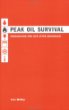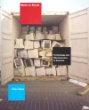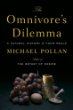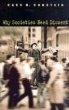
Review: Peak Oil Survival–Preparation for Life After Gridcrash

5 Star, Survival & Sustainment

Peak Oil SurvivalScary, Practical, A “Best in Class” Book,

February 7, 2007

Aric McBay

There is an entire literatue on Peak Oil (now, 30 years too late). Of the seven or eight that I have read, this is the single best most sensible book. Easy to read, to “connects the dots” and makes it clear just how tough urban and surban survival is going to be–imagine Baghdad at home.

The author has really knocked the ball out of the park with common sense. This is not a book that states the obvious as much as it is a book that really drives home the importance of obtaining water, treating water, creating latrines and making best use of gray water, keeping food cool, heating for fuel (with a dramatic savings achievable for short-term fuel use augmented by hot box “sitting”), and then ending with lighting and heat.

The layout of the book is first-rate, the diagrams are superb and easy to understand, and the practical list of tools and supplies needed for sustainment survival is explicit, not over-stated, and just plain serious.

Absolutely a great book and a serious contribution to the good of any community.

Other books:
Hubbert's Peak: The Impending World Oil Shortage
Blood and Oil: The Dangers and Consequences of America's Growing Dependency on Imported Petroleum
The Party's Over: Oil, War And The Fate Of Industrial SocietiesResource Wars: The New Landscape of Global Conflict With a New Introduction by the Author
The Long Emergency: Surviving the End of Oil, Climate Change, and Other Converging Catastrophes of the Twenty-First Century
The Shock Doctrine: The Rise of Disaster Capitalism
Crossing the Rubicon: The Decline of the American Empire at the End of the Age of Oil
The Soul of Capitalism: Opening Paths to a Moral Economy
The Broken Branch: How Congress Is Failing America and How to Get It Back on Track (Institutions of American Democracy)
Breach of Trust: How Washington Turns Outsiders Into Insiders

AA Mind the GapClick Here to Vote on Review at Amazon,

on Cover Above to Buy or Read Other Reviews,

I Respond to Comments Here or There

Review: The Oil Depletion Protocol–A Plan to Avert Oil Wars, Terrorism and Economic Collapse

5 Star, Congress (Failure, Reform), Economics, Environment (Solutions), Executive (Partisan Failure, Reform), Future, Science & Politics of Science, Survival & Sustainment, True Cost & Toxicity, Values, Ethics, Sustainable Evolution, Water, Energy, Oil, Scarcity

Oil DepletionBottom Line Deadly Serious,

February 7, 2007

Richard Heinberg

All of the non-fiction reading that I have done supports this author's presenation of both the consequences of doing nothing, and practical bottom line: a 3% reduction per year for the next ten to twenty years, of gross consumption (per capita is meaningless when the number of people are growing rapidly) of oil is the only way to transition gracefully.

Amazon visiters need to be aware that the oil industry, and Exxon in particularly, is applying considerable funds to pay for disinformation and misrepresentation. As Al Gore stated in his briefing to 10,000 Republicans in the Taco Bell Arena of Boise State University, the oil companies (less BP and Chevron) are adopting the precise strategy of the tobacco industry, seeking to turn facts into “theories” that are “in dispute.”

Reality is not in dispute. What is in dispute is the ethics of the Exxon CEO, among others, who choose to lie to the American people and others and take credit for improving gas mileage when what is really needed is a massive turning away from the use of both oil and water.

This book is a great companion to “Peak Oil Survival,” and discusses at the macro levels the implications of oil depletion.

I also like this book because at the back I found a page that informed me that the publisher, New Society Publishers, is both committed to books helpful to society, but that its use of recycled paper as a directly measureable benefit in saving 25 trees, 2,281 gallons of solid waste, 2,512 gallons of water, 3,276 kilowatt hours of electricity, 4,150 lbs of greenhouse gases, 18 lbs of HAPs, VOCs, and AOX combined, and 6 cubic yards of landfill space.

WOW. See my growing list on “true cost” information. Above is the “true cost” for books that do NOT use recycled paper.

AA Mind the GapClick Here to Vote on Review at Amazon,

on Cover Above to Buy or Read Other Reviews,

I Respond to Comments Here or There

Review: Made to Break–Technology and Obsolescence in America

5 Star, Capitalism (Good & Bad), Economics, True Cost & Toxicity

Made to BreakPart of a Larger Story,

February 4, 2007

Giles Slade

This is one of the best of the “toxic tech” books in current view, by no means completely original, and certainly not the whole story. It gets five stars for its niche. In relation to other books, for example, Natural Capitalism: Creating the Next Industrial Revolution; The Ecology of Commerce; The Omnivore's Dilemma: A Natural History of Four Meals; Pandora's Poison: Chlorine, Health, and a New Environmental Strategy; any of the books on Peak Oil, and the original book on the down side of industrialization, Manufacture of Evil: Ethics, Evolution, and the Industrial System it falls to a lower level.

What is most important is the emerging literature on Cradle to Cradle: Remaking the Way We Make Things We should be LEASING tools and appliances with short lives. The manufacturer should–as that literature recommends–be required to take back the discarded item, and plan for upgrades that do not require the discarding of the entire unit.

See also:
High Tech Trash: Digital Devices, Hidden Toxics, and Human Health
Exposed: The Toxic Chemistry of Everyday Products and What's at Stake for American Power
A Consumer's Dictionary of Household, Yard and Office Chemicals: Complete Information About Harmful and Desirable Chemicals Found in Everyday Home Products, Yard Poisons, and Office Polluters

AA Mind the GapClick Here to Vote on Review at Amazon,

on Cover Above to Buy or Read Other Reviews,

I Respond to Comments Here or There

Review: The Omnivore’s Dilemma–A Natural History of Four Meals

5 Star, Nature, Diet, Memetics, Design

OmnivoreShocking: Iowa an Agricultural Desert, Cannot Eat Its Own Corn!,

February 4, 2007

Michael Pollan

I bought both his books, and now regret buying the Botany of Desire–that book is more of a whimsical discussion of the relation between four plants and humans, while this one is a deeper learning experience that is focused on sustainability. There are a number of gems that I noted down.

In something of a play on words and meaning, the author opens by noting that we have a national eating disorder because we lack a culture that places eating in a proper frame of reference where time spent preparing and enjoying food is valued, and then seques into how damaging to the environment, and to ourselves, are monocultures. At many points through the book the author documents how industrialized foods are less nutricious, more harmful to the human body, and more wasteful of the earth's resources, than organic foods.

The book is especially dramatic and deeply documented with reference to the bastardization of corn from something delicious for humans, to something that is not edible by humans but used to create a machine line for manufactured foods that can be transported great distances. The whole story of corn as the foundation for abusing cows, chickens, and other animals is extremely well told here, and shocking. It stunned me, for example, to read about Iowa as an agricultural “desert,” whose farms cannot support families, only inedible corn destined for beef factories.

As the author notes, the mutation of corn pushed the animals off the local farms and into a factory farm system. The author does not emphasize animal cruelty but that comes across clearly. Animals are grown in confined spaces, and drugs combined with forced feeding take an animal from 80 lbs to 1,100 lbs in 14 months, at which point they are killed.

Side notes on how beaks are cut off chickens to keep them from hurting another another in conditions that make gulags look like country clubs, are reguarly put forward, and very troubling.

The manner in which our mutant agriculture leads to obesity can be illustrated by the author's showing that corn fed beef is “marbled” with fat, and cleverly sold as a feature rather than the flaw that it is.

Processed food wastes energy. Later on in the book the author stresses that grass farming is the fastest way to harness the free renewable power of the sun.

On pages 130-131 he constrasts the two competing systems:

He constrasts industrial vs. pastoral; annual vs. perennial; monoculture vs. polyculture; fossil energy vs. solar energy; global market vs. local market; specialized vs. diversified; mechanical vs. biological; imported fertility vs. local fertility; and myriad inputs including fertilizer and chemicals, vs. chicken feed.

I learn that industrialized organic farming is just as fuel and corn consumptive as industrialized chemical farming.

The author affirms the productivity of local farms, while pointing out that it is the transaction and scaling costs that kill the family famr.

He paints an attractive picture of natural farms as not needing machines, chemicals, fertilizers, and so on, because they manage natural complexity is a way that produces balance, nutrition, productivity, and profit. Localized food is natural.

Chefs get a great deal of credit for helping localized farms survive, as they give testimony with their buying, of how much better the localized product are from the one size fits all drugged up factory foods.

I recommend The Ecology of Commerce or Natural Capitalism: Creating the Next Industrial Revolution in addition to this book, and also Pandora's Poison: Chlorine, Health, and a New Environmental Strategy the latter on our chlorine-based industry. I do not recommend the The Botany of Desire: A Plant's-Eye View of the World unless you are interested in the spirit of the plant rather than the stabilization of the planet.

See also Diet for a Small Planet and Hope's Edge: The Next Diet for a Small Planet

AA Mind the GapClick Here to Vote on Review at Amazon,

on Cover Above to Buy or Read Other Reviews,

I Respond to Comments Here or There

Review: Why Societies Need Dissent (Oliver Wendell Holmes Lectures)

5 Star, Censorship & Denial of Access, Consciousness & Social IQ, Decision-Making & Decision-Support, Democracy, Education (General), Information Society, Intelligence (Public), Philosophy, Values, Ethics, Sustainable Evolution

Society DissentEssential Contribution to Democratic Dialog,

January 30, 2007

Cass R. Sunstein

It took me a couple of years to get to this book, but I am glad I did. Interestingly, it is dedicated to Judge Richard Posner, who has become quite a celebrity in writing and talking, from a legal point of view, about secret intelligence, in addition to his many other works.

The author's position is not completely new (see for instance Elizabeth Janeway's 1987 classic, “IMPROPER BEHAVIOR: When and How Misconduct Can be Healthy for Society”, and the more standard but still seminal “The Social Construction of Reality.”

The author rises beyond the law to embrace sociology, psychology, and philosophy, and in that vein, reminds me of Norman Dixon's classic work, “The Psychology of Military Incompetence.”

The core of the book addresses what the author names the two influences (most people get most of their information second-hand; and the general desire for good opinion of oneself) and the three phenomena (conformity, social cascades, and group polarization).

He notes that pluralistic ignorance is dangerous; that groups and systems work better when there are incentives for sharing information openly; and that “free speech” requires BOTH legal protection AND cultural acceptance.

He discusses the superiority of the more adaptive and open democratic decision making to that of totalitarian societies, but his description of their pathologies, ideas hatched in secret and for which no opposition will be accepted, sound starkly like Dick Cheney's Standard Operating Procedure–facsist control, lies to the public with impunity, and no tolerance for flag officers, including flag officers like Tony Zinni and General Shinseki, who have the courage to say that invading Iraq is not only nuts, it will be a disaster. For deep insights into Cheney's impeachable suprression of dissent, see “One Percent Doctrine,' “VICE: Dick Cheney and the Hijacking of the American Presidency,” and “Crossing the Rubicon”–and of course the various books on impeachment (see my list).

The author concludes with a special focus on the role of Judges and Senators as dissenting voices, and I am reminded of Senator Robert Byrd's courageous and erudite opposition to the illegal war on Iraq, with his speeches available to all in book form as “Losing America: Confronting a Reckless and Arrogant Presidency”).

The author concludes with a very disappointing section on education and affirmative action, and in this section, spoils an otherwise superb book by focusing on the banalities of affirmative action. Like George Bush and Hillary Clinton, he is toying with the cosmetics and avoiding the deep–the really deep–need for a complete recasting of education to fully integrate distance and self-paced online learning, multi-cultural learning, deep historical and cross-cultural understanding; a draconian Manhattan Project to improve desktop analytic tools and the need for an Information Economy Meta Language (IEML) such as Pierre Levy is creating (see his “Collective Intelligence”), as well as life-long learning, the localization of everything, and so on. I beg to emphasize this: it is the agricultural era school schedule (summer off) and the industrial era rote learning rigid structured program, that is killing the creativity of our kids while locking them up in a program that is nothing more than advanced child care with a semblance of prison population, the “club med” aspects for cheerleaders and jocks not-with-standing. Our HIGHEST national priority should be to churn education so that our kids are liberally and broadly educated and armed with all of the tools for thinking that the Central Intelligence Agency still does not have today because it too is a vestige of the Soviet era of gray desks and dumb telephones.

Thomas Jefferson had it right: “A Nation's best defense is an educated citizenry.” Cass Sunstein is arguably, with Lawrence Lessig, one of the greatest lawyers of our generation, but in the final section, he plops quietly.

Never-the-less, a five star book.

AA Mind the GapClick Here to Vote on Review at Amazon,

on Cover Above to Buy or Read Other Reviews,

I Respond to Comments Here or There

Review DVD: Left Behind – The Movie

2 Star, Religion & Politics of Religion, Reviews (DVD Only)

Left BehindBanal, Pathetic, Out of Touch,

January 30, 2007

Kirk Cameron

I have always had a morbid fascination with that segment of the population that believes that the Bible is the only book one has to read, and that great literature consists entirely of the Left Behind series. I bought this movie to get a sense of this group.

Banal is the kindest word I can find for this tripe. Third rate actors, low-rent science fiction backdrops, and completely out of touch with reality. The movie opens with the Israeli agricultural “miracle.” What it does not tell the audience is that Israel would be a dead state if it were not for the 20% of the Israeli government's budget funded by US taxpayers through the US Government's very unwise investment in this apartheid regime (see Jimmy Carter's new book) and if it were not for the blatant Israeli underground pipes that are literally looting the Arab aquifers at long range and from way beneath the earth. Israeli agriculture is not a miracle, it is a travesty–it consumes 50% of all the water used in Israel, and produces less than 5% of the Gross Domestic Product.

The movie goes downhill from there. Just to place it in a proper religous movie context, if the “Ten Commandments” was a perfect 10, this movie is no more than a 1 and certainly not even close to a 2.

AA Mind the GapClick Here to Vote on Review at Amazon,

on Cover Above to Buy or Read Other Reviews,

I Respond to Comments Here or There

Review: How The World Really Works

6 Star Top 10%, America (Founders, Current Situation), Banks, Fed, Money, & Concentrated Wealth, Corruption, Crime (Corporate), Crime (Government), Crime (Organized, Transnational), Religion & Politics of Religion

How World WorksBest Insight into Organized Crime-Vatican-Wall Street Collaboration,

January 29, 2007

Alan B. Jones

I am going to put my reputation on the line, and the 850+ non-fiction books I have read that make me the #1 Amazon reviewer for non-fiction (and to my great surprise, today #49 over all fiction, movies, music, and software as well as non-fiction) for the simple reason that too many people discuss books such as this by labeling it “conspiracy theory.”

It's not a conspiracy theory if it is true. I will try to be brief as well as illuminative.

First off, the author has culled a handful of books that support his case against a global financial elite, and these tend, with the exception of the Quigley book, to be left of left of center. I am however happy to add a number of books that support his essential theses that a handful of banking families control the central banks which are NOT government banks, and through loans, control governments, impoverish the middle class, and harvest profit without conscience from the “working poor.”

Try these on for size:

1) Confessions of an Economic Hit Man by John Perkins. 85% rock solid, 15% flakey, but in my view, a perfectly reasonable slam on the World Trade Organization and the International Monetary Fund as instruments for impoverishing lesser developed countries, not empowering them.

2) The End of Poverty: Economic Possibilities for Our Time by Jeffrey Sachs, another slam on the WTO/IMF, which he relegates to third rate out-dated economist ranks, not at all focused or able to achieve what he calls “developmental economics.”

3) The Global Class War: How America's Bipartisan Elite Lost Our Future – and What It Will Take to Win It Back by Jeff Faux, a fine discussion of how our elites bribe the elites in other countries, and the both screw the public by looting the commonwealths of gold, oil, etcetera, without returns to the people whose families have lived on top of these resources for centuries.

4) Running on Empty: How the Democratic and Republican Parties Are Bankrupting Our Future and What Americans Can Do About It, by Paul Peterson of the Council of Foreign Relations (which the author hates, in my view it has two types of members–one manipulative like Henry Kissinger, another honest, like Paul Peterson), in which both the Republican and the Democratic parties are lambasted for being the ignorant slaves of the ultra-rich elites, and hopeless out of touch with reality and unable to represent We the People.

5) War Is a Racket: The Anti-War Classic by America's Most Decorated General, Two Other Anti=Interventionist Tracts, and Photographs from the Horror of It by General Smedley Butler, the highest decorated Marine of his time, who complained about being an enforcer for banks and businesses that lent money to the Third World then sent the Marines to get it back for them.

There are many other books that support this author's book reviews in great detail and from many varied perspectives. I refer you to my various lists, including the list on “Screwing the 90% that do the work.”

The author has some pretensions and some slop, his arguments are not always consistent, but then neither are mine. On balance I regard this book as a first rate personal effort that should be read by every middle class person wondering, as Lou Dobbs on CNN has wondered, why we are exporting middle class jobs and importing poverty in the form of illegal aliens.

The author wraps up his varied reviews with a focus on the relationship between organized crime and the super-elite as well as their political elite (e.g. the Bush family, the best of the servant class), and on the relationship between drugs, covert operations, and Wall Street. Here again the author draws on a very tiny sub-set of books while not listing many others that support his thesis so I will mention a few here.

Having been through both Viet-Nam as a youth and the Central American Wars as an adult, I am quite certain that there are at least four different slices of the Central Intelligence Agency (CIA) where I served for ten years as a clandestine case officer:

A small slice does what the White House wants, including black bag jobs.

A small but more important slice does what Wall Street wants, and helps Wall Street with access to financially relevant information that the public which pays for the CIA does not get. Buzzy Krongard, until recently Executive Director of the CIA, comes to mind as the most recent leader of this section.

A larger slice, that does covert action off the books with funding from Saudi Arabia and others, sometimes called the Safari Club, sometimes having off-shoots like Ted Shackley's Southern Air Transport, and so on. This slice can provide the intersection between criminal activities, white collar crime profits, illegal White House activities, and plain profiteering.

Finally, 90% of the CIA, folks like me that did not realize they were simply going through the motions and giving the local counterintelligence service a full-time rabbit to follow while the commercial clandestine boys and girls looted the bank in bright daylight.

I have two intelligence lists that can be helpful here, but I have not focused on creating crime lists. I'll just say that between the books on the The Working Poor: Invisible in America and on being Nickel and Dimed: On (Not) Getting By in Americaand books on immoral predatory capitalism and unilateral militarism of the Dick Cheney variety (I have compiled a list of 25 specific impeachable actions by Dick Cheney based on three books:

The One Percent Doctrine: Deep Inside America's Pursuit of Its Enemies Since 9/11
Vice: Dick Cheney and the Hijacking of the American Presidency
Crossing the Rubicon: The Decline of the American Empire at the End of the Age of Oil

There is a very clear-cut and direct relationship between dictators, transnational organized crime and terrorism, and Wall Street as well as the Republican and Democratic National Committees (see Running on Empty: How the Democratic and Republican Parties Are Bankrupting Our Future and What Americans Can Do About It)

That reminds me: there is an entire literature on petroleum, peak oil, petrodollars, and so on. Americans have been betrayed by their government since at least 1975, and more likely, back to the 1950's when naivetƩ about international affairs was replaced by active complicity.

Good news. 1) Internet leveled playing field. 2) Not enough guns to kill us all. 3) A few of the really rich have realized they need to help us create infinite wealth for ourselves, or lose all they have to locusts. Read, be vocal, be active, we're going to get a grip on our commonwealth soon.

Tip of the Hat to Jere for the following added links:
When Corporations Rule the World
The Road to Serfdom: Text and Documents–The Definitive Edition (The Collected Works of F. a. Hayek)
Money Masters of Our Time

AA Mind the GapClick Here to Vote on Review at Amazon,

on Cover Above to Buy or Read Other Reviews,

I Respond to Comments Here or There

noble gold