Recognizing that the society has become complex suggests that the truth about social issues, public interest or common good is not a single truth, but rather that there are a variety of well-founded and equally valid truths that must co-exist and be reconciled by human deliberation. Social complexity means there are different views about the most important issues in a society. Socially complex issues share no common denominator; different views must be embraced as in relation rather than in opposition.
Recognition of social complexity—and the impoverished political simplicity no longer adequate to its charter—has important consequences for how we go about understanding of social issues. This in turn determinates our future aspirations and approach to social struggles regarding how we want to collectively re-construct sociality. Put bluntly, Industrial-Era politics have failed, and new methods must be found to achieve political reconciliation among agonistic perspectives. There is no more hope for complete unity and consensus in principal social concerns. But these concerns are few and abstract. Everyday life is not lived in abstract world. The matter of everyday life is hybrid, ephemeral and so of “minor importance” to everybody.
It's Not Just the Politicians Who Have Cheapened the Defense Debate
Winslow Wheeler
I recall from early in my career when Sen. Barry Goldwater (R-AZ) took to the floor of the Senate to attack the allegedly scurrilous report that the B-1 bomber would cost as much as $60 million a copy: in truth, it turned out to cost $200 million per copy. I also remember when Sen. Dale Bumpers (D-AR) opposed keeping battleships in the Navy because of their “teak deck:” In peacetime, the Iowa class battleships did lay wood on top of their 7.5 inch thick steel decks. No one needs to be reminded that Congressman Buck McKeon (R-CA) and Leon Panetta (formerly D-CA) have termed any further cuts in the defense budget to be “catastrophic:” If returning to 2007 levels of defense spending is so terrible, why did Donald Rumsfeld and Robert Gates not tell us back then?
Such outrageous statements are so ignorant that you have to assume the politicians knew they were full of baloney when they made them. They probably assumed no one would check up on them or that such bunkum “will go around the world while the truth is still pulling its boots on.” (Thank you, Mark Twain.)
Think tanks have been a part of the Washington scene since at least the end of World War II. People expect them to have competent research and logical analysis behind their comments. That can be a perilous assumption. A recent example occurred just after Christmas when the Director of the Heritage Foundation's Center for Foreign Policy Studies invoked the name of a chief architect of the F-15 and the F-16 (and more) in a commentary to promote the F-22 and the F-35. The willfulness of the ignorance is something that senators Goldwater and Bumpers and today's Pentagon budget boosters would recognize.
There are other characteristics of the debate on the F-22 and the F-35 that need to be recognized as badly misinformed, especially that either one is an asset to our air forces.
Four of us worked with that genius who, among many other things, had a fundamental role in two of the most successful fighter designs in recent aviation history, Col. John Boyd. We took profound offense at the ignorant and misleading assertion that he had anything but derision for the F-22 and the thinking behind the F-35. In response, we wrote a commentary–not just on the aircraft but also on the depths to which the Washington debate on these subjects has sunk.
Find our comments at any of the websites that follow, and below:
By Thomas Christie, Pierre Sprey, Chuck Spinney & Winslow Wheeler
Almost 30 years ago, in 1983, The Heritage Foundation stepped forward as a thoughtful, independent thinking participant in the then-raging debate over Ronald Reagan's defense budget increases. In one of its major policy publications, Heritage published an insightful analysis with an unambiguous conclusion: “The increased spending secured by President Reagan should afford significant improvements in force size. It does not.” (See Agenda '83: A Mandate for Leadership Report, Richard N. Holwill, ed., The Heritage Foundation, 1983; see chapter 4, p. 69 of “Defense” by George W.S. Kuhn.) The analysis was crammed with data and straightforward logic as it made the case for real reform in America's overpriced, underperforming defense budget.
Since then, Heritage has come a long way in defense policy analysis, all of it downward.
Phi Beta Iota: The corrupt government is surrounded by thousands–perhaps tens of thousands–of corrupt second-string piglets. While most people are good people trapped in a bad system, the net result is that everyone lies and the public trust is betrayed. The truth at any cost lowers all others costs. 2012 is the year in which we battle for the soul of the Republic.
I served in the CIA for 28 years and I can tell you: America's screw-ups come from bad leaders, not lousy spies.
Paul Pillar
Foreign Policy, Jan/Feb 2012
“Presidents Make Decisions Based on Intelligence.”
Not the big ones. From George W. Bush trumpeting WMD reports about Iraq to this year's Republican presidential candidates vowing to set policy in Afghanistan based on the dictates of the intelligence community, Americans often get the sense that their leaders' hands are guided abroad by their all-knowing spying apparatus. After all, the United States spends about $80 billion on intelligence each year, which provides a flood of important guidance every week on matters ranging from hunting terrorists to countering China's growing military capabilities. This analysis informs policymakers' day-to-day decision-making and sometimes gets them to look more closely at problems, such as the rising threat from al Qaeda in the late 1990s, than they otherwise would.
On major foreign-policy decisions, however, whether going to war or broadly rethinking U.S. strategy in the Arab world (as President Barack Obama is likely doing now), intelligence is not the decisive factor. The influences that really matter are the ones that leaders bring with them into office: their own strategic sense, the lessons they have drawn from history or personal experience, the imperatives of domestic politics, and their own neuroses. A memo or briefing emanating from some unfamiliar corner of the bureaucracy hardly stands a chance.
Phi Beta Iota: Brother Pillar avoids the obvious – the excessive influence of the banks, military-industrial complex, and the Zionists, among others. CORRUPTION is our greatest enemy. Both parties are corrupt, and a third party (or Americans Elect) is not the answer–we need to restore the INTEGRITY of the entire process from election through governance through accountability.
Posted 2 days ago on Jan. 9, 2012, 4:43 a.m. EST by OccupyWallSt
Martin Luther King, Jr.'s Birthday
January 15th, 2012 @ 7:00pm in Each Time Zone Globally
Via J15global.com: On his birthday and in the spirit of Dr. King's vision for racial and economic equality, peace, and non-violence, we are holding candlelight vigils to unite our world in a global movement for systemic change.
Wherever we may be, whether in our homes, in city squares, online, Occupies, or at work, we lift a beautiful message high above the political dialogue. We light the dream of a more equitable world in our hearts. We can overcome!
Dr. King said “A true revolution of values will soon look uneasily on the glaring contrast of poverty and wealth. With righteous indignation, it will look across the seas and say: ‘This is not just.' ”
Vigils are being organized around the world — from California to Cairo, New York to New Orleans, Germany to Nova Scotia. Pete Seeger, K'naan, Ramy Essam, Sol Guy, Joan Baez, Steve Earle and many more have committed their support.
We gather to empower a great and global dream, a dream we have all dreamt of for thousands of years. We will sing, because freedom songs are the soul of the movement.. Together, we will make the dream a reality.
Help turn this moment into a world-wide wave of light:
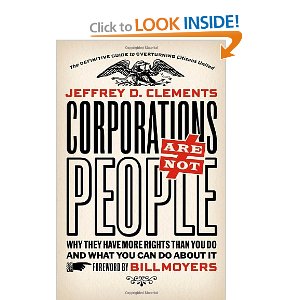
This book should mainstream the campaign to end corporate personhood.
Clements traces the development of the legal doctrine of corporate personhood back long before the Supreme Court's Citizens United decision two years ago this month, in particular to President Richard Nixon's appointment of Lewis Powell to the Supreme Court in 1972. Led by Powell's radical new conception of corporate rights, Clements shows, the court began striking down laws that protected living breathing persons' rights in areas including the environment, tobacco, public health, food, drugs, financial regulation, and elections.
In 1978 the Supreme Court ruled that corporations had speech rights that prevented banning their money from an election, a conclusion that might have been nearly incomprehensible a decade earlier before the U.S. Chamber of Commerce and various corporate foundations began filling our public discourse with phrases like “corporate speech.” In 1980 Congress forbade the Federal Trade Commission from protecting children or students from junk food advertising and sales. In 1982 corporate speech rights in the U.S. Supreme Court overturned a state law that had attempted to block energy companies from promoting greater energy consumption. In the 1990s, the Monsanto corporation, whose genetically engineered drug was banned in many countries, won the right to include it in milk in the United States and the “right not to speak,” thereby overturning a law requiring that milk be labeled to indicate the drug's presence.
Decision after decision has extended corporate rights to a position of priority over actual human rights on everything from food and water and air to education and healthcare and wars. The ground has shifted. In 1971 Lewis Powell argued on behalf of the cigarette companies that they had a corporate person's right to use cartoons and misleading claims to get young people hooked on nicotine, and he was laughed out of court. In 2001, the Supreme Court struck down a state law banning cigarette ads within 1,000 feet of schools and playgrounds. The reason? The sacred right of the corporate person, which carries more weight now than the rights of the people of a community to protect their children … er, excuse me, their “replacement smokers.”
And why do corporate rights carry so much weight? One reason is that, as Clements documents and explains, “transnational corporations now dominate our government” through election spending. This is why a civilized single-payer health coverage system like those found in the rest of the wealthy nations of the world is not “practical.” This is why cutting military spending back to 2007 levels would mean “amageddon” even though in 2007 it didn't. This is why our government hands oil corporations not only wars and highways but also massive amounts of good old money. This is why we cannot protect our mountains or streams but can go to extraordinary lengths to protect our investment bankers.
“Since the Citizens United decision in 2010,” Clements writes, “hundreds of business leaders have condemned the decision and have joined the work for a constitutional amendment to overturn expanded corporate rights.” You might not learn this from the corporate media, but there is a widespread and growing mainstream understanding that abuse by oversized mega-corporations has been disastrous for ordinary businesses as well as communities, families, and individuals. Clements' turns out to be a pro-business, albeit anti-U.S. Chamber of Commerce, book.
And what can be done? We can build an independent, principled, and relentless Occupy movement and include as a central demand the amending of the U.S. Constitution to end corporate personhood. Clements' book offers a draft amendment, a sample resolution, a collection of frequently asked questions (and answers), a list of organizations, websites, resources, books, and campaigns.
This is doable, and it is what we should do this election year so that in future election years we might actually have elections.
Two major economic problems have been: 1. Unemployment, 2. the Housing Bubble and resulting financial crisis. But there were two ways of reducing the damage of both crises that no one seemed to think of because of conceptual road blocks to that way of thinking.
Some people have been collecting unemployment benefits for years. Meanwhile, employers can't afford to hire new employees. So money keeps getting paid out to people who remain idle through no fault of their own. If someone had thought of temporarily rewriting the rules so that people could volunteer to work for free while they were collecting their checks, then they could pool their labor and offer it to employers who desperately need it.
This would be a very difficult arrangement to organize. That's undeniable. First, it could easily put Temporary Employment Companies out of business, and that wouldn't be fair. So the system would have to be designed to protect those companies. Second, the unemployed would have to be allowed to pick their jobs according to what employers thought they were qualified to do. Third, there would have to be some way of making it worth their while: a certificate of service to their county for their future resume, perhaps extra money for gas if they had to drive a long way, etc. There would have to be some kind of incentive. Then it would be a matter of employers signing up for the program and giving employment agencies a list of what jobs were open. None of this would be easy, but it would mediate the cost to the economy of unemployment payments, and it would help employers get through tough times. To what degree it would help would depend on how many people participated. But it would help. The more who participated, the more it would help.
The housing bubble resulted in mass foreclosures. Because their mortgage payments went up, many people could no longer afford to keep making their payments. So they were evicted from their homes. Seas of unoccupied houses were the result. But many of them could have afforded a cheaper mortgage. If there had been a program that helped to match them up with other, cheaper foreclosed houses, everyone could have moved down a notch instead of putting everyone out on the street and leaving all those houses empty and mortgages unpaid. This probably would have been a much easier program to arrange than the above jobs program. But they both would be common sense ways to try and help mediate the effects of these two related crises. However, people are trained not to think that way, so no one thought of it.
I'm not saying that either of the above ideas would be easy to implement, only that they would have been a common sense approach to the twin problems. If we are ruling out common sense, then we have a problem.
We need to learn to see beyond these conceptual and ideological road blocks if we are to work together as citizens of nation that loves to call itself “United.” When crises occur, we need to look beyond narrow ways of thinking so that we can make the most efficient use of our resources.
WHEN:Tuesday, Jan. 10, 2012,5:30 – 8:00 p.m.
While Café Scientifique events are usually held on the first Tuesday of each month, please note that this event will take place on the second Tuesday due to the holiday.
WHERE:The Front Page restaurant, near Ballston Metro.
Located at 4201 Wilson Blvd., Arlington, VA 22203 on the ground floor of the National Science Foundation (NSF) building. Parking is available under the NSF building or at Ballston Common Mall.
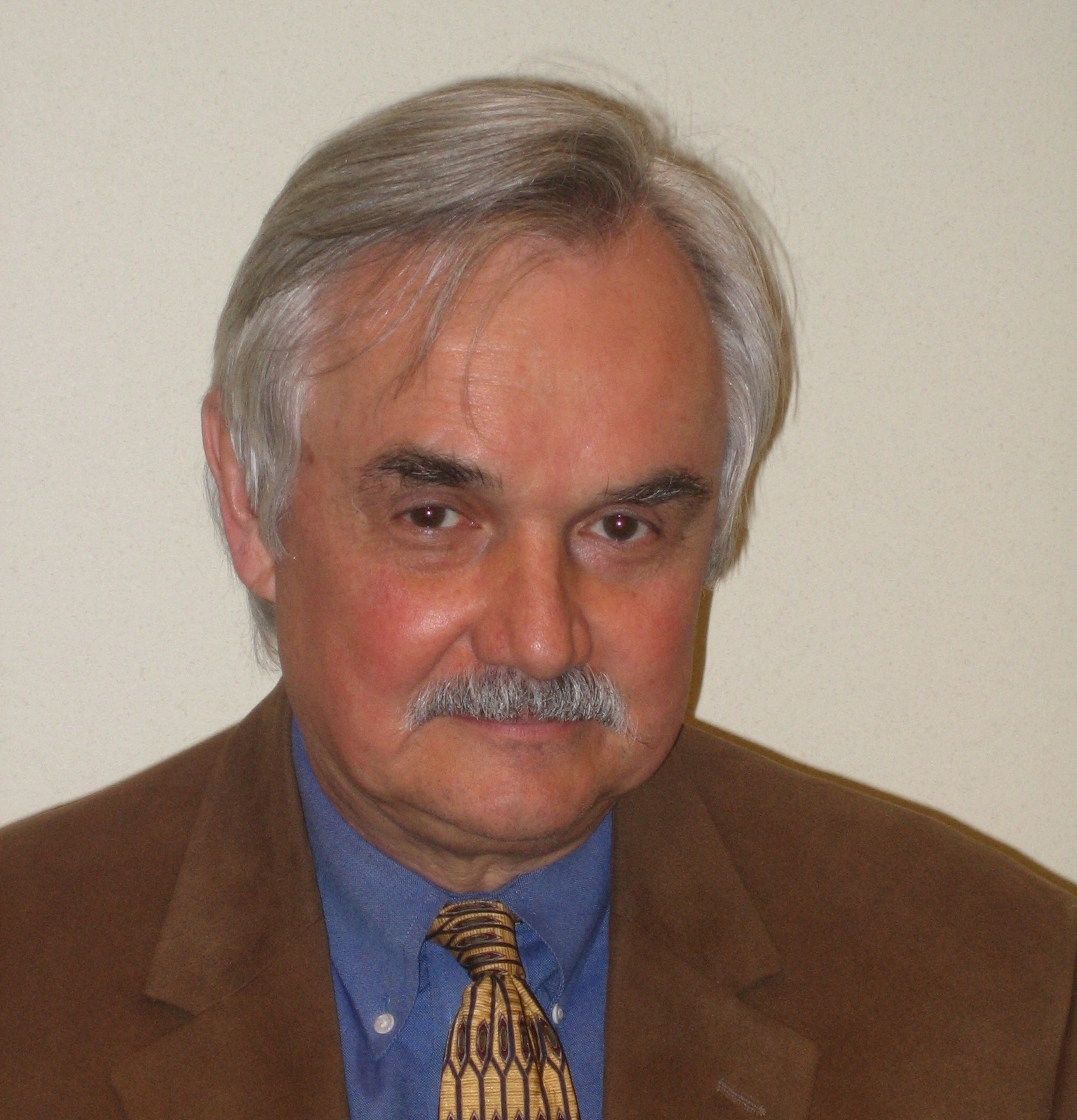
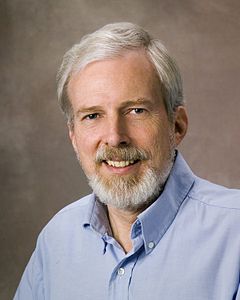
WHO: Presented by Stuart Umpleby, Professor of Management, The George Washington University.
HOW: Please come early to order table service and socialize. Special half-price burgers start at 5:30 p.m. Presentation begins at 6:15 p.m. followed by Q&A. No science background required – only an interest! Café Scientifique is free and open to the public. Registration requested. Register online now.
ABOUT THE TOPIC: In the social sciences it is clear that theories affect the phenomenon being studied. Indeed, we create theories in the hope that they will be accepted, acted upon and the social system will perhaps function better. However, usually scientific research is based on the assumption that the theory does not affect the phenomenon. The result is a gap between our assumptions about social systems and the way we do research. Closing this gap is leading to new methods for both research and practice. Creating a second order science, which includes examining the effects of theories on phenomena, is presently impeded by logical difficulties involving self- reference. This problem can be solved by reinterpreting some parts of mathematics using ideas common in everyday life.
SUPPORT THIS CAFÉ: The Ballston Science and Technology Alliance, a nonprofit organization, is the sponsor of Café Scientifique Arlington. Since April 2006, the goal of Café Scientifique has been to make science more accessible and accountable by featuring speakers whose expertise spans the sciences and who can talk in plain English. Please go to www.arlingtonvirginiausa.com/bsta and contribute. Help keep Café Scientifique open and free to all!