Event: Free Online Download Why Stone-Age Instincts Run Your Life & How Science Can Change That

04 Education, 11 Society, Advanced Cyber/IO, Communities of Practice, Cultural Intelligence, Earth Intelligence, Ethics, Methods & Process, Strategy, Threats
Tom Atlee

Dear friends,

I’m excited to let you know about an upcoming free teleseminar by colleagues of mine, Michael Dowd and Connie Barlow. This couple is well known for their work in translating the various evolutionary sciences into practical wisdom for meeting the challenges of everyday life.

The focus of their hour-long audio seminar will be, as they summarize it: “Why the Stone-Age instincts we’ve all inherited can so often challenge us in our modern-day settings—and how new discoveries in the evolutionary and human sciences offer perspectives that are both practical and profound.”

Michael and Connie were the ones who launched me into my own evolutionary perspective, which expanded and deepened into the vision in my book REFLECTIONS ON EVOLUTIONARY ACTIVISM.

I'm beginning to see an emerging whole-life curriculum to bring actionable evolutionary understandings into virtually every aspect of life, just as feminist and ecological understandings have spread into every niche.  The first rough outline of such an “evolutionizing” curriculum might look something like this:

*  Evolutionize yourself and your relationships:
Connie and Michael's class
*  Evolutionize your groups, organizations and communities:
Peggy Holman's ENGAGING EMERGENCE
*  Evolutionize your society and social systems:
Tom Atlee's REFLECTIONS ON EVOLUTIONARY ACTIVISM
Robert Wright's NON-ZERO
John Stewart's EVOLUTION'S ARROW
Paul Ehrlich and Robert Ornstein's NEW WORLD, NEW MIND
*  Evolutionize your worldview
Elisabet Sahtouris' EARTHDANCE
Thomas Berry and Brian Swimme's THE UNIVERSE STORY
Michael Dowd's THANK GOD FOR EVOLUTION
David Sloan Wilson's EVOLUTION FOR EVERYONE

There are many other dimensions that could be included in such a curriculum — evolutionizing technology, education, heatlh care, you name it — and dozens of other really fine books and other resources that could be used — but the general idea in this outline intrigues me and, I hope, others who might act on it.

I invite you get a good whiff of how this perspective could play out in your own life.  Check out Connie and Michael's free evening teleclass this Wednesday (May 18th) — “Evolutionize Your Life: The Science of How to Decode Human Behavior, Eliminate Self-Judgment, and Create a Big-Hearted Life of Purpose and Joyful Integrity”.   You can read more about it and register at http://bit.ly/EvolutionizeLifeClass .

Enjoy!

Coheartedly,
Tom

Australia to Microsoft: You’re Fired

04 Education, Academia, Advanced Cyber/IO, Collaboration Zones, InfoOps (IO), Methods & Process, Strategy, Technologies
Marc Bailey

Marc bails out Macquarie Uni on business intelligence

HTML5 business intelligence developed by Australians

James Hutchinson

ComputerWorld, 16 May 2011

Marc Bailey wants to kill the spreadsheet.

At least, that’s what the research fellows at Macquarie University asked for when he first stepped on board as CIO in late 2009. The proliferation of Microsoft Excel documents, changed countless times and shared between any number of siloed departments at the institution, had created “islands of data” that made one of his first challenges a seemingly insurmountable one.

Nearly 18 months later, and with nine months of development under the belt, the first release of the solution — Datamart — was pushed out to university staff in April this year. The offering, built upon Web-based software offered by Melbourne outfit Yellowfin, replaced multiple business intelligence systems and, of course, the spreadsheet.

. . . . . .

Bailey says the second year is all about leveraging the data often hidden under illusions of protection by university staff, and leveraging the infrastructure the IT team worked hard to replace in his first year at the institution.

. . . . . .

Bailey’s first year has been characterised by his challenge to form what is now known as the Informatics team and pursue technology goals centred around students and staff, rather than controlling the technology. The department has been split into nine groups, with Bailey heading the federation of those groups under his overarching strategy.

Read full article….

Phi Beta Iota: Emphasis added.  This is a tremendously important initiative.

See Also:

Graphic: Business Intelligence Hits the Wall

Future of the Library versus Future of the Librarian

Advanced Cyber/IO, Communities of Practice, Cultural Intelligence, info-graphics/data-visualization, IO Mapping, IO Multinational, IO Sense-Making, Methods & Process, Policies, Threats
Seth Godin Home

The future of the library

What is a public library for?

First, how we got here:

Before Gutenberg, a book cost about as much as a small house. As a result, only kings and bishops could afford to own a book of their own.

This naturally led to the creation of shared books, of libraries where scholars (everyone else was too busy not starving) could come to read books that they didn't have to own. The library as warehouse for books worth sharing.

Only after that did we invent the librarian.

The librarian isn't a clerk who happens to work at a library. A librarian is a data hound, a guide, a sherpa and a teacher. The librarian is the interface between reams of data and the untrained but motivated user.

After Gutenberg, books  got a lot cheaper. More individuals built their own collections. At the same time, though, the number of titles exploded, and the demand for libraries did as well. We definitely needed a warehouse to store all this bounty, and more than ever we needed a librarian to help us find what we needed. The library is a house for the librarian.

Continue reading “Future of the Library versus Future of the Librarian”

Reference: Cynthia McKinney Speaks in Tehran

05 Iran, Advanced Cyber/IO, Analysis, Civil Society, Corruption, Counter-Oppression/Counter-Dictatorship Practices, Cultural Intelligence, Ethics, Government, Methods & Process, Policies, Threats, Waste (materials, food, etc)
Cynthia McKinney

The Tehran Peace Conference started on 14 May and ended today, 15 May, (63rd Anniversary of Palestine's Nakbah ) with me chairing the 7:30 am panel entitled, “Terrorism:  Concepts and Contexts.”  Members of the Clergy from Brazil, Greece, and the U.S. made presentations as well as international lawyers, academicians, and peace activists from Australia, Canada, Ecuador, Venezuela, Spain, Ghana, and Bolivia.  My assignment is to write up my report of each of the presentations and submit the recommendations from the panel to the Conference Secretariat.

On Day One of the Opening Plenary with journalist Jim Lobe seated on my right and Rabbis Weiss and Rosenberg sitting in front of me, I was surprised when my name was called to make a presentation at the opening plenary of the Tehran Peace Tribune.  I immediately set about writing my remarks and here is what I said:

Cynthia McKinney
International Conference on Global Alliance Against Terrorism for a Just Peace
Tehran, Iran
15 May 2011

How wonderful to be at a Conference where the word “love” is used; we are here because we love humankind.  We are here from all corners of the earth; we are against terrorism; we want peace.

However, we must clarify peace.  What kind of peace do we want?

President John F. Kennedy answered his question by saying:  “. . . not a Pax Americana” imposed on the world by weapons of war.  He went on to say that the kind of peace we want is the kind of peace that makes life worth living–peace for all men and women for all time.

No Justice, No Peace.  No Truth, No Justice!

But, today, U.S. policy is rooted in lies, injustice, and war.  And at home, the people of the U.S. suffer.  Racism is acute, despite and maybe because of President Obama; hatred is rampant with hatred of Muslims, incarceration of Palestinians, targeting of immigrants, the lynchings of Blacks, disappearances of Latinos, and the pauperization of the people.  People inside the U.S. are under attack in the realm of policy:

Continue reading “Reference: Cynthia McKinney Speaks in Tehran”

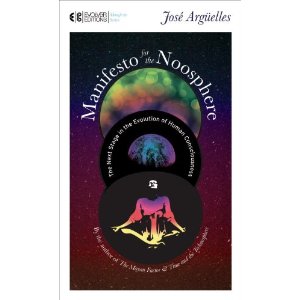
MUST READ CAPSTONE WORK: Noosphere — The Next Stage in the Evolution of Human Consciousness, A Testimony by Jose Arguelles

11 Society, 6 Star Top 10%, About the Idea, Advanced Cyber/IO, Augmented Reality, Consciousness & Social IQ, Cosmos & Destiny, Culture, Research, Ethics, Historic Contributions, InfoOps (IO), Information Society, Intelligence (Extra-Terrestrial), Intelligence (Public), Intelligence (Wealth of Networks), Methods & Process, Nature, Diet, Memetics, Design, Officers Call, Philosophy, Real Time, Strategy, Strategy, Truth & Reconciliation, Values, Ethics, Sustainable Evolution, Voices Lost (Indigenous, Gender, Poor, Marginalized)
Click on Image to Enlarge

Phi Beta Iota: We reproduce the excerpt in order to add links to all of the books and individuals mentioned.  Tip of the Hat to Reality Sandwich for this offering, and to Evolver Editions (North Atlantic/Random House) for their new Manifesto series in support of human consciousness and planetary synthesis.

Noosphere: The Next Stage in the Evolution of Human Consciousness, A Testimony

Amazon Page

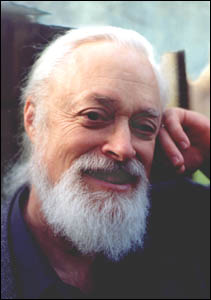
To mark the recent passing of José Argüelles, we offer an excerpt from his upcoming book Manifesto for the Noosphere: The Next Stage in the Evolution of Human Consciousness, available from Evolver Editions/North Atlantic Books in October 2011.

EXCERPT:

We must enlarge our approach to encompass the formation taking place before our eyes … of a particular biological entity such as has never existed on earth-the growth, outside and above the biosphere, of an added planetary layer, an envelope of thinking substance, to which, for the sake of convenience and symmetry, I have given the name of the Noosphere. –Pierre Teilhard de Chardin, The Future of Man

Amazon Page

Manifesto for the Noosphere is the result of forty years of study, contemplation, investigation, and synthesis. While the noosphere may be beyond the grasp of conventional science, it is a deep and pervasive intuition that has gripped the minds of scientists, philosophers, poets, and artists since the concept first emerged in 1926. It is an evolutionary concept posited by studies in both biogeochemistry and paleontology. It is a whole-systems paradigm that melds prophecy and analysis of current world trends. It is a perception that the transformation of the biosphere is inevitably leading to a new geological epoch and evolutionary cycle, and it is due to the impact of human thought on the environment that this new era — the Noosphere — is dawning.

Continue reading “MUST READ CAPSTONE WORK: Noosphere — The Next Stage in the Evolution of Human Consciousness, A Testimony by Jose Arguelles”

Is ‘Arab Spring’ Coming To Kabul?

08 Wild Cards, 11 Society, Advanced Cyber/IO, Civil Society, Counter-Oppression/Counter-Dictatorship Practices, Cultural Intelligence, Ethics, InfoOps (IO), IO Sense-Making, Methods & Process, Mobile
DefDog Recommends....

Is ‘Arab Spring' Coming To Kabul?

Radio Free Europe, 13 May 2011

The recent emergence of the first, large-scale Facebook movement among Afghan university students calling for reform can't help but raise the question — will the wave of antigovernment dissent in the Middle East reach Afghanistan?

Since March, some 1,500 university students in Kabul, and another 3,000 elsewhere around the country, have “friended” the Facebook page “Reformists.” There, they meet daily for discussions about how to exert grassroots pressure on the government — pressure that barely exists in Afghanistan today.

In some ways, the movement is very much like similar Facebook groups in the Arab world.

Read more….

Reference: Psychological Roots of Over-Consumption

About the Idea, Advanced Cyber/IO, Communities of Practice, Cultural Intelligence, Earth Intelligence, Ethics, Key Players

Click on Image to Expand

The psychological roots of resource over-consumption

Nate Hagens, 11 May 2011

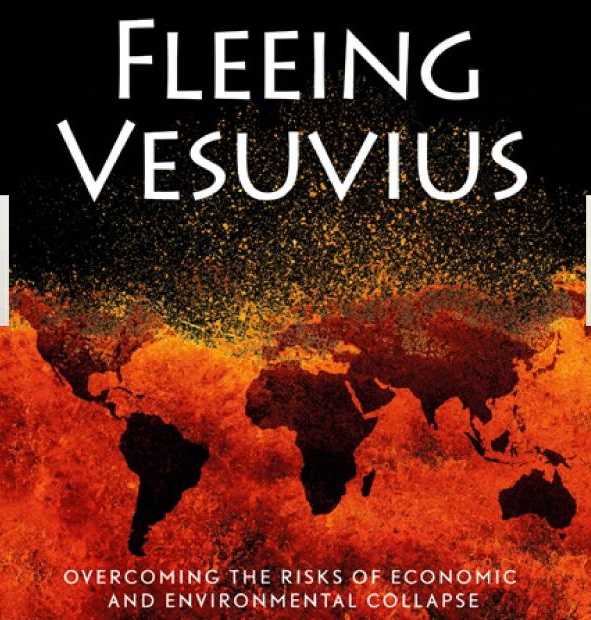
Chapter from Fleeing Vesuvius

Humans have an innate need for status and for novelty in their lives. Unfortunately, the modern world has adopted very energy- and resource-intensive ways of meeting those needs. Other ways are going to have to be found as part of the move to a more sustainable world.

Phi Beta Iota: Buckminster Fuller understood the centrality of time/energy, but he did not grasp the psychological roots of collective self-destruction.  This is an extraordinary article in every possible way.  Strategic Analytics & Smart Nations are a solution.

See Also:

YouTube: Steele to Scowcroft at WW Center

noble gold