However you want to define the American dream, there is not much of it that’s left anymore.
Wherever you choose to look — at the economy and jobs, the public schools, the budget deficits, the nonstop warfare overseas — you’ll see a country in sad shape. Standards of living are declining, and American parents increasingly believe that their children will inherit a very bad deal.
We’re in denial about the extent of the rot in the system, and the effort that would be required to turn things around. It will likely take many years, perhaps a decade or more, to get employment back to a level at which one could fairly say the economy is thriving.
With the public in the U.S and particularly in Europe losing patience with the Afghan mission, the NATO announcement seemed intended to generate headlines or at least a public perception of a plan for withdrawal.
In fact, the transition plan is more of a hope than a detailed road map. The provinces to be handed over next year by NATO and U.S. forces have yet to be selected, officials said, and the prospects for transition in parts of the country facing the fiercest fighting are murky at best. Decisions about whether to negotiate with the Taliban have yet to be made and disagreements remain about what concessions could be made.
As a published field, though, Conspiracy Theory has a surprisingly strong foundation. Consider Carroll Quigley's “The Anglo-American Establishment,” a masterpiece that completely unravels a powerful, and very real, conspiracy. It's written by an internationally respected Oxford professor, and it's content has never been disputed. Indeed, it is so meticulously and absurdly detailed that nobody has ever read it. There are lists of names and dates over 10 pages long throughout the text and I find myself skipping whole chapters every time I try and dig in. The information here is seldom referenced today, but it has been co-opted and integrated into the marketplace, too. Professor Quigley becomes Cleon Skousen becomes Glenn Beck.
A letter to a community organizer and networker overwhelmed by the potential impact of global crises on his community.
Dear John,
You might consider something I'm thinking of calling crisis-fatigue. Like battle fatigue or compassion fatigue. I think its main ingredient is ambiguity-fatigue. It is exhausting to continually contemplate potentially massive threats from a place of radical uncertainty littered with certainties that blink on and off…
How does one respond to this in anything approaching a sane way? I struggle with this all the time. At least a few things have become obvious to me. These strategies are remarkably consistent with what you'd expect the requisites would be for living in a complex, chaotic, unpredictable system:
1) Let go of outcome. Since we're not in charge (and never really were), admit that what happens is much bigger than any of us. It seems we need to be willing to die, willing for everyone around us to suffer, willing to fail at every attempt to make the world better or to understand or to be understood, or to even grow and learn from all this. Let it all go. (I do not mean that we should expect, encourage or welcome such undesirable outcomes. I mean we can want or envision positive outcomes even as we appreciate the fullness of life with or without them. Honoring our desires without being controlled by them clarifies our minds and frees us to be fully present. I know of few forces more powerfully benign than passionate engagement without attachment.)
2) Come to terms with our own intrinsic participation in Whatever Happens. Not only are we not in control, we're not un-involved. Our role in Whatever Happens isn't something we can escape. (One consolation is we aren't alone. Everyone and everything is co-creating Whatever Happens.) This is hard for us to come to terms with because it looks so much like the guilt-based responsibility upon which our society is based (“Everything is not my fault!”); but it is a totally different thing.
Guilt-based responsibility is part of the linear cause-and-effect worldview. (“Who's responsible/ guilty/ blameworthy?” is the social equivalent of the scientists' question, “What's the cause?”) But blame can't fathom the complexity of What Happens in a living/chaotic system. Phenomena arise from the whole, from the system itself. Those who stand by when events happen are creating a context for those events to unfold in the way they do — even when they are miles away obliviously watching a sitcom. Even inanimate objects are participants: Roads are participating in the death of pollinators (by replacing trees and meadows, by enabling the transport of pesticides, by contributing to ozone depletion). Everything participates. It is pointless to point. The route to better conditions is through increased awareness of the whole, and a more radically expansive sense of all our roles. This includes the previous item — letting go — because co-creation means we're not in charge of outcomes, we're just vitally important participants in influencing them.
3) Look for positive possibilities and ways to partner them into greater probability. Meg Wheatley and David Spangler taught me about living in a world of possibilities. We could say, inspired by the poet Muriel Rukeyser, that the universe is made of possibilities, not atoms. They are everywhere. They are everything. Some say God (or the devil) is in the details. I say God (and the devil) are in the possibilities. Every moment is filled with them. Although we don't get to control how they turn out, they are very responsive to our actions, our beliefs, our caring. That is the edge of co-creativity where Life resides most vividly.
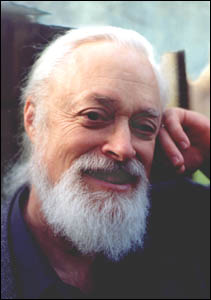
Phi Beta Iota: We respectfully urge one and all to contribute to the non-profit Co-Intelligence Institute. Tom Atlee is as close as we come to a Founding Father for a prosperous world at peace, beginning here in the USA.
Tom Atlee recently described the game changing potential of the Interactive Voter Choice System in the following terms:
“The participatory social-networking capacity of the Interactive Voter Choice System shifts voters' allegiance and attention from parties, ideologies, and political categories to the actual policies they want to see implemented. The system then helps them ally with others who want to see those policies implemented, regardless of their diverse political beliefs or reasons for favoring those policies. In the process, IVCS gives rise to an empowering, collectively intelligent, evolving, self-organizing political ecosystem which can enable citizens to do the following:
clarify and push for policies they want, creating their own personal “platforms”
network with others to form coalitions or ad hoc lobbying groups to push preferred policies
field candidates outside of the party system to promote the policies they want
create new political parties
work within existing parties to shape their platforms and performance
hold elected representatives accountable for their performance on favored policies
create parallel “shadow government” structures and policies
take over political parties and dissolve them and, through all of the above, to
ultimately move our politics beyond party politics and ideologies altogether.
“Imagine a politics where one hardly ever hears ‘liberal' or ‘conservative' or even ‘transpartisan', but only discussion of the issues. Imagine a politics where grassroots organizing is finally on a level playing field — or even favorable playing field — with the big money players. Imagine the already-surveyed popular preferences — like single payer health care and ending the wars in Iraq and Afghanistan — readily becoming the official policy of our government.”I honestly think IVCS is one of the most important emerging forms of political leverage we have available. Of course it can only do its job if it is well-funded for software development, viral promotion, and political strategizing so it can launch with strong popular appeal, participation, and well-thought-out security safeguards to prevent its marginalization, subversion or co-optation. If that happens soon enough, the chances are extremely high that it will have a decisive positive impact on the critical watershed 2012 election and every election after that. It could be a total game-changer.”
When I read Tom's article, my immediate reaction was that he had explained IVCS and its game changing potential in the most compelling terms that have been written on the subject. So I shared the article with a number of people who have expressed interest in IVCS. Their enthusiastic response was that they got the big picture, but were still unclear about how IVCS actually works. They asked for a clear explanation of how it enables voters, not political parties or special interests, to determine the outcomes of elections. How can voters use the system to run and elect their own candidates? I have written this post to answer these questions.
Humble Beginnings
Sheer frustration caused the idea for IVCS to pop into my head in 2004 during a campaign event for Howard Dean during his presidential primary bid. While milling around with his supporters waiting for Dean to start a nationwide conference call, I realized that his campaign slogan “You have the power” didn't jibe with the powerless role supporters like myself were relegated to playing at the event.
The way it was structured made it impossible for me to do what I came to do, which was to pressure Dean to remain true to his initial opposition to the U.S. invasion and occupation of Iraq, an issue I felt he had begun to waffle on. I also wanted to see if I could get other supporters to join me in pressing Dean not to renege on his opposition to the war.
The absence of any way for me to press my concern, and rally other anti-war supporters, hit home to me a political fact that I had not fully appreciated before. It is that in U.S. politics, electoral candidates conduct their campaigns on a “take it or leave it” basis. I had been coming to this conclusion gradually over time, but attending Dean's event and seeing how much he and his modus operandi had changed since the first rally I had attended in the summer of 2003 brought it home in a very forceful and depressing way.
The main goal of most campaigning candidates, to my way of thinking, is not to find out what their prospective constituents want them to do if they are elected, but to get them to embrace the agendas the candidates think will get them the most votes. Although they often conduct opinion polls, their objective is to use the results to figure out how to frame their targeted mixed messages to re-interpret reality for voters, and cajole disparate voting blocs into voting for them for different reasons. Campaigns are about defining and interpreting reality for voters, and “imaging” the candidates so that they appear to represent the best solution to the problematic versions of “reality” the campaigns create.
This systemic duplicity is basically a reversal of the democratic theory that elected officials should represent the people. Candidates do not seek or run on mandates from their constituents. Instead, they get voters to vote for them by manipulating their perceptions of reality and their images of the candidates themselves. Once these disingenuous candidates get into office, they can turn democratic theory upside down and claim that the voters who voted for them gave them a mandate to enact the candidates' agendas!
Phi Beta Iota: At this time and in our view, despite the strong approval that Tom Atlee voices and which we respect, the system is trying too hard to force fit pre-written scripted choices onto cards. As Harrison Owen said at a luncheon recently with the sponsors of IVCS and Phi Beta Iota, it is trying way too hard and should just give the voters the Open Space needed to create an infinite array of choices and consensus. It also does not at this time provide for displaying “true cost” information of alternative options, or for engaging the reality of having to make trade-offs if one wishes to make choices within a sustainable budget that sustains the environment. It's a start–and the best thing we've seen to date. It has a long way to go and Electoral Reform might be more fruitful (but much harder to advance); so in terms of a first step, this is, as Tom Atlee goes to great lengths to articulate, the best thing going.
In her newest book, former Alaska Governor Sarah Palin sharply criticizes the record of President Barack Obama while defending her own, in the process offering an unapologetic vision of conservative politics that strongly suggests a forthcoming presidential run.
“America by Heart,” which will be officially released on Tuesday (The Huffington Post obtained an advance copy), exhibits Palin in a variety of roles: culture warrior, presidential critic, committed mother and political provocateur. Clocking in at roughly 270 pages, it reads, at times, like an episode of Glenn Beck's Fox News show. Lengthy quotes and historical research is threaded, often, around contemporary political debates. In the mind's eye of the former governor, the founders, were they alive today, would be nothing short of Palin devotees — and they would certainly be shocked by Obama.
The president makes infrequent appearances in Palin's book, but when he does surface it is in an unflattering light.
“There is a narcissism in our leaders in Washington today,” Palin writes. “There's a quasi-religious feeling to the message coming from them. They are trying to convince us that not only are they our saviors, but that we are our saviors… as candidate Obama proclaimed on Super Tuesday 2008, ‘We are the ones we've been waiting for, we are the change that we seek.'”
Obama, as Palin posits, is neither providing the change that was sought nor fulfilling the role of savior he supposedly promised. Instead, he is cast as a wealth re-distributor, a sly practitioner, and, above all else, a politician with policies antithetical to American values. This is true, she argues, on matters large and small.
Interesting article in the New York Times – “How China meddled with the Internet,” based on a report to Congress by the United States-China Economic and Security Review Commission. The Times article talks about an incident where IDC China Telecommunication broadcast inaccurate Web traffic routes for about 18 minutes back in April. According to the Times, Chinese engineering managers said the incident was accidental, but didn’t really explain what happened, and “the commission said it had no evidence that the misdirection was intentional.” So there was a technical screwup, happens all the time, no big deal? Or should we be paranoid?
No doubt there’s a lot to worry about in the world of cyber-security, but what makes the Times article interesting is this contention (not really attributed to any expert):
While sensitive data such as e-mails and commercial transactions are generally encrypted before being transmitted, the Chinese government holds a copy of an encryption master key, and there was speculation that China might have used it to break the encryption on some of the misdirected Internet traffic.
That does sound scary right? China has an “encryption master key” for Internet traffic?
Except it doesn’t seem to be true. Experts tell me that there are no “master keys” associated with Internet traffic. In fact, conscientious engineers have avoided creating that sort of thing. They use public key encryption.
So why would the times suggest that there’s a “master key”?
Phi Beta Iota: We have three thoughts:
1) There's been a movie on the idea, and a low-rent mind might have been led to use the idea for spin.
2) Much more seriously, we have been told that many routers strip security as a routine means of increasing speed. We do not know the truth of the matter, since encrypted emails do arrive with encryption, but as a general proposition, security does seem to have been sacrificed to speed, and it may be there is no need for an Internet key in general.
3) Finally, we would observe that 80% of signals intelligence is pattern analysis, and being able to pull a massive amount of Internet into a place where pattern analysis of who is talking to who can take place, might, conceivably be worth doing.
Asked to name the world’s wealthiest entrepreneurs, few people would think of Eric Lefkofsky, who is 40 and keeps a deliberately low profile in his hometown of Chicago. But Mr. Lefkofsky has an impressive entrepreneurial track record, one that recently led Forbes to estimate his wealth at $750 million.
The first business Mr. Lefkofsky started, StarBelly, made tools for building Web sites; he sold it in 2000 for $240 million. He then started two companies that have since gone public — InnerWorkings, which provides printing capabilities over the Web, and Echo Global Logistics, a transportation and logistics outsourcing business he founded with a law school friend, Brad Keywell. He also founded MediaBank, which helps companies buy advertising. In each case, Mr. Lefkofsky used the power of technology and the Internet to update an industry.
And then came Groupon, the social-coupon Web site that he bankrolled and started in 2008 with Andrew Mason — a venture that has been called the fastest-growing company ever. Groupon offers its followers a deal-of-the-day coupon, sponsored by a local business, that the followers are encouraged to share with their social networks. The local business gets customers, and Groupon takes a share of the coupon proceeds — a business model that has led to talk that Groupon, still privately owned, could be worth as much as $3 billion. More recently, Mr. Lefkofsky and Mr. Keywell started an investment fund with $100 million of their earnings. It’s called Lightbank, and it invests only in early-stage technology companies that are built around social media. The following is a condensed version of a recent conversation with Mr. Lefkofsky.