Worth a Look: Book Reviews on Disinformation, Other Information Pathologies, & Repression

00 Remixed Review Lists, 9-11 Truth Books & DVDs, Censorship & Denial of Access, Congress (Failure, Reform), Corruption, Corruption, Crime (Corporate), Crime (Government), Empire, Sorrows, Hubris, Blowback, Executive (Partisan Failure, Reform), Intelligence (Extra-Terrestrial), Iraq, Misinformation & Propaganda, Politics of Science & Science of Politics, Power (Pathologies & Utilization), Power Behind-the-Scenes/Special Interests, Science & Politics of Science, Secrecy & Politics of Secrecy, Secrecy & Politics of Secrecy, Values, Ethics, Sustainable Evolution, Voices Lost (Indigenous, Gender, Poor, Marginalized), Worth A Look

Disinformation, Other Information Pathologies, & Repression

9/11

Review: 9-11

Review: 9-11 Descent into Tyranny–The New World Order’s Dark Plans to Turn Earth into a Prison Planet

Review: Access Denied–The Practice and Policy of Global Internet Filtering

Review: Painful Questions–An Analysis of the September 11th Attack

Review: The 9/11 Commission Report–Omissions And Distortions (Paperback)

Review: The Big Wedding–9/11, the Whistle Blowers, and the Cover-up (Paperback)

Review: The Hidden History of 9-11

Review: The New Pearl Harbor–Disturbing Questions About the Bush Administration and 9/11 (Paperback)

Review: The Terror Timeline–Year by Year, Day by Day, Minute by Minute: A Comprehensive Chronicle of the Road to 9/11–and America’s Response (Paperback)

Review: The War On Truth–9/11, Disinformation And The Anatomy Of Terrorism (Paperback)

Censorship

Review DVD: The U.S. vs. John Lennon

Review: Censorship of Historical Thought–A World Guide, 1945-2000

Review: Forbidden Knowledge–From Prometheus to Pornography

Review: Gag Rule–On the Suppression of Dissent and Stifling of Democracy

Review: Into the Buzzsaw–Leading Journalists Expose the Myth of a Free Press

Review: Soft Despotism, Democracy’s Drift: Montesquieu, Rousseau, Tocqueville, and the Modern Prospect

Review: The Age of Missing Information

Cover-Ups

Review: Scorpion Down–Sunk by the Soviets, Buried by the Pentagon: The Untold Story of the USS Scorpion

Review: Silent Steel–The Mysterious Death of the Nuclear Attack Sub USS Scorpion

Extra-Terrestrial Withholding

Review: Hidden Truth–Forbidden Knowledge

Iraq

Review: A War Against Truth–An Intimate Account of the Invasion of Iraq [ILLUSTRATED] (Paperback)

Propaganda

Review (Guest): Propaganda–The Formation of Men’s Attitudes

Review DVD: Fahrenheit 9/11 (2004)

Review: Big Lies–The Right-Wing Propaganda Machine and How It Distorts the Truth

Review: Disinformation –22 Media Myths That Undermine the War on Terror (Hardcover)

Review: Fog Facts –Searching for Truth in the Land of Spin (Nation Books) (Hardcover)

Review: HOW ISRAEL LOST

Review: Interventions

Review: It’s Not News, It’s Fark–How Mass Media Tries to Pass Off Crap As News

Review: Manufacturing Consent–The Political Economy of the Mass Media

Review: State of Fear

Review: The Infernal Machine–A History of Terrorism

Secrecy

Review: Lost History–Contras, Cocaine, the Press & ‘Project Truth’

Review: Nation of Secrets–The Threat to Democracy and the American Way of Life

Review: Secrecy–The American Experience

Review: Secrets–A Memoir of Vietnam and the Pentagon Papers

Review: Secrets and Lies–Operation “Iraqi Freedom” and After: A Prelude to the Fall of U.S. Power in the Middle East?

Review: The American Truth

Two-Party Tyranny

Review: Grand Illusion–The Myth of Voter Choice in a Two-Party Tyranny

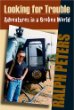
Review: Looking For Trouble–Adventures in a Broken World

5 Star, Empire, Sorrows, Hubris, Blowback, Force Structure (Military), Insurgency & Revolution, Intelligence (Government/Secret), Intelligence (Public), Peace, Poverty, & Middle Class, Security (Including Immigration), War & Face of Battle

Peters TroiubleWhat Humans Knew in 1990's That Secret Mandarins Refused to Hear, June 28, 2008

Ralph Peters

This book is not, as some might expect, a collection of past Op-Eds, but rather an extraordinary retrospective at the 1989-1996 time frame when officers like Ralph (and General Al Gray, myself, and a number of others in the Army and the Marines) were seeing the writing on the wall: the end of big war and the emergence of global instability in every clime and place). Ralph actually walked the ground and had “eyes on.”

I was immediately charmed anew by the poetic writing and the visually elegant turns of phrase. I have in my notes: chuckled, amused, reminded.

This review is going to combine my fly leaf notes with as many short quotes as I can fit in within my 1,000 word allotment.

Notes first:

Deep reading of Tolstoy and others set the stage for *understanding* today's culture and mindset in Russia. Earlier in his life, a subscription gift from an aunt to National Geographic opened his eyes to the rest of the world.

Early on, disdain for how we spend billions on satellites and nothing on officers walking the ground. He notes that overt human intelligence can absorb and articulate what no satellite can provide: “the temper of the people, the taste of the land.”

USSR in 1991 was potholes and rust. In his “walk-about” he gained direct invited access to an MVD commander's office, to all of the local “secret” messages, and had invited “eyes on” the MVD special intelligence communications room.

In the Bosnia-Kosovo run-up, which he and others anticipated, he learned that Europe cannot be trusted to act in unison or decisively in the absence of strong US leadership–France, Germany, and the United Kingdom all revert to their historical animosities, and despite their large standing armies, lack the political will or the deep strategic analytics necessary to use those armies in a coherent manner.

His respect for Armenia is deeply rooted in his on the ground experience among them.

Col Stu Herrington, whose book Traitors Among Us: Inside the Spy Catcher's World I have praised, is strongly praised in this book. He and the author were part of a team that worked with the Russians to address the long-standing concern over Americans being held in the Gulag, and the pages in this book, covering each of the wars from World War II onwards, are a complete surprise and essential reading for anyone interested in POW/MIA accounting.

He blasts the US policy of crop eradication, and his devastating criticism of arm-chair politicians and ivory tower diplomats warms my heart.

Late in the book he focused on Pakistan and I find this chapter especially vital for the public understanding of how the US is destroying its once-close ties to the Pakistani officer corps. The older officers are fully trained by the British or the US. The company and field grade officers are not, and are so delusional about Islam and so ignorant about the rest of the world as to be very dangerous to us.

Throughout the book he laments the lot of women across most Islamic countries (with Indonesia and Malaysia as notable exceptions; I add this from my own knowledge and Ralph's official report to the Marine Corps in the 1990's).

Now the quotes. Page number, then words:

8 On [the Russian and Central Asian] frontiers, humanity is a brotherhood of smugglers.

29 Only its women allowed the Soviet Union to endure as long as it did.

38 …I am convinced there is no Russian word for maintenance.

45 …worry too much about dead facts and too little about their antagonist's delusions.

66 Artist and intelligence challenges similar: an eye for detail and ability to reduce complexity to coherence

73 …no one in the US intelligence community was interested. If the data didn't come from a satellite, it didn't count.

87 What Belgrade lacked … was human dignity.

108 I knew we could overpower [Iraqi] military….I had seen…his officer corps…drunk and whoring.

132 Conquest of Central Asia is a chronicle of…cruelty….Soviets are the champs….[others] tortured human beings. The Soviet Union tortured the earth itself.

141 Bukhara is where Islam turned dark…

146 The Clinton Administration was run by intolerant dreamers… With neither self-critical faculties nor experience of the world …

151 Islam froze by the mid-fifteenth century when science-fearing zealots….

172 And there you have our diplomats. Unwilling to talk to our enemies… Unwilling to learn.

200 Azerbaijan was the first place where I got n inside look at the nastiness of our Saudi “friends.”

204 Everywhere, the Saudis took an interest in human suffering only if it offered them an entry point for missionary activities. And any Muslim who wouldn't sign up for … Wahhabi Puritanism was welcome to die.

218 …the callousness with which our government had treated the family members of our MIAs…

231 [General McCaffrey] wasn't getting an adequate tie-it-all-together picture of the cocaine problem. Not from his staff, and not from the alphabet-soup agencies…

239 You cannot take away the livelihood of the poor [coca crops] unless you have the wherewithal to replace it immediately and enduringly.

244 Found wealth, when immature countries…hit the natural-resources lottery, is uniformly destructive of the souls of men and nations.

251 [Army saw the future coming.] It was impossible, however, to persuade the Clinton White House, the intelligence establishment, or even our own services (except for the Marines) that our enemies, rather than our desires, would shape the future security environment.

319 [Drug Czar] was not allowed to differentiate between hard and soft drugs.

335 [At the Plain of Jars] I saw my country's dark side….we go mad now and then. And when we do, we leave desolation behind.

This is an amazing book and for anyone who is concerned with strategic warning, honest intelligence, strategy, force structure, the need to rebalance the instruments of national power, and the future of humanity, will find this book inspiring.

E Veritate Potens–From Truth, We the People Are Empowered

See also:
Wars of Blood and Faith: The Conflicts That Will Shape the 21st Century
Robert Young Pelton's The World's Most Dangerous Places: 5th Edition (Robert Young Pelton the World's Most Dangerous Places)
The Coming Anarchy: Shattering the Dreams of the Post Cold War
The Warning Solution : Intelligent Analysis in the Age of Information Overload
None So Blind: A Personal Account of the Intelligence Failure in Vietnam
On Intelligence: Spies and Secrecy in an Open World
The New Craft of Intelligence: Personal, Public, & Political–Citizen's Action Handbook for Fighting Terrorism, Genocide, Disease, Toxic Bombs, & Corruption
Information Operations: All Information, All Languages, All the Time
THE SMART NATION ACT: Public Intelligence in the Public Interest

Review: State of the World 2008–Toward a Sustainable Global Economy

4 Star, Complexity & Catastrophe, Empire, Sorrows, Hubris, Blowback, Environment (Problems), Intelligence (Public), Nature, Diet, Memetics, Design, Security (Including Immigration), Threats (Emerging & Perennial), Values, Ethics, Sustainable Evolution, Water, Energy, Oil, Scarcity
State World 2008
Amazon Page

Superb Primer for Any Level, Needs Two Missing Pieces, April 25, 2008

Worldwatch Institute

This a superb edited work that melds chapters (with notes at the end) from world-class authors on a broad range of topics.

I kept this at five stars until the end and then I could not stand it anymore. There are at least five reasons to reduce it to four. Here are the first two.

1. As someone who grew up with Banks & Textor and have created four analytic models in my lifetime, I am growing increasing impatient with the continued fragmentation of research and writing. There is a model available: ten threats (from the UN High Level Threat Panel), twelve policies, eight challengers. We need to start fusing, analyzing, visualizing and discussing all ten threats in relation to all ten policies. I am no longer content to read about water in one chapter, meat in another, and so on. Stop putzing around and create the EarthGame with all information, all languages, all the time–geospatially grounded of course–and let's get on with the task of identifying with precision the global range of gifts table down to the household level, from $1 to $100 million.

2. I am increasingly irritated by the little cabals that strive to cite only themselves, and furthermore, have their own language to distinguish them. “Get the price right” instead of “true cost”? Get over it. Enough already. I am also increasingly of the view that the Notes must be indexed. The notes are good, but when the lead chapter talks about “Adjust Economic Scale” and fails to cite Small Is Beautiful, 25th Anniversary Edition: Economics As If People Mattered: 25 Years Later . . . With Commentaries or Human Scale I growl.

Together with Plan 3.0 and Vital Signs, both linked by another reviewer, this book represents a fine stand-alone study set if you want to limit yourself to the WorldWatch oracles and dismiss all others.

Here is what grabbed me about this book:

+ Opens with utterly sensational four pages of “timeline” for 2007 with little blocks that are priceless. I really like this.

+ Chapter 1 does a fine job of listing:

– Four flawed economic assumptions:

– 1. Independence of economic activity from “infinite” nature

– 2. Growth should be the primary economic objective

– 3. Markets are always superior to governments at allocating resources

– 4. Humans are economic maximizers and place no value on community

This may sound simple but I admire it.

– The seven big ideas for economic reform:

– 1. Adjust economic scale

– 2. Shift from growth to development

– 3. Make prices tell the ecological truth [note: for World Index of Social and Environmental Responsibility–WISER–to not be in index irritates me so much I almost take the fifth star again).

– 4. Account for nature's contributions [I am infuriated by a second hand citation. I am not familiar with more than a couple of books, but to not mention Ecological Economics: Principles And Applications or The Future of Life moves this book, as very good as it is–toward Classic Comics book shallowness.

– 5. Apply the precautionary principle. [Cites a San Francisco Chronicle opinion piece, what happened to the real books on this subject, such as Protecting Public Health and the Environment: Implementing The Precautionary Principle

– 6. Revitalize commons management

– 7. Value women [here I am irritated by the isolation of these authors and their citations from a broader understanding of why we should value women: because it is a proven fact that there is no better investment, dollar for development dollar, than a dollar spend educating women. That ripples through society and impacts on the men big time.]

The second chapter has a prices Figure showing that computer diffusion is growing arithmetically while cell phone diffusion is growing logrithmically plus. My comment: Nokia is slowing beginning to grasp what I told their Chairman a year ago: give the cell phones to the poor free, sell the call, not the phone (and my other idea, educate the poor one cell call at a time, starting with call centers in India and China, and then monetize the transactions. Having six farmers call in asking about the same animal disease is PRICELESS! How governments cannot understand this simple logic is beyond my comprehension.

Across the book the tables and figures are powerful but they are not integrated into a total model (e.g. you should not grow grain with water you cannot afford to create fuel instead of feeding a family when you could run 35 million cars a year on Cuban sugar cane sap).

I was pleasantly surprised to see meat and seafood in its own chapter, but as an avid admirer of everything by Francis Moore Lappe
, see for example Diet for a Small Planet and her most recentDemocracy's Edge: Choosing to Save Our Country by Bringing Democracy to Life.

Toward the end are two very important chapters, one on the financial implications of sustainability (i.e. what alternative vehicles can be used to push back on predatory lending, absentee ownership, and wasteful food practices) and on harnessing human energy (e.g. to plant trees).

I put the book down with irritation–Open Money, Collective Intelligence, even the word Citizen are not in this book–and I again harken to the need for an EarthGame in which all knowledge, all budgets, all citizens, can come together to game, understand, dialog, and decide.

I've come to the conclusion that the fragmentation of the “academy” is now just as dangerous as the desperate failure of our political system in America (see Running On Empty: How The Democratic and Republican Parties Are Bankrupting Our Future and What Americans Can Do About It for the simple reason that if the academy would get its act together and “make sense” to the public, the public will take care of the political fix.

We knew most of this stuff in the 1970's, 1980's, and 1990's–at the academic level–but the politicians were able to ignore us because a) the people were unwitting and b) low gas prices and high Exxon bribes were great for the smokey room crowd. That's over. It's time for the academy to start producing explicit recommendations and budgets, at the zip code level, that we can use to beat politicians into submission or out of office.

Please have it online by 4 July 2008, and thank you for all the wonderful work up to this point. Time to bring this program home.

Two more links that are action oriented:
How to Change the World: Social Entrepreneurs and the Power of New Ideas, Updated Edition
Collective Intelligence: Creating a Prosperous World at Peace

Vote on Review

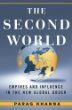
Review: The Second World–Empires and Influence in the New Global Order

5 Star, Change & Innovation, Empire, Sorrows, Hubris, Blowback, Future, Peace, Poverty, & Middle Class

Second WorldTour of the world in concise but precise terms,March 30, 2008

Parag Khanna

This is an extraordinary book, a tour of the “real” world where the future is being defined. While I respect the reviewer's that have difficulty with inaccuracies or inconsistencies, on balance, in all of my reading as reviewed on Amazon, I would rate this one of the top 20 books, perhaps even one of the top 10 (let's go with that, making it one of the top 10 on reality, while my other “top ten” would encompass world changing, social entrepreneurship, the Tao of democracy and other solution-oriented writings).

My notes must of necessity be cryptic. I will start with the bottom line and urge the Amazon reader to take my notes as a strong incentive to buy and read the book cover to cover.

Bottom line: US has screwed up big time, and is taking third place to China's achievement of globalization on its terms, using consultation, incentives, and efficient/effective agreements to propel itself past Europe, which has consensus model that has displaced the US but cannot compete with China's global juggernaut. The US is gently tarred with confusing “security” for prosperity or legitimacy, with preferring single-party strong-arm partners, and with being generally clumsy, inept, ignorant, and hence losing on all fronts.

+ Second World is internally divided between rich and poor sectors

+ Second World is the tipping point domain that will determine the tri-polar (China, Europe, US) outcome

+ Author covers five regions 1) east of Europe including Russia and Turkey; 2) Central Asia; 3) South America with little attention to Caribbean; 4) Middle East; and 5) Asia and the 4 Chinas.

Early on the author states that the Americas are terribly ignorant of both the old and new geography, and I would agree while emphasizing that the “expert” advisors to Presidential candidates are themselves as ignorant (or biased)–from those that are state-centric to those that are ideologically unbalanced to those that believe their ego and social network are sufficient in and of themselves. Not a single one of them knows how to lead a nation-wide conversation, much less a regional or international conversation–they are the “walking dead” of the pyramidal era, and any contender that listens to them and allows them to exclude the iconoclasts and the avant guarde is destined to be neutered, so to speak, before their time.

+ According to the author, America is now viewed as destabilize, in an era when the Second World judges legitimacy on the basis of proven effectiveness (one could also add: sustained effectiveness, not a US forte). Further on the author drives this point home by saying that success trumps ideology, and across the Second World, democracy is not considered practical (nor credible as a US claim for access).

+ European Union is the standard bearer for both technology and regulation (another book I have reviewed pointed out that USA has become a “dumping ground” for products from China Europe will not admit–thank you, Dick Cheney).

+ USA, EU, and China have no common culture, and (combined with the distinct cultures of the other four emergent regions), this is cause for concern about future misunderstandings and over-reactions.

+ The world is demographically blended and so increasingly inter-dependent that the day of major war is indeed likely to be a thing of the past.

+ In the early focus on Europe, the author quotes a European to the effect that Europe is expanding, each time getting poorer, but each time delivering and buying priceless stability. This is one reason why Eastern Europe is skyrocketing and at the same time, displacing the USA as a source for many exports to Europe.

+ He tells us that Europe is confident, incentivizes its partners, has a generation in charge that is transcendent, and is disdainful of the US for its ineptness.

+ Russia is described as a “Siberian Saudi Arabia” but with an insecure nuclear arsenal. ¾ of the wealth is centered in (controlled from) Moscow while 2/3 of Russians are living at the poverty line or below.

+ Russia is being emptied of Russians as they vote with their feet and move west, at the same time that Chinese are moving north into Siberia, which global warming is making more hospitable.

+ In the Balkans instability threatens Europe, but European agro-technology is making a huge difference, as is the European penchant to support multiple parties rather than any single dictator. Still, “lurking tribalization” is of concern.

+ Turkey is a key player in saving the Balkans, and in the author's view, is powerful, democratic, secular, and Muslim, and also responsible for ten times more trade with Europe than with the US.

+ Black Sea is creating its own unified region.

+ Georgia does not have a single decent road.

+ Caucasian Corridor is a Balkans waiting to happen.

+ While Brussels is central, London, Ankara, and Moscow each have their own key role in the region.

+ Central Asia benefits from the re-creation of the Silk Road for East-West trade, while also suffering from being the “laboratory” for imperial excess seeking to play the Great Game (not something the US is at all qualified to “play”)

+ The author points out Central Asia is at the intersection of Russia, China, Europe, and the US, to which I would add Iran as well.

+ Mongolia is militarily aligned with the US (and from my own knowledge, has one of the finer peace keeping training programs as well as an ideal pre-Afghanistan mobilization training environment)

+ According to the author, China, in sharp contrast to the US and Russia, is making huge gains in Central Asia because of “swift settlement” of all outstanding border issues, its promotion of shared development strategies, its “massive charm offensive” and its role as a “consultative leader,” and its being the “standard bearer for business practices” which is code for no-strings attached loans nearing one billion. The Shanghai Cooperation Organization (SCO) is now called the “NATO of the East.” China is winning Central Asia through strategy, trade, and co-development. [See also my online memorandum “Chinese Irregular Warfare oss.net”]

+ Kazakhstan has energy and retained its own language, shows promise.

+ Kyrgystan a mess, Tajikistan a bridge for revival of Sino-Iranian trade routes.

+ Uzbeckistan and Tajikistan are Islamic targets.

+ American failure to reconstruct Afghanistan has left Karzai neutered, perhaps soon to go.

+ South America has been suffocated by US hegemony, and US sponsorship of 30 years of “Dirty War” pitting authoritarian rightists against [liberation theology and populist] leftists.

+ Unlike other regions, South America simply wants US to live up to its rhetoric about free trade and democratization, “without exceptions.”

+ US threatened by crime, drugs, migration from the South, does not seem to appreciate the value of South American integration and self-sufficiency in energy and food sectors.

+ Four Mexico's–northern, central breadbasket, indigenous destitute isthmus, and very poor Mayan Yucatan.

+ Chaves in Venezuela is a spendthrift and has quadrupled Venezuela's debt, but he actually has a serious strategy that includes China to offset US, a pipeline to Argentina, state to state barter of commodities, modernizing Caribbean energy sector, and welcoming Iran and Europe.

+ Colombia is the key to the future of the region, unique for having Pacific and Caribbean coasts while also being the entry point for a Pan-American highway of greater potential.

+ US is losing the drug war and screwing up the alternatives of trade and economic accelerators.

+ Brazil is the USA of South America, and has formed a trade axis with China. It is multiracial, with the largest populations of Arabs outside Nigeria, Lebanese outside Lebanon, Italians and Japanese outside their own countries. Crime is the wild card, the Achilles' heel.

+ Argentina is a basket case (the author does not tell us that Argentine is also being seduced by Chinese men and is likely to be majority Chinese by 2025).

+ Chile, despite US mis-deeds, benefited from German farmers and is today's success story, focused on stability, pragmatism, and profit.

+ Arabs are redefining themselves in the Middle East in a manner not seen in the past 1000 years. They remain central, and the author anticipates Arab economics will triumph over Islamic radicalism. Later in the book he concludes that the Arabic opinion and sense of self is solidifying.

+ North Africa is Europe's southern shore, and part of the Mediterranean culture, but suffers a massive disconnect between unemployable poorly educated youth and jobs without qualified applicants.

+ Libya (I learn for the first time) is a huge success, with major gains in education, advancement of women, and per capita income over $7000 a year.

+ Egypt as the Arab cornerstone and the difficult blend of Arabia and Islam. This government, the author tells us , “provides neither moral leadership nor public services” and therefore is “a perfect target for Islamist groups well-equipped to provide both.” He believes an Iranian-style revolution is possible.

+ The Mashreq–Israel, Palestine, Jordan, Syria and Lebanon, he sums up as “Iranian interference, Syrian intransigence, Lebanese weakness, Israeli aggression, and Palestinian desperation.” I was surprised to not see “American idiocy” in there, since my taxpayer dollars are funding the Israeli genocide against the Palestinians.

+ He anticipates the death of Iraq and the emergence of Kurdistan, and here I quote two gifted turns of phrase: “Wars are like a geopolitical reset button.” and “The Iraq war exposed the United States as a superpower whose intelligence does not match its aspirations.” As an intelligence professional, I must clarify this: both the Army leadership and the CIA professionals, that is to say, Charlie Allen, got it exactly right–no weapons of mass destruction, kept the cook books, bluffing for regional sake. It was George Tenet who parked his integrity on the same shelf as Colin Powell and Mike Hayden, who allowed Dick Cheney to hijack the US Government and send the US military to war on the basis of 935 explicitly documented lies to the public and Congress and the UN, and 25 explicitly documented high crimes and misdemeanors.

+ Iran does not get enough coverage, but that is insufficient to undermine my very high regard for this book.

+ Gulf will provide 40% of the energy for the foreseeable future. Oil windfalls were mis-directed by the leaders, who funded luxuries for themselves, and militaries, rather than seeing to the public good.

+ Wahhabist reckoning is coming–they teach selected elements of the Koran by rote, not Islam. However, they correctly evaluate the Saudi Royals as the near enemy and the USA as the far enemy, joined at the hip.

+ United Arab Emirates is where Las Vegas meets Singapore, with Dubai as the icon. He notes with studied understatement that Chinese goods and Chinese whores are half price to any competing goods or whores, and the former “designed to disintegrate.”

+ Malaysia and Indonesia have huge Chinese Diasporas. Myanmar, Thailand, Vietnam not as well covered as I would have liked, especially Vietnam which is totally independent of China.

+ There are four Chinas–the southeast quadrant with Shanghai, Hong Kong, and Taiwan (I was surprised to see no mention of Macau, through which China is aggressively wooing all former Portuguese colonies including Brazil); the Beijing centered northeast, and the far edge of Tibet and Xinjiang, which the author tells us earlier in the book are as vital to China as the Rockies and West of the Rockies are to the US.

+ He says that China is “blending” Asia, and that from Malaysia and elsewhere there is broad recognition that a form of Chinese “Monroe Doctrine” is being established. He specifically points out that US offers of “security” are losing out to European offers of “capacity” that nurture prosperity (as well as Chinese offers of co-development).

+ I grew up in Singapore, finishing high school there, and I am in total agreement with the author's admiration for Lee Kuan Yew and the manner in which communitarian trumps democratic when it comes to producing more stability and prosperity. I recently learned from my step-mother, who just left Singapore after decades of being the leader of English education for the government (and Chinese teachers) that one cannot run for Parliament in Singapore without first earning a Masters in Business Administration.

+ Uniquely, Asians want to stay in Asia while visiting everywhere else.

+ He plays down India and I completely disagree with his dismissal of them. India has made more progress than China when one considers the totally divergent and conflictive situations they must handle across tribes, religions, classes, and environmental challenges.

In his conclusion, the author suggests that a tri-polar world now exists, but one read what can only be a list of indicators of USA suicidal tendencies: lousy education, no investment in technology, as many gang members as there are policemen (roughly 750,000 he tells us). The USA can learn to co-exist and co-develop with the rest of the world, and abandon its military “big stick” paradigm, or it can be relegated to third place forever, and gradually go down even further.

I am very worried. I see no one that has strategic perspective, a holistic understanding of the ten threats and twelve policies, nor an appreciation of the urgency of creating an alternative development model for Brazil, China, India, Indonesia, Iran, Russia, and Venezuela, among others.

See also:
A More Secure World: Our Shared Responsibility–Report of the Secretary-General's High-level Panel on Threats, Challenges and Change
High Noon 20 Global Problems, 20 Years to Solve Them
The Unconquerable World: Power, Nonviolence, and the Will of the People
The Fifty-Year Wound: How America's Cold War Victory Has Shaped Our World
War is a Racket: The Antiwar Classic by America's Most Decorated Soldier
The leadership of civilization building: Administrative and civilization theory, symbolic dialogue, and citizen skills for the 21st century
How to Change the World: Social Entrepreneurs and the Power of New Ideas, Updated Edition
Plan B 3.0: Mobilizing to Save Civilization, Third Edition
The Future of Life
Collective Intelligence: Creating a Prosperous World at Peace

Review: Daydream Believers–How a Few Grand Ideas Wrecked American Power

5 Star, Congress (Failure, Reform), Corruption, Diplomacy, Empire, Sorrows, Hubris, Blowback, Executive (Partisan Failure, Reform), Impeachment & Treason, Insurgency & Revolution, Intelligence (Government/Secret), Iraq, Politics, Power (Pathologies & Utilization), Religion & Politics of Religion, War & Face of Battle

Daydream BelieversTogether with a Few Other Books, All You Need to Know, March 21, 2008

Fred Kaplan

The author is kinder to the protagonists than they merit.

I give the author high marks for making the case early on in the book that the world did NOT change after 9-11, and that what really happened was that the coincidence of neo-conservative back-stabbing and Bush's well-intentioned evangelical village idiot view of freedom and democracy.

The author does a fine job of reviewing how after 9-11 we were faced with two choices, the first, going for empire (“we make our own reality”) or revitalizing alliances. The neocons in their ignorance called for regime changes, but the author fails us here by not understanding that both political parties love 42 of the 44 dictators, those that “our” dictators.

The author has many gifted turns of phrase. One talks about how their “vision” turned into a “dream” that then met “reality” and was instantly converted into a “nightmare.”

The author adds to our knowledge of how Rumsfeld empowered Andy Marshall, and how the inner circle quickly grew enamored of the delusion that they could achieve total situational awareness with total accuracy in a system of systems no intelligent person would ever believe in.

The author highlights two major intelligence failures that contributed to the policy bubble:

1. Soviet Union was way behind the US during the Cold War, not ahead.
2. Soviet economy was vastly worse and more vulnerable that CIA ever understood.

The author helps us understand that the 1989 collapse of the Berlin War created a furor over the “peace dividend” and the “end of history” that were mistaken, but sufficient to bury with noise any concerns about Bin Laden and Saudi Arabian spread of virulent anti-Shi'ite Wahabibism from 1988 onwards.

By 1997 Marshall and Andy Krepinevich were staking everything on Unmanned Aerial Vehicles (UAV), high speed communications and computing (still not real today), and precision munitions.

The author provides a super discussion of Col John Warden's “five rings” in priority order: 1) leadership and C4I; 2) infrastructure; 3) transportation; 4) population (again, war crimes); and finally, 5) the enemy. The author is brutal in scoring the campaign designed by Col Warden a complete failure. It…did…not…work (in Gulf I).

I cannot summarize everything, so a few highlights:

+ Taliban quickly learned how to defeat US overhead (satellite) surveillance–remember, we do not do “no-notice” air breather imagery any more, except for easily detected UAVs, with mud as well as cover and concealment. .

+ Excellent account of the influence on Rumsfeld of George Tenet's failure to satisfy him during a missile defense review. It became obvious to all that the U.S. Intelligence Community a) no longer had a very high level of technical mastery on the topic; and b) was so fragmented as to make the varied analytic elements deaf, dumb, and blind–not sharing with each other, using contradictory data sets, the list goes on.

Page 187 is the page to read if you are just browsing in the bookstore:

Summarizing 2007: “Not so much a return to realism as a retreat to randomness.” Also: “Grand vision was shattered by reality. Policies were devised piecemeal; actions were scattershot, aimless.” And: “put forth ideas without strategies; policies without process; wishes without means.” Devastating.

So many other notes. Here are a tiny handful:

+ Speechwriter Michael Gersen connected with Bush on an evangelical level, wrote major speeches, in the case of a foreign policy speech, without actually consulting any adult practitioners.

+ Joseph Korbel was both Madeline Albright's father and Condi Rice's educational mentor–talk about a non-partisan losing streak!

+ American Enterprise Institute and Richard Perl used Natan (Anatoly) Sharansky to impress Cheney and subvert Bush by reframing the Israeli genocide against the Palestinians as the first 21st Century war between terrorism (the hapless Palestinians) and democracy (the Israeli's).

+ He credits Eliot Abrams with devising the unique linkage between American Jews whose numbers and influence have been declining, and the Evangelical Christians whose influence peaked with Bush-Cheney.

+ He slams General Tommy Franks for providing assurances and making promises he could not keep with respect to settling and stabilizing the towns by-passed or over-run by the US Army.

+ The author is misleading in his account of the Saudi-Powell discussions on how an election would lead to radical Islamics in charge (as opposed to despotic, perverted spendthrifts).

+ Rumsfeld Lite going into Iraq meant that a quarter million tons of ordnance was looted by insurgents, which is what cost us four years time. General Shinseki is vindicated.

+ For the first time I learn of a planned Truth and Reconciliation Commission.

+ The author introduces Ahmed Chalabi but does not fully understand this man's crimes as well as his special relationship with Iran. Iran used him to get the USA to depose the Taliban and Sadaam Hussein, , and to lure the entire US military into a quagmire.

+ Department of State, Mr. White in particular, got it right every time.

+ Legitimacy and stability must come before elections.

+ Hezbollah win in Lebanon dealt a crushing blow to the Bush delusions.

+ Bush refused to deal with Syria and Iran throughout. I am reminded of how Civil Affairs was told in the first five years of the war to blow off the tribal leaders and imams, and only now are they being allowed to get it right.

+ Useful account of three failed Public Diplomacy tenures (Charlotte Beers, Margaret Tutwiler, Karen Hughes (who waited six months so her son could leave for college–so much for the importance of that job….)

+ USA sent $230 million in aid to Lebanon, while Iran poured in $1 billion via Hezbollah (meanwhile, the Chinese do the same everywhere else).

Page 191 is glorious: Bush's strategies were “based on fantasies, faith, and a willful indifference toward those affected by their consequences.”

Page 192: the real divide is “between the realists and the fantasists.”

The author quite properly slams the Democrats for not having an original idea, plan, program, bill, budget, or moral thought.

He ends by suggesting that multinational consensus is still the true litmus test for the sensibility and sustainability of any endeavor.

On this note, I conclude that five stars are right where this book should be. Incomplete, but original and provocative. Bravo.

Other recommendations:
Breaking the Real Axis of Evil: How to Oust the World's Last Dictators by 2025
Web of Deceit: The History of Western Complicity in Iraq, from Churchill to Kennedy to George W. Bush
Legacy of Ashes: The History of the CIA
The Sorrows of Empire: Militarism, Secrecy, and the End of the Republic (The American Empire Project)
DVD Why We Fight
Vice: Dick Cheney and the Hijacking of the American Presidency
The Price of Loyalty : George W. Bush, the White House, and the Education of Paul O'Neill
Fiasco: The American Military Adventure in Iraq
Rumsfeld: His Rise, Fall, and Catastrophic Legacy

Vote on Review

Review: Bad Samaritans–The Myth of Free Trade and the Secret History of Capitalism

5 Star, Capitalism (Good & Bad), Empire, Sorrows, Hubris, Blowback

Bad SamaritansSpeaking truth to power, helpful revisionism, February 22, 2008

Ha-Joon Chang

While other books (linked below) have focused on the evils done in our name, this is the first book I have seen that dissects economic history in order to demonstrate the hypocrisy of the current regime that bullies lesser developed countries with the IMF-WTO-World Bank interlocking conditionalities.

The author comes down solidly in favor of protectionism, foreign investment controls, state-owned enterprises, avoidance of privatization, not allowing patents to clash with the public interest, the need to defy the marketplace and respect the role of manufacturing, and the influence of culture (and changing the culture through government direction).

This is a nuanced book that trashes the neo-liberals while speaking truth to power. On any given prescrption, the author will say “it depends” and avoid leaning to one extreme over another.

He touches on democracy as not necessarily good for developement, and corruption not necessarily bad.

Other books that I respect as much as this one:
The Bottom Billion: Why the Poorest Countries are Failing and What Can Be Done About It
The End of Poverty: Economic Possibilities for Our Time
The Fortune at the Bottom of the Pyramid: Eradicating Poverty Through Profits (Wharton School Publishing Paperbacks)
Confessions of an Economic Hit Man
The Shock Doctrine: The Rise of Disaster Capitalism
Manufacture of Evil: Ethics, Evolution, and the Industrial System
Open Society: Reforming Global Capitalism
The Pathology of Power – A Challenge to Human Freedom and Safety
Blessed Unrest: How the Largest Movement in the World Came into Being and Why No One Saw It Coming
The Unconquerable World: Power, Nonviolence, and the Will of the People

See also my varied lists.

Review DVD: The World Without US – With Niall Ferguson

3 Star, America (Anti-America), Empire, Sorrows, Hubris, Blowback, Reviews (DVD Only)

World Without UsClever in a sophmoric way–selective, Inconclusive, and naive, February 14, 2008

Mitch Anderson

I have been going blind the past two weeks doing the index to the new edited work by Mark Tovey, COLLECTIVE INTELLIGENCE: Creating a Prosperous World at Peace, playing DVDs in the background.

This one fooled me right up to the end with its able review of the disconnect between most Arab oil going to China and Europe (so why should the US protect it), the great strengths of the German and Japanese economies, the great wealth of the Arab countries to whom we give most of our foreign military assistance….

I was especially intregued by his use of putative candidates for president promising to pull all our troops back and reinvest in the homeland, something Mayor Mike Bloomberg has been harping on.

Then he pulled the plug with, as I say, a clever but sophmoric conclusion that is NOT, as one “official” review would have it, conclusive at all–the DVD ends with a nuclear explosion and a replay of Hiroshima, with one Asian mother in the rubble asking another to tell her daughter (who is assuredly vaporized) that she loves here. Then she dies and the movie dies with her.

This happens to be my lifetime focus, so here are a few thoughts:

1) For what we spend on war all over the world, $1.3 trillion a year, we could use one third of it to retain essential military and law enforcement capabilites, one third of it to completely rebuild our homeland, and one third of it to invest in massive undersea, outerspace, paranormal, and inter-cultural innovation.

2) Washington DC is run by four crime families: the Clintons, the Bushes, the Republicans and the Democrats. They specialize in picking the taxpayers' pocket, robbing the many to enrich the few. At the same time, Wall Street has migrated from being a fiduciary trust to being a financial intermediary, and as John Bogle spells out in his most recent book, these asset managers have skimmed off one fifth of the wealth as “fees” without any of the “owners” being any the wiser.

3) The ten high level threats to mankind have now been definitively established, and they are poverty, infectious disease, environmental degradation, inter-state conflict, civil war, genocide, other atrocities, proliferation (which is best practiced by the arms mongering of the five permanent members of the Security Council), terrorism (note how this is NINTH yet consuming the current White House), and transnational crime (the latter a $2 trillion a year endeavor, against $7 trillion in the “legal” economy and an almost certain $1 trillion in corporate fraud and tax avoidance and another $1 trillion in barter and intangible exchange.

The USA needs the following:

1) Electoral reform and a citizenship mindful of its civic duties.

2) Honest politicians committed to transparent open government and no legislation without pre-publication in detail.

3) A strategy that commits to eradicating the ten high level threats, and buy-outs or force-oputs for the 44 dictators, 42 of whom we love to love, two of whom we love to hate (one being Cuba, which has the best health care in the world, the only sustainable agricultural model without pesticide and with full employment, and oh yes, they can send 10,000 doctors to Venezuela without blinking.

4) Recognition that all ten threats, poverty for example, require the harmonization of twelve policis from Agriculture to Water (for example, US wastes roughly a third of the food it grows, which consumed water we cannot afford to lose).

5) Recognize that nothing the US or EUR do will matter unless we can create an EarthGame that serves as the Operating Manual for Spaceship Earth, and presents in compelling terms sustainable architectures that can be adopted by the eight demographic giants who–if they repeat our mistakes–will consume the entire planet within 3 to five generations.

Enough. This is an annoying movie for its lack of nuance and serious understanding of the complexities as well as the opportunities that lie before us.

Better DVDs:
The Fog of War – Eleven Lessons from the Life of Robert S. McNamara
Why We Fight
Tibet – Cry of the Snow Lion
Gandhi (Widescreen Two-Disc Special Edition)
The Snow Walker

Better Books:
The Unconquerable World: Power, Nonviolence, and the Will of the People
Breaking the Real Axis of Evil: How to Oust the World's Last Dictators by 2025
The leadership of civilization building: Administrative and civilization theory, symbolic dialogue, and citizen skills for the 21st century
A Power Governments Cannot Suppress
The Battle for the Soul of Capitalism

Afterthought: anyone can search on the terms in brackets for more:
[Chinese Irregular Warfare Memorandum oss.net]
[Steele Joint Forces Quarterly Asymmetric]
[Steele Alternative Paradigm for National Security]
[Steele Presidential Leadership oss.net]

And of course there are the books I have written and the ones we are publishing and providing free online at Earth Intelligence Network.

noble gold