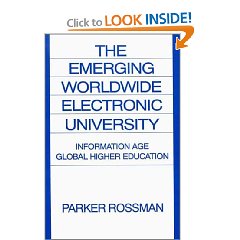
This book is available immediately from WHSmith. I recommend it without reservation, it is in my top dozen books on the World Brain – Global Brain -Global Mind – Collective Intellgence reading area.
Amazon seems to be deleting a lot of reviews from top reviewers, which I find quite annoying. Indeed, Amazon has become so unreliable, on top of being unresponsive to years of requests for simple changes (e.g. being able to access all reviews by a specific reviewer against a specific search such as “World Brain” that I finally created Phi Beta Iota the Public Intelligence Blog, where you can access all reviews in each each of 98 reading categories, all leading back to Amazon, but not dependent on Amazon.
This book is extraordinary in that is directly connects information to DNA and makes an absolutely fascinating case for how every single atom on the planet is an information element, and all of the atoms in the whole are the Global Mind.
There are no notes, and normally this would set me off, but I found the personal reflections of this author so utterly extraordinary that I can not find fault on this point.
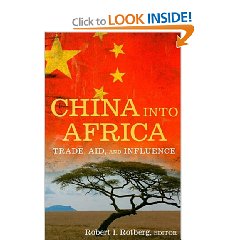
Africa and China are now immersed in their third and most transformative era of heavy engagement, one that promises to do more for economic growth and poverty alleviation than anything attempted by Western colonialism or international aid programs.Robert Rotberg and his Chinese, African, and other colleagues discuss this important trend and specify its likely implications. Among the specific topics tackled here are China's interest in African oil; military and security relations; the influx and goals of Chinese aid to sub-Saharan Africa; human rights issues; and China's overall strategy in the region. China's insatiable demand for energy and raw materials responds to sub-Saharan Africa's relatively abundant supplies of unprocessed metals, diamonds, and gold, while offering a growing market for Africa's agriculture and light manufactures.As this book illustrates, this evolving symbiosis could be the making of Africa, the poorest and most troubled continent, while it further powers China's expansive economic machine.
Amazon Page
One of the most worrying elements to emerge from these pages is a consistent lack of transparency in all these Chinese ventures. “Not a single Chinese official in the region would agree to meet us,” the authors write. Their requests for interviews with African officials and Chinese managers were routinely ignored, access to work sites barred and information on contractual terms withheld. Domestic parliamentarians have been similarly stymied, unable to uncover even basic details of projects they were promised would transform their countries. None of this bodes well on a continent where top-level sleaze and capital flight have already leached away billions of dollars earmarked for development. Opaque, unscrutinized contracts threaten more of the same. Michel and Beuret are admirably even-handed, unsparing in their attacks on the cynical agendas and sad outcomes of past French, British and U.S. intervention.
Phi Beta Iota: Above two on order and will be reviewed soon.
Amazon Page
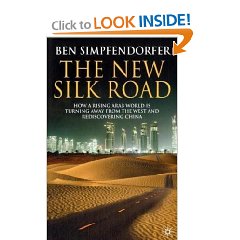
“As the chief China economist for Royal Bank of Scotland in Hong Kong and a former resident of both Beirut and Damascus, Mr Simpfendorfer is well placed to tackle the subject. But although he is a professional economist, what sets Mr Simpfendorfer's book aside from the usual run of publications about the mainland's rise is not his command of macroeconomic statistics, but his grasp of how the expanding relationship between China and the Arab world works at the personal level.” – Tom Holland, South China Morning Post
“Despite the global economic crisis, the trajectory of the Arab and Chinese economies still match the soaring skylines of Dubai and Shanghai. Furthermore, as Ben Simpfendorfer bracingly illustrates, these are not isolated events but rather the resurrection of a Silk Road symbiosis. For all the region's troubles, this book places the Persian Gulf back where it geographically belongs: at the center of Eurasia and bending towards the overwhelming gravity of China.” – Parag Khanna, author of The Second World–Empires and Influence in the New Global Order and Senior Research Fellow at the New America Foundation
Amazon Page
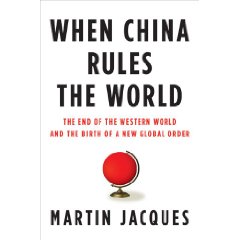
A convincing economic, political and cultural analysis of waning Western dominance and the rise of China and a new paradigm of modernity. Jacques (The Politics of Thatcherism) takes the pulse of the nation poised to become, by virtue of its scale and staggering rate of growth, the biggest market in the world. Jacques points to the decline of American hegemony and outlines specific elements of China's rising global power and how these are likely to influence international relations in the future. He imagines a world where China's distinct brand of modernity, rooted firmly in its ancient culture and traditions, will have a profound influence on attitudes toward work, family and even politics that will become a counterbalance to and eventually reverse the one-way flow of Westernization. He suggests that while China's economic prosperity may not necessarily translate into democracy, China's increased self-confidence is allowing it to project its political and cultural identity ever more widely as time goes on. As comprehensive as it is compelling, this brilliant book is crucial reading for anyone interested in understanding where the we are and where we are going. Publishers Weekly
For the better part of 15 years, with one tragic interruption, he dug and dug and then transformed his scholarly spadework into accessible, inviting prose. The result is “When China Rules the World,” a compelling and thought-provoking analysis of global trends that defies the common Western assumption that, to be fully modern, a nation must become democratic, financially transparent and legally accountable. Jacques argues persuasively that China is on track to take over as the world's dominant power and that, when it does, it will make the rules, on its own terms, with little regard for what came before. Washington Post
Amazon: O’Brien turns to accredited research conducted in Europe that confirms the toxicity of America’s food supply, and traces the relationship between Big Food and Big Money that has ensured that the United States is one of the only developed countries in the world to allow hidden toxins in our food–toxins that can be blamed for the alarming recent increases in allergies, ADHD, cancer, and asthma among our children. Featuring recipes and an action plan for weaning your family off dangerous chemicals one step at a time, The Unhealthy Truth is a must-read for every parent–and for every concerned citizen–in America today.
Via Email: Unhealthy Truth: How Our Food Is Making Us Sick and What We Can Do About It is a remarkable, readable, galvanizing book about the effect of unhealthy food on our kids.
Robyn O¹Brien has been called the Erin Brockovich of the food industry. Some of this information is not new, but Robyn has brought it together in a credible (she¹s has an MBA), comprehensive (she¹s a gifted researcher), compelling way that includes her own personal story.
She has also started Allergy Kids Foundation, whose mission/goal is to create universal food allergy awareness and to inspire parents to learn to identify the existence of and protect the health of their children with food allergies.
As the first independently funded food allergy organization, AllergyKids highlights previously undisclosed research addressing the recent introduction and engineering of allergens, proteins, food additives and dyes into our food supply and the impact that these novel proteins, chemicals and allergens have on the health and well being of women and their children.
In the last twenty years, the new childhood epidemics of allergies, asthma, autism and ADHD (also obesity and cancer) have increased dramatically:
+ 400% increase in allergies,
+ 300% increase in asthma,
+ 400% increase in ADHD
+ and an increase of between 1,500 and 6,000% in the number of children with autism-spectrum disorders.
This book is available immediately from WHSmith. I recommend it without reservation, it is in my top dozen books on the World Brain – Global Brain -Global Mind – Collective Intellgence reading area.
Amazon seems to be deleting a lot of reviews from top reviewers, which I find quite annoying. Indeed, Amazon has become so unreliable, on top of being unresponsive to years of requests for simple changes (e.g. being able to access all reviews by a specific reviewer against a specific search such as “World Brain” that I finally created Phi Beta Iota the Public Intelligence Blog, where you can access all reviews in each each of 98 reading categories, all leading back to Amazon, but not dependent on Amazon.
This book is extraordinary in that is directly connects information to DNA and makes an absolutely fascinating case for how every single atom on the planet is an information element, and all of the atoms in the whole are the Global Mind.
There are no notes, and normally this would set me off, but I found the personal reflections of this author so utterly extraordinary that I can not find fault on this point.
The Original Surveyor of Distance Education and Virtual Learning
January 23, 2010
G. Parker Rossman
My original review of this book seems to have vanished into thin air here at Amazon.
G. Parker Rossman and his book came into my life just after I started the international conference on “National Security & National Competitiveness: Open Source Solutions,” and both the book and the World Brain discussion group that he co-founded were extremely influencial in my recognition that the ultimate outcome for a re-appreciation of open sources instead of secret sources was a global networked “world brain.”
From my point of view, he was the first serious scholar to comprehensively begin documenting what could be learned online, and the first–at a time when fewer than 10% of those who could afford a computer were actually online–to really begin outlining the possibilities for both distance education and virtual learning.
It was as a direct result of his influence through this book that Gottfried Mayer-Kress spoke to the conference in 1997 on the topic of the World Brain, and that was when the entire modern Open Source Intelligence movement took a decisive turn away from helping the US Government get a grip on reality, and toward connecting and empowering all multinational sources of information for the good of all.
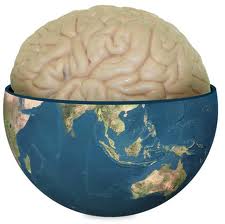
I have listed both this author and Gottfried Mayer-Kress in the World Brain line-up that runs from H. G. Wells through Vannavar Bush to today's proponents for Collective Intelligence, the World Brain, and a Global Game in which we all play ourselves and all of us have access to “true cost” information in all languages all the time.
Here are ten other books I recommend with this one, I have reviewed and summarized all of them:
Strongly Recommended by BGen McMaster in Talk at ODNI
January 20, 2010
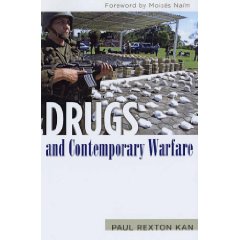
Paul Rexton Kan
This is one of two books strongly recommended, with deep admiration, by BGen McMaster, USA (Ret) speaking to the Office of the Director of National Intelligence (ODNI) on 19 January. The four page trip report on his remarks about improving intelligence in support of the multinational mission in Afghanistan has been posted to Phi Beta Iota the Public Intelligence Blog.
I have bought this book and will review it within two weeks. CIA got its start in drug running and money laundering in Viet-Nam, and has at best facilitated the expansion of the drug zone and at worst financed it–at least half of the billion dollars a year that were channeled into Afghanistan by CIA via the Pakistani Intelligence Service are assumed (by me) to have been stolen, and today Pakistan is the primary site for the processing of Afghan opium into #4 heroin for onward shipment to Europe and elsewhere.
General McMaster also recommended Organizations at War in Afghanistan and Beyond. In my own review of Ghost Wars: The Secret History of the CIA, Afghanistan, and Bin Laden, from the Soviet Invasion to September 10, 2001 From that review pending my doing a complete proper review of this book:
The most important point in the book is not one the author intended to make. He inadvertently but most helpfully points to the fact that at no time did the U.S. government, in lacking a policy on Afghanistan across several Administrations, think about the strategic implications of “big money movements.” I refer to Saudi Oil, Afghan Drugs, and CIA Cash.
The greatest failure of the CIA comes across throughout early in the book: the CIA missed the radicalization of Islam and its implications for global destabilization. It did so for three reasons: 1) CIA obsession with hard targets to the detriment of global coverage; 2) CIA obsession with technical secrets rather than human overt and covert information; and 3) CIA laziness and political naiveté in relying on foreign liaison, and especially on Saudi Arabia and Pakistan.
My bottom line: the $75 billion a year for secret intelligence is not producing intelligence, only waste and profit. We are killing our troops in the field by being incompetent at intelligence. That breaks my heart.
Strongly Recommended by BGen McMaster in Talk at ODNI
January 20, 2010
Abdulkader H. Sinno
This is one of two books strongly recommended, with deep admiration, by BGen McMaster, USA (Ret) speaking to the Office of the Director of National Intelligence (ODNI) on 19 January. The four page trip report on his remarks about improving intelligence in support of the multinational mission in Afghanistan has been posted to Phi Beta Iota the Public Intelligence Blog.
I have bought this book and will review it within two weeks. The key point that General McMaster made in referencing the book is that the author of this book has it right, there is no such thing as a leaderless jihad, and it is vital to be able to identify, understand, and interdict the often obscure means by which a jihad “organization” is formed and operated.
The most important point in the book is not one the author intended to make. He inadvertently but most helpfully points to the fact that at no time did the U.S. government, in lacking a policy on Afghanistan across several Administrations, think about the strategic implications of “big money movements.” I refer to Saudi Oil, Afghan Drugs, and CIA Cash.
The greatest failure of the CIA comes across throughout early in the book: the CIA missed the radicalization of Islam and its implications for global destabilization. It did so for three reasons: 1) CIA obsession with hard targets to the detriment of global coverage; 2) CIA obsession with technical secrets rather than human overt and covert information; and 3) CIA laziness and political naiveté in relying on foreign liaison, and especially on Saudi Arabia and Pakistan.




 Extraordinary Book