Design Revolution: 100 Products That Empower People
Featuring more than 100 contemporary design products and systems–safer baby bottles, a high-tech waterless washing machine, low-cost prosthetics for landmine victims, Braille-based Lego-style building blocks for blind children, wheelchairs for rugged conditions, sugarcane charcoal, universal composting systems, DIY soccer balls–that are as fascinating as they are revolutionary, this exceptionally smart, friendly and well-designed volume makes the case for design as a tool to solve some of the world's biggest social problems in beautiful, sustainable and engaging ways–for global citizens in the developing world and in more developed economies alike. Particularly at a time when the weight of climate change, global poverty and population growth are impossible to ignore, Pilloton challenges designers to be changemakers instead of “stuff creators.” Urgent and optimistic, a compendium and a call to action,
Amazon Page
Design for the Other 90%
Of the world s total population of 6.5 billion, 90%, have little or no access to most of the products and services many of us take for granted; in fact, nearly half do not have regular access to food, clean water, or shelter. Design for the Other 90% explores more than thirty projects which reflect the growing movement among designers, engineers, students and professors, architects, and social entrepreneurs to design low-cost solutions for this other 90%. Published in conjunction with a major exhibition on view at the Smithsonian s Cooper-Hewitt, National Design Museum, Design for the Other 90% highlights a wide variety of design innovations that address the basic challenges of survival and progress faced by the world s poor and marginalized.
Amazon Page
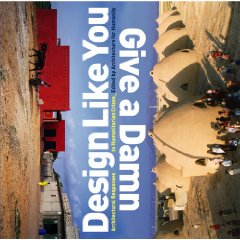
Design Like You Give a Damn: Architectural Responses to Humanitarian Crises
The greatest humanitarian challenge we face today is that of providing shelter. Currently one in seven people lives in a slum or refugee camp, and more than 3,000,000,000 people–nearly half the world's population–do not have access to clean water or adequate sanitation. The physical design of our homes, neighborhoods and communities shapes every aspect of our lives. Yet too often architects are desperately needed in the places where they can least be afforded. Edited by Architecture for Humanity and now in its third printing, Design Like You Give a Damn is a compendium of innovative projects from around the world that demonstrate the power of design to improve lives. The first book to bring the best of humanitarian architecture and design to the printed page, Design Like You Give a Damn offers a history of the movement toward socially conscious design, and showcases more than 80 contemporary solutions to such urgent needs as basic shelter, healthcare, education and access to clean water, energy and sanitation.
Wiki Government: How Technology Can Make Government Better, Democracy Stronger, and Citizens More Powerful
“A sweeping visionary yet highly pragmatic book! Beth Noveck concretely shows how to leverage the participatory nature of web 2.0 technologies to build a new kind of participatory democracy and a smart, lean government. She speaks from experience. A must read not just for policy folks and the digerati but for any of us wanting to understand how to tap the collective and diverse wisdom of the America to create a better, more connected style of democracy.”
Phi Beta Iota: Focuses on the patent process–use Look Inside to study contents before making a purchase decisioin. We have ordered the book and will review it within the week.
Amazon Page
The Myth of Digital Democracy
Both utopian and dystopian interpretations have been made of the Internet's influence on many spheres of life–and democracy is no exception. . . . Absent from much of this debate is evidence-based analysis of the effects of the Internet on the business of politics. Many theories have been built on nothing more than anecdote, inference and assertion. In The Myth of Digital Democracy, political scientist Matthew Hindman fills important gaps in the evidence base, and does so accessibly.
This is a magnum opus from a very specific point of view that overlooks both major consciousness figures and major biosphere figures. Herman Daly gets one note, Tom Atlee, Barbara Marx Hubbard, Steve McIntosh are not in this book. Buckminster Fuller, Paul Hawken, the Meadows, E. O. Wilson on Consilience, J. F Rischard on HIGH NOON, etcetera, are not in this book. My review begins after the Table of Contents, which the publisher failed to provide using standard Amazon tools for publishers.
Table of Contents
I The Hidden Paradox of Human History
HOMO EMPATHICUS
2 The New View of Human Nature
3 A Sentient Interpretation of Biological Evolution
4 Becoming Human
5 Rethinking the Meaning of the Human Journey
EMPATHY AND CIVILIZATION
6 The Ancient Theological Brain and Patriarchal Economy
7 Cosmopolitan Rome and the Rise of Urban Christianity
8 The Soft Industrial Revolution of the Late Medieval era and the Birth of Humanism
9 Ideological Thinking in a Modern Market Economy
10 Psychological Consciousness in a postmodern Existential world
THE AGE OF EMPATHY
11 The Climb to Global Peak Empathy
12 The Planetary Entropic Abyss
13 The Emerging Era of Distributed Capitalism
14 The Theatrical Self in an Improvisational Society
15 Biosphere Consciousness in a Climax Economy
– – – – – – – –
If this book is reprinted, it should be single-spaced. The massive bulk (675 pages) is pretentious and not necessary, especially for those of us that read when traveling, and for students having to carry books around. As noted earlier the author leaves out a great deal and I will offer ten links below (and over 300 links at Phi Beta Iota the Public Intelligence Blog where I have posted “Worth a Look: Book Review Lists”). This review focuses on the righteous theme the author has pursued across multiple literatures.
The book's bottom line is well summarized in the jacket flaps and comes at the very end as the author aspires for a combination of biosphere consciousness and distributed capitalism, the latter made possible by a combination of backyard energy and global information and communications technologies (ICT). Early in the book the author discusses how the wealthy dominated water power in the Medieval Period, but the poor were able to use windmills anywhere–this makes an impression on me as it did on the author.
The author has a story to tell and as I go through the book I am constantly reminded of books and points not in this book, but I abandoned my first draft of my review because it focused too much on work by others and not enough on the enormous task this author has taken on. In a nutshell, the author believes that the same revolutions in energy and communications that lead to a growth in human consciousness also lead to a commensurate crisis in earth or biosphere viability. In today's era the potential crisis (widely anticipated in the 1970's and deliberately ignored by the White House and the Senate for selfish corrupt reasons) is playing a forcing function, potentially catalyzing the rethinking of philosophy, economics, and our social models.
There are three negatives to this book that for any other author or theme would have dropped the book to a four, but I feel a five is still warranted for both the heroic personal effort of the author, and the importance of the theme.
#1. There is no appreciation that I can see of the fact that we are returning to the wisdom of the indigenous cultures that we have genocided since 1941, not only in the USA but in Australia, Africa, and elsewhere. This is not new wisdom that the author is bringing to bear, but old wisdom that is being rediscovered.
#2. The author fell prey to the Climate Change manipulation of data and hyperbole as well as nine documented errors in the British law suit against Al Gore, who has been asked to return his Academy Award. I won't belabor this now that the fraud of Climate Change has been adequately exposed, I will just say this: the UN High Level Panel on Threats, Challenge, and Change is the more honest and substantive endeavor, and Environmental Degradation, #3 of 10 after Poverty and Infectious Disease, is properly ranked. Climate Change is less than 10% of that, and within Climate Change carbon emissions are 10% at most, and much less important than sulfur or mercury. Carbon trades are fraud–a form of phantom wealth engineered by Maurice Strong and shilled by Al Gore, with the International Panel on Climate Change director–a railway engineer, not a scientist–happily lining his pockets by making the science fit. Learn more at the ClimateGate Rolling Update at Phi Beta Iota the Public Intelligence Blog.
#3. This is a book for the one billion rich, and it does not really address the five billion poor, and so I felt a continuing sense of annoyance as I read, recognizing this as a “salon” work for funders and the well-off, rather than a grass roots books focused on bottom-up social change. For that, see the books I list below.
Having disclosed those three “nits,” I am hugely positive on this book and its theme. The author observes that historians tend to document the negatives–the wars and the conflicts–and gloss over the periods of peace and prosperity and I buy into that. We don't do enough to isolate and extend the “good news.”
Here are other fly-leaf notes:
+ Empathy is rooted in selfhood, enables dialog that in turn allows reconciliation.
+ Today transparency and cooperation are displacing secrecy and competition.
+ Importance of touch, of reversing the isolation of the individual as a cog in the machine.
+ Herding of humans began in 4000 BC with hydraulic civilizations, not with the Industrial Revolution as some have suggested
+ Energy advances appear to stimulate changes in communications (including computing and intelligence)
+ Mothers and mothering matter, root of selfhood and stability that enables exploring and innovation
+ Darwin's later work looked at empathy among animals and between different species
+ Faith and emotion are an important part of “humanity” and of “intelligence”
+ Religions are NOT inherently empathetic, tend to both focus on the other worldly and to exclude those not of the same religion
+ The author does well as a single individual researcher but there is a lot in this book that is simplistic for lack of access to deeper works by others
+ Soil salinity has collapsed civilizations before ours including the Romans
+ Nice discussion of the Gnostics who felt that the real sin of man was in not understanding self and the human potential for divinity (Barbara Marx Hubbard and Buckminster Fuller have focused on this in more recent times)
+ Medieval Period ran out of wood the way we are running out of oil
+ Interesting discussion of print as a facilitator for both individuality and the scientific method
+ Light discussion of schools, not connected with the broader literature on pedagogy and mass instruction.
+ Energy changes impact on space and time perceptions. Electricity and Morse code took global communications and connectivity to a whole new level
+ Child development runs throughout this book in an interesting manner
+ Disconcerting notes include English as the universal language (Chinese over-taking fast followed by Hindi); everyone is a tourist (this would be news to the five billion poor); no more aliens, decline of religion (not from where I sit).
+ Author is excessively dependent on Climate Change as a stimulus, I totally agree with the author's sense of urgency, but all ClimateGate has done is set science back in the public esteem by at least a decade.
+ The author provides an engaging discussion of the coming 3rd Industrial Revolution in which we will further embrace new indices of immaterial wealth and move from property to access and from co-optation to cooperation.
+ The book closes with a discussion of how social skills are changing and now half theater and half authentic, which may not be as odd as it sounds, as individuals must master both deep multi-cultural empathy and the ability to project open authenticity despite violent disagreement with “the other.”
This book is absolutely worth buying and reading–it would be better if it were single spaced and much less bulky. I hope the paperback version goes to single space; there is no justification for doubling the bulk of this content.
See all my other reviews relevant to this specific books and its focus at Phi Beta Iota the Public Intelligence Blog, but specifically the “good news” books visible through Worth a Look: Book Review Lists.
On 16 January 2010, Herbert Meyer, who served during the Reagan Administration as Special Assistant to the Director of Central Intelligence and Vice Chairman of the CIA's National Intelligence Council, wrote the following:
“No one among us is perfect, or even close to perfect. In the real world, intelligence failures will happen from time to time no matter how honorable, hardworking, or talented the men and women are on whom we rely to keep us safe. But after so many intelligence
Full Meyer Op-Ed
failures in such a short time, we have got to stop making the same mistake over and over again. This week's Washington cliché is that our system failed. No. Systems don't fail; people fail. Put the right people in charge, and the “system” will fail much, much less frequently.”
I couldn't agree more with Mr. Meyer.
The final chapter of my book, Cash on Delivery: CIA Special Operations During the Secret War in Laos, is titled “Speaking Truth to Power – Lessons Learned”. In it I wrote, “It probably is wonderful that so many politicians, wide variety of pundits and family members of victims of terrorist attacks have taken such an interest in the organization of the CIA and other intelligence community agencies. I see no reason why they should not criticize what they see and understand about what the CIA has or has not done. However, they do not know the full story and they ought to know they do not know it. Yet, they proceed to suggest just how the CIA should be re-organized, without any experience in the collection, analysis and dissemination of intelligence and without all the details of how any particular intelligence, and certainly not how all of it, was collected, analyzed and disseminated. Most often, the solution they suggest boils down to rearranging the lines and boxes on organization charts. People populate the boxes on organization charts. How can it be that the perceived failures they are correcting were merely the result of the boxes not being connected properly among the lines? If the failures were the fault of the people, why don’t they ask that all those people be fired or demoted? Would that do any good? You cannot just go out and hire experienced intelligence professionals from a vast pool that just happens not to be working for the CIA at the time. Intelligence professionals must be grown from seed; they cannot be transplanted from mature plants. Yet, reorganizations are always proposed as changes of the alignment of lines and boxes or the creation of more lines and boxes added to the top of the whole structure, e.g. the National Counterterrorism Center or the Director of National Intelligence. Just how does adding more people to boxes and placing them on top of a bureaucratic structure make it better? Where do the people come from? If they are experienced intelligence professionals, how did anyone figure out how to identify the ones who were not part of the problem? If they are not experienced intelligence professionals why does anyone believe they will have what it takes to lead such a complex undertaking that has no valid lateral experience other than to mature within the intelligence structure?”
Reorganizations look good on paper and play well in the media, but they don't solve the true problem of a lack of first class leadership. When there is a failure to “connect the dots” you need to determine why the people you have did not or could not make the connections. Then you must take remedial actions to lead those people to better performance and to inspire them to, in the words of the U.S. Army, be all they can be.
Intelligence organizations like the CIA will still fail to connect all the dots and will still lose officers killed in action, no system can be perfect and the fight against terrorism will not be without casualties, but when we have failures or casualties we must be able to figure out whether there was nothing we could have done, or whether the leaders we have failed in their duties. Then we replace those leaders and do our best to give them the remedial training they need to become better, if and when they lead again. If we have the best leaders we can get, they will determine how the lines and boxes should be connected and we should expect they will be correct.
I read a lot, and quite by accident (or courtesy of Dick Cheney who drove people back to books looking for answers) I am the top Amazon reviewer for non-fiction. I would have bought this book, along with the book I did buy today, Jeremy Rifkin's The Empathic Civilization: The Race to Global Consciousness in a World in Crisis but one look at the price and a one word decision: NO.
This book is CRIMINALLY priced. As a publisher myself, I can assure one and all that in lots of 1,500 in hard cover, it costs at most two cents a page including color cover and graphics. Using the Amazon on demand printing option, the cost is even less. Authors must STOP allowing publishers to price their precious work beyond the reach of most people with a brain. I offer all my books free online as well as via Amazon.
and many more. Phi Beta Iota, the Public Intelligence Blog, provides easy access to all of my reviews (over 1,500) in each of 98 reading categories including Catastrophe & Resilience, Cosmos & Destiny, and so on.
If the author will post this book free online, or if the publisher can be shamed into pricing it at under $35, I will buy it and review it.
Jack Hogan and Buzz Rucci are a couple of buddies in the modern U.S. Navy. They signed up to risk their lives defending their country, but instead they’re risking their sanity playing at war in a series of military maneuvers and preparedness exercises. They are “bathtub admirals,” performing meaningless exercises in the name of global peace . . . or something like that. In the spirit of Phillip Jennings’ recent Nam-A-Rama (2005), or Joseph Heller’s classic Catch-22 (to which Huber makes a brief reference, acknowledging his novel’s pedigree), this is a witty, wacky, wildly outrageous novel that skewers just about anything you’d care to name, from military budgets to political machinations to America’s success as the self-appointed guardian of the world. Considering that Huber, a career navy man, has mostly written for military publications and Web sites (although he has turned out some short satirical pieces), and especially considering that this is his first novel, it is a remarkably accomplished book, striking just the right balance between ridicule and insight. –David Pitt
Commander Jeff Huber, U.S. Navy (Retired) commanded an E-2C Hawkeye squadron and was operations officer of a Navy air wing and an aircraft carrier. Jeff's essays have been required reading at the U.S. Naval War College where he earned a master of arts degree in neoconservative studies in 1995. His satires on military and foreign policy affairs appear at Military.com, Antiwar.com, Aviation Week and Pen and Sword. Jeff's novel Bathtub Admirals, a lampoon of America's rise to global dominance, is on sale now.





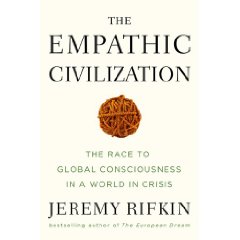
 HUGE Book, Deep Look From One Perspective




 Criminal Pricing in Sharp Contrast to Content