Writer Corry Doctorow may be just suffering from deep winter blues, but if not, and he's correct, his brief musings on the near future of the net are ominous:
“Try as I might, I can’t shake the feeling that 2014 is the year we lose the Web. The W3C push for DRM in all browsers is going to ensure that all interfaces built in HTML5 (which will be pretty much everything) will be opaque to users, and it will be illegal to report on security flaws in them (because reporting a security flaw in DRM exposes you to risk of prosecution for making a circumvention device), so they will be riddled with holes that creeps, RATters, spooks, authoritarians and crooks will be able to use to take over your computer and f*ck you in every possible way.”
Years ago I gave a lecture at Yale. My subject was Google. I ran through the basic points in The Google Legacy and Google Version 2.0. The audience reacted as if I had dissected a dead frog. I received a smattering of polite applause and headed out for a talk in New York City. So much for Yale and the idea that Google was more than a Web search company.
But Yale perceived the Web page differently. Here’s the quote:
‘Yale’s policy on free expression and free speech entitles no one to appropriate a Yale resource and use it as their [sic] own ,’ the statement read. It further stated its main priority at this time was supporting its own resources, ‘not others created independently and without the university’s cooperation or permission,’ and that ‘all the information on the website remains available to students on the Yale site.’
I assume the Washington Post is semi-accurate, just like an Amazon recommendation.
What did the future bonesmen learn? A nuance of academic freedom in Yale Land has been broadcast in an analogue transmission.
Will these two free thinkers demonstrate digital initiative in the future? Is Yale turning out well-trained online researchers for the next-generation information highway?
Here is a very important essay about the lessons to be learned from the West Virginia spill, a story that has gotten remarkably little in-depth coverage by the corporate media. I read today that the supposedly safe water trucks that have been bringing water to the people in fact having been filling from the same river downstream from where the leak occurred.
This disaster, like the Texas explosion that destroyed a town a few months back, occurred because there had been no regulatory oversight of this facility in over two decades. It is a Goebbels' Big Lie to say we have too much regulation in this country. The problem is exactly the opposite.
West Virginia’s Message to the Nation
ALAN FARAGO, President of Friends of the Everglades – Counter Punch
Many observers recognize that the U.S. Government has for decades placed too much emphasis on military might to the detriment of other interests. This book provides a sobering explanation of how such a skewed approach emerged. Stuart is an historian at Dickinson College and also adjunct professor at the U.S. Army War College. He shows how the 150-year tradition of peacetime pursuit of national interests headed by the State Department gave way to the “Pearl Harbor System” of viewing the world through the perspective of potential threats to national security.
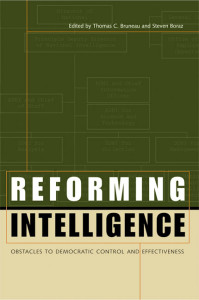
These days, it's rare to pick up a newspaper and not see a story related to intelligence. From the investigations of the 9/11 commission, to accusations of illegal wiretapping, to debates on whether it's acceptable to torture prisoners for information, intelligence—both accurate and not—is driving domestic and foreign policy. And yet, in part because of its inherently secretive nature, intelligence has received very little scholarly study. Into this void comes Reforming Intelligence, a timely collection of case studies written by intelligence experts, and sponsored by the Center for Civil-Military Relations (CCMR) at the Naval Postgraduate School, that collectively outline the best practices for intelligence services in the United States and other democratic states.