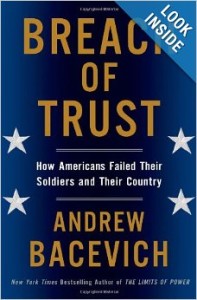
Review (Guest): BREACH OF TRUST – How Americans Failed Their Soldiers and Their Country

5 Star, America (Founders, Current Situation), Atrocities & Genocide, Civil Society, Congress (Failure, Reform), Corruption, Crime (Government), Culture, Research, Democracy, Economics, Empire, Sorrows, Hubris, Blowback, Executive (Partisan Failure, Reform), Force Structure (Military), Impeachment & Treason, Military & Pentagon Power, Misinformation & Propaganda, Nature, Diet, Memetics, Design, Peace, Poverty, & Middle Class, Philosophy, Politics, Power (Pathologies & Utilization), Priorities, Public Administration, Security (Including Immigration), Strategy, Threats (Emerging & Perennial), True Cost & Toxicity, Values, Ethics, Sustainable Evolution, Voices Lost (Indigenous, Gender, Poor, Marginalized), War & Face of Battle
0Shares
Amazon Page
Amazon Page

Andrew J. Bacedvich

A disturbing but vitally necessary read. Take note, Mr President, and Congress too

By Timothy J. Bazzett on September 10, 2013

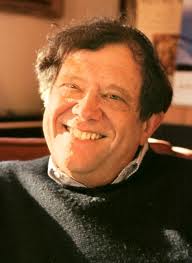
Andrew Bacevich's latest offering, BREACH OF TRUST, is going to make a lot of people squirm – if people read it, that is. Because in this book he tells us flat out that an all-volunteer army in a democratic society simply does not work, and that the present system is “broken.” It is bankrupting our country, and not just financially, but morally. He tells us that Iraq and Afghanistan, two of the longest and most expensive wars in U.S. history, have evoked little more than “an attitude of cordial indifference” on the part of a shallow and selfish populace more concerned with the latest doings of the Kardashians, professional superstar athletes or other vapid and overpaid millionaire celebrities, reflecting “a culture that is moored to nothing more than irreverent whimsy and jeering ridicule.”

Bacevich cites General Stanley McChrystal, former commander of all U.S. and NATO forces in Afghanistan, who spoke about having “skin in the game,” meaning that when a country goes to war every town and city should be at risk. McChrystal went on to say the unthinkable: “I think we'd be better if we actually went to a draft these days … for the nation it would be a better course.”

Horrors! That dreaded “D” word finally uttered aloud. Well, I'd say it's about damn time. And Bacevich agrees, noting that in his many speaking engagements over the past ten years “I can count on one hand the number of occasions when someone did NOT pose a question about the draft, invariably offered as a suggestion for how to curb Washington's appetite for intervention abroad and establish some semblance of political accountability.”


Continue reading “Review (Guest): BREACH OF TRUST – How Americans Failed Their Soldiers and Their Country”

Event: 22-24 JAN 14 Nashville TN InfoWarCon 2014

#Events
0Shares

infowarcon-logo-subtitle_whitebkgBeyond Information Warfare

“Mr. Schwartau, why would the bad guys ever want to use the internet…?” (Congressman Glickman during Congressional Testimony, June 1991)

It was obvious. To some of us. Now, it is almost impossible to quantify how far behind we really are.

Winn Schwartau
Winn Schwartau

Information Warfare (some relegated the term as politically incorrect) or CyberWar or any other term – semantics should be left aside – we know what we’re talking about.

  • Class I: Personal Privacy and Identity
  • Class II: Industrial and Competitive Espionage, APTs, and Organized Crime
  • Class III: Nation-State, NGO and Terrorist Conflict, Critical Infrastructures

InfowarCon goes even further though: Beyond Information Warfare. (The title of Winn’s new book, TBR 2014!)

Amazon Page
Amazon Page

Weaponization of the Internet of Things, autonomous smart vehicles, budget EMP/HPM/HERF, exoskeleton and robotics, hostile biomedical applications, mind disruption and manipulations… and we need to get ahead of the curve. Like, NOW!

Information Security and Assurance defends against the past. But the world must anticipate and plan for future technologies and their weaponization – before they are developed and deployed by others.

This is InfowarCon. Please peruse the site and REGISTER EARLY as attendance will be strictly limited.

Finally, a heartfelt memory to the wonderful GFirst Conference. We will miss you… and we’re hoping to fill a little of that void.

Conference Home Page

Phi Beta Iota: Cyber-war is only a threat because of the pervasive corruption among governments and corporations. The first (governments) are lazy and selfish and delusional about the value of mass cyuber-surveillance.  For this reason they refuse to protect the public interest and make cyber safe. Corporations are unethical and often thoughtless.  In the case of Facebook, Google, and Microsoft, among others, they simply sell their customers out and cut deals with unethical governments pursuing unconstitutional paths. In the case of all others, they are simply oblivios. Being safe is cyberspace is as important as safe driving, safe sex, safe eating, etcetera. It has been allowed to be a wild frontier for the wrong reason, to the greatest detriment of the public, of society, of the global economy, and so on.

We certainly recommend this conference.  We also recommend 18-20 JUL 14 NYC Hackers on Planet Earth (HOPE X).

Berto Jongman: Prison Letters — Pussy Riot and Slavoj Zizek

Cultural Intelligence
0Shares
Berto Jongman
Berto Jongman

Nadezhda Tolokonnikova of Pussy Riot's prison letters to Slavoj Žižek

Pussy Riot's Nadezhda Tolokonnikova is currently in a prison hospital in Siberia; here she and Slovenian philosopher Slavoj Žižek meet in an extraordinary exchange of letters

Pussy Riot: composer Cecilie Ore's choral tribute to the punk band

Nadezhda Tolokonnikova of Pussy Riot writing to Slavoj Žižek

‘We are the children of Dionysus, sailing in a barrel and not ­recognising any authority' … Nadezhda Tolokonnikova of Pussy Riot writing to Slavoj Žižek. Photograph: David Levene/AFP/Getty/Guardian
Phi Beta Iota: Complete correspondence and superb photographs below the line.

Anthony Judge: Affinity, Diaspora, Identity, Reunification, Return – Reimagining possibilities of engaging with place and time

Collective Intelligence, Cultural Intelligence, Earth Intelligence, Peace Intelligence
0Shares
Anthony Judge
Anthony Judge

Affinity, Diaspora, Identity, Reunification, Return

Reimagining possibilities of engaging with place and time

Introduction
Official administrative “necessities”?
Property “possession” and ownership
Questionable claims to possession
Possession of a sense of place
Divided realms and domains as variously possessed
Dispossession, repossession and being possessed
Possession of a worldview within the noosphere
Associative diasporas and degrees of possession
Expression of opinion and association voting rights
Reimagining unification and reunification through metaphor
Sensing time and the potential of return
Engaging with other elective affinities
References

Berto Jongman: Bits, Bytes, & Stuff

Cultural Intelligence, IO Deeds of War, IO Impotency, Peace Intelligence
0Shares
Berto Jongman
Berto Jongman

Age of Ambient Everything

Anthropomorphic Machine – IBM's Watson

Cybersecurity Ecosystem

Cybersecurity via the UN?

Cyberwar Aspects

Disarmament in Africa

GCHQ Monitoring Hotel Reservations

Global Development and Local Peacebuilding

Guantanamo Protest Song (Vimeo)

NSA Cost-Benefit Ratio on Surveillance: NEGATIVE

NSA Overstated Threat from Snowden Leaks

Chuck Spinney: Overcoming the Descent into a Neo Dark Age

Cultural Intelligence
0Shares
Chuck Spinney
Chuck Spinney

The below  pdf, from the Cal Tech archives, is Richard Feynman's commencement address to the graduating class of 1974.  His title, framed with his characteristic wit, is “Cargo Cult Science: Some remarks of science, pseudoscience, and leaning how not to fool yourself.”

Feynman's subject is nature of integrity in the practice of science and the search for truth (and, I would add, in life).  His remarks are especially germane when the practice science involves the quest for money and the misshaping of public policy (a subject President Eisenhower also addressed explicitly in his farewell address almost 14 years earlier

Eisenhower Extract:

Akin to, and largely responsible for the sweeping changes in our industrial-military posture, has been the technological revolution during recent decades.

In this revolution, research has become central, it also becomes more formalized, complex, and costly. A steadily increasing share is conducted for, by, or at the direction of, the Federal government.

Today, the solitary inventor, tinkering in his shop, has been overshadowed by task forces of scientists in laboratories and testing fields. In the same fashion, the free university, historically the fountainhead of free ideas and scientific discovery, has experienced a revolution in the conduct of research. Partly because of the huge costs involved, a government contract becomes virtually a substitute for intellectual curiosity. For every old blackboard there are now hundreds of new electronic computers.

The prospect of domination of the nation's scholars by Federal employment, project allocations, and the power of money is ever present – and is gravely to be regarded.

Yet, in holding scientific research and discovery in respect, as we should, we must also be alert to the equal and opposite danger that public policy could itself become the captive of a scientific-technological elite.

It is the task of statesmanship to mold, to balance, and to integrate these and other forces, new and old, within the principles of our democratic system – ever aiming toward the supreme goals of our free society.

Read full speech by Eisenhower.

Tikkun: The Spiritual Truth of JFK – 50 Years On…

Cultural Intelligence
0Shares
Rabbi Michael Lerner

November 22 marks the fiftieth anniversary of the assassination of John F. Kennedy, and virtually all major TV channels, magazines, and other media outlets are planning specials, documentaries, articles with historical analyses and personal retellings of where people were at the time of assassination. Also, Oliver Stone's 1991 Oscar-nominated film JFK challenging the conventional theory that Lee Harvey Oswald was the lone gunman and suggesting that there may have been a conspiracy to kill Kennedy will be shown this month in over 250 theaters nationwide. To put the Kennedy assassination in a historical perspective that is both spiritual and political, we here reprint Peter Gabel's brilliant article on the subject, “The Spiritual Truth of JFK (As Movie and Reality),” originally published in Tikkun in March/April 1992 in response to the original release of Stone's film. Gabel’s piece is an example of the kind of historical analysis we are trying to develop in Tikkun—locating the critical event of JFK's assassination in the context of the repression of our collective spiritual longings for a loving world that characterized the 1950s, and what he calls the “opening up of desire” represented by JFK. In defending Stone's film against its critics, Gabel also shows how the conflict between hope and fear, between the desire for an erotic, loving, and caring world and the forces seeking to deny and contain that desire, is central to understanding the meaning of historical events. His analysis also implicitly helps explain why this month there is such an outpouring of memory, pain, longing, and loss in recollecting the assassination fifty years later.


The Spiritual Truth of JFK (As Movie and Reality)

by Peter Gabel

Oliver Stone's JFK is a great movie, but not because it “proves” that John F. Kennedy was killed by a conspiracy. Stone himself has acknowledged that the movie is a myth — a countermyth to the myth produced by the Warren Commission — but a myth that contains what Stone calls a spiritual truth. To understand that spiritual truth, we must look deeply into the psychological and social meaning of the assassination — its meaning for American society at the time that it occurred, and for understanding contemporary American politics and culture.

Continue reading “Tikkun: The Spiritual Truth of JFK – 50 Years On…”