Drapeable fabric turns into solid concrete when it gets wet
popsi.com, Clay Dillow, 18 May 2011
When disaster strikes and permanent structures are leveled, as they were recently by earthquakes in Japan and New Zealand (and more distantly in Haiti), they are usually replaced in the short term by tent cities. Two engineering students thought they could do better and invented Concrete Canvas, a fabric impregnated with concrete that can turn a tent into a hardy, permanent structure in 24 hours. Just add water.
I rarely promote major media outlets such as AOL, but the past few months I have been geting a LOT of good quality local news to fill the gap left by ailing local newspapers with AOL's venture called patch.com. With community based and locally edited editions for towns and communities all across the nation, Patch has become a major local source for news, events, and perspectives in my own community. At first skeptical, I tried it and found it a wonderful new way the internet can become a new source for local news and information!
Check it out at patch.com and find a location near you, or become your own news source by starting one if your area lacks one.
Today I found out that AOL and Huffington Post have merged, and Arianna herself announced a new “blog” section for each local patch across the country. Here's is her announcement:
What does your organization do with legacy products and services? Things you started that never really caught on, or died out slowly over time?
That's a very easy way to judge the posture and speed of a brand. If there's a one-way track–stuff gets added, but it never gets taken away–then the ship is going to get slower and heavier and become much harder to handle until it eventually sinks.
How long did it take Detroit to take the ashtrays out of cars? The single-sex admission policy at the club? How many people who use your website need to speak up on behalf of a button or a policy for you to persist in keeping it there? How long before you cancel the Sisterhood meetings that are now attended by just three people?
Either you're focused on maintaining the legacy features or you're focused on figuring out how to replace them. Driving with your eyes on the rearview mirror is difficult indeed.
In a world of little competition, legacy features are something worth keeping. No sense alienating loyal customers.
But we don't live in a world of little competition. The faster your industry moves, the more likely others are willing to live without the legacy stuff and create a solution that's going to eclipse what you've got, legacies and all.
Corporations haven't changed much organizationally since the middle ages. They're dinosaurs. It's time to turn them into history, where they belong.
As part of the new venture I'm working on, we're developing a set of new rules that allow a new form of corporation to work much more like the Internet. We think these changes will make these new organizations superior to our current corporate competition — both from the perspective of the person working with (not, not for) us and from the ability of these ventures to compete with the status quo.
At this point, the organization we're building is the equivalent of the first mammal. Very, very small relative to competition (the dinos that ruled the earth for hundreds of millions of years) but incredibly adaptive. The rules of adaptation we're developing will help us stay alive, and eventually (we hope) defeat the competition. We hope you'll decide to evolve along with us.
Here's the first rule we think is important: if at all possible, use entrepreneurial superempowerment.
Essentially, this rule is torn from my book on global guerrilla warfare. The same amplification that makes it possible for small groups of terrorists/guerrillas to do incredible damage/challenge nation-states can be used to build a successful organization. In short, this rule means that you should provide the people working with your organization all of the tools they need to be economically successful. In particular, these tools need to be networked tools. Tools that amplify every action taken by 1,000 fold.
Further, on a motivational level, these people should be allowed to innovate. To become entrepreneurs that are constantly striving to maximize their potential. Allow them the flexibility to try new ideas, change up the processes used, and pioneer new areas for expansion. The objective is to fill your entire organization with superempowered entrepreneurs.
Thank you for this search. In the absence of Berto Jongman's map of world conflict and human rights, still the very best and most comprehensive document available, the Chart of Conflict 2011 from the International Institute for Strategic Studies (IISS) in London is worth a look but a pale substitute. Insurgency occurs when a government loses legitimacy. This loss of legitimacy inspires a wide range of responses from the non-violent to the violent. Most maps and handbooks do not have a sophisticated analytic model and do not account for the preconditions of revolution across all the domains.
In January, the chief of the military's elite special-operations troops accepted an unusual invitation to visit Central Intelligence Agency headquarters. There, Adm. William McRaven was shown, for the first time, photos and maps indicating the whereabouts of the world's most wanted man.
Adm. McRaven—one of the first military officers to be brought into the CIA's latest hunt for Osama bin Laden—offered a blunt assessment: Taking bin Laden's compound would be reasonably straightforward. Dealing with Pakistan would be hard.
A Wall Street Journal reconstruction of the mission planning shows that this meeting helped define a profound new strategy in the U.S. war on terror, namely the use of secret, unilateral missions powered by a militarized spy operation. The strategy reflects newfound trust between two traditionally wary groups: America's spies, and its troops.
The bin Laden strike was the strategy's “proof of concept,” says one U.S. official.
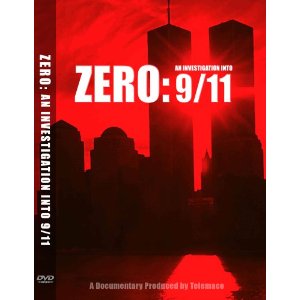
This is the film that makes it impossible to accept the “official” version of the “911” tragedy any longer. It presents no new, startling evidence – no “smoking gun.” What it does, though, is to organize the wealth of available material in such a way as leave no room for doubt.
Front and center, for me anyway, has always been the Video supposedly showing Osama Bin Laden taking credit for the attacks – a Video that just magically turned up almost out of nowhere a couple months after the attacks. This Video has always been suspect precisely because it surfaced just about the time people were beginning to doubt the “official” version.