2004 IJIC 17/2 Information Peacekeeping & The Future of Intelligence
Articles & Chapters, Intelligence (Government/Secret), Intelligence (Public)
The truth at any cost lowers all other costs — curated by former US spy Robert David Steele.
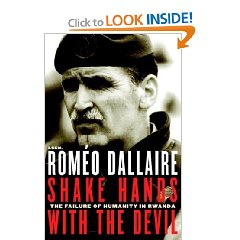

I see things a little differently. I see this book as a massive indictment of the United Nations culture of “go along gently”, as a compelling documentary of how ignorant the United Nations is about impending disasters because of its persistent refusal to establish a UN intelligence secretariat as recommended by the Brahimi Report, and as a case study in how the Western nations have failed to establish coherent global strategies–and the intelligence-policy dialogues necessary to keep such strategies updated and relevant.
According to the author, 15 UN peacekeepers died–over 800,000 Rwandans died. The number 15 is not larger because Belgium, Canada, and the US explicitly stated that Rwanda was “irrelevant” in any sense of the word, and not worth the death of a single additional Western (mostly white) soldier.
Although there has been slight improvement in the UN since LtGen Patrick Cammaert, NL RM became the Military Advisor to the Secretary General (see General Cammaert and other views in Peacekeeping Intelligence: Emerging Concepts for the Future, the reality is that the UN is still unintelligent and unable to muster the strategic intelligence necessary to get the mandate right; the operational intelligence necessary to get the force structure right; and the tactical intelligence necessary to achieve the mission on the ground. Just about everything General Dallaire writes about in this book with respect to UN culture and UN lack of intelligence remains valid today: they still cannot get decent maps with which to plan a campaign or execute the mission; UN administrators are still anal-retentive bureaucrats that will not issue paper and pencils, much less soft drinks for diplomatic encounters; UN “seniors” still like the first class lifestyle on the road (they pretend to be austere only in NY); UN civilian mission leaders still misrepresent military reporting, as Booh-Booh did to Dallaire; and the UN is still ineffective in creating public intelligence with which to communicate directly to national publics the reasons why humanitarian operations must take place early and in force.
General Dallaire concludes his excruciatingly detailed book, a book with enormous credibility stemming from the meticulous manner in which he documents what happened, when it happened, and what everyone knew when (including advance warning of the genocide from the “third force” that the UN leadership refused to take seriously), with two thoughts, one running throughout the book, the second in the conclusion only:
First, and perhaps because of the mental toll he himself paid for this mission, there are frequent references throughout the book to the urgency of understanding the psychology of groups, tribes, and cultures. This is not something any Western intelligence agency is capable of today. The closest I have seen to this is Dr. Marc Sageman's book on Understanding Terror Networks We urgently need a global “survey”, with specific reference to the countries plagued by ethnic conflict and other sources of instability, and we need to start taking “psychological intelligence” very seriously. We need to UNDERSTAND.
Second, he concludes the book by emphasizing the urgency of understanding and then correcting the sources of the utter RAGE that characterizes hundreds of thousands if not millions of young men around the world, all of whom he says have access to guns and many of whom he says will ultimately and unavoidably have access to weapons of mass destruction.
As I contemplate the six-front hundred-year war that America has started by attacking Iraq instead of addressing the social networks and sources of terrorism, I cannot help but think that this great solider and statesman has hit the nail on the head: Rwanda is coming to your neighborhood, and nothing your policy makers and military leaders are doing today is relevant to avoiding that visitation. Remember the kindergarten class in Scotland? The Columbine shootings and Oklahoma disasters? Now magnify that by 1000X, aggravated by a mix of angry domestic militants, alienated immigrant gangs, hysterical working poor fathers pushed into insanity–and the free availability of small arms, toxins, and simple means for collapsing the public infrastructure….
The complexity of society, which has lost its humanity, is leading to unpredictable and difficult to diagnose and correct collapses of all the basic mechanisms of survival. General Dallaire's book is not about Rwanda–it is about us and what will happen to us if we persist in being unintelligent about our world and the forces that could–if we were wise–permit billions to survive in peace.
In addition to this book I recommend the PKI book mentioned above, Jonathan Schell's book on The Unconquerable World: Power, Nonviolence, and the Will of the People Bill Moyer's on Doing Democracy, and Tom Atlee on The Tao of Democracy: Using Co-Intelligence to Create a World That Works for All. If we do not take back the power and restore common sense to how our nations behave and how our nations spend our money around the globe, the plague of Rwanda will visit our neighborhoods within the decade.
See also:
How to Prevent Genocide: A Guide for Policymakers, Scholars, and the Concerned Citizen
The New Craft of Intelligence: Personal, Public, & Political–Citizen's Action Handbook for Fighting Terrorism, Genocide, Disease, Toxic Bombs, & Corruption

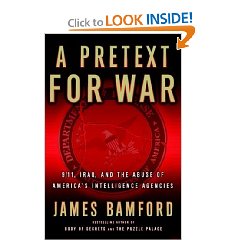

This is the ideal book for any citizen who wants a professional “once over” tour of the various intelligence and policy pieces that broke down and allowed 9-11 to happen, and then allowed the entire “balance of powers” construct from our Founding Fathers to fly out the window. If you want to go deeper, see my thirteen Lists and 479+ other reviews of national security non-fiction.
The book is especially strong on the Rendon Group being used to illegally propagandize American citizens with U.S. taxpayer funds, on the abject failure of George Tenet in revitalizing U.S. clandestine operations, on the failure (treated more kindly) of Mike Hayden to bring the National Security Agency into the 21st Century, and on the very unhealthy merger of the U.S. neoconservatives that captured the White House, and well-funded Zionists in both America and Israel who essentially bought themselves an invasion of Iraq–a remarkable coincidence of interests: Jews paying to invade Iraq, Iranians using Chalabi to feed lies to the neo-cons so they would be deceived into thinking Iraq would be a cake-walk, and Bin Laden never daring to dream the entire U.S. population and all arms of government–including a passive media–would “sleep walk” into what this book suggests is one of the dumbest and most costly strategic errors in the national security history of the USA.
This book is not, despite some of the ideologically-motivated reviews below, an attack of George Bush Junior, as much as it is an appalled and informed review of how a complex government collapsed in the face of 9-11, and a handful of ostensibly patriotic and very myopic individuals were able to abuse their personal power because all of the professional counter-forces: the diplomats, the spies, the military professionals, the Congress, the media–every single one was not sufficiently competent nor sufficiently motivated to mandate a more balanced policy process that could understand the many global threats (terrorism and Iraq are actually two of the lesser ones), devise a comprehensive long-term strategy, and execute that strategy using *all* of the instruments of national power, including strong global alliances that lead all governments to fight all gangs in the most effective fashion possible.
We let kids play with matches, and they burned down the house.
Pages 65-68 offer a superb overview of the nuances of open sources of information, including a useful caveat on “experts” that are only as good as their discipline in seeking out and validating the sources they claim as their foundation. From my own role as a former spy and now global proponent for improved use of open sources of information to product open source intelligence, I regard the author's methodical review of sources and their dangers to be among the very best I have ever seen. His details on press misinformation and the laziness of journalists, and his understanding of how many “leads” about terrorists are actually more sinister and selfish efforts to settle personal scores by fabricating the leads to destroy others using American power, are clear signs that this author is a top-notch professional.
In general the book and the original research by the author confirm what earlier scholars of revolution (Chalmers Johnson, Ted Gurr, Eckstein, among others) have documented in the past, to wit that most top-notch terrorists are middle-class, smart, educated beyond the norm, and grow into their motivation. They are *not* crazy and suicide is a rational choice for them, not an aberrant behavior.
I found the author's observation that recruitment is a bottom-up self-selected process rather than a top-down “seek out and recruit” process, quite fascinating, especially when the author makes the point that these people are NOT brainwashed. This is about a conflict of ideas, of ideals, of perception, and of context, and America is clearly not able to field the “idea army” and is not able to be competitive with Bin Laden in the war for the hearts and minds of these hundreds of thousands of prospective terrorists.
Most importantly, the author documents that Bin Laden is not your typical terrorist, is not seeking a controlled network, and is perhaps most brilliant for letting thousands of cells blossom with a little financial nurturing and a lot of social liberty.
The author documents the return of kinship as a source of power–kinship and social networking as means of organizing, as means of providing security, as means of radicalizing supporters.
The book is disappointing in two respects–a cursory conclusion as to how to marshal global resources against their severe threat, and no reference to the Pakistani and Hamas variants of terrorism, nor to the overlapping networking of ethnic criminal, corrupt government, and motivated terrorist networks.
For those interested in understanding the terrorist threat at the individual level of detail, I recommend this book together with Yossef Bodansky's classic on “Bin Laden: the Man Who Declared War on America” and Steve Emerson's more recent “American Jihad.” However, for a broader strategic understanding of the emerging threats and the reasons why billions are increasingly against America, I suggest the Amazon customer consider the several books in my Emerging Threats List and my Blowback List (“see more about me” should really say “see my other reviews and specific lists”).
I believe this author has more to offer, and would be interested in a second book from him, one that answers the specific question: “How must America behave, what pathologies of American corporate and government action must be corrected, if we are to live in peace with billions of faithful Muslims?” The author has helped us understand the core of the terrorist networks that are capable of bringing down America. Now it might be helpful if he turns his medical eye on our own mind-sets, and tells us how to heal ourselves.

 DOC (10 Pages): the-osint-story-2-1
OSS.Net, Inc.
25 June 2004, Version 2.1
MEMORANDUM
Continue reading “2004 Modern History of Public Intelligence and the Opposition”
LESSON 1: EMPHATHIZE WITH YOUR ENEMY. We must see ourselves as they see us, we must see their circumstances as they see them, before we can be effective.
LESSON 2: RATIONALITY WILL NOT SAVE US. Human fallibility combined with weapons of mass destruction will destroy nations. Castro has 162 nuclear warheads already on the island, and was willing to accept annihilation of Cuba as the cost of upholding his independence and honor.
LESSON 3: THERE'S SOMETHING BEYOND ONESELF. History, philosophy, values, responsibility–think beyond your niche.
LESSON 4: MAXIMIZE EFFICIENCY. Although this was McNamara's hallmark, and the fog of war demands redundancy, he has a point: we are not maximizing how we spend $500B a year toward world peace, and are instead spending it toward the enrichment of select corporations, building things that don't work in the real world.
LESSON 5: PROPORTIONALITY SHOULD BE A GUIDELINE IN WAR. McNamara is clearly still grieving over the fact that we firebombed 67 Japanese cities before we ever considered using the atomic bomb, destroying 50% to 90% of those cities.
LESSON 6: GET THE DATA. It is truly appalling to realize that the U.S. Government is operating on 2% of the relevant information, in part because it relies heavily on foreign allies for what they want to tell us, in part because the U.S. Government has turned its back on open sources of information. Marc Sageman, in “Understanding Networks of Terror”, knows more about terrorism today than do the CIA or FBI, because he went after the open source data and found the patterns. There is a quote from a Senator in the 1960's that is also compelling, talking about “an instability of ideas” that are not understood, leading to erroneous decisions in Washington. For want of action, we forsook thought.
LESSON 7: BELIEF & SEEING ARE BOTH OFTEN WRONG. With specific reference to the Gulf of Tonkin, as well as the failure of America to understand that the Vietnamese were fighting for independence from China, not just the French or the corrupt Catholic regime of Ngo Dinh Diem, McNamara blows a big whole in the way the neo-cons “believed” themselves into the Iraq war, and took America's blood, treasure, and spirit with them.
LESSON 8: BE PREPARED TO RE-EXAMINE YOUR REASONING. McNamara is blunt here: if your allies are not willing to go along with you, consider the possibility that your reasoning is flawed.
LESSON 9: IN ORDER TO DO GOOD, YOU MAY HAVE TO ENGAGE IN EVIL. Having said that, he recommends that we try to maximize ethics and minimize evil. He is specifically concerned with what constitutes a war crime under changing circumstances.
LESSON 10: NEVER SAY NEVER. Reality and the future are not predictable. There are no absolutes. We should spend more time thinking back over what might have been, be more flexible about taking alternative courses of action in the future.
LESSON 11: YOU CAN'T CHANGE HUMAN NATURE. There will always be war, and disaster. We can try to understand it, and deal with it, while seeking to calm our own human nature that wants to strike back in ways that are counter-productive.
For those who dismiss this movie because McNamara does not apologize, I say “pay attention.” The entire movie is an apology, both direct from McNamara, and indirect in the manner that the producer and director have peeled away his outer defenses and shown his remorse at key points in the film. I strongly recommend the book by McNamara and James Blight, “WILSON's GHOST.” In my humble opinion, in the context of the 470+ non-fiction books I have reviewed here, McNamara and Bill Colby are the two Viet-Nam era officials that have grown the most since leaving office. He has acquired wisdom since leaving defense, and we ignore this wisdom at our peril.