Here are the concise references focused on revolution. For corruption, collective intelligence, open space and other methods of non-violent consensus building and emergence, see the lists at the end of this post.
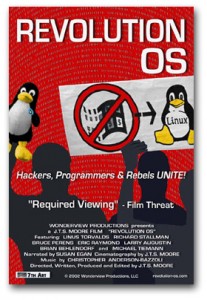
REVOLUTION OS tells the inside story of the hackers who rebelled against the proprietary software model and Microsoft to create GNU/Linux and the Open Source movement.
On June 1, 2001, Microsoft CEO Steve Ballmer said “Linux is a cancer that attaches itself in an intellectual property sense to everything it touches.”
Microsoft fears GNU/Linux, and rightly so. GNU/Linux and the Open Source & Free Software movements arguably represent the greatest threat to Microsoft's way of life. Shot in cinemascope on 35mm film in Silicon Valley, REVOLUTION OS tracks down the key movers and shakers behind Linux, and finds out how and why Linux became such a potent threat.
REVOLUTION OS features interviews with Linus Torvalds, Richard Stallman, Bruce Perens, Eric Raymond, Brian Behlendorf, Michael Tiemann, Larry Augustin, Frank Hecker, and Rob Malda. To view the trailer or the first eight minutes go to the ifilm website for REVOLUTION OS.
For the second time, Icelanders voted down a deal to repay Britain and the Netherlands billions of euros lost in the island nation's 2008 financial collapse—at once a bold popular rejection of the notion that taxpayers must bear the burden for bankers' woes and a risky outcome that will complicate Iceland's efforts to rejoin global markets.
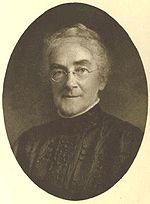
Ellen Henrietta Swallow Richards (December 3, 1842 – March 30, 1911) was the foremost female industrial and environmental chemist in the United States in the 19th century, pioneering the field of home economics. Richards graduated from Westford Academy (2nd oldest secondary school in Westford, MA). She was the first woman admitted to the Massachusetts Institute of Technology and its first female instructor, the first woman in America accepted to any school of science and technology, and the first American woman to earn a degree in chemistry.
This is the TOP SECRET OSCAR SIERRA Intelligence Analysis Orientation created to deal with the shared problem of CIA and DIA. It is so real it scares the most hardened veterans years after retirement.
Short Video
This one is funny sad. For funny hysterical see the colliding sexual fantasies between pilots and intelligence officers:
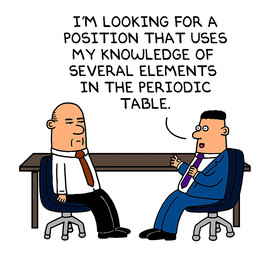
Forget art history and calculus. Most students need to learn how to run a business, says Scott Adams (Creator of Dilbert)
Wall Street Journal, 9 April 2011
I understand why the top students in America study physics, chemistry, calculus and classic literature. The kids in this brainy group are the future professors, scientists, thinkers and engineers who will propel civilization forward. But why do we make B students sit through these same classes? That's like trying to train your cat to do your taxes—a waste of time and money. Wouldn't it make more sense to teach B students something useful, like entrepreneurship?
“Why do we make B students sit through the same classes as their brainy peers? That's like trying to train your cat to do your taxes—a waste of time and money. Wouldn't it make sense to teach them something useful instead?”
. . . . . .
By the time I graduated, I had mastered the strange art of transforming nothing into something. Every good thing that has happened to me as an adult can be traced back to that training. Several years later, I finished my MBA at Berkeley's Haas School of Business. That was the fine-tuning I needed to see the world through an entrepreneur's eyes.
If you're having a hard time imagining what an education in entrepreneurship should include, allow me to prime the pump with some lessons I've learned along the way.
That's my starter list for the sort of classes that would serve B students well. The list is not meant to be complete. Obviously an entrepreneur would benefit from classes in finance, management and more.
Remember, children are our future, and the majority of them are B students. If that doesn't scare you, it probably should.