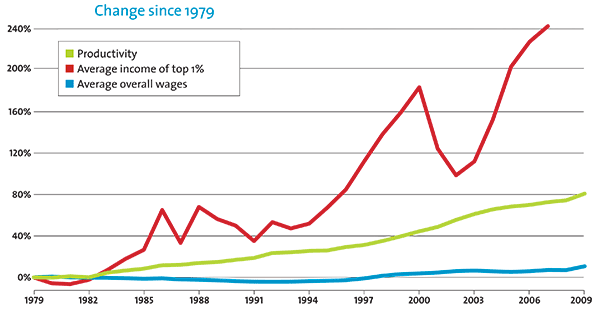
Graphic: Mother Jones on Wealth, Productivity, & Wages
03 Economy, 11 Society, Civil Society, Commerce, Corruption
The truth at any cost lowers all other costs — curated by former US spy Robert David Steele.
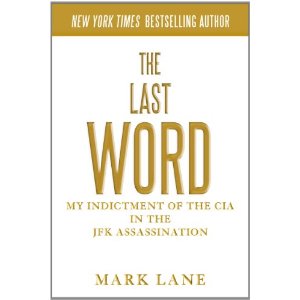
Mark Lane has been a member of the bar for half a century and is the author of nine books including the New York Times bestselling Plausible Denial and Rush to Judgment. He was a member of the New York State legislature, and is the best-known researcher on the JFK assassination. He lives in Charlottesville, Virginia.
Robert K. Tanenbaum has been homicide bureau chief for the New York District Attorney’s Office and from 1976 to 1978 he served as a Deputy Chief Counsel for the House Select Committee on Assassinations to investigate the John F. Kennedy assassination and the Martin Luther King, Jr. assassination. He teaches Advanced Criminal Procedure at the University of California at Berkeley, where he resides.
See Also:
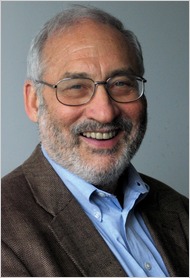
Trillions and trillions wasted on wars, a fiscal catastrophe, a weaker America.
By Joseph E. Stiglitz
Slate, Thursday, Sept. 1, 2011
The Sept. 11, 2001, terror attacks by al-Qaida were meant to harm the United States, and they did, but in ways that Osama Bin Laden probably never imagined. President George W. Bush's response to the attacks compromised America's basic principles, undermined its economy, and weakened its security.
The attack on Afghanistan that followed the 9/11 attacks was understandable, but the subsequent invasion of Iraq was entirely unconnected to al-Qaida—as much as Bush tried to establish a link. That war of choice quickly became very expensive—orders of magnitude beyond the $60 billion claimed at the beginning—as colossal incompetence met dishonest misrepresentation.
Indeed, when Linda Bilmes and I calculated America's war costs three years ago, the conservative tally was $3 trillion to $5 trillion. Since then, the costs have mounted further. With almost 50 percent of returning troops eligible to receive some level of disability payment, and more than 600,000 treated so far in veterans' medical facilities, we now estimate that future disability payments and health care costs will total $600 billion to $900 billion. The social costs, reflected in veteran suicides (which have topped 18 per day in recent years) and family breakups, are incalculable.
See Also:
The Worst Mistake America Made After 9/11
How focusing too much on the war on terror undermined our economy and global power.
By Anne Applebaum Slate, 4 September 2011
It looks increasingly likely that President Obama is going to cave into the oil interests promoting the pipeline to move oil mine in tar sands of Canada to the Port Arthur Free Trade Zone in Texas.
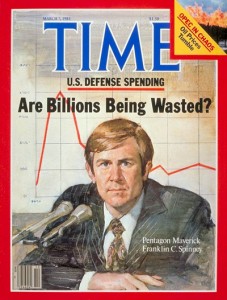
One of the prime selling points of this scheme, which has environmentalists all in uproar will no doubt be that the pipeline is needed for energy security. So what is going on? My good friend Pierre Sprey's answer may surprise you. He has graciously given me permission to distribute it.
Peak Oil or Peak Profits?
email from Pierre Sprey, 5 September 2005
A new Oil Change International report has injected a breath of fresh air into the endless stream of media BS about peak oil, declining US oil production, disastrous dependence on foreign oil, need for new offshore drilling, blah, blah , blah, blah…. The report's charts show that our domestic oil production has been rising markedly since 2008. The excess domestic oil and the new Keystone pipeline oil are unneeded for the domestic market and will go largely to exports to fatten Big Oil's bottom line.
The most interesting conclusions are:
Refiners have therefore identified export markets as their primary hope for growth and maximum profits.
Continue reading “Chuck Spinney: Big Oil Screwing US for Peak Profits”
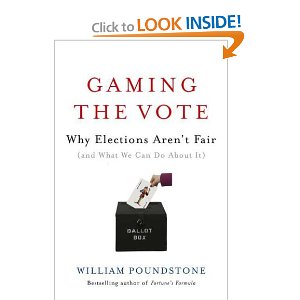 William Poundstone
2.0 out of 5 stars Gaming the Vote: Why Elections Aren't Fair (and What We Can Do About It), February 12, 2008
The book is extremely well-written, and a joy to read. It would be highly recommended, except for two fatal flaws discussed below.
Poundstone's latest book deals with an issue that is fundamental to democracy, yet almost totally ignored in the U.S. While many books focus on the role of money in elections, or voter registration, or voting machine integrity, relatively few popularly written books have tackled the more fundamental question of how votes get translated into representation. This is not a question of voting machine technology, but of logic. Most Americans are remarkably unaware of the variety of voting methods available, nor of the fact that the plurality voting method that predominates in the U.S. is not the norm among modern democracies, and, in fact, is probably the most problematic of all voting methods.
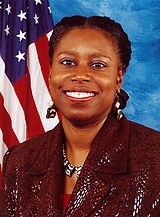
Phi Beta Iota: The following is being circulated world-wide (less US “mainstream” media), and represents both an African view, and the view of those associated with Cynthia McKinney and her related concerns of 21st Century imperialism and genocide against black Africans at the hands of the Libyan forces seeking to topple Qathafi.
Hands off Libya Protests on September 21
Mathaba, 2011/09/05
Statement by masses in Ghana and also advice on how to organize a demonstration in your own community.
The “US/NATO Hands Off Libya! Hands Off Africa!” coalition consists of revolutionary and progressive African organizations in Ghana who oppose the US/NATO illegal invasion of Libya/Africa and support Muammar Qathafi and the Libyan Jamahiriya to win the war against US/NATO imperialist forces and NTC/Al Qaeda reactionaries. The coalition is organizing a march from Kwame Nkrumah Circle to the US Embassy to demonstrate against the illegal US/NATO invasion and for victory to Qathafi and the Libyan Jamahiriya on 21st September 2011.
We are calling on all Africans in Africa and the diaspora to demonstrate at US embassies on the same day.
Safety copy below the line.
Continue reading “Cynthia McKinney: Hands Off Libya — 21 Sep Protests”

A hundred and fifty years ago, adults were incensed about child labor. Low-wage kids were taking jobs away from hard-working adults.
Sure, there was some moral outrage at seven-year olds losing fingers and being abused at work, but the economic rationale was paramount. Factory owners insisted that losing child workers would be catastrophic to their industries and fought hard to keep the kids at work–they said they couldn't afford to hire adults. It wasn't until 1918 that nationwide compulsory education was in place.
Part of the rationale to sell this major transformation to industrialists was that educated kids would actually become more compliant and productive workers. Our current system of teaching kids to sit in straight rows and obey instructions isn't a coincidence–it was an investment in our economic future. The plan: trade short-term child labor wages for longer-term productivity by giving kids a head start in doing what they're told.
Large-scale education was never about teaching kids or creating scholars. It was invented to churn out adults who worked well within the system.
Of course, it worked. Several generations of productive, fully employed workers followed. But now?
