Ben Franklin’s Strategic Narrative: Honest & Open

Cultural Intelligence

The Junto Club created by Franklin in 1727 is an instructive predecessor to what could be today in the way of “collective intelligence.”

Franklin is a counter example of how things might be done differently.
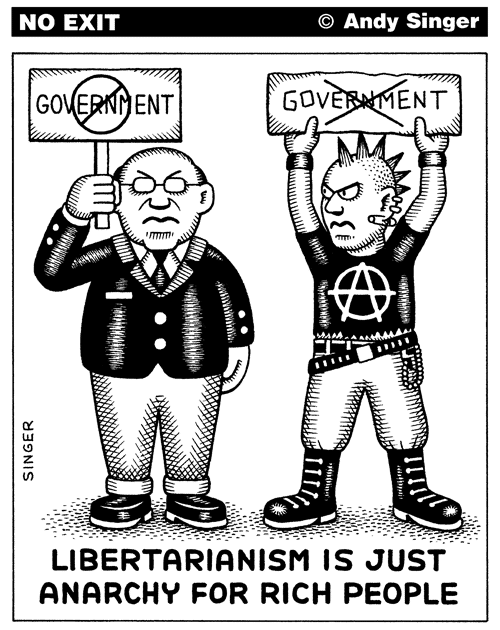
It is important to understand that the Junto Club put BOTH civic improvement, the “commons”, and personal improvement ahead of the financial gain of the members; but there was nothing wrong if financial gain followed the first two improvements.  Hence the Junto Club is also a rebuke to the current Hamiltonian Federalists who champion unregulated free market extreme capitalism over everything else.

Junto in Spanish means “together.”  Below from Wikipedia (Junto).

The Junto was a club established in 1727 by Benjamin Franklin for mutual improvement in Philadelphia. Also known as the Leather Apron Club, its purpose was to debate questions of morals, politics, and natural philosophy, and to exchange knowledge of business affairs.

. . . . . . .

Franklin describes the formation and purpose of the Junto in his autobiography:

I should have mentioned before, that, in the autumn of the preceding year, [1727] I had form'd most of my ingenious acquaintance into a club of mutual improvement, which we called the Junto; we met on Friday evenings. The rules that I drew up required that every member, in his turn, should produce one or more queries on any point of Morals, Politics, or Natural Philosophy, to be discuss'd by the company; and once in three months produce and read an essay of his own writing, on any subject he pleased.


Learn more….

The Role of Facebook in Disaster Response

Advanced Cyber/IO, IO Multinational, IO Sense-Making, IO Technologies
Patrick Meier

The Role of Facebook in Disaster Response

Posted on May 22, 2011 by Patrick Meier|

I recently met up with Facebook colleagues Simon Axten and Matt Perault to discuss the role that they and their platform might play in disaster response. So I thought I’d share some thoughts that come up during the conversation seeing as I’ve been thinking about this topic with a number of other colleagues for a while. I’m also very interested to hear any ideas and suggestions that iRevolution readers may have on this.

There’s no doubt that Facebook can—and already does—play an important role in disaster response. In Haiti, my colleague Rob Munro used Facebook to recruit hundreds of Creole speaking volunteers to translate tens of thousands of text messages into English as part of Mission 4636. When an earthquake struck New Zealand earlier this year, thousands of students organized their response via a Facebook group and also used the platform’s check-in’s feature to alert others in their social network that they were alright.

But how else might Facebook be used? Continue reading “The Role of Facebook in Disaster Response”

Review: The World Sensorium — The Social Embryology of World Federation 1946

5 Star, Civil Society, Communications, Complexity & Resilience, Culture, Research, Education (Universities), Games, Models, & Simulations, Information Operations, Information Society, Intelligence (Collective & Quantum), Intelligence (Extra-Terrestrial), Intelligence (Public), Intelligence (Wealth of Networks), Nature, Diet, Memetics, Design, Peace, Poverty, & Middle Class, Philosophy, Priorities, Public Administration, Strategy, Survival & Sustainment, Water, Energy, Oil, Scarcity
Amazon Page

Oliver L. Reiser

5.0 out of 5 stars A Gem–Easy to Read, A Foundation Book for World Brain and Global Game, May 22, 2011
I bought this book on a whim, sensing that despite its 1946 publication date it might be inspirational and I have been *very* glad to go through this. It was a half-century ahead of its time. This book, which does cite H.G. Wells and World Brain (Adamantine Classics for the 21st Century), is a wonderful core reading for any age including high school but certainly going all the way to PhD programs. I consider it a SUPERB start to any semester of dialog in this domain.

Quick overview and appreciation by the chapter:

Reflections on Tyranny versus Crowd Power

07 Other Atrocities, 09 Justice, 10 Security, 11 Society, Advanced Cyber/IO, Civil Society, Collective Intelligence, Corruption, Counter-Oppression/Counter-Dictatorship Practices, Cultural Intelligence, Ethics, Government, Open Government
Click on Image to Enlarge

Sacrificial Crowds and Radical Power: A Meditation

by Justin Rogers-Cooper, 19 May 2011

Advocate (CUNY Graduate Center)

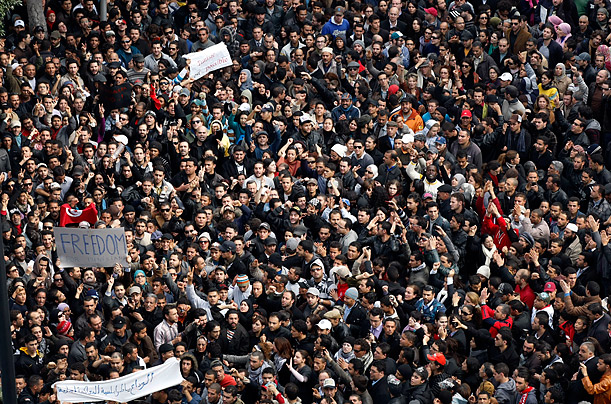
In early Jan­u­ary the BBC reported that Moham­mad Bouazazi, a Tunisian col­lege grad­u­ate who ille­gally sold fruits and veg­eta­bles in Sidi Bouzid, had died from his self-inflicted burns. He had set him­self on fire by dous­ing his body with petrol when police con­fis­cated his pro­duce. He didn’t have the proper per­mits. Pub­lic protest had been rare in Tunisia before. When he died, the BBC reported that “a crowd esti­mated at 5,000 took part in his funeral.” The crowd chanted the same mes­sage together, out loud: “Farewell, Moham­mad, we will avenge you. We weep for you today, we will make those who caused your death weep.”

Safety copy below the line–note ending on Bush-Obama “crowd control” plans.

Continue reading “Reflections on Tyranny versus Crowd Power”

Carterizing Obama–Netanyhu Tells Him Off…

05 Energy, 07 Other Atrocities, 08 Wild Cards, 09 Justice, 10 Security, 11 Society, Civil Society, Cultural Intelligence, Government, IO Impotency
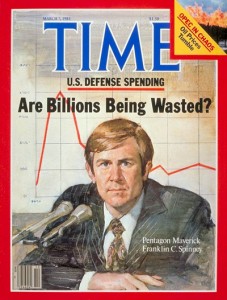
Chuck Spinney Recommends...

This important essay by Robert Parry contextualizes Israeli Prime Minister Netanyahu's arrogant stuffing of President Obama, which took place after Obama gave a weak-kneed speech on the Middle East.  If Parry is right, a really dirty game is in the offing.

And look at the banality of language that provoked Netanhahu: Obama's speech purported to analyze the implications of the Arab Revolt with an analysis that was viewed as being weak, inept, and self centered by some Arabs (e.g., see this cogent analysis of his language) as well as his goals for the pursuit in the Arab-Israeli peace process: namely a return to Israel's 1967 borders, with some land swaps, in return for the security of a Jewish state within these borders (a choice of language that may have been an attempt to appease Netanyahu*).

————————-

*Mr. Obama's language was somewhat ambiguous when he said the primary Israeli-related goal of the peace process was  to establish conditions for Israel as a Jewish state
and the homeland for the Jewish people.” But it does raise a question of whether he is acceding to the sectarian interpretation of a Jewish democracy demanded by Benjamin Netanyahu, who has made recognition of Israel as aJewish nation-state a prerequisite for any final agreement with the Palestinians. This kind of sectarian definition in a democracy has unknowable ramifications for the non-Jewish minority making up 20% of Israel's citizens. For a discussion of this issue, see Isabel Kirshner, “Some Question the Existence of Israel as a Jewish State,” New York Times, 24 October 2010.

Netanyahu Sets Limits for Obama

This public rebuke raises questions about whether Netanyahu will now try to sink Obama’s reelection the way earlier Likud leaders undermined President Jimmy Carter

by Robert Parry, Consortium News,  May 21, 2011

Israeli Prime Minister Benjamin Netanyahu’s Oval Office rebuke of U.S. President Barack Obama – and the Republicans’ immediate attempt to exploit the dispute to peel away Jewish voters – suggest that American politics may be in for a replay of Campaign 1980.

Continue reading “Carterizing Obama–Netanyhu Tells Him Off…”

noble gold