
Earthships. Homes built to live off of the grid. If this is a topic you are interested in. Please flesh this page out. Feel free to create more pages on specific architectural elements of the earthship and/or specific examples.

The truth at any cost lowers all other costs — curated by former US spy Robert David Steele.
Earthships. Homes built to live off of the grid. If this is a topic you are interested in. Please flesh this page out. Feel free to create more pages on specific architectural elements of the earthship and/or specific examples.

How Big Pharma got Americans hooked on anti-psychotic drugs.
James Ridgeway, 12 July 2011
Al Jazeera
Has America become a nation of psychotics? You would certainly think so, based on the explosion in the use of antipsychotic medications. In 2008, with over $14 billion in sales, antipsychotics became the single top-selling therapeutic class of prescription drugs in the United States, surpassing drugs used to treat high cholesterol and acid reflux.
Phi Beta Iota: The industrialization of agriculture, and the industrialization of “medicine,” have poisoned the Western population, the USA most of all. The degree to which toxins and other poisons are allowed by law is now criminally insane.

Former CIA Official: Israel Will Bomb Iran In September
July 15, 2011 4:04 pm ET — MJ Rosenberg
A longtime CIA officer who spent 21 years in the Middle East is predicting that Israel will bomb Iran in fall, dragging the United States into another major war and endangering U.S. military and civilian personnel (and other interests) throughout the Middle East and beyond.
Earlier this week, Robert Baer appeared on the provocative KPFK Los Angeles show Background Briefing, hosted by Ian Masters. It was there that he predicted that Israeli Prime Minister Binyamin Netanyahu is likely to ignite a war with Iran in the very near future.
Phi Beta Iota: We know and admire Bob Baer, one of the greats in clandestine case officering, whose books, Sleeping With the Devil: How Washington Sold Our Soul for Saudi Crude and See No Evil–The True Story of a Ground Soldier in the CIA’s War on Terrorism correctly observe that no amount of professionalism in the intelligence ranks can make up for massive ideology, corruption, and impeachable malfeasance in the White House, Congress, and the military-industrial cabal. War is how the unethical elite deal with unrest at home–it syphons the poor angry young men out of the system and distracts the booboisee. Israel, like the USA, has multiple governments, and right now the two extremist versions are nominally in charge and think they can get away with bombing Iran and then redirecting the US military against Iran. The Israeli attack on the USS Liberty is the best “truth-teller” on how crazy they can get, and how much they disrespect the USA. They give no thought at all to the five front war that George Bush started with the Islamic virtual caliphate, or the consequences of “burning” the young seeking reform, turning them all against Israel and the USA.
See Also:
Continue reading “Chuck Spinney: Israel To Bomb Iran Soon + RECAP”
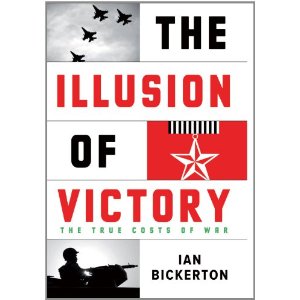
Ian Bickerton
5.0 out of 5 stars A brilliant overview of the results of modern conflicts,May 26, 2011
By Tim Johnson (Fremantle, Australia) – See all my reviews
Although I loved Bickerton's excellent book, I did find it a demanding read; chapters one, two and three is not material that a general reader like myself often encounters in the contemporary media: the Russo-Japanese War of 1904–1905 is not a conflict that is considered in accounts of the reasons for contemporary conflicts but the more so that it need be. Far too often the entrails of conflict are not considered and much modern commentary about conflict virtually implies that the event had few if any antecedents implying that it just happened spontaneously. I believe that Illusion of Victory puts that idea away and that seems not to be the author's thesis.
Continue reading “Review (Guest): The Illusion of Victory – The True Costs of War”
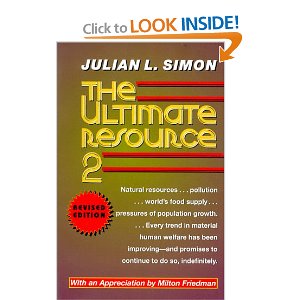
Julian Lincoln Simon
5.0 out of 5 stars The doomslayer falls,April 4, 1998
By A Customer
On Sunday, February 8th, psychologist and economist Julian L. Simon succumbed to a heart attack in Maryland. It is difficult to overstate the damage his death will cause the world debate on overpopulation, natural resources, and the environment. Dr. Simon's prolific and energetic mind gave rise to fourteen books and countless papers and lectures, dedicated to overthrowing the dogma that underlies so much of today's environmental discourse.
Simon, still considered a maverick after thirty years of relentless data-gathering, impeccable empirical work, and well-thought out conclusions, questioned the unquestionable. He maintained that the earth is in good shape by every conceivable measure, and that the environmental situation continues to improve each year. Every index of human happiness – food prices, net income, infant mortality, life expectancy, disease rates – has steadily improved. He documented those claims with reams of data, culminating in his 1996 tour de force The State of Humanity. It is absolutely comprehensive, and contains enough obscure data to make the most jaded Trivial Pursuit fan squirm (if you ever want to read about the average lower-class Brazilian's annual starch intake, look no further).

Published 23 August 2005, the Ludwig von Mises Institute article by Pierre Lemieux discusses the actual decline of resource prices–including “scarce” resources–and the reason: advances in human ingenuity. This supports our basic proposition on this web site, that the single best investment that could be made to create a prosperous world at peace is to give the five billion poor free access to the Internet so as to nurture and harvest their brainpower.
Mises Daily: Tuesday, August 23, 2005 by Pierre Lemieux
EXTRACT
Until his death in 1997, economist Julian Simon predicted a continuous decline in resource prices. In 1980, he made a famous bet with environmentalist Paul Ehrlich. Simon’s bet was that a $1,000 basket of any five metals chosen by Ehrlich would be worth less (in constant dollars) 10 years later. Ehrlich lost. In 1990, the value of the basket at current market prices was down more than 50%. Ehrlich had to send a $576.07 check to Simon, representing the drop in the basket value. In fact, the prices of all the metals chosen by Ehrlich had fallen.[5]
In his challenging 1981 book The Ultimate Resource, Simon showed that resource prices had generally decreased over time. The relative price of oil (in terms of other goods) has fallen by perhaps as much as two-thirds between the 1860s and today. During the same period, the price of oil in terms of salaries has decreased by more than 90%.
Five Interwoven Economies: Subsistence, Gift, Exchange, Planned, and Theft (or Conquest)
This video presents a simplified education model about socioeconomics and technological change. It discusses five interwove economies (subsistence, gift, exchange, planned, and theft) and how the balance will shift with cultural changes and technological changes. It suggests that things like a basic income, better planning, improved subsistence, and an expanded gift economy can compensate in part for an exchange economy that is having problems.
The text for the presentation is here.
The content is under the CC-BY-SA license and you are encouraged to build on it, but the video itself is under CC-BY-ND. If you make derivatives, you can credit Paul Fernhout at http://www.pdfernhout.net/
