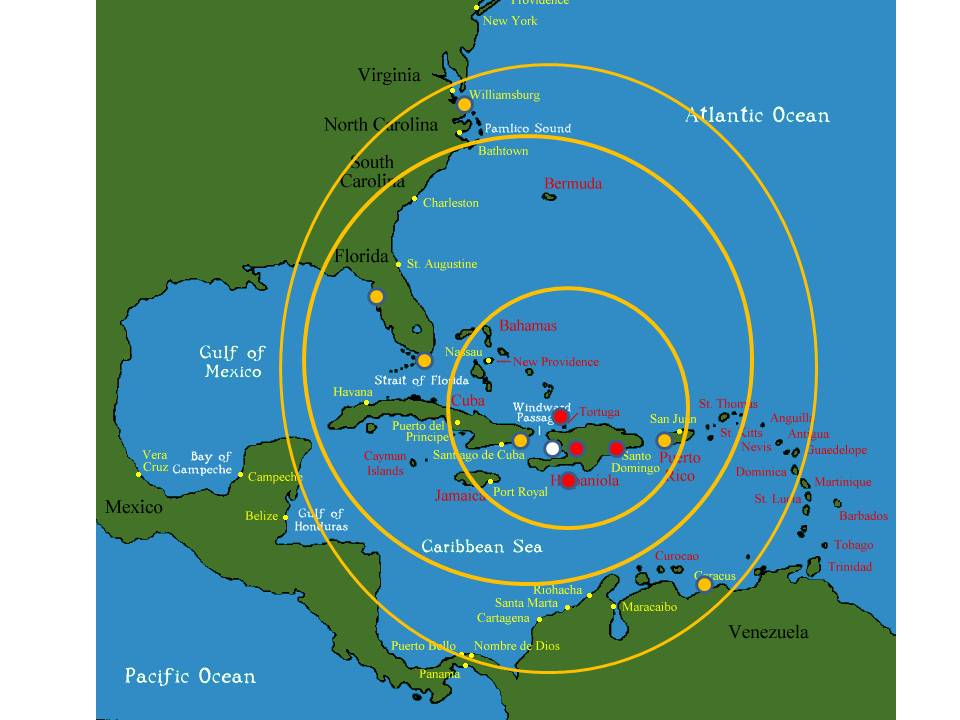
Multinational Decision Support Center (MDSC) in Tampa or Quantico
Grid the Island, Assign Zone Masters with Commercial Satellite Communications to Each Grid Square
Execute Bottom-Up Needs-Driven Information-Driven Relief Effort as well as Med-Evac Priority
Emphasize AIR DROPS not WHEELS, and C-13os using See Bee rough strips created overnight
Assume all local water contaminated by bodies and sewage until demonstrated otherwise
Hospital Ship Should Have Been Turned Around Instantly, Refueled and Resupplied at Sea
Send at least one and ideally two Amphibious Ships will full complements of helos augmented as they pass Camp Lejeune coming down from Little Creek–ideally plan to use Landing Craft not just the helos
Pre-Approved Emergency Flights ONLY into Port a Prince and Santo Domingo (including See Bees and their construction equipment, Army engineers and bridges
Create at least two Foreward Area Refueling Points (FARP), one for conventional aircraft, one for helicopters, and add a third for free fuel for all ground vehicles including indigenous and NGO vehicles
Triage all relief aircraft via MDSC, ideally triage the loads BEFORE they are loaded–push the information perimeter all the way out to every government and NGO planning to arrive, run BIG AIR into McDill, Guantanamo, Havana, Bermuda, Miami, triage loads into C-130, Air Drop, and Helo Delivery. Remember that onward transport is the next log-jam, see USMC Lessons Learned from Bangladesh–precision drops across the country are better than jamming everything into an airport without onward delivery options.
Why is it we are not seeing Army Civil Affairs Brigade in charge of this? Frock the ranking Colonel to one-star (pull him out of AF for this), put the Total Force behind CAB, and tell the existing conventional leadership they are in direct support of CAB.
“Nature Ethics provides a comprehensive and fair-minded account of the contrasting positions, particularly with respect to animals, between ecofeminist nature ethics and the celebrated holistic views of Theodore Roosevelt, Aldo Leopold, Holmes Rolston III, and Warwick Fox. Anyone interested in women's studies, animal advocacy, hunting, vegetarianism, or environmental ethics will find this impressive book helpful and challenging.”
Amazon Page
How are the unjustified dominations of women and other humans connected to the unjustified domination of animals and nonhuman nature? What are the characteristics of oppressive conceptual frameworks and systems of unjustified domination? How does an ecofeminist perspective help one understand issues of environmental and social justice? In this important new work Karen J. Warren answers these and other questions from a Western perspective. Warren looks at the variety of positions in ecofeminism, the distinctive nature of ecofeminist philosophy, ecofeminism as an ecological position, and other aspects of the movement to reveal its significance to both understanding and creatively changing patriarchal (and other) systems of unjustified domination.
Amazon Page
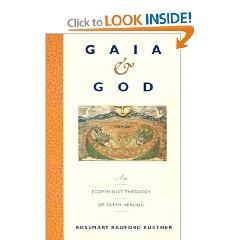
This is a comprehensive and important discussion of three main myths of creation, destruction, and domination. Ruether ( Mary: The Feminine Face of the Church , Westminster/John Knox Pr., 1977) shows how these patriarchal stories still permeate the culture and social structure of the Western world today. She eloquently critiques these values from an ecological and feminist point of view, exploring how male domination of women and of nature are interconnected. Arguing that these values must be changed, she develops potential ways for healing ourselves and our planet from within existing religious traditions. This work is useful for special collections in religion, woman's studies, and ecology. It assumes some relevant knowledge on the part of the reader but is highly relevant for this specialized audience.
“Cry of the Earth, Cry of the Poor” represents Leonardo Boff's most systematic effort to date to link the spirit of liberation theology with the urgent challenge of ecology. Focusing on the threatened Amazon of his native Brazil, Boff traces the ties that bind the fate of the rain forests with the fate of the Indians and the poor of the land. In this book, readers will find the keys to a new, liberating faith.
Blackwater/XE behind terrorist bombings in Asia and Africa?
ByWayne Madsen Online Journal Contributing Writer
Jan 18, 2010, 00:25
WMR’s intelligence sources in Asia and Europe are reporting that the CIA contractor firm XE Services, formerly Blackwater, has been carrying out “false flag” terrorist attacks in Afghanistan, Somalia, the Sinkiang region of China, Pakistan, Iran, and Iraq, in some cases with the assistance of Israeli Mossad and Indian Research and Analysis Wing (RAW) personnel.
Fingers are being pointed at Blackwater/XE and Mossad operatives for the motorbike bomb in Tehran that killed Tehran University nuclear physicist Dr. Moussad Ali-Mohammadi.
Gen Richards' views come ahead of a defence review and potential cuts
A “radical” shift in defence spending is needed, the head of the British army has said.
General Sir David Richards said priority should be given to troops working on the ground on winning over hearts and minds.
He told the International Institute for Strategic Studies there was too much emphasis on cutting-edge technology and not enough on cheaper troops and staff.
The UK was behind its enemies in being prepared for modern warfare, he added.
‘Minds of millions'
Gen Richards said current and future conflicts would focus on using communication to drum up support and would need more British troops to work among populations such as that in Afghanistan.
In his speech in London, he said: “If one equips more for this type of conflict while significantly reducing investment in higher-end war-fighting capability, suddenly one can buy an impressive amount of ‘kit'.
The United States attorney in Manhattan is merging the two units in his office that prosecute terrorism and international narcotics cases, saying that he wants to focus more on extremist Islamic groups whose members he believes are increasingly turning to the drug trade to finance their activities.
Pentagon Supplier for Rifle Sights Says It Has ‘Always' Added New Testament References
By JOSEPH RHEE, TAHMAN BRADLEY and BRIAN ROSS
Jan. 18, 2010
– – – – – – –
Note: the below report, which appears to be well sourced, does not rebut the Global Warming hypothesis per se, but it highlights the shoddy political character of the IPCC, together with its bias to hype the threat of global warming.
It also makes the revelations in the hacked emails all the more salient to the GW debate, especially those emails which reveal the organized efforts of suppress the opposing views of those scientists labeled disparagingly as “climate deniers” (an obscene, almost subliminal, reference to holocaust deniers) in peer reviewed journals.
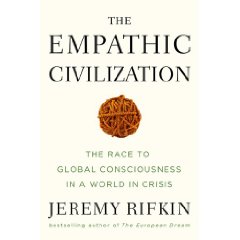
This is a magnum opus from a very specific point of view that overlooks both major consciousness figures and major biosphere figures. Herman Daly gets one note, Tom Atlee, Barbara Marx Hubbard, Steve McIntosh are not in this book. Buckminster Fuller, Paul Hawken, the Meadows, E. O. Wilson on Consilience, J. F Rischard on HIGH NOON, etcetera, are not in this book. My review begins after the Table of Contents, which the publisher failed to provide using standard Amazon tools for publishers.
Table of Contents
I The Hidden Paradox of Human History
HOMO EMPATHICUS
2 The New View of Human Nature
3 A Sentient Interpretation of Biological Evolution
4 Becoming Human
5 Rethinking the Meaning of the Human Journey
EMPATHY AND CIVILIZATION
6 The Ancient Theological Brain and Patriarchal Economy
7 Cosmopolitan Rome and the Rise of Urban Christianity
8 The Soft Industrial Revolution of the Late Medieval era and the Birth of Humanism
9 Ideological Thinking in a Modern Market Economy
10 Psychological Consciousness in a postmodern Existential world
THE AGE OF EMPATHY
11 The Climb to Global Peak Empathy
12 The Planetary Entropic Abyss
13 The Emerging Era of Distributed Capitalism
14 The Theatrical Self in an Improvisational Society
15 Biosphere Consciousness in a Climax Economy
– – – – – – – –
If this book is reprinted, it should be single-spaced. The massive bulk (675 pages) is pretentious and not necessary, especially for those of us that read when traveling, and for students having to carry books around. As noted earlier the author leaves out a great deal and I will offer ten links below (and over 300 links at Phi Beta Iota the Public Intelligence Blog where I have posted “Worth a Look: Book Review Lists”). This review focuses on the righteous theme the author has pursued across multiple literatures.
The book's bottom line is well summarized in the jacket flaps and comes at the very end as the author aspires for a combination of biosphere consciousness and distributed capitalism, the latter made possible by a combination of backyard energy and global information and communications technologies (ICT). Early in the book the author discusses how the wealthy dominated water power in the Medieval Period, but the poor were able to use windmills anywhere–this makes an impression on me as it did on the author.
The author has a story to tell and as I go through the book I am constantly reminded of books and points not in this book, but I abandoned my first draft of my review because it focused too much on work by others and not enough on the enormous task this author has taken on. In a nutshell, the author believes that the same revolutions in energy and communications that lead to a growth in human consciousness also lead to a commensurate crisis in earth or biosphere viability. In today's era the potential crisis (widely anticipated in the 1970's and deliberately ignored by the White House and the Senate for selfish corrupt reasons) is playing a forcing function, potentially catalyzing the rethinking of philosophy, economics, and our social models.
There are three negatives to this book that for any other author or theme would have dropped the book to a four, but I feel a five is still warranted for both the heroic personal effort of the author, and the importance of the theme.
#1. There is no appreciation that I can see of the fact that we are returning to the wisdom of the indigenous cultures that we have genocided since 1941, not only in the USA but in Australia, Africa, and elsewhere. This is not new wisdom that the author is bringing to bear, but old wisdom that is being rediscovered.
#2. The author fell prey to the Climate Change manipulation of data and hyperbole as well as nine documented errors in the British law suit against Al Gore, who has been asked to return his Academy Award. I won't belabor this now that the fraud of Climate Change has been adequately exposed, I will just say this: the UN High Level Panel on Threats, Challenge, and Change is the more honest and substantive endeavor, and Environmental Degradation, #3 of 10 after Poverty and Infectious Disease, is properly ranked. Climate Change is less than 10% of that, and within Climate Change carbon emissions are 10% at most, and much less important than sulfur or mercury. Carbon trades are fraud–a form of phantom wealth engineered by Maurice Strong and shilled by Al Gore, with the International Panel on Climate Change director–a railway engineer, not a scientist–happily lining his pockets by making the science fit. Learn more at the ClimateGate Rolling Update at Phi Beta Iota the Public Intelligence Blog.
#3. This is a book for the one billion rich, and it does not really address the five billion poor, and so I felt a continuing sense of annoyance as I read, recognizing this as a “salon” work for funders and the well-off, rather than a grass roots books focused on bottom-up social change. For that, see the books I list below.
Having disclosed those three “nits,” I am hugely positive on this book and its theme. The author observes that historians tend to document the negatives–the wars and the conflicts–and gloss over the periods of peace and prosperity and I buy into that. We don't do enough to isolate and extend the “good news.”
Here are other fly-leaf notes:
+ Empathy is rooted in selfhood, enables dialog that in turn allows reconciliation.
+ Today transparency and cooperation are displacing secrecy and competition.
+ Importance of touch, of reversing the isolation of the individual as a cog in the machine.
+ Herding of humans began in 4000 BC with hydraulic civilizations, not with the Industrial Revolution as some have suggested
+ Energy advances appear to stimulate changes in communications (including computing and intelligence)
+ Mothers and mothering matter, root of selfhood and stability that enables exploring and innovation
+ Darwin's later work looked at empathy among animals and between different species
+ Faith and emotion are an important part of “humanity” and of “intelligence”
+ Religions are NOT inherently empathetic, tend to both focus on the other worldly and to exclude those not of the same religion
+ The author does well as a single individual researcher but there is a lot in this book that is simplistic for lack of access to deeper works by others
+ Soil salinity has collapsed civilizations before ours including the Romans
+ Nice discussion of the Gnostics who felt that the real sin of man was in not understanding self and the human potential for divinity (Barbara Marx Hubbard and Buckminster Fuller have focused on this in more recent times)
+ Medieval Period ran out of wood the way we are running out of oil
+ Interesting discussion of print as a facilitator for both individuality and the scientific method
+ Light discussion of schools, not connected with the broader literature on pedagogy and mass instruction.
+ Energy changes impact on space and time perceptions. Electricity and Morse code took global communications and connectivity to a whole new level
+ Child development runs throughout this book in an interesting manner
+ Disconcerting notes include English as the universal language (Chinese over-taking fast followed by Hindi); everyone is a tourist (this would be news to the five billion poor); no more aliens, decline of religion (not from where I sit).
+ Author is excessively dependent on Climate Change as a stimulus, I totally agree with the author's sense of urgency, but all ClimateGate has done is set science back in the public esteem by at least a decade.
+ The author provides an engaging discussion of the coming 3rd Industrial Revolution in which we will further embrace new indices of immaterial wealth and move from property to access and from co-optation to cooperation.
+ The book closes with a discussion of how social skills are changing and now half theater and half authentic, which may not be as odd as it sounds, as individuals must master both deep multi-cultural empathy and the ability to project open authenticity despite violent disagreement with “the other.”
This book is absolutely worth buying and reading–it would be better if it were single spaced and much less bulky. I hope the paperback version goes to single space; there is no justification for doubling the bulk of this content.
See all my other reviews relevant to this specific books and its focus at Phi Beta Iota the Public Intelligence Blog, but specifically the “good news” books visible through Worth a Look: Book Review Lists.
Phi Beta Iota: The report observes that we lack both indicators and the ability to share information about indicators across boundaries. More disturbing to us from a public intelligence perspective is the report's unwillingess to address the cognitive dissonance that led to the break-down of an educated multi-cultural field grade officer in the U.S. Army.





 HUGE Book, Deep Look From One Perspective