Worth a Look: Book Reviews on Theocracy

00 Remixed Review Lists, Congress (Failure, Reform), Corruption, Crime (Corporate), Crime (Government), Culture, Research, Empire, Sorrows, Hubris, Blowback, Impeachment & Treason, Justice (Failure, Reform), Leadership, Politics, Power (Pathologies & Utilization), Religion & Politics of Religion, Science & Politics of Science, Secrecy & Politics of Secrecy, Threats (Emerging & Perennial), True Cost & Toxicity, Values, Ethics, Sustainable Evolution, Voices Lost (Indigenous, Gender, Poor, Marginalized), Worth A Look

Theocracy

Review: America’s “War on Terrorism” (Paperback)

Review: American Theocracy–The Peril and Politics of Radical Religion, Oil, and Borrowed Money in the 21st Century (Hardcover)

Review: Blood in the Sand–Imperial Fantasies, Right-Wing Ambitions, and the Erosion of American Democracy (Hardcover)

Review: Dreaming War–Blood for Oil and the Cheney-Bush Junta

Review: Foreign Follies–America’s New Global Empire

Review: Hegemony or Survival–America’s Quest for Global Dominance (The American Empire Project)

Review: Losing America–Confronting a Reckless and Arrogant Presidency

Review: Obama–The Postmodern Coup – Making of a Manchurian Candidate

Review: Power Trip (Open Media Series)

Review: The Ambition and the Power–The Fall of Jim Wright : A True Story of Washington

Review: The Bush Tragedy

Review: The Price of Loyalty–George W. Bush, the White House, and the Education of Paul O’Neill

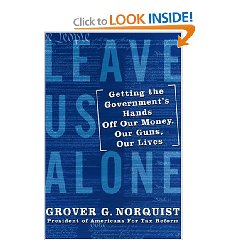
Review: Leave Us Alone–Getting the Government’s Hands Off Our Money, Our Guns, Our Lives

5 Star, Banks, Fed, Money, & Concentrated Wealth, Complexity & Catastrophe, Congress (Failure, Reform), Crime (Government), Culture, Research, Economics, Impeachment & Treason, Insurgency & Revolution, Justice (Failure, Reform), Politics, Power (Pathologies & Utilization), True Cost & Toxicity, Voices Lost (Indigenous, Gender, Poor, Marginalized)
Amazon Page

5.0 out of 5 stars Can Cause Discomfort, But This Book MATTERS

May 17, 2008

Grover Norquist

I was given this book as a gift, along with Groundswell: Winning in a World Transformed by Social Technologies and to my great surprise, being an estranged moderate Reagan Republican, I found that I am much more of a Libertarian than I realized, and this author, although he causes me great discomfort in some areas (such as privatizing Social Security), he makes complete sense. I learn he has been voted one of the 50 most powerful people in DC by GQ (2007) and I believe it. Senator McCain has better listen this time around. I urge all who are enthused with Senator Obama to read Obama – The Postmodern Coup: Making of a Manchurian Candidate. Senator Obama is NOT transparent and I consider his top foreign policy advisors to be dangerous–Dr. Strangelove (Brzezinski) has one last war with Russia left in him, and seriiousl believes he can confront the Chinese in Africa–this is lunacy (search for my Memorandum online <Chinese Irregular Warfare oss.net>.

The book lacks an index. This is a HUGE MISTAKE on the part of the publisher because there are too many important ideas in this book. The publisher should create and post online an index to this book. The publisher can also be criticized for failing to provide Library of Congress cataloguing information. This is a REFERENCE work. The author should consider holding the publisher accountable for such fundamental incompetencies that detract from the book's lasting value.

The five core reforms that he builds up to are:

1) Portable pensions

2) Competitive health care

3) Educational choice including home schooling

4) Outsourcing of all government functions possible

5) Transparency (see not only Groundswell, but also Here Comes Everybody: The Power of Organizing Without Organizations)

The author posits a stark choice between the Leave Us Alone movement, that appears to be growing daily (and included 27 secessionist movements that meet annually at a conference organized by Kirkpatrick Sale, author of Human Scale, and what he calls the Takings Group, the tax and spend elected officials both Republican and Democratic.

This is a serious reference work with an even mix of books, articles, and online citations.

There are some areas where the author could benefit from knowledge that is not yet mainstream–for example, we can blow away the Medicare unfunded obligations by negotiating prices that are 1% (ONE percent) of what we foolishly pay now, and as a recent PriceWaterHouseCooopers study documented so well, also eliminating the 50% of the medical professional that is waste, including (the author does address this–the tort lawyers like Senator John Edwards who make millions putting good doctors out of business so bad doctors can do more elective operations).

On balance–and this was my first exposure to this individual–I put the book down thinking to myself that this author deserves his reputation, and that he combines a very powerful intellect with an equally powerful moral force.

Other books I recommend:
The Thirteen American Arguments: Enduring Debates That Inspire and Define Our Nation
The Revolution: A Manifesto
Don't Start the Revolution Without Me!
Crashing the Party: Taking on the Corporate Government in an Age of Surrender
Spoiling for a Fight: Third-Party Politics in America
The Vermont Manifesto

Vote on Review

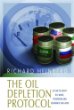
Review: The Oil Depletion Protocol–A Plan to Avert Oil Wars, Terrorism and Economic Collapse

5 Star, Congress (Failure, Reform), Economics, Environment (Solutions), Executive (Partisan Failure, Reform), Future, Science & Politics of Science, Survival & Sustainment, True Cost & Toxicity, Values, Ethics, Sustainable Evolution, Water, Energy, Oil, Scarcity

Oil DepletionBottom Line Deadly Serious,

February 7, 2007

Richard Heinberg

All of the non-fiction reading that I have done supports this author's presenation of both the consequences of doing nothing, and practical bottom line: a 3% reduction per year for the next ten to twenty years, of gross consumption (per capita is meaningless when the number of people are growing rapidly) of oil is the only way to transition gracefully.

Amazon visiters need to be aware that the oil industry, and Exxon in particularly, is applying considerable funds to pay for disinformation and misrepresentation. As Al Gore stated in his briefing to 10,000 Republicans in the Taco Bell Arena of Boise State University, the oil companies (less BP and Chevron) are adopting the precise strategy of the tobacco industry, seeking to turn facts into “theories” that are “in dispute.”

Reality is not in dispute. What is in dispute is the ethics of the Exxon CEO, among others, who choose to lie to the American people and others and take credit for improving gas mileage when what is really needed is a massive turning away from the use of both oil and water.

This book is a great companion to “Peak Oil Survival,” and discusses at the macro levels the implications of oil depletion.

I also like this book because at the back I found a page that informed me that the publisher, New Society Publishers, is both committed to books helpful to society, but that its use of recycled paper as a directly measureable benefit in saving 25 trees, 2,281 gallons of solid waste, 2,512 gallons of water, 3,276 kilowatt hours of electricity, 4,150 lbs of greenhouse gases, 18 lbs of HAPs, VOCs, and AOX combined, and 6 cubic yards of landfill space.

WOW. See my growing list on “true cost” information. Above is the “true cost” for books that do NOT use recycled paper.

AA Mind the GapClick Here to Vote on Review at Amazon,

on Cover Above to Buy or Read Other Reviews,

I Respond to Comments Here or There

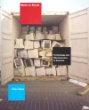
Review: Made to Break–Technology and Obsolescence in America

5 Star, Capitalism (Good & Bad), Economics, True Cost & Toxicity

Made to BreakPart of a Larger Story,

February 4, 2007

Giles Slade

This is one of the best of the “toxic tech” books in current view, by no means completely original, and certainly not the whole story. It gets five stars for its niche. In relation to other books, for example, Natural Capitalism: Creating the Next Industrial Revolution; The Ecology of Commerce; The Omnivore's Dilemma: A Natural History of Four Meals; Pandora's Poison: Chlorine, Health, and a New Environmental Strategy; any of the books on Peak Oil, and the original book on the down side of industrialization, Manufacture of Evil: Ethics, Evolution, and the Industrial System it falls to a lower level.

What is most important is the emerging literature on Cradle to Cradle: Remaking the Way We Make Things We should be LEASING tools and appliances with short lives. The manufacturer should–as that literature recommends–be required to take back the discarded item, and plan for upgrades that do not require the discarding of the entire unit.

See also:
High Tech Trash: Digital Devices, Hidden Toxics, and Human Health
Exposed: The Toxic Chemistry of Everyday Products and What's at Stake for American Power
A Consumer's Dictionary of Household, Yard and Office Chemicals: Complete Information About Harmful and Desirable Chemicals Found in Everyday Home Products, Yard Poisons, and Office Polluters

AA Mind the GapClick Here to Vote on Review at Amazon,

on Cover Above to Buy or Read Other Reviews,

I Respond to Comments Here or There

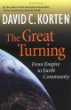
Review: The Great Turning–From Empire to Earth Community

6 Star Top 10%, Banks, Fed, Money, & Concentrated Wealth, Capitalism (Good & Bad), Censorship & Denial of Access, Change & Innovation, Complexity & Catastrophe, Complexity & Resilience, Congress (Failure, Reform), Consciousness & Social IQ, Corruption, Democracy, Economics, Education (General), Empire, Sorrows, Hubris, Blowback, Environment (Problems), Environment (Solutions), Executive (Partisan Failure, Reform), History, Information Society, Justice (Failure, Reform), Peace, Poverty, & Middle Class, Philosophy, Politics, Power (Pathologies & Utilization), Priorities, Public Administration, Religion & Politics of Religion, Science & Politics of Science, Security (Including Immigration), Stabilization & Reconstruction, Survival & Sustainment, Technology (Bio-Mimicry, Clean), True Cost & Toxicity, Truth & Reconciliation, Values, Ethics, Sustainable Evolution, Voices Lost (Indigenous, Gender, Poor, Marginalized), War & Face of Battle, Water, Energy, Oil, Scarcity

Great TurningPeople are the new super power–local resilience, global community,

January 28, 2007

David C Korten

I have mixed feelings about this book. It is unquestionably a five-star work of reflection, integration, and focused moral intent. On the other hand, while it introduced a broad “earth-friendly” literature that I was *not* familiar with, it does not “see” a much broader literature that I have absorbed, and so I want to do two things with this review: feature the highlights from this book, and list a number of other works that support and expand on the author's reflections for the greater good of us all.

Early highlights include the continued relevance of Dennis Kucinich and the emerging value of the Case Foundation and Revolution Health as funded by Steve Case, founder of AOL. The author posits early on the choice we have been a great unraveling and a great turning. He describes all our institutions as failing at the same time that we have unlimited potential. He concludes, as have many others, that centralized authority is not working, and suggests that we must confront that which does not work and devise new constructive alternatives (“for every no there must be a yes”).

In the middle of the book he describes the five levels of consciousness as magical, imperial, socialized, cultural, and spirirtual. I would have put socialized ahead of imperial, since the industrial era used schools to socialize us into both factory workers and conscripts for the armed forces. He concludes this section with a commentary on moral autism, which of course reminds us of nakedly amoral Dick Cheney.

The author moves toward a conclusion by pointing out that people are the new super-power, with the Internet and its many new features as the foundation for bringing people together and making people power effective.

A large portion of the middle section is a historical review of America, with its genocidal, slavery, and unilateral militant interventionist nature, and its extreme inequality now, which the literature on revolution clearly identifies (the latter, concentration of wealth) as a precurser to almost inevitable violent revolution).

The book ends with four strategic elements:

1) Awakening of cultural and spiritual consciousness
2) Resistance of the imperial empire's assault on children, families, communities, and nature
3) Form and connect communities of convergence
4) Build a majoritarian political base.

In parting notes he points out that the status of our children is the key indicator of our future, and that today one out of every two children is born into and lives into poverty (one reason why the High Level Threat Panel put poverty above infectuous disease and environmental degradation).

He ends by calling for local living economies at a human scale.

If you have the time to only read one book within the broad literatures of imagination, corporateism, and constructive prospects for the planet, this is probably that book. Below I want to a list quite a few that support this author's thesis, and for which I have provided a summative as well as an evaluative review within these Amazon pages:

The Corporation
WALMART-HIGH COST OF LOW PRICE (DVD/FF/FR-SP-SUB)
Confessions of an Economic Hit Man
Rogue Nation: American Unilateralism and the Failure of Good Intentions
Rule by Secrecy: The Hidden History That Connects the Trilateral Commission, the Freemasons, and the Great Pyramids
The Sorrows of Empire: Militarism, Secrecy, and the End of the Republic (The American Empire Project)
War Is a Racket: The Anti-War Classic by America's Most Decorated General, Two Other Anti=Interventionist Tracts, and Photographs from the Horror of It
The One Percent Doctrine: Deep Inside America's Pursuit of Its Enemies Since 9/11
Vice: Dick Cheney and the Hijacking of the American Presidency

See also:
Fog Facts: Searching for Truth in the Land of Spin
Lost History: Contras, Cocaine, the Press & ‘Project Truth'
“The Landscape of History: How Historians Map the Past”
Imagine: What America Could Be in the 21st Century
The Cultural Creatives: How 50 Million People Are Changing the World
The Tao of Democracy: Using Co-Intelligence to Create a World That Works for All
The Change Handbook: The Definitive Resource on Today's Best Methods for Engaging Whole Systems
Deep Economy

There are many more should you wish to explore via my categorized lists, but the above both lend great credence to the author of this single book, and expand considerably on the reflections that he has distilled into this one book.

AA Mind the GapClick Here to Vote on Review at Amazon,

on Cover Above to Buy or Read Other Reviews,

I Respond to Comments Here or There

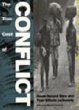
Review: The True Cost of Conflict/Seven Recent Wars and Their Effects on Society

5 Star, Asymmetric, Cyber, Hacking, Odd War, Atrocities & Genocide, Congress (Failure, Reform), Corruption, Crime (Government), Misinformation & Propaganda, True Cost & Toxicity, War & Face of Battle

Amazon Page
Amazon Page

Ten Years Ahead of Its Time, Now Part of “True Cost” Meme,

January 4, 2007
Michael Cranna
This book was ten years ahead of its time in relation to the emergent “true cost” meme that is exploding as the public acquires access to more information and the tools to make sense of that information.

The author has done a first-rate job of looking at seven conflicts and their costs or (rarely) benefits. This is precisely the kind of analysis that is needed if Congresses and Parliaments are to be educated and weaned away from the bankers fondness for war and credit for war as a profit harvesting opportunity.

I recommend that in addition to this book, the reader consider General Smedley Butler's book, “War is a Racket,” and the superb book by Cees Wiebes, “Intelligence and the War in Bosnia” (see my review for lessons learned).

Vote on Review
Vote on Review

Click Here to Vote on Review at Amazon,

on Cover Above to Buy or Read Other Reviews,

I Respond to Comments Here or There
Review: Blue Frontier–Dispatches from America’s Ocean Wilderness

5 Star, Capitalism (Good & Bad), Economics, Environment (Problems), Environment (Solutions), Information Society, Intelligence (Government/Secret), Intelligence (Public), Survival & Sustainment, True Cost & Toxicity, Values, Ethics, Sustainable Evolution, Water, Energy, Oil, Scarcity

Amazon Page
Amazon Page

Extremely Important Work,–Tsunami of Data NOT Reaching Public,

January 2, 2007

David Helvarg

There is so much solid, worthwhile information in this book, including valuable insights in why Western political interests are undermining proper representation of our national oceans, coasts, and Exclusive Economic Zone (EEZ) in Congress, that I would urge those interested in the oceans (hugely more important to our future than the Amazon or globla forestry, just to make the point), to buy this book, suffer its limitations, and ultimately benefit from the wisdom and experience of the author, for whom my respect is unqualified and whole-hearted. In passing, it would probably be helpful if the first thing we all demanded was that EEZ stand for Exclusive Environmental Zone, rather than treating the oceans as a for-profit target area.

There is one other information-related observation I would make that emerged from reading this book: both the United Nations and the National Oceanic and Atmospheric Administration (NOAA) are clearly doing heroic and deeply important work vital to the future of the oceans–and they are doing a terrible job of communicating the basic information about the oceans and their work to the larger world of voters and concerned citizens. What really came home to me as I reflected on what to emphasize in this review is that there is a very wide, almost impenetratable, barrier between what the UN and NOAA know, and what is being communicated to the citizens who have the right to know (they paid for that information with their tax dollars) and the need to know and the desire to know. From this I would say that the next big step for those who would seek to save the oceans, is to demand that all UN and US Government information paid for by the taxpayer be put online henceforth, available at no further cost to the public. It is this information, the bullets and beans of the information war between corporate and citizen interests, that will decide the future of the oceans.

Vote on Review
Vote on Review

Click Here to Vote on Review at Amazon,

on Cover Above to Buy or Read Other Reviews,

I Respond to Comments Here or There