Several warnings of an imminent “false flag” attack by the Israeli-influenced United States on one of its own warships, which will be attributed to Iran, have been reported by several reliable sources. In recent years “false-flag” terrorism has been utilized multiple times by US and Israeli political actors to provide pretexts for otherwise unjustifiable, anti-Islamic military excursions. The plan is to justify an all-out assault on Iran based upon a new fabricated “Pearl Harbor”.
“2013 and 2014 are what I am most worried about because this year everybody is trying to just get through the next election…Everybody is going to do their best to get us through the election. Watch out for 2013, Rogers told ET Now.
Max Blumenthal of the Nation Institute explains the further militarization.
Police being armed with military weapons. Posse Comitatus being side-stepped by converting police into a virtual military — includes long-range acoustic device as well as tasers and military grade pepper spray. US citizens protesting non-violently now being classified as criminals with a blurring of the lines between protestors, criminials, and terorrists. The police mind-set against non-violent civilians is now anti-Constitutional.
Hundreds of US police officer now being trained in Israel to use Israeli tactics against the Palestinians, against US citizens protestin
Joint Terrorism Task Forces being used to federalize police. Police Commissioner Kelly of New York City has made several trips to Israel and appears to have embraced their concept of crimi-terrorists: anyone who is disruptive of the “official” perspective.
How Crisis Mapping Proved Henry Kissinger Wrong in Cambodia
Crisis Mapping can reveal insights on current crises as well as crises from decades ago. Take Dr. Jen Ziemke‘s dissertation research on crisis mapping the Angolan civil war, which revealed and explained patterns of violence against civilians. My colleague Dr. Taylor Owen recently shared with me his fascinating research, which comprises a spatio-historical analysis of the US bombardment of Cambodia. Like Jen’s research, Taylor’s clearly shows how crisis mapping can shed new light on important historical events.
. . . . . . .
In particular, Owen’s analysis shows that:
Click on Image to Enlarge
“… the total tonnage dropped on Cambodia was five times greater than previously known; the bombing inside Cambodia began nearly 4 years prior to the supposed start of the Menu Campaign, under the Johnson Administration; that, in contradiction to Henry Kissinger’s claims, and over the warning of the Joints Chiefs of Staff, Base Areas 704, 354 and 707 were all heavily bombed; the bombing intensity increased throughout the summer of 1973, after Congress barred any such increase; and, that despite claims by both Kissinger and Nixon to the contrary, there was substantial bombing within 1km of inhabited villages.”
Phi Beta Iota: This is very exciting stuff. The public does not read nor think well, in large part because the rote “teaching” was designed by Carnegie and Rockfeller to create obedient factory workers able to follow instructions. Visualization–including spatio-historical analysis but also including advanced visualization as well as the simple visualization for flag officers (red, yellow, green), could be the next revolution in education. At a minimum it will demonstrate that experts know nothing and elites cannot be trusted.
Dr. Jill Stein, GPUS Presidential Candidate, will be in the Northern Virginia/DC area, mid-January. We have scheduled a house party so people can get to know Jill better. We'll meet at the home of John Reeder. We'll have snacks and drinks. If you can, please rsvp to tamar@gp.org. Even if you haven't let us know, come anyway. We're just trying to get a rough estimate of attendance.
When: Wednesday, January 18, 2012, 7:30pm
Where: 1812 N. Huntington Street, Arlington, Va 22205
Contact: Tamar Yager, 703-534-2187 or 502-296-3849
Metro: Orange line to East Falls Church. Need to call Tamar for a pick-up (advance notice please).
Driving directions: from Lee Highway and Harrison Street go south on Harrison Street to 18th Street; go right onto 18th Street and go 3 blocks to a right onto Huntington Street. The house is the third house on the left.
Phi Beta Iota: There are multiple candidates for the Green Party nomination, listed below. Dr. Stein appears to be the most visible candidate; Cynthia McKinney is obsessing on Libya and probably not in the running for 2012.
Below from Politics1, BOLD is Announced, Italics Possible.
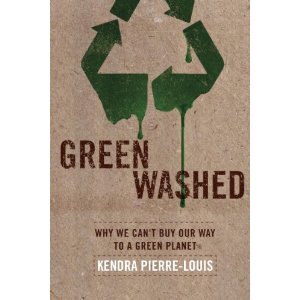
A new book suggests that “It's the economy, stupid,” may be more than political strategy; it may also be the key to environmental sustainability. The book is Green Washed: Why We Can't Buy Our Way to a Green Planet, by Kendra Pierre-Louis. The argument developed is not just that the consumer choices of an individual won't save the planet without collective action, but also that the only collective action that will save us is abandoning the whole idea of consumer choices.
Pierre-Louis lays the groundwork for her argument by walking us through the hazards of supposedly environmental approaches to numerous fields. First is clothing, in which a big trend is toward organic cotton. While reducing pesticides is all to the good, Pierre-Louis writes, growing cotton — any cotton — is a rapid way to exhaust the earth's stores of fresh water. Among the preferable proposals the author suggests is creating or altering your own clothing so that it means more to you and you throw it away less rapidly. The low-hanging fruit in improving our clothing practices is in quantity, not quality: buy less clothing!
Amazon Page
Next comes diet. Our poisonous farming practices are killing the Mississippi River, exhausting our underground water supplies, drying up the Colorado (on this I recommend the 3-D movie “Grand Canyon Adventure”), eradicating biodiversity, eliminating soil, and consuming fossil fuels. Genetically modified crops are outrageous failures on their own terms, resulting in increased, rather than diminished, use of pesticides and herbicides. Last week, I would add, the Obama administration approved new Monsanto corn despite 45,000 negative public comments and 23 positive, corn that will mean the widespread use of a major ingredient in Agent Orange as herbicide. According to Pierre-Louis, we cannot ethically shop our way out of this, not even by buying local, and we couldn't even if products were meaningfully labeled and the accuracy of the labeling was verified. Instead the easiest solution lies in the fact that, in the United States, we throw away 40 percent of the food we buy. Stop doing that! Start buying and using only what you need.
The purpose of high school should be to prepare EVERY individual for further learning, whether it be inside the classroom or outside. The way I see it, there are 3 categories of learning that a student in K-12 ought to master in order to progress for further learning: creativity, critical thinking, and memorizing knowledge(I fail to find a term that encapsulates this idea in a more functional manner).
Creativity generally happens when one either A. Lacks the knowledge/experience about a subject to conform to standards set by experience from themselves or others, or B. Learns how to work in unintuitive, possibly “random” solutions to a given problem. Kids have an inherent advantage in this area because of a lack of life experience. Therefore, it is an ABSOLUTE MUST that kids be given creative expression from the time they are in Kindergarten all the way up through 12th grade. As they gain life experience they should be in the habit of thinking in creative ways, and further utilizing techniques for thinking creatively, some of which are described in Scott Thorpe's book “How to Think Like Einstein: Simple Ways to Break the Rules and Discover Your Hidden Genius”.
Next is critical thinking, which kids also have an advantage in age. However, unlike creativity, they are not born with the skills. Rather, they have to be taught how to think this way, and they need to learn and develop this skill to the point that it becomes second nature. There are various ways to do this, examples might be: mathematical word problems, analysis of literature or anything else you may derive open-ended questions from, even games like Chess or Sudoku. Creativity and critical thinking would show apparent connections by middle school if not earlier. It not only allows an individual to come up with an answer to a problem, but it challenges that individual to use logic to analyze and improve existing solutions to make them smarter and more efficient. Early grades can be focused in developing creativity and critical thinking individually to make them routine and intuitively utilized, while later grades can be focused on combining and using them together to come up with many possible creative, sound, rational ideas to a given complex problem.
Memorizing knowledge I don't believe should be a focus until at least 7th grade. This would only serve to discourage creativity and critical thinking among the younger kids by essentially being told “this is what smart people think so they must be correct”. 7th grade and beyond, kids can receive reading assignments and things of the sort that require them to obtain knowledge and combine it with creativity and critical thinking to build on what is already there. It is not necessary to reinvent the wheel, however you should know how it works first. This part of the learning would also require teaching how to find and discover information. By the time you graduate, you should know how to find information that you're looking for, use creative techniques to discover new ideas, and use critical thinking to logically apply the best ideas into the best solution possible.
The school system as it is today is about 90% memorizing knowledge, 10% critical thinking, and 0% creativity.(I say 0% because any positive gains made from the few artistic and creative classes out there are canceled out by the complete creative discouragement in other areas) It is an institution that is happy to dumb down the curriculum in order to achieve higher graduation rates and make it look like the school and teachers are succeeding. Teachers often try the best they can but get no support from parents, and when kids refuse to learn there is no recourse. Many parents are unable to support their children academically if they are low income and juggling full and/or part time jobs, some parents have made choices to abuse drugs or alcohol and are unable to handle that responsibility.
I believe the school system needs to be the responsibility of the community as a whole, community centers run by either volunteers or non-profits that connect with the teachers to help struggling students with either homework or a safe environment for those with a rough home life. Community centers can reach out and connect with parents and EVERYONE can be responsible for their children's education.
I'll briefly touch on the topic of college by saying that, tuition could possibly be paid for students in part or in full by taking scientific advancements made by a college, putting them in the public domain, and utilizing them to save money. The money saved by increased efficiency can serve to pay for college tuition to encourage further advancements. An example might be that a college figures out a method of filtering salt water into drinkable water, thus decreasing the cost of water by the government, and the excess funds saved by the new technique can be redirected towards college tuition. I have no clue about numbers on this but I'm thinking it could be at least partially viable and utilizing colleges for the public interest could be absolutely valuable in restoring our country and solving the problems it faces.