The food industry pissed off the wrong Mommy of Four. Sarah Palin might call Robyn O'Brien (author of The Unhealthy Truth) a pitbull with lipstick. She might be blond and pretty, but when her youngest child, Tory, had an allergic reaction to eggs, she didn't take “Don't worry your pretty little head about it” for an answer. Why are allergies and asthma on such a rise in America?
The answers were largely: We don't know and we're not really studying it. Better yet, there were two competing camps that each thought the other one's strategy would harm the kids. One thought you should expose your kids to the foods they are allergic to in small doses to see if the allergy would go away, and the other thought you should totally avoid any contact to the allergic food at all to see if it would go away. Riiight. It's nice to have theories, it's nice to do research, but what happens if you have kids, they have allergies, and you have to feed them NOW?
In the introduction the complex approach is stressed. When someone is doing a research he should look at the system as a whole one. Some definitions: Biology is the science of life, which in turn requires the definition of science and life. To avoid that the biology is defined as science of living organisms or science of living systems.
1. Theories and hypotheses.
The aim of science. The aim of science is to gain knowledge of the world. Knowledge has many forms. Science concerns only with scientific knowledge, which is expressed in singular and general propositions. Singular proposition is also called facts, whereas general propositions are referred to as hypotheses, models, rules, laws, and theories. Laws are also well-confirmed general propositions, yet they are less comprehensive than theories. Thus any general proposition within the framework of a theory may be called law. There are two kinds of laws: deterministic and probabilistic. Most of the biological laws are probabilistic.
Scientific methodology or how do we gain scientific knowledge.
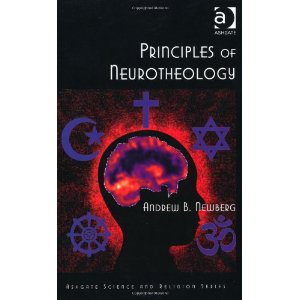
Andrew B. Newberg, Associate Professor, Department of Radiology, University of Pennsylvania, USA.
Publisher's Description: “Neurotheology” has garnered substantial attention in the academic and lay communities in recent years. Several books have been written addressing the relationship between the brain and religious experience and numerous scholarly articles have been published on the topic, some in the popular press. The scientific and religious communities have been very interested in obtaining more information regarding neurotheology, how to approach this topic, and how science and religion can be integrated in some manner that preserves both. If neurotheology is to be considered a viable field going forward, it requires a set of clear principles that can be generally agreed upon and supported by both the theological or religious perspective and the scientific one as well. “Principles of Neurotheology” sets out the necessary principles of neurotheology which can be used as a foundation for future neurotheological discourse. Laying the groundwork for a new synthesis of scientific and theological dialogue, this book proposes that neurotheology, a term fraught with potential problems, is a highly useful and important voice in the greater study of religious and theological ideas and their intersection with science.
In my early 20's, circa 1973, I questioned why each culture had it's own distinct religion much like they spoke a distinct tongue? Clearly, people speaking a language addressed a universal need to communicate. Did religion address some need so fundamental to human nature that, like our different languages, groups of people, separated in time and space would evolve different religious systems independently? The 1960's saw the world grown smaller by telecommunications and jet travel, increasing awareness of the disparities in belief systems and the consequent conflicts arising therefrom, convinced me that we were entering an era in which an appreciation of our universality was critical as our capacity for self-destruction grew. The works of individuals, like Carl Jung and Joseph Campbell, began to build bridges across an enormous chasm of endless distinctions in practices and details.
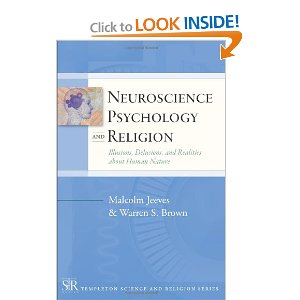
A rare accomplishment, this book journeys to the heart of those questions at the level of a Scientific American article; with eloquence and an impressive scope and command of the research. It is the most balanced account of the neuroscience perspective on religion that I have had the pleasure to read. Readers seeking more imaginative interpretations of the neuroscience data, where authors find “the God Module” on fMRI or proof of God's existence in the brain's design, will be disappointed. Here, as well, there is no treatise of comparative religious mythology or proof in the validity of any particular belief system over others. Despite being written by two admittedly Catholic scholars, they are, as well, first-rate neuroscientists. The only faith peddled here is what brain science can inform us about the phenomenon of religiosity as seen on it's effect in the central nervous system and visa versa. This is a cutting edge neuroscience view of how the brain begets the mind and what is specific to a mind hooked on religion.
Available for Pre-Order. For the faction controlling the Pentagon, the military industry, and the oil industry, the Cold War never ended. They engineered an incredible plan to grab total control of the planet, of land, sea, air, space, outer space and cyberspace. Continuing ‘below the radar,' they created a global network of military bases and conflicts to advance the long-term goal of Full Spectrum Dominance. Methods included control of propaganda, use of NGOs for regime change, Color Revolutions to advance NATO eastwards, and a vast array of psychological and economic warfare techniques. They even used ‘save the gorilla' organizations in Africa to secretly run arms in to create wars for raw materials. It was all part of a Revolution in Military Affairs, as they termed it. The events of September 11, 2001 would allow an American President to declare a worldwide War on Terror, on an enemy who was everywhere, and nowhere. 9/11 justified the Patriot Act, the very act that destroyed Americans' Constitutional freedoms in the name of security. This book gives a disturbing look at the strategy of Full Spectrum Dominance, at what is behind a strategy that could lead us into a horrific nuclear war in the very near future, and at the very least, to a world at continuous war.
Alternative models for grass roots economic development such as micro-financing are now being widely adopted in Bangladesh, India, Pakistan and elsewhere. New views on measuring development such as GDH (gross domestic happiness) have been adopted by Bhutan rather than GDP, and China's own hybrid approach combining market and planned policy to achieve economic transformation offer new choices for developing countries. All of these are representative of a new wave of thinking that rejects the increasingly discredited policies of the IMF and World Bank.
It is easy to criticise the views of activists who take to the street every time the World Bank, IMF, WTO or World Economic Forum meet. However they are driven by hard concerns which are not calling for an end to globalization but a reorientation of what this means. They are challenging notions of accepted economic and business parlance, calling for fair trade rather than just free trade; balanced rather than fast growth; and protection of domestic cottage industries and with it ethnic diversification and social identity. In many respects the term is a misnomer. They are calling for fairer re-distribution of the fruits of globalization and a humane reduction of its side-effects through sensitivities to local conditional realities.