Chuck Spinney: Criteria for a Sensible Grand Strategy

Strategy
0Shares
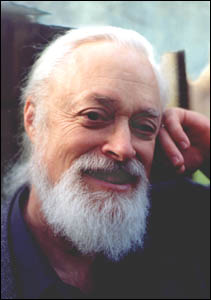
Chuck Spinney

Criteria of a Sensible Grand Strategy

Chuck Spinney (updated 11 Aug 2011)

The Bush administration’s theory and practice of grand strategy could be summarized in the sound byte, “You are either with us or you are with the terrorists.” President Obama may have softened the rhetoric but his escalation of the targeted killing strategy by special forces teams and drones continues and escalates Mr. Bush’s preemptive mentality.  The art of grand strategy is far more subtle than this, and it is now clear that Bush’s primitive conception led to all sorts of problems at home and abroad, which are likely to continue under Mr. Obama unless he changes course and evolves more constructive grand strategic course of action.  Such a change involves an appeal to first principles, which begins with the question: What are the qualities make up a constructive  grand strategy?

The late American strategist, Col John R. Boyd (USAF Ret – see bio) evolved five criteria for synthesizing and evaluating a nation's grand strategy. Boyd's brilliant theories of conflict are contained in his collections of briefings entitled a Discourse on Winning and Losing, which can be downloaded here. Here, I will briefly introduce the reader to what I will call Boyd's criteria for shaping a sensible grand strategy.

Continue reading “Chuck Spinney: Criteria for a Sensible Grand Strategy”

Marcus Aurelius: Romney Slams Obama, Postures At VMI

02 China, 06 Family, 07 Other Atrocities, 09 Justice, 10 Security, 11 Society, Civil Society, Corruption, Cultural Intelligence, IO Impotency
0Shares
Marcus Aurelius

Romney Criticizes Obama at Military College

This morning, Mitt Romney used his foreign policy address at the Citadel in Charleston, South Carolina to criticize what he called the Obama administration's “feckless policies of the last three years.”

“I believe we are an exceptional country with a unique destiny and role in the world,” Romney said, with an audience of cadets sitting behind him. “Not exceptional, as the president has derisively said, in the way that the British think Great Britain is exceptional or the Greeks think Greece is exceptional. In Barack Obama’s profoundly mistaken view, there is nothing unique about the United States.”

Romney criticized the president on cutting the defense budget, as well. “I will reverse President Obama’s massive defense cuts,” he said. “I will begin reversing Obama-era cuts to national missile defense and prioritize the full deployment of a multilayered national ballistic missile defense system.”

Continue reading “Marcus Aurelius: Romney Slams Obama, Postures At VMI”

Tom Atlee: Dawning Realizations re Occupy Wall Street

Advanced Cyber/IO, Blog Wisdom, Civil Society, Collective Intelligence, Cultural Intelligence, Ethics
0Shares
Tom Atlee

Dawning realizations re Occupy Wall Street

It is slowly dawning on me that I've seen events very similar to Occupy Wall Street.

The first time was on the Great Peace March in 1986 which started out from Los Angeles as a hierarchical mega-PR event with 1200 people and tons of equipment. It suddenly and traumatically went bankrupt in the Mojave Desert two weeks later. 800 marchers went home. 400 marchers didn't. It took them (us) two weeks sitting around an BMX track in Barstow to reorganize with no formal leaders (but tons of ambient leadership) and little support (but tons of vulnerability that soon attracted grassroots support). As we re-started our 3000-mile trek with 400 people, it turned into a 9 month miracle of self-organization (I mean, where DO you put 400 people each night 15 or so miles further down the road?!!), out of which came my first experiences of and ideas about collective intelligence, which led to my life work today. The lives of hundreds of other people were transformed by that March, whose emergent troubadours sang “echoes of our care will last forever..”. The folks at Occupy Wall Street are doing a similar experiment in passion-driven self-organization.

The other comparable events I've seen were run by Open Space and World Cafe – especially Open Space.

Continue reading “Tom Atlee: Dawning Realizations re Occupy Wall Street”

Worth a Look: Beyond Intractability, Governance Commons

Worth A Look
0Shares

Beyond Intractibility

Beyond Intractability: A Free Knowledge Base on More Constructive Approaches to Destructive Conflict

Governance Commons

The Commons is a large-scale knowledge base and a network of people and organizations working to improve governance. Information about the many aspects of the program are summarized in a Quick Tour Video with more information found under the About tab and and by following links from this page.

Chuck Spinney: In new window Print all The Liquidation of al-Awlaqi – Droning Mindlessly Into an American Jihad

04 Inter-State Conflict, 05 Civil War, 07 Other Atrocities, 08 Wild Cards, 09 Terrorism, 10 Security, Corruption, Cultural Intelligence, Director of National Intelligence et al (IC), DoD, Government, IO Deeds of War, Law Enforcement, Military
0Shares
Chuck Spinney

Using the extra-judicial liquidation of Anwar al-Awlaqi as a point of departure, Patrick Seale provides very useful and important survey of the strategic and grand strategic implications of the expanding U.S. conflict in what now might be called the Yemen Theater of Operations (YTO) in what is rapidly mutating into a U.S. Jihad against the Islamic world.  The United States is now in involved militarily in wars encompassing at least six theaters of operations in the Islamic world, including Iraq, Afghanistan, Pakistan, Yemen, Libya, and Somalia, with possible expansions into the Sahel and Nigeria, not to mention Iran and who knows where else.

Chuck Spinney
Badalona, Catalunya (part of Spain according to some)

Anwar al-Awlaqi, Yemen, and Obama’s War

by Patrick Seale

Agence Global, 4 Oct 2011

On Friday, 30 September, Yemen announced that a Hellfire missile fired from a CIA-operated drone had killed Shaykh Anwar al-Awlaqi, in the north of the country. His grief-stricken father, once a minister of agriculture in a Yemeni government, went to the scene to collect and bury the pieces of what remained of Anwar’s body. It was the seventh U.S. strike in Yemen this year.

Anwar al-Awlaqi was a virulent critic of American foreign policy in the Arab world, and a passionate advocate of al-Qaida’s form of Islamic jihad. He was also a U.S. citizen, born in New Mexico, with an engineering degree from Colorado State University. His internet sermons, delivered in fluent English, had a devoted following, especially among young Muslims in the West.

His killing inevitably aroused a storm of controversy in the United States about its legality. In an article in The National Interest, Paul R. Pillar, a former senior CIA officer now a university professor, described it as “essentially a long-range execution without judge, jury or publicly presented evidence.” This is a subject which must be left to the Americans to debate.

What are its probable consequences? The most obvious is that it is likely further to inflame some Muslims against the United States, drawing fresh recruits into the jihadist struggle. “Why kill him in this brutal, ugly way?” a member of his Awalik tribe was quoted as saying. “Killing him will not solve the Americans’ problem with al-Qaida. It will just increase its strength and sympathy in this region.”

A key question, therefore, is whether al-Qaida — including its Yemen-based offshoot, “Al-Qaida in the Arabian Peninsula” — is an organisation or a cause.

Read full article.

Venessa Miemis: Ten Projects to Liberate the Web

Autonomous Internet
0Shares
Venessa Miemis

In the last nine months of planning the Contact Summit, I’ve come across a range of projects and initiatives building toward the “Next Net.

Though they vary in their stages of development and specific implementations, they fall under the common themes of enabling peer-to-peer communication and exchange, protecting personal freedom and privacy, and giving people more control over their data and identity on the web.

Here’s list of just ten projects, many of which will be demoing at our exhibitor space at Contact on October 20th in New York City.

Read full post with graphics.


Review (Guest): Democracy Incorporated – Managed Democracy and the Specter of Inverted Totalitarianism

4 Star, America (Founders, Current Situation), Censorship & Denial of Access, Civil Society, Communications, Congress (Failure, Reform), Consciousness & Social IQ, Corruption, Crime (Corporate), Crime (Government), Culture, Research, Democracy, Economics, Education (General), Executive (Partisan Failure, Reform), Impeachment & Treason, Information Operations, Justice (Failure, Reform), Media, Military & Pentagon Power, Misinformation & Propaganda, Nature, Diet, Memetics, Design, Peace, Poverty, & Middle Class, Politics, Power (Pathologies & Utilization), Secrecy & Politics of Secrecy, Threats (Emerging & Perennial), True Cost & Toxicity, Voices Lost (Indigenous, Gender, Poor, Marginalized)
0Shares
Amazon Page

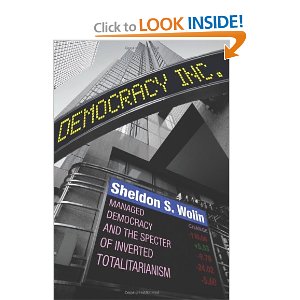
Sheldon S. Wolin

Editorial Review:

Of the many books I've read or skimmed in the past seven years that attempted to get inside the social and political debacles of the present, none has had the chilling clarity and historical discernment of Sheldon S. Wolin's Democracy Incorporated. Building on his fifty years as a political theorist and proponent of radical democracy, Wolin here extends his concern with the extinguishing of the political and its replacement by fraudulent simulations of democratic process. — Jonathan Crary, Artforum

4.0 out of 5 stars Managed Democracy, Superpower, and alas, even, “Inverted Totalitarianism”, June 17, 2008

ByJohn P. Jones III (Albuquerque, NM, USA) – See all my reviews  (VINE VOICE)    (TOP 500 REVIEWER)    (REAL NAME)

This is a seminal work which “tells it like it is” concerning the current power arrangements in the American political system, as well as the political leadership's aspirations towards global empire. Prof. Wolin sets the tone of his work on page 1, with the juxtaposition of the imagery of Adolph Hitler landing in a small plane at the 1934 rally at Nuremberg, as shown in Leni Reifenstahl's “Triumph of the Will,” and George Bush landing on the aircraft carrier “Abraham Lincoln” in 2003. Certainly one of the dominant themes of the book is comparing the operating power structure in the United States with various totalitarian regimes of the past: Stalinist Russia, Nazi Germany and Fascist Italy. Prof Wolin emphasizes the differences between these totalitarian powers, and the softer concentration of power in the United States, which he dubs “inverted totalitarianism.”

Continue reading “Review (Guest): Democracy Incorporated – Managed Democracy and the Specter of Inverted Totalitarianism”